Top 15 Castles around Pratovecchio Stia
Best castles around Pratovecchio Stia are found in the Casentino Valley of Tuscany, a region known for its historical significance and natural landscape. This area features several historic castles that offer insight into Italy's medieval past. Pratovecchio Stia is situated amidst rolling hills and river valleys, providing a setting for these ancient structures. The region's history is deeply intertwined with powerful feudal families, whose strongholds shaped the local landscape.
Best castles around Pratovecchio Stia
- The most popular castles is Corniolino…
Last updated: June 30, 2026
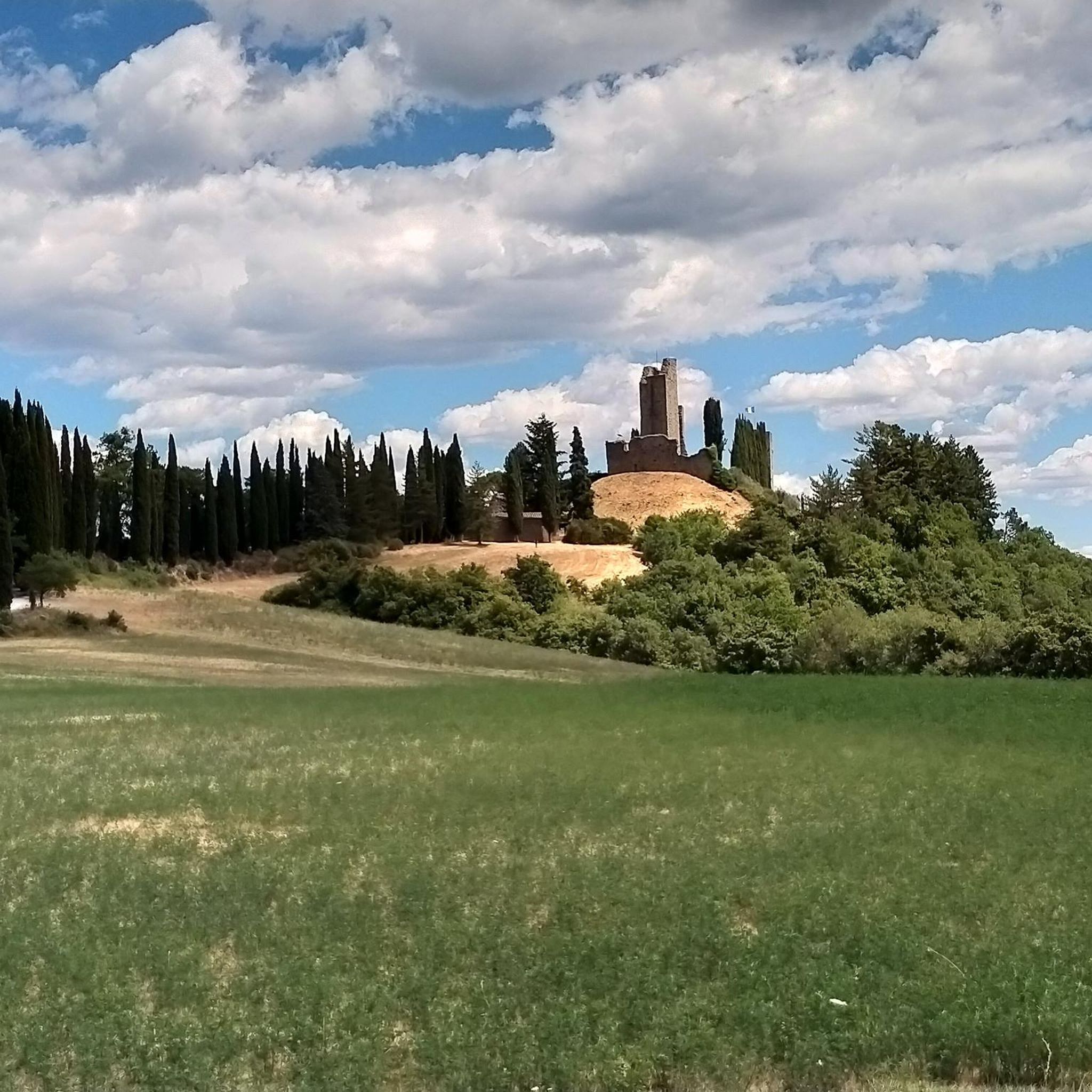
Castello di Romena
Highlight • Castle
Translated by Google •
Tip by

Montemignaio Castle (Castel Leone)
Highlight • Castle
Translated by Google •
Tip by

Sign up now to discover places like this
Get recommendations on the best single tracks, peaks, & plenty of other exciting outdoor places.
Sign up for free
Palagio Fiorentino
Highlight • Castle
Translated by Google •
Tip by
Corniolino Castle
Highlight • Castle
Translated by Google •
Tip by
Castle of the Guidi Counts in Poppi
Highlight • Castle
Translated by Google •
Tip by

Sign up for free to discover even more castles around Pratovecchio Stia.
Sign up for free
Already have an account?
Start today with a free account
Your next adventure awaits.
Login or Signup
Popular around Pratovecchio Stia

Other adventures around Pratovecchio Stia

Tips from the Community

Great views and resting areas all around the castle.
0
0

I recommend a stop with a visit to understand the battle of Campaldino
0
0

short path, you reach the parish church from the fields, ..rather suggestive. ..
0
1

Castello dei Conti Guidi, beautiful stone village. Wonderful view.
0
0

The origin of the Montemignaio castle is linked to the passage through the area of the ancient Roman road which, from Florence ... led to Arezzo. The ancient route was still widely used during the Middle Ages and this generated the development of the Castle, located in a dominant position, at the top of a buttress overlooking the Fiana torrent valley. The first written document proving the existence of the settlement dates back to 1103, it is a papal bull in which the authority over the Pieve di Montemignaio was confirmed to the Bishop of Fiesole. Already in the following years and throughout the 12th century the area was remembered among the dominions of the Guidi counts... It was the Guidi family who built the castle on site, also known as 'Castel Leone' or simply 'Castiglione', which remained in their possession until the revolt of Castel S. Niccolò with whose inhabitants the Montemignanesi made common cause against the abuses of the last descendant of the feudal family, Count Galeoto. In 1440 the same inhabitants submitted to the Municipality of Florence and were aggregated to the Podesteria of the Montagna Fiorentina. The remains of the castle walls still partially surround the town. To the right of the main access door the mighty tower still stands out, which also served as a bell tower, to the left a second tower, probably originally the twin of the other, is today significantly reduced in height. The two towers are joined by a mighty curtain wall in which opens the beautiful round arched door that leads into the heart of the castle. Once through the entrance on the left, the majestic remains of the palace rise, first the residence of the counts and then of the Florentine Podestà, and of the square-shaped keep. In the curtain walls you can still see the walled shape of what was once the door that led into the courtyard of the Palagio. Today, to access the splendid courtyard, with a beautiful well in the centre, you need to go around the outside of the walls from the right of the main door. The original small church of the castle still stands immediately behind the bulk of the keep. The whole, rather well maintained, is one of the best examples of a fortified medieval Tuscan mountain village. (Source: https://castellitoscani.com/castel-leone-montemignaio/ )
0
0
The arrival at the Castle of the Guidi Counts is immediately announced by a bronze statue depicting Dante Alighieri, which overlooks the Casentino valley and the Campaldino plain, where in 1289 Dante himself, among the ranks of the Florentine Guelphs, fought against the Arezzo Ghibellines. (Source: https://www.centrostoricopoppi.it/attrazioni-turistiche/#castello-e-piazza-delle-armi)
1
0
Poppi Castle is the main monument of the Casentino. Unlike all the other castles and medieval architecture in the area, it has not been ruined by time and men, having always been used as the residence of the local political or administrative power, in fact the Municipality of Poppi is still located there today. Since its origins, the history of the castle has been closely linked to that of the largest feudal family in Casentino who placed Poppi at the center of its large properties and inhabited this manor for almost four hundred years: the Guidi counts. Although the first written news of the existence of the castle dates back to 1191, its architecture and the fact that the Guidi family were already owners of vast possessions in Tuscany and Romagna at the time lead us to assume that its foundation was two or three years earlier. centuries, dating back to the period between the Lombard and Frankish invasions in these territories. ... (Source: https://castellitoscani.com/poppi/ )
1
0

The climb to reach the castle will initially make you regret not staying in the valley, but the square, the gardens, and the view over the Arno valley and the mountains of the Casentinesi Forests will repay the effort. The castle has a square tower and can also be visited inside, where it houses a library, a chapel and a historical museum.
2
0
Frequently Asked Questions
What are some historically significant castles in the Pratovecchio Stia area?
The Casentino Valley is rich in history. Two prominent examples are Castello di Romena, dating back to the 11th century and a stronghold of the Guidi Counts, and Porciano Castle, also from the 11th century and known for its connection to Dante Alighieri. Another notable site is Montemignaio Castle (Castel Leone), with origins linked to an ancient Roman road.
Can I find family-friendly castles to visit around Pratovecchio Stia?
Yes, several castles offer an engaging experience for families. The Castle of the Guidi Counts in Poppi is categorized as family-friendly and features a library, chapel, and historical museum. Palagio Fiorentino is also listed as family-friendly, offering a glimpse into the region's past.
What kind of views can I expect from the castles in this region?
The castles in Pratovecchio Stia offer breathtaking panoramic views. From Castello di Romena, you can see the Arno Valley. Porciano Castle provides a vantage point over the Casentino Valley. The Castle of the Guidi Counts in Poppi offers stunning vistas over the Arno valley and the mountains of the Casentinesi Forests.
Are there hiking or cycling routes near the castles?
Absolutely! The region offers numerous outdoor activities. For gravel biking, you can explore routes like the 'Arno River Cycle Path' loops, with options ranging from moderate to difficult. For running, there's a 'Castello di Porciano loop from Pratovecchio Stia' and a 'Palagio Fiorentino loop from Pratovecchio'. Mountain biking enthusiasts can find routes like the 'Castello di Porciano – Pieve di San Pietro a Romena loop'. You can find more details on these and other routes in the Gravel biking around Pratovecchio Stia, Running Trails around Pratovecchio Stia, and MTB Trails around Pratovecchio Stia guides.
Which castles are mentioned in historical literature, like Dante's works?
Castello di Romena holds significant literary value, having been cited by Dante Alighieri in the 30th canto of his *Divine Comedy*. Porciano Castle is also renowned for hosting Dante during his exile from Florence in the early 14th century, adding a significant cultural dimension to its history.
What are the best times of year to visit the castles around Pratovecchio Stia?
The best times to visit are typically spring (April-May) and autumn (September-October) when the weather is mild and pleasant for exploring both the castles and the surrounding natural landscapes. Summer can be warm, but still enjoyable, while winter offers a quieter, often snow-dusted, experience.
Are there any castles that offer more than just historical ruins?
Yes, Porciano Castle, for instance, has been restored and now houses various collections on its lower floors, including domestic and agricultural tools, an exhibition on Native Americans, and artifacts found during its restorations. It also features the 'Salone di Dante' used for cultural events. The Castle of the Guidi Counts in Poppi also includes a library and a historical museum.
Where can I find information about visiting hours or tickets for these castles?
For specific visiting hours, ticket prices, and any booking requirements, it's best to check the official tourism websites for the region or the individual castle sites. For general information about the area, you can visit Visit Tuscany's Pratovecchio Stia page. For Romena Castle, see Visit Tuscany's Romena Castle page, and for Porciano Castle, see Visit Tuscany's Porciano Castle page.
What should I wear when exploring the castles and surrounding areas?
Comfortable walking shoes are essential, as many castles involve walking on uneven terrain, stairs, or cobblestones. Layered clothing is advisable, especially during spring and autumn, to adapt to changing temperatures. If you plan on hiking, appropriate outdoor gear is recommended.
Can I visit multiple castles on a single trip?
Yes, the castles in the Casentino Valley are relatively close to each other, making it feasible to visit several in one trip. Planning a route that connects Castello di Romena, Porciano Castle, and perhaps the Castle of the Guidi Counts in Poppi can offer a comprehensive historical experience. Many routes also connect these sites for hiking or cycling.
Are there any castles that belonged to the powerful Guidi Counts?
Many castles in the region were once possessions of the influential Guidi Counts. Castello di Romena, Porciano Castle, Montemignaio Castle (Castel Leone), Palagio Fiorentino, Corniolino Castle, and the Castle of the Guidi Counts in Poppi all have historical ties to this powerful feudal family.
What kind of amenities like cafes or accommodation are available near the castles?
The towns and villages surrounding the castles, such as Pratovecchio Stia and Poppi, offer various amenities. You'll find local cafes, restaurants serving traditional Tuscan cuisine, and a range of accommodation options from charming B&Bs to hotels, providing convenient bases for exploring the castles.
Are the trails around the castles dog-friendly?
While many outdoor trails in Tuscany are generally dog-friendly, it's always best to check specific regulations for each castle or protected area. Dogs are often welcome on leashes in outdoor areas, but may not be permitted inside castle buildings or museums. Always ensure your dog is well-behaved and pick up after them.
How long does it typically take to explore a castle in the region?
The time required to explore a castle varies. For a site like Castello di Romena, which is largely in ruins but offers extensive grounds and views, you might spend 1-2 hours. A castle with internal museums and exhibitions, like Porciano Castle or the Castle of the Guidi Counts in Poppi, could take 2-3 hours or more to fully appreciate.
What makes <a href="https://www.komoot.com/highlight/3690219" target="_blank" rel="noopener">Corniolino Castle</a> unique?
Corniolino Castle, dating back to the 12th-13th century, is notable for its strategic location on the Alpe and its description as an 'insepugnable mountain' fortress. While partially in ruins, its visible structures include a mighty arched entrance door in sandstone blocks and part of the central keep, offering a glimpse into its formidable past as a Guidi Counts' stronghold.
Most popular routes around Pratovecchio Stia
Most popular attractions around Pratovecchio Stia

Get inspired with the komoot mobile app


Explore more
Looking for the best castles somewhere else? Discover other guides around Pratovecchio Stia:
