Top 5 Castles around Loro Ciuffenna
Best castles around Loro Ciuffenna are found in a picturesque medieval village nestled between the Arno Valley and the Pratomagno mountains in Tuscany. This region is characterized by its historical architecture and remnants of past fortifications. The village itself, along with nearby fortilices and castles, offers insight into its defensive history. Exploring the area reveals a landscape rich in medieval heritage.
Best castles around Loro Ciuffenna
- The most popular castles is Montozzi Castle, a castle that stands on a…
Last updated: June 30, 2026
Montozzi Castle
Highlight • Castle
Translated by Google •
Tip by

Montemignaio Castle (Castel Leone)
Highlight • Castle
Translated by Google •
Tip by

Sign up now to discover places like this
Get recommendations on the best single tracks, peaks, & plenty of other exciting outdoor places.
Sign up for free
Quota di Poppi Village
Highlight • Settlement
Translated by Google •
Tip by
Ruins of the Castello dei Guidi on Poggio della Regina
Highlight • Castle
Translated by Google •
Tip by

Castle of St. Nicholas
Highlight • Castle
Translated by Google •
Tip by

Start today with a free account
Your next adventure awaits.
Login or Signup

Tips from the Community

Overlooking the Solano Valley from a panoramic hilltop, this imposing fortress-palace was one of the Guidi Counts' most powerful strongholds and still retains the charm of its medieval keep and 15th-century mullioned windows. The village, accessible by an ancient stone bridge, tells a thousand-year history of resistance and rebirth, representing one of the most iconic and best-restored profiles in the entire Casentino.
0
0
Situated at the highest point of the village, this ancient medieval castle dominates the valley, offering one of the most evocative views of the Casentino. The remains of the fortification make it the perfect place for a scenic stop to discover the historical roots of the landscape.
1
0

Castello dei Conti Guidi, beautiful stone village. Wonderful view.
0
0

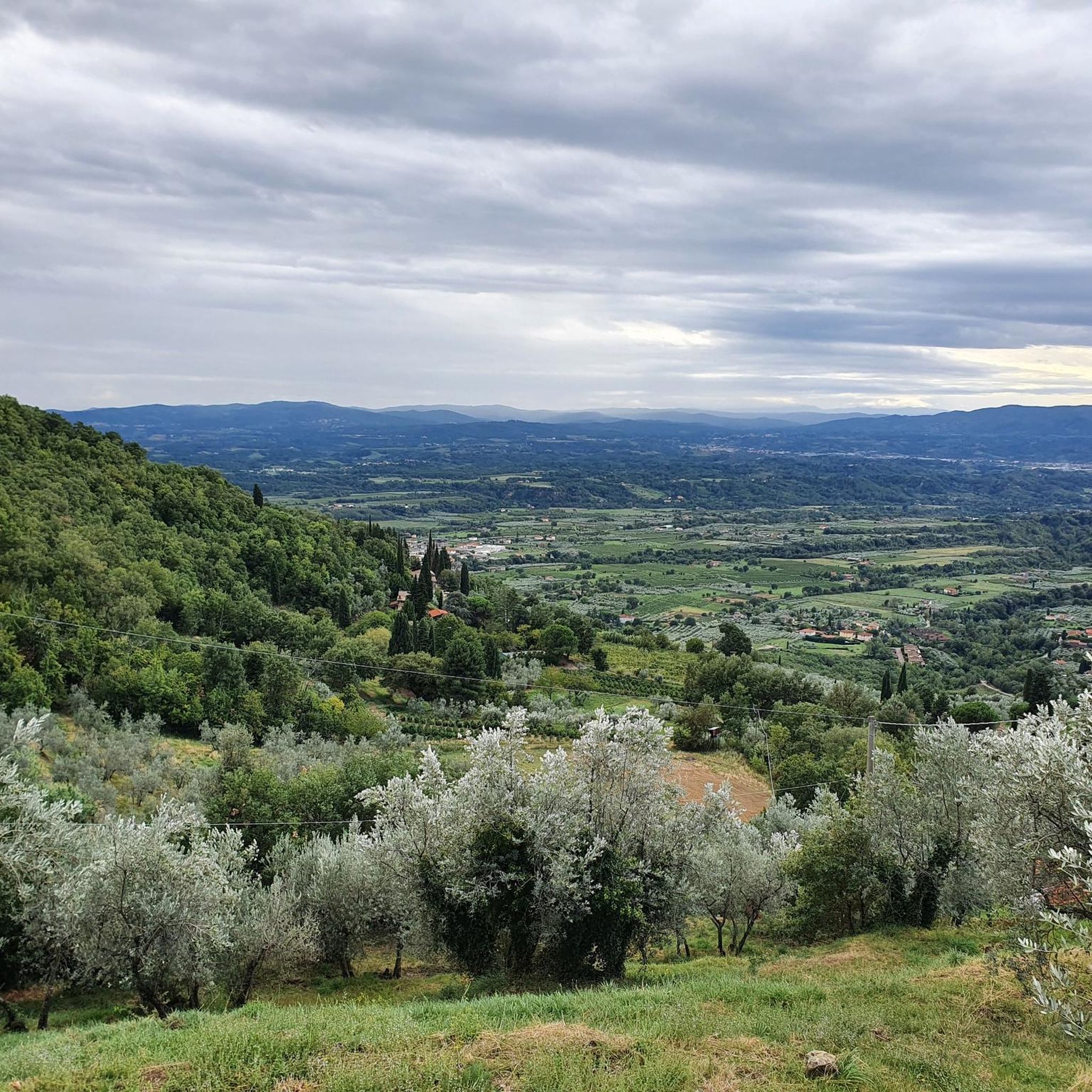
In Setteponti, shortly after Poggio Bagnoli coming from Arezzo, there is a fork on the left and immediately a dirt road, but in excellent condition. Climb of just under 3 km, gentle with only a few steeper points. At the top, views of both sides, Valdambra and Valdarno.
0
0

The origin of the Montemignaio castle is linked to the passage through the area of the ancient Roman road which, from Florence ... led to Arezzo. The ancient route was still widely used during the Middle Ages and this generated the development of the Castle, located in a dominant position, at the top of a buttress overlooking the Fiana torrent valley. The first written document proving the existence of the settlement dates back to 1103, it is a papal bull in which the authority over the Pieve di Montemignaio was confirmed to the Bishop of Fiesole. Already in the following years and throughout the 12th century the area was remembered among the dominions of the Guidi counts... It was the Guidi family who built the castle on site, also known as 'Castel Leone' or simply 'Castiglione', which remained in their possession until the revolt of Castel S. Niccolò with whose inhabitants the Montemignanesi made common cause against the abuses of the last descendant of the feudal family, Count Galeoto. In 1440 the same inhabitants submitted to the Municipality of Florence and were aggregated to the Podesteria of the Montagna Fiorentina. The remains of the castle walls still partially surround the town. To the right of the main access door the mighty tower still stands out, which also served as a bell tower, to the left a second tower, probably originally the twin of the other, is today significantly reduced in height. The two towers are joined by a mighty curtain wall in which opens the beautiful round arched door that leads into the heart of the castle. Once through the entrance on the left, the majestic remains of the palace rise, first the residence of the counts and then of the Florentine Podestà, and of the square-shaped keep. In the curtain walls you can still see the walled shape of what was once the door that led into the courtyard of the Palagio. Today, to access the splendid courtyard, with a beautiful well in the centre, you need to go around the outside of the walls from the right of the main door. The original small church of the castle still stands immediately behind the bulk of the keep. The whole, rather well maintained, is one of the best examples of a fortified medieval Tuscan mountain village. (Source: https://castellitoscani.com/castel-leone-montemignaio/ )
0
0
Quota di Poppi is a small but delightful medieval village located on the slopes of the Pratomagno pre-Apennine massif at approximately 437 meters above sea level. This village is the last bastion that you come across when climbing the panoramic road of Pratomagno from the town of Poppi, of which it is a hamlet. The village is truly a gem: in summer the alleys are decorated with many varieties of flowers and plants in a mix of colors that bring joy... Quota, originally called Coita, was built as a castle by the Guidi Counts in the 13th century and remained under their dominion for about two hundred years, governing much of the Casentino territory. The strategic position of Quota was ideal for the control of the two important cities of Castel Focognano and Bibbiena, which in that period were under the influence of Arezzo. The Quota Castle represented an important military garrison in the Casentino and was a fundamental control point on the communication routes between Florence and Arezzo. Its location on the top of a hill allowed a complete view of the surrounding area, making it a fortress that was difficult to attack. (Source: https://borghi.toscana.it/cosa-vedere/quota-di-poppi/ )
0
0

archaeological site with the ruins of a medieval Guidi castle. The area is open and visitable, but is currently not in good condition. However, there is an area with a table, which is quite shady in the hot seasons. The castle stood on the top of the hill just under 1000m above sea level. The hill dominates the Valdarno, down in the plain you can recognize Figline, Incisa, Piandiscò... But the panorama is surprising and extends across the whole of Tuscany. The peaks of the Apuan Alps, Monte Serra, the Pistoia Apennines, then Monte Amiata and Monte Cetona are easily recognisable. The path to get to Poggio della Regina is well maintained and has a rather compact surface. The network of paths is very dense, you can choose various rings and itineraries.
0
0

Great old facility, surrounded by olive trees. If you like, you can get wine and olive oil directly from the producers. Oh, and there are also holiday apartments.
2
0
Frequently Asked Questions
What historical sites related to castles can I explore in Loro Ciuffenna itself?
While Loro Ciuffenna doesn't have a single, fully preserved castle, the village itself is a medieval fortified site. You can explore its historic center, which retains its medieval layout, stone houses, and winding alleys. Look for the original castle gates, one of which now serves as the Porta dell'Orologio (Clock Tower). The Church of Santa Maria Assunta, located at the highest point, was originally the castle's chapel and houses 14th and 15th-century frescoes. Don't miss the beautiful single-arched Romanesque bridge over the Ciuffenna river.
Which are the most notable castles and fortified villages near Loro Ciuffenna?
Beyond the medieval village of Loro Ciuffenna itself, you can visit several significant sites. Montozzi Castle, dating back to the 13th century, stands on a hill overlooking the Valdarno. The Poggio di Loro Medieval Village offers remains of castle walls and a Romanesque church. Also, explore Montemignaio Castle (Castel Leone), a well-maintained site with a mighty tower and curtain walls, linked to an ancient Roman road.
Are there any castle ruins or archaeological sites to visit for a more rugged experience?
Yes, for those interested in archaeological sites, the Ruins of the Castello dei Guidi on Poggio della Regina offer a unique experience. This site features the ruins of a medieval Guidi castle on a hill almost 1000m above sea level, providing extensive panoramic views across Tuscany. While the ruins are not in pristine condition, the area is open and visitable, with a shady spot for a break.
What kind of views can I expect from the castles and fortified villages in the area?
Many of the castles and fortified villages around Loro Ciuffenna offer stunning views. From the Montozzi Castle area, you can overlook the upper Valdarno and Valdambra. The Ruins of the Castello dei Guidi on Poggio della Regina provide a vast panorama, allowing you to recognize towns in the Valdarno plain and even distant peaks like the Apuan Alps and Monte Amiata on a clear day. Quota di Poppi Village, situated on the slopes of the Pratomagno, also offers excellent vantage points.
Are there family-friendly options among the castles and villages?
Exploring the medieval village of Loro Ciuffenna itself is a family-friendly activity, with its charming streets and historical elements. The Poggio di Loro Medieval Village, with its characteristic stone houses and ancient church, also offers an engaging walk for families. These locations provide a gentle introduction to history without requiring strenuous hikes.
What outdoor activities can I combine with visiting these castles?
The region around Loro Ciuffenna is excellent for outdoor activities. You can find numerous routes for hiking, gravel biking, and cycling. For hiking, consider routes like the "Ascent to the Pieve di San Pietro" or "Tour to Montemarciano from Loro Ciuffenna." If you enjoy cycling, there are routes like "Villa Monsoglio" or "View of Casamona – Pieve di San Pietro at Gropina loop." You can find more details and routes in the hiking guide, gravel biking guide, and cycling guide for Loro Ciuffenna.
Are there hiking trails that lead to or around these historical sites?
Yes, several hiking trails allow you to explore the areas around these historical sites. For instance, the path leading to the Ruins of the Castello dei Guidi on Poggio della Regina is well-maintained and offers various ring routes. The medieval villages like Poggio di Loro and Quota di Poppi are often starting points or waypoints for longer hikes into the surrounding Pratomagno mountains.
What is the best time of year to visit the castles and medieval villages in Loro Ciuffenna?
The best time to visit is generally during the spring (April-May) and autumn (September-October) when the weather is mild and pleasant for exploring. The Tuscan landscape is particularly beautiful during these seasons, with blooming flowers in spring and vibrant foliage in autumn. Summer can be hot, but the higher elevations and shaded areas of some sites offer respite. Winter visits are possible, especially for walks, but some services might have reduced hours.
What should I wear for castle visits and walks in the Loro Ciuffenna area?
Comfortable walking shoes are essential, as many of the medieval villages and castle sites involve cobbled streets, uneven paths, or uphill climbs. Layers of clothing are recommended, especially during spring and autumn, as temperatures can vary. A hat and sunscreen are advisable during warmer months, and a light jacket or rain gear can be useful year-round, particularly if you plan to explore trails.
Can I find local products or unique experiences near these castles?
Near Montozzi Castle, you might find opportunities to purchase wine and olive oil directly from local producers, as mentioned in visitor tips. The medieval villages themselves, like Loro Ciuffenna, often have small shops selling local crafts and food products. Exploring these villages allows you to experience the authentic Tuscan lifestyle.
Are there any hidden gems or lesser-known fortified sites worth discovering?
While not a traditional castle, the fortilice of Il Borro, located within the territory of Loro Ciuffenna, is a historical point of interest. Originally a small fort, it represents another aspect of the region's historical fortifications and is connected to a significant historical figure from the mid-13th century. Exploring the ancient Fondaccio district in Loro Ciuffenna itself, once the economic heart of the castle, can also feel like discovering a hidden gem.
Most popular routes around Loro Ciuffenna
Most popular attractions around Loro Ciuffenna

Get inspired with the komoot mobile app


Explore more
Looking for the best castles somewhere else? Discover other guides around Loro Ciuffenna:
