Top 5 Caves around Castelvetere Sul Calore
Best caves around Castelvetere Sul Calore are part of the wider Irpinia region, particularly the province of Avellino. Castelvetere Sul Calore is a village recognized for its history, natural beauty, and medieval origins. While direct cave systems within the town are limited, the surrounding area offers notable cave attractions. These natural points of interest provide insights into the region's geological and historical landscape.
Best caves around Castelvetere Sul Calore
- The most popular caves is Sanctuary of the Most Holy Savior…
Last updated: June 30, 2026
Sanctuary of the Most Holy Savior of Serino
Highlight • Religious Site
Translated by Google •
Tip by

Grotta dei Candraloni
Highlight • Cave
Translated by Google •
Tip by
Sign up now to discover places like this
Get recommendations on the best single tracks, peaks, & plenty of other exciting outdoor places.
Sign up for free
Bocca del Dragone Picnic Area
Highlight • Rest Area
Translated by Google •
Tip by
Start today with a free account
Your next adventure awaits.
Login or Signup
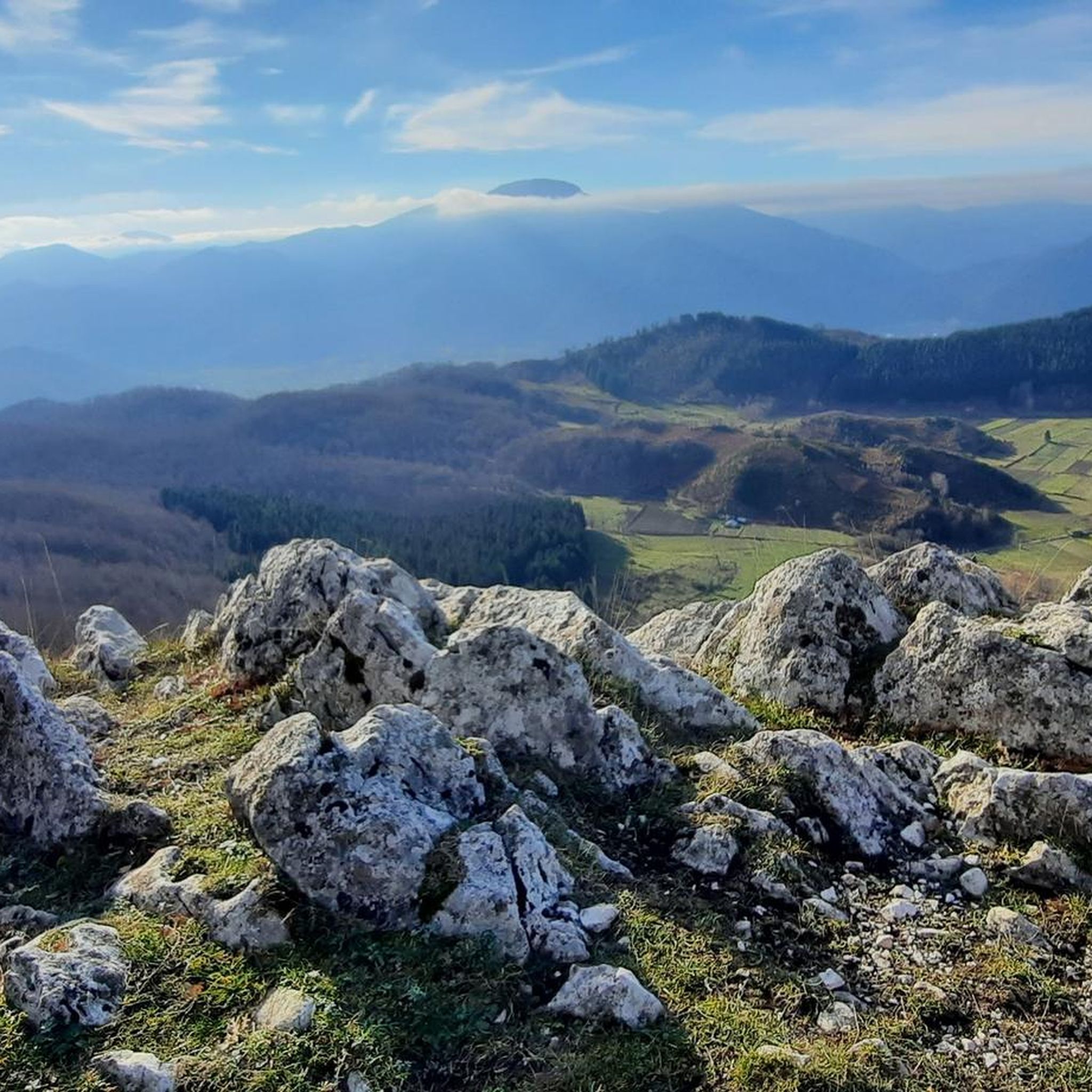
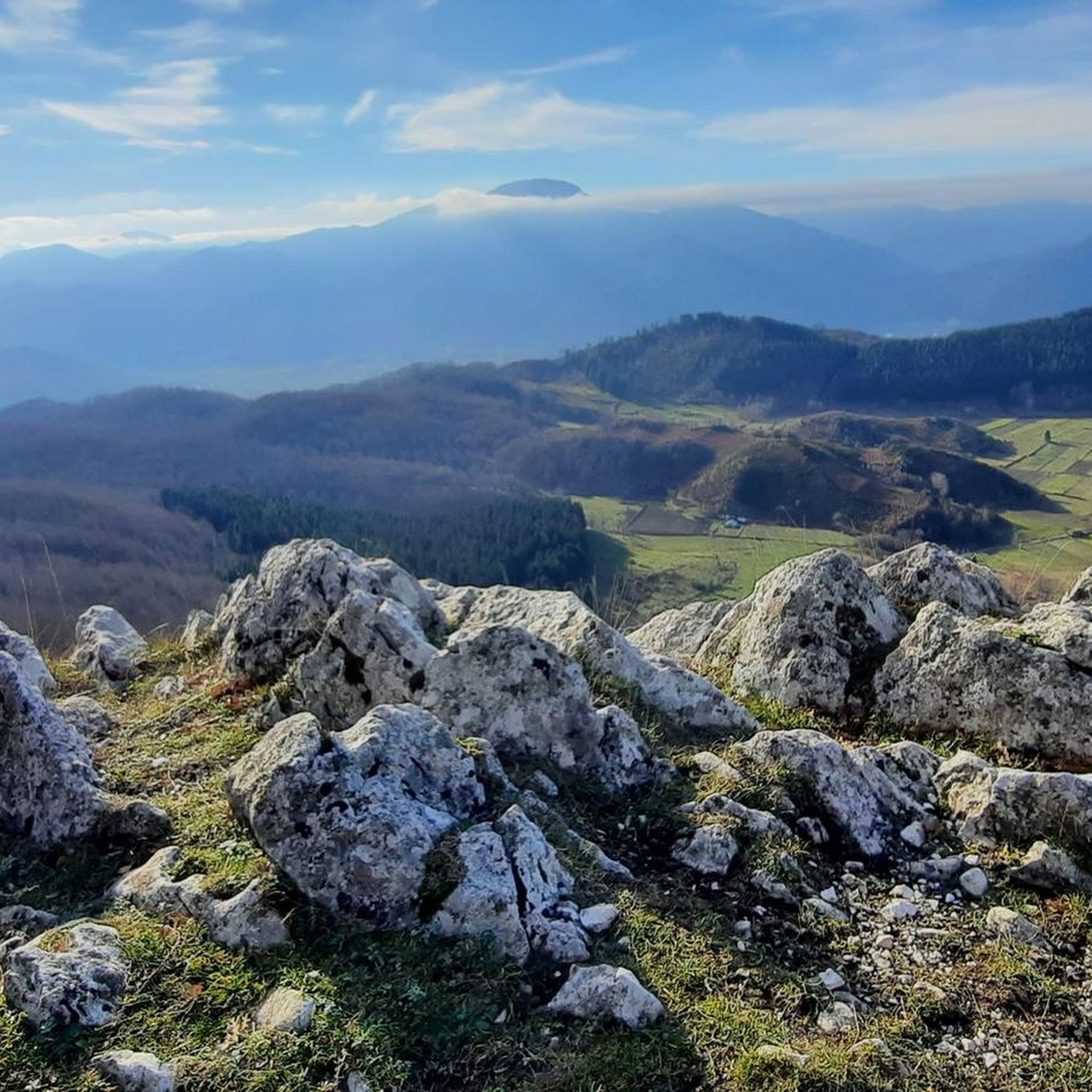
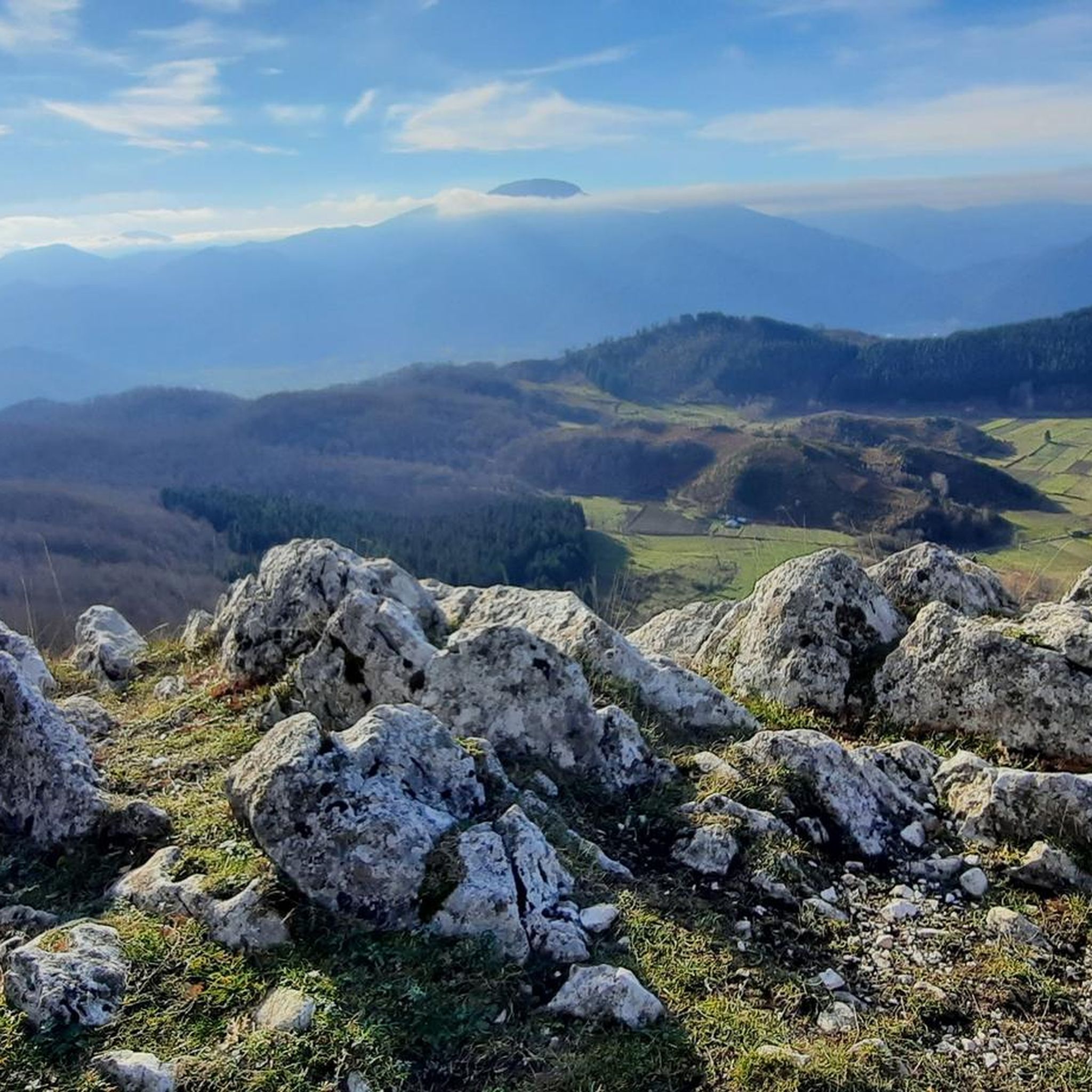
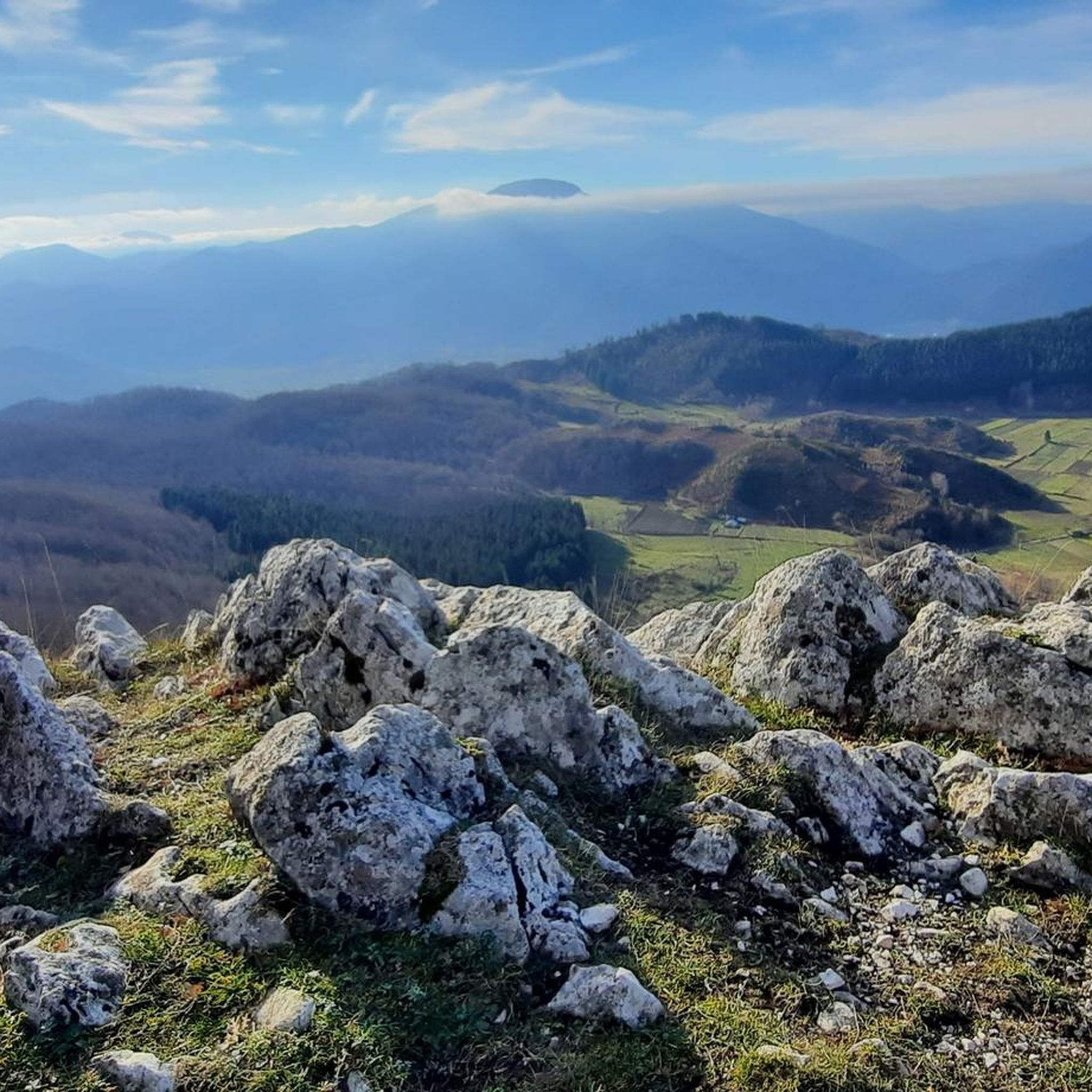

Tips from the Community

Must see, Candraloni sinkhole
0
0


The Grotta dei Candraloni, a sinkhole where the waters of the stream of the same name fall.
0
0

Really suggestive place that deserves to be visited.
4
0

Finally, a protection was placed on the road adjacent to the cave, a very, very dangerous point overlooking the cave. Pay attention.
7
0
Always spectacular to visit this place, pay close attention to the slippery surface.
4
0
The Grotta dei Candraloni is a natural sinkhole hidden in the Verteglia plateau in Montella, in the province of Avellino. The main entrance of the cave is hidden by beech woods and you have to climb to an altitude of 1220 meters above sea level, from here you enter the mysterious bowels of the path that extends for 840 meters, while the depth is 65 meters. The first obligatory passage of the path of the beech groves at the entrance to the cave consists of a series of natural ladders to the left of the homonymous Candraloni stream. Then, only the most experienced, motivated and equipped can continue, remaining on the left, for a climb of a few meters, made a bit slippery by the presence of water, while the many twigs are more characteristic and for those who know how to use them, even useful ones. and trunks of trees present, lying there by the bad weather of winter and by the strange games of nature. It then begins along the main branch of the cave, a "karst channel", which extends for 400 meters and leads to the river delle Acque Nere. This is the easiest and most spacious section of the sinkhole, although it is very likely the presence of mud, even high, and the "sucker effect" that can cause if you sink with your feet. Not infrequently, it can also reach the knees and often also dirties concretions and stalactites. The path then begins to tighten, becomes a bottleneck, even quite full of water at certain times of the year, slowing down the continuation considerably, which culminates in the plain of the Black Waters below.
22
0
The Candraloni sinkhole is located on the massif of Mount Termino within the Regional Park of the Picentini Mountains at an altitude of 1120 meters and has a development of 840 meters by 65 meters of depth. The first passage from the path of the beech forest to the entrance of the cave, I would dare to say "obligatory", consists of a series of natural ladders on the orographic left of the Candraloni stream of the same name, then remaining on the left a climbing of a few meters is required. completely easy, both for the very slippery rock and for the presence of branches and trunks of all thickness, which if on the one hand can prove useful for a few more grips, on the other hand they give a lot of annoyance because they are an obstacle that slows down and exacerbates the progression. The cave has a main branch about 400 meters long, this "karst channel" leads the river to the Black Waters, it can be traveled easily as it is large and spacious, the only drawback is the amount of mud that weighs down the movements because it sometimes sinks up to the top the knees and the suction effect tends to keep the foot stuck, there are minute debris everywhere, even the concretions and stalactites are soiled that they seem to be made of earth and leaves. The first bottleneck that you meet passes easily despite the presence of water, but we come to the second, which would require you to get totally wet almost up to the bust, in all honesty for today we are not willing to this small sacrifice and we decide to view the other branch which we will find to be much more interesting. Already in the sixties the very first explorations of the GS CAI of Naples and CSR stopped at this bottleneck. Twenty years later, thanks also to the realization of the topographical survey, it was understood that the waters could be conveyed into the underlying plan of the Black Waters, thus various work phases with support of coloring tests and a 40-meter excavation in the terminal siphon, led in 1987 to the opening of a passable passage in the Candraloni - Acque Nere system and to the exploration of other short branches. The most important secondary branch is taken in the opposite direction to the first, practically as soon as you descend the difference in height of the initial shaft you proceed to the right in the ascent. The small advantage is that there is no water and above all the passages are relatively clean, so we have the opportunity to admire numerous karst shapes by taking some photos without the hassle of getting wet or smudging the camera with mud. Beyond the inevitable stalactites and stalagmites, our attention is captured by a fault line on our left, while on the right a sequence of tubs and tubs that diametrically measure from a few cm up to more than a meter, together with particular calcite flows, all proceeding in a space no more than two meters wide until you reach the "jump of the tape" a large well that theoretically rises in the direction of the source. In the distribution of calcite, it causes the eccentric to take anomalous directions, even twisting or meandering, they could also be connected to the action of moderate air currents which by moving the water droplets divert the distribution of calcite. "Francesco Cosentini". http://www.caisalerno.it/2009/allegati/Paolo_Sarni/2017.01.21%20ANELLO%20DEI%20CANDRALONI.pdf
16
0
Frequently Asked Questions
What are the most unique caves to explore near Castelvetere Sul Calore?
The region offers several unique cave experiences. The Sanctuary of the Most Holy Savior of Serino is particularly notable as it's entirely carved into the rock, serving as a historical and religious site. For a natural adventure, Grotta dei Candraloni is a natural sinkhole with a karst channel extending for 400 meters, offering a more challenging exploration.
Are there any family-friendly cave attractions in the area?
Yes, the Bocca del Dragone Picnic Area features an equipped area perfect for families, including a small cave with a nativity scene inside. It's a great spot to enjoy nature and tranquility.
What kind of natural features can I expect to see in the caves around Castelvetere Sul Calore?
The caves in this region are primarily characterized by rock-cut formations, natural sinkholes, and karst features. You'll encounter geological formations like the karst channel in Grotta dei Candraloni, and the unique rock-carved architecture of the Sanctuary of the Most Holy Savior of Serino.
What is the best time of year to visit the caves near Castelvetere Sul Calore?
The best time to visit is generally during the spring and autumn months when the weather is mild and pleasant for outdoor activities and exploration. Some cave paths, especially those leading to the Sanctuary of the Most Holy Savior of Serino, can be challenging and are best avoided during heavy rain or snow.
How difficult are the cave explorations in this region?
Difficulty varies. The path to the Sanctuary of the Most Holy Savior of Serino is described as very scenic and challenging due to slopes and terrain. Grotta dei Candraloni is also considered challenging and requires suitable equipment and knowledge, with sections that can be muddy and wet. The Bocca del Dragone Picnic Area offers a much easier, family-friendly experience.
Are there any historical or religious sites associated with the caves?
Absolutely. The Sanctuary of the Most Holy Savior of Serino is a significant historical and religious site, excavated around the late 1300s by a Benedictine community. It houses statues of the Most Holy Savior and Saint Michael Archangel and was historically a refuge for pilgrims.
What outdoor activities can I do near these caves?
Beyond cave exploration, the area around Castelvetere Sul Calore offers various outdoor activities. You can find numerous MTB Trails, Running Trails, and Road Cycling Routes, catering to different skill levels.
Are permits required to visit any of the caves?
For more challenging caves like Grotta dei Candraloni, it is strongly recommended to have good knowledge of the area and suitable speleological equipment. While explicit permits aren't always mentioned for general access, guided tours or local expertise are advisable for safety in less accessible areas.
Is public transport available to reach the caves?
Information on direct public transport to the specific cave entrances is limited. Many of these natural sites are best accessed by private vehicle, especially those located in more remote mountain areas. It's advisable to check local transport options to nearby towns and then plan for a short drive or hike.
Are there any safety warnings for exploring the caves?
Yes, caution is advised, especially for less developed sites. For Grotta dei Candraloni, venturing alone is not recommended, and appropriate equipment is necessary. The Karst Sinkhole of the Monti Picentini has a partially damaged fence, so extreme care is needed when approaching.
Can I find accommodation or dining options near the caves?
While direct amenities at the cave sites are rare, Castelvetere Sul Calore and nearby villages offer various options for accommodation, cafes, and restaurants. It's best to plan your visit to the caves and then return to a nearby town for services.
What do visitors enjoy most about the caves and surrounding area?
Visitors appreciate the tranquility and natural beauty of the region. The historical and religious significance of sites like the Sanctuary of the Most Holy Savior of Serino, the unique geological formations, and the opportunity for challenging outdoor adventures are highly valued by the komoot community.
Most popular routes around Castelvetere Sul Calore
Most popular attractions around Castelvetere Sul Calore

Get inspired with the komoot mobile app


Explore more
Extend your search for the best caves by checking out these guides of the top ones around Castelvetere Sul Calore:
