Top 7 Castles around Veroli
Best castles around Veroli are found in this historic hilltop town in the Lazio region of Italy, offering glimpses into its medieval and Renaissance periods. Situated amidst the Monti Ernici and Monti Lepini, the area features structures that hint at their past as defensive strongholds or grand residences. The landscape provides a backdrop for exploring ancient architecture and historical narratives. These sites offer a tangible connection to the region's strategic importance and cultural evolution.
Best castles around Veroli
- The most…
Last updated: May 2, 2026
Fumone Historic Centre
Highlight • Historical Site
Translated by Google •
Tip by

Alatri Historic Center
Highlight • Historical Site
Translated by Google •
Tip by
Sign up now to discover places like this
Get recommendations on the best single tracks, peaks, & plenty of other exciting outdoor places.
Sign up for free
Isola del Liri
Highlight • Settlement
Translated by Google •
Tip by

Castello di Sora
Highlight • Castle
Translated by Google •
Tip by

Sora
Highlight • Settlement
Translated by Google •
Tip by

Sign up for free to discover even more castles around Veroli.
Sign up for free
Already have an account?
Start today with a free account
Your next adventure awaits.
Login or Signup
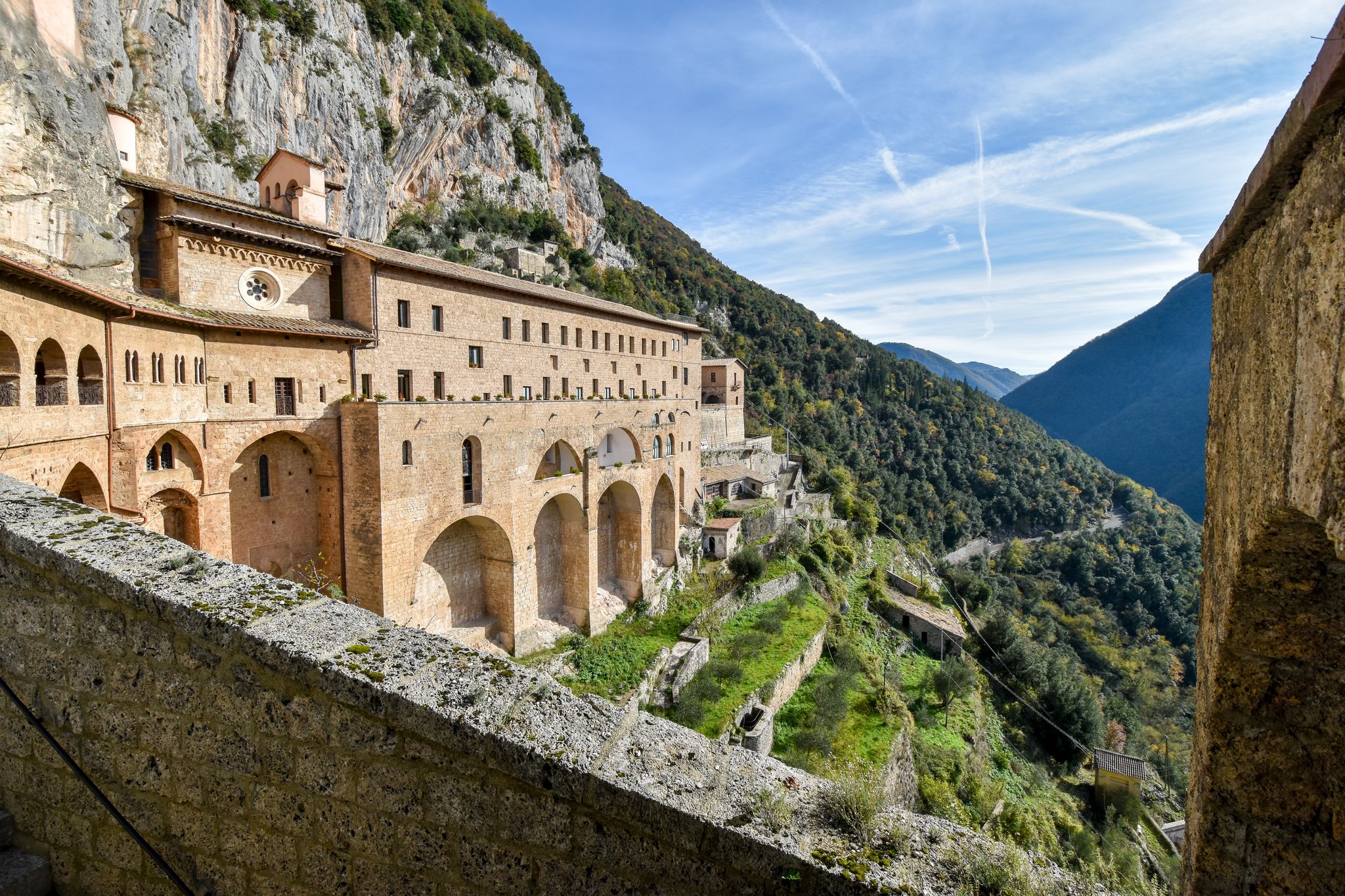
Other adventures around Veroli

Tips from the Community

Isola del Liri, a city-island crossed by the Liri river, has a history that dates back to the time of the Lords of the place, the sons of the Longobard steward Pietro il Maggiore. Famous for its ancient paper industry, it is recovering its past with the "Museum of Civilization of Paper and Telecommunications". The city is notable for the suggestive "Grande" waterfall, unique of its kind in Italy, and the monumental 14th-18th century Boncompagni-Viscogliosi Castle, together with several churches and historical sites of interest.
1
0

Municipality of Ciociaria on the banks of the Liri River.
0
0
The ruins of the castle of Sora are easily reachable from the town. They offer a splendid view of the city.
0
0

This beautiful town is located in the province of Frosinone, on the border between Lazio and Abruzzo. The inhabited center is surmounted by the Castle of Saints Casto and Cassio dating back to the 16th century.
3
0

A beautiful village in Ciociaria, located between Monti Ernici and Monti Lepini. It was called 'Olympus of Ciociaria'. It is known for having been the place of imprisonment of Pope Celestine V after his resignation from the papal throne.
1
0
It is also called the 'City of the Cyclops' due to the presence of the Acropolis of Civita, one of the greatest examples of the megalithic cities of Lazio. It was one of the main centers of the Italic people of the Ernici.
1
0

Una maestosa cinta di mura in opera poligonale domina Alatri città degli Ernici, popolo italico appartenente al gruppo osco-sannitico. Entrata in contatto con Roma nel periodo regio (V sec, a.C.) e successivamente municipio romano fu sede vescovile, libero comune, dominio della potente famiglia Conti e possedimento dello Stato della Chiesa. Nell' ambito delle costruzioni megalitiche dell'area mediterranea, il complesso dell'acropoli, è tra le costruzioni più imponenti e suggestive. I monumentali massi compongono una cortina muraria compatta sulla quale si aprono due porte di accesso: Porta Maggiore, che presenta uno straordinario architrave monolitico e Porta Minore, fornita di un piano inclinato per salire alla platea superiore, dove i templi pagani furono distrutti per realizzare il Duomo e l'Episcopio. Nel Duomo è custodita la celebre reliquia dell'Ostia incarnata, miracolo del 1227. Un secondo circuito murario, sempre in opera poligonale, si estende per oltre 2 km e nel medioevo furono aggiunti torrioni quadrangolari, che rafforzavano il sistema difensivo anche delle porte di accesso alla città. Notevoli sono i monumenti dell'età medievale. La chiesa di S. Maria Maggiore custodisce il gruppo ligneo della Madonna di Costantinopoli (XIII sec.) e il Trittico del Redentore di Antonio di Alatri. Del sec. XIII è pure il Palazzo Gottifredo, dove è alloggiato il museo civico con una sezione antropologica in cui sono esposti oggetti particolari, quali una culla in tondino di ferro collocata tra due alberi che veniva utilizzata dalle coppie di carbonai per preservare i neonati da eventuali animali, e numerosi altri oggetti di vita quotidiana. Il museo comprende, inoltre, l'importantissima sezione epigrafica; tra le altre iscrizioni famosissima quella che descrive le opere fatte eseguire dal censore Lucio Betilieno Varo nel periodo di Roma Repubblicana per rinnovare la città (nuove vie, portico che conduce all'Acropoli, piscina per il bagno, serbatoio dell'acqua, orologio solare). Alatri conobbe nei secoli momenti di oscurantismo e sottomissioni ma anche fermenti culturali e religiosi. Attualmente questa città, adagiata su una collina rivestita di uliveti, è centro turistico di grande valore grazie alle sue importanti testimonianze archeologiche e medioevali, e alle sue numerose manifestazioni culturali e folcloristiche, che ne fanno un gioiello della Ciociaria. (fonte: https://www.ciociariaturismo.it/it/la-ciociaria/i-91-comuni/tutti91comuni/74-alatri.html)
2
0
Due to its position and proximity to the boundary of the ancient state of the Church, Fumone, from which the valleys of the Cosa and Sacco dominate, was placed by the papacy as a sentinel against Saracen and Norman incursions. It seems that its name derives from the fact that it was the reporting center for any enemies in sight, by lighting fires on a special tower: a thesis that is reflected in the popular saying "Si Fumo fumat..Tota Campania tremat .. . ". Fumone enters history in the Middle Ages (9th century), but the legend traces its origins to King Tarquinius the Superb who, after the expulsion from Rome, seems to have found refuge here (5th century BC). Over the centuries it was papal dominion and its fortress was also used as a prison. His most illustrious prisoner was Pope Celestine V, the Pope of the "great refusal", locked up in the fortress by Boniface VIII, where he died in 1296 in mysterious circumstances. At the end of the century XVII the Marquises Longhi, to whom the fortress was received, restored and transformed it, creating a magnificent complex called "Villa Longhi" with the adjoining "hanging garden", a real marvel: its avenues alternate with ancient plants, flower beds and archaeological finds. (source: https://www.ciociariaturismo.it/it/la-ciociaria/i-91-comuni/tutti91comuni/113-fumone.html)
2
0
Frequently Asked Questions
What historical sites related to castles can I explore directly within Veroli?
Within Veroli itself, you can explore the Rocca di San Leucio, a medieval fortress built into ancient Cyclopean walls, offering panoramic views and a deep dive into the town's strategic past. Also notable are Palazzo Quinones, a Romanesque-Gothic structure believed to have originated as a castle, and Palazzo Franchi de' Cavalieri, a magnificent 17th-century building known for its exquisite frescoes and a terrace with stunning views of the Sacco Valley.
Are there any castles around Veroli that offer unique natural features or viewpoints?
Yes, Isola del Liri is a unique city-island featuring a monumental 14th-18th century castle and the suggestive "Grande" waterfall, which is unique in Italy. Additionally, the ruins of Castello di Sora offer splendid panoramic views of the city from its elevated position.
What kind of outdoor activities can I do near the castles around Veroli?
The area around Veroli offers various outdoor activities. You can find numerous hiking trails, such as the challenging Mount Passeggio – Prato di Campoli loop or the moderate Laghetto di Fango loop. For cycling enthusiasts, there are gravel biking routes like the Historic Center of Patrica loop, and challenging MTB trails including the Trisulti Charterhouse loop. You can find more details on these routes in the hiking around Veroli, gravel biking around Veroli, and MTB Trails around Veroli guides.
Are there family-friendly castle attractions or areas around Veroli?
Yes, Isola del Liri is considered family-friendly, offering a unique setting with its waterfall and historical castle. The town of Sora, with its 16th-century castle, is also noted as family-friendly.
What is the best time of year to visit the castles and historical sites in and around Veroli?
The best time to visit is generally during the spring (April-June) and autumn (September-October) months. The weather is typically mild and pleasant, ideal for exploring historical sites and enjoying the panoramic views without the intense heat of summer or the chill of winter. This also allows for comfortable participation in outdoor activities like hiking.
Are there any castles around Veroli that are less crowded but still historically significant?
While popular sites like Fumone Historic Centre attract visitors, exploring the structures directly within Veroli, such as the Rocca di San Leucio or Palazzo Quinones, might offer a more intimate experience. These sites are deeply rooted in Veroli's history and provide significant insights into the region's past without necessarily being as widely known as some of the larger, more distant castles.
What historical events are associated with the castles and fortresses in the Veroli area?
The Rocca di San Leucio in Veroli has a rich history, including the imprisonment of Pope John XIII in 965 AD and providing refuge to Pope Alexander III in 1155. Fumone Historic Centre is famously known as the place where Pope Celestine V was imprisoned after his resignation. These sites highlight the region's strategic importance and its role in papal history.
Can I find cafes or restaurants near the castle attractions around Veroli?
Yes, the towns and villages surrounding the castles, such as Veroli itself, Fumone Historic Centre, Isola del Liri, and Sora, all have local cafes, restaurants, and accommodation options where you can enjoy regional cuisine and refreshments after your explorations.
What is the significance of the ancient walls found near Veroli's fortresses?
The ancient polygonal walls, also known as Cyclopean walls, near the Rocca di San Leucio in Veroli are a significant feature. Originally built by the Ernici, these walls formed a crucial defensive system using enormous dry-stacked stones. They represent a foundational piece of Veroli's history, showcasing ancient defensive architecture and the town's strategic importance from antiquity through the medieval period.
Are there any castles around Veroli that have been repurposed or transformed over time?
Yes, Palazzo Quinones in Veroli, with its Romanesque-Gothic style, strongly suggests it was originally a castle that later transformed into a more opulent residence. Similarly, Ladislao Castle, whose oldest parts date back to the 13th century, was later transformed into a wool mill, then an institute for orphans, a military hospital, and now serves as an exhibition and congress center.
What do visitors enjoy most about the castles and historical sites in the Veroli area?
Visitors particularly appreciate the rich history and strategic importance of sites like Fumone Historic Centre, noting its beautiful village setting and historical significance. The unique natural feature of the waterfall at Isola del Liri combined with its castle is also a major draw. Many enjoy the panoramic views offered by elevated castle ruins such as Castello di Sora and the historical insights provided by Veroli's own ancient structures.
How long should I allocate to visit the main castle attractions in and around Veroli?
For individual sites like Fumone Historic Centre or Isola del Liri, you might spend 2-3 hours exploring the castle and its immediate surroundings. If you plan to visit multiple sites in a day, such as the structures within Veroli (Rocca di San Leucio, Palazzo Quinones, Palazzo Franchi de' Cavalieri) and one or two nearby castles, a full day would be recommended to allow for travel and thorough exploration.
Most popular attractions around Veroli

Get inspired with the komoot mobile app


Explore more
Looking for the best castles somewhere else? Discover other guides around Veroli:
