Top 7 Castles around Gibellina
Best castles around Gibellina are found in the surrounding region of western Sicily, an area shaped by its history. The town of Gibellina itself was rebuilt as Gibellina Nuova after the 1968 Belice earthquake, becoming an open-air museum of contemporary art. While traditional medieval castles are not prevalent in Gibellina, the nearby towns offer historical sites and castle ruins. The monumental Cretto di Burri, a land art installation covering the ruins of Gibellina Vecchia, serves as a poignant memorial in…
Last updated: June 30, 2026
Wonderful view of Salemi
Highlight • Viewpoint
Translated by Google •
Tip by

Historic Centre of Salemi
Highlight • Historical Site
Translated by Google •
Tip by

Sign up now to discover places like this
Get recommendations on the best single tracks, peaks, & plenty of other exciting outdoor places.
Sign up for free
ruins of Salaparuta
Highlight (Segment) • Historical Site
Translated by Google •
Tip by

Salemi Norman Castle and ruins of the ancient church
Highlight • Castle
Translated by Google •
Tip by
Grifeo Castle – Regional Museum of Prehistory of the Belice
Highlight • Castle
A few km from the town of Partanna rises the Strait called today "Archaeological Park". Since the beginning of the twentieth century in Contrada Stretto …
Translated by Google •
Tip by
Sign up for free to discover even more castles around Gibellina.
Sign up for free
Already have an account?
Start today with a free account
Your next adventure awaits.
Login or Signup
Other adventures around Gibellina

Tips from the Community

A country that is absolutely worth visiting, it was the first capital of Italy, even if only for one day.
0
0

History, culture and breathtaking views of the hilly surroundings are all mixed here. The view of the Norman-Swabian castle that towers over the town is particularly impressive - a perfect destination after a challenging stage. The climb, especially in the Monte delle Rose district, is quite demanding, but the reward is worth it: a spectacular view of the old town and the castle. Salemi is not only a visual highlight, but also steeped in history. In May 1860, Giuseppe Garibaldi briefly proclaimed Salemi the first capital of a united Italy - even if the title only lasted for one day. This town combines the legacy of a turbulent past with the charm of a typical Sicilian village, which lies about 400 meters above sea level. Salemi not only offers a historical insight, but also a challenging but worthwhile route through the rural region. When you drive through the winding streets here, you can literally feel how history and the present merge into one another.
0
0

On 14 May 1860 Giuseppe Garibaldi landed in Marsala and headed towards Salemi. Here he hoisted the Italian flag, a nation that was then forming, on the Norman-Swabian castle, proclaiming Salemi the capital of Italy, an informal title that he retained for only one day. Today Salemi is a splendid town of around 10,000 inhabitants, part of the most beautiful villages in Italy according to the National Association of Italian Municipalities.
3
0

Salemi, the first capital of Italy. Sicilian village located on a hill, with a beautiful Norman castle
2
0
A historical marvel, the Norman castle
0
0
The former Mother Church, dedicated to San Nicola di Bari, collapsed following the earthquake of 1968, stood on the acropolis of the city, now Piazza Alicia, perhaps on the site of a pre-existing pagan temple, which was followed by an Arab mosque. The construction, begun in 1615 on a project by Mariano Smeriglio, was completed in 1761. The recovery intervention by the architect Alvaro Siza intended to leave the ruins of the apse as the scenic background of the square, in memory of the earthquake and as a sign of the consequent rebirth of the town. The large churchyard, between the apse and what remains of the side chapels, has become a meeting and meeting place especially for young people.
11
0
The Norman, or Norman-Swabian, Castle of Salemi is a castle built on the top of the hill where the city of Salemi stands, in the center of the Belice valley. Built by Ruggero the Norman around 1077, on pre-existing Greek-Roman fortifications . The religious inscription I.C.N.C.R.I dates back to that period. The geographer El Edrisi already wrote about it in the 12th century. It was remodeled by Federico II di Svevia in the XIII century. On 11 December 1441, a confederation was formed in the castle of Salemi consisting of Salemi, Trapani, Mazara, Monte San Giuliano, Castelvetrano and Partanna, which undertook to defend Queen Bianca of Aragon.
10
0
The former Capuchin convent of the 18th century. They were built at the end of the 18th century, on land purchased by Prince Fabrizio Alliata and at his expense, who endowed the friars with income for worship, food and the maintenance of the structures. The church, inserted in the body of the convent, had a single nave which was accessed through the beautiful portal crowned by a robust mixtilinear frame. The convent consisted of sixteen rooms on the ground floor, some of which had a real vault and thirty-one on the first floor, connected by long corridors. From 1927 to 1963 it was used as a hospital and later as a school; it has recently been restored and consolidated also with the insertion of new metal structures.
12
0
Frequently Asked Questions
What historical sites and castles can I visit near Gibellina?
While Gibellina itself is known for its contemporary art and the poignant Cretto di Burri, the surrounding region offers several historical sites and castle remnants. You can explore the Norman-Swabian castle in Salemi, where Garibaldi once hoisted the Italian flag. The Historic Centre of Salemi also features its dominating Norman castle. Further, you can visit the ruins of Salaparuta, which include the base of the Paruta castle, and the well-preserved Grifeo Castle in Partanna, which houses a Regional Museum of Prehistory.
Are there any family-friendly castles or historical sites in the Gibellina area?
Yes, the Grifeo Castle in Partanna is noted as family-friendly. It's a well-preserved medieval building that also hosts the Regional Museum of Prehistory of the Belice, offering an educational experience for all ages. The Salemi Norman Castle is also categorized as family-friendly.
What is the Cretto di Burri and is it worth visiting?
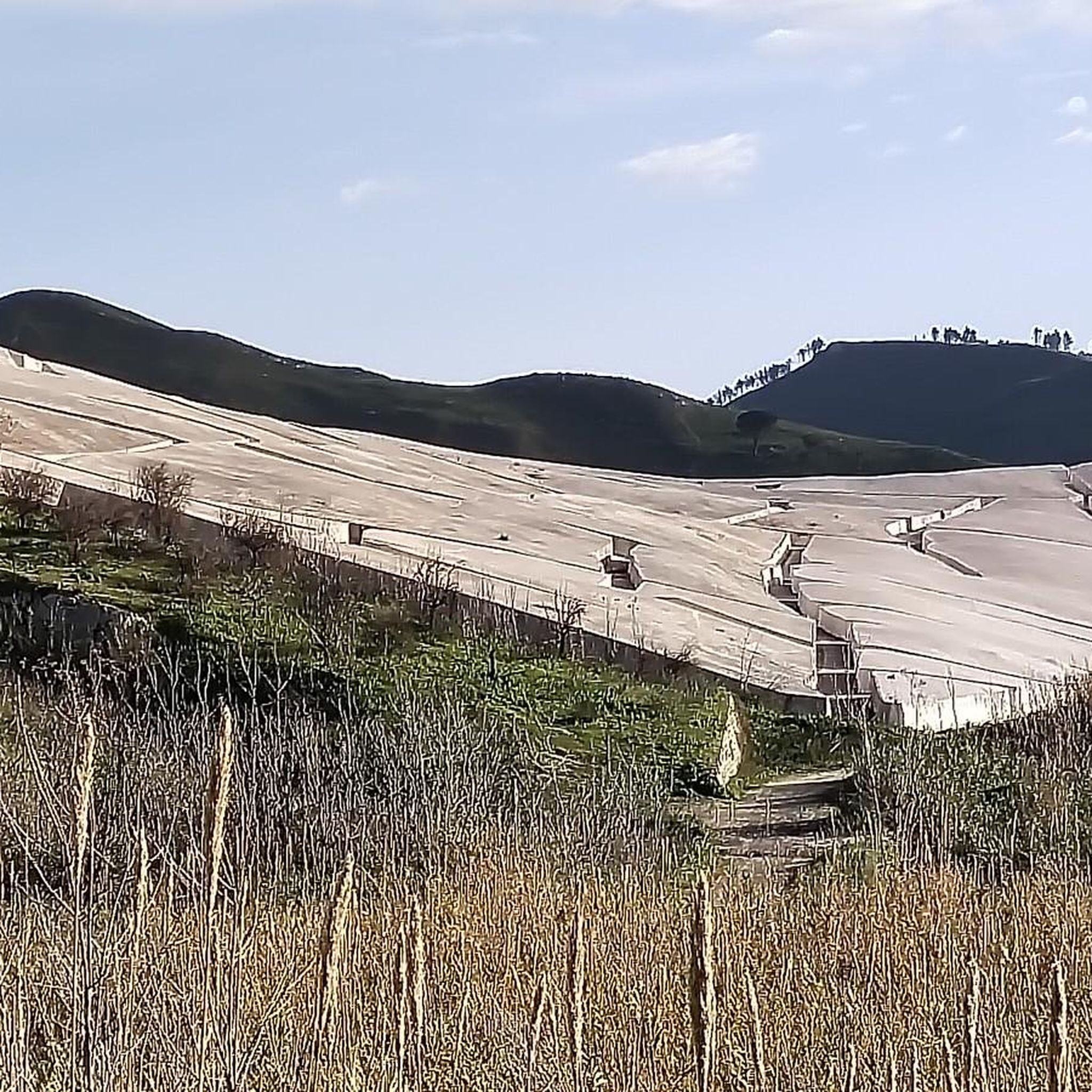
The Cretto di Burri (Il Grande Cretto) is a monumental land art installation by artist Alberto Burri, covering the ruins of Gibellina Vecchia, the original town destroyed by the 1968 earthquake. It's a powerful and poignant memorial, where massive white concrete blocks trace the original street layout. Visitors can walk through the 'cracks' of this vast maze, experiencing a unique reflection on loss and memory. It is considered one of the world's largest and most significant works of land art and is definitely worth visiting for its historical and artistic merit.
What outdoor activities can I do near the castles around Gibellina?
The region around Gibellina offers various outdoor activities. You can find numerous road cycling, running, and mountain biking trails. For instance, there are road cycling routes like the 'Climb to the cretto of Ghibellina' or the 'Terre Sicane Wine Route'. Running enthusiasts can explore trails such as the 'Belice trail' or loops around 'Bosco Finestrelle'. Mountain bikers have options like the 'Cretto di Burri loop' or routes to 'Vita Old Town'. You can find detailed routes and guides for these activities on the Road Cycling Routes around Gibellina, Running Trails around Gibellina, and MTB Trails around Gibellina guide pages.
Are there hiking trails near the Cretto di Burri?
While the Cretto di Burri itself is a walkable art installation, the surrounding area offers trails suitable for hiking and running. For example, you can find a 'Cretto di Burri loop' for mountain biking, which can also be adapted for longer walks, or explore the 'Belice trail' for running, which is nearby. These routes are detailed in the Running Trails around Gibellina and MTB Trails around Gibellina guides.
What is the best time of year to visit the castles and historical sites near Gibellina?
The best time to visit the castles and historical sites in western Sicily, including those near Gibellina, is typically during the spring (April to June) and autumn (September to October). During these months, the weather is pleasantly mild, making it ideal for exploring outdoor sites like the Cretto di Burri and walking through historic town centers without the intense heat of summer. Summer can be very hot, while winter can bring cooler temperatures and more rain.
What amenities are available at the Cretto di Burri?
The Cretto di Burri is primarily a vast open-air art installation and memorial. As such, visitor facilities are minimal. It is recommended to bring your own water and any other necessities. There are no dedicated cafes or public toilets directly on site, so plan accordingly before your visit.
Can I find cafes, pubs, or accommodation in nearby towns like Salemi or Gibellina Nuova?
Yes, both Salemi and Gibellina Nuova offer options for cafes, pubs, and accommodation. Salemi, being a historic town, has a range of local eateries and places to stay. Gibellina Nuova, as a center for contemporary art, also provides various services for visitors, including dining options and lodging, especially given its status as the Italian capital of contemporary art for 2024 and 2026.
Are there any dog-friendly historical sites or trails near Gibellina?
Many outdoor historical sites and trails in the region are generally dog-friendly, especially if dogs are kept on a leash. The Cretto di Burri, being an open-air installation, allows for walks with dogs. For specific hiking and running trails, it's always best to ensure your dog is well-behaved and to check local regulations. The nearby Running Trails around Gibellina and MTB Trails around Gibellina guides can help you find suitable routes.
What is the historical significance of Salemi's castle?
The Norman-Swabian castle in Salemi holds significant historical importance. Built around 1077 by Ruggero the Norman on older fortifications and later remodeled by Federico II di Svevia, it was briefly proclaimed the first capital of Italy by Giuseppe Garibaldi in 1860. It's a symbol of Sicilian history, from its Elimi foundations to Norman domination, and remains a prominent landmark in the Historic Centre of Salemi.
How long should I plan for a visit to the castles and historical sites in the Gibellina region?
To fully appreciate the main historical sites and castles in the Gibellina region, including the Cretto di Burri, Salemi's castle and historic center, and Grifeo Castle in Partanna, you should plan for at least 1-2 full days. A single day could cover Salemi and the Cretto di Burri, but to include Partanna and explore some of the surrounding trails, a second day would be beneficial. This allows for a more relaxed pace and deeper immersion into the history and art of the area.
Are there any viewpoints near the historical sites around Gibellina?
Yes, the Wonderful view of Salemi highlight is specifically a viewpoint that offers a fantastic perspective of Salemi and its Norman-Swabian castle. From this vantage point, you can appreciate the historical layout of the town and the surrounding landscape. The Grifeo Castle in Partanna also offers scenic views from its location on the slopes of a hill.
Most popular attractions around Gibellina

Get inspired with the komoot mobile app


Explore more
Looking for the best castles somewhere else? Discover other guides around Gibellina:
