Top 2 Castles around Poggio Moiano
Best castles around Poggio Moiano are situated in the Sabina region, known for its strategic hilltop positions and historical significance. The area's past is deeply rooted in medieval fortifications and fortified settlements, reflecting centuries of defensive importance. Poggio Moiano itself has origins linked to early medieval settlements and was controlled by influential families. The surrounding landscape features the lush Turano Valley, providing a scenic backdrop to these historical structures.
Best castles around Poggio Moiano
- The most popular castles is Rocca…
Last updated: October 16, 2026
Rocca Sinibalda Castle
Highlight • Castle
Translated by Google •
Tip by

Orvinio
Highlight • Settlement
Translated by Google •
Tip by

Sign up now to discover places like this
Get recommendations on the best single tracks, peaks, & plenty of other exciting outdoor places.
Castello Orsini
Highlight • Castle
Tip by

Frasso Sabino
Highlight • Settlement
Showing Translation
Tip by

Start today with a free account
Your next adventure awaits.
Other adventures around Poggio Moiano

Tips from the Community

among the most beautiful villages in Italy
0
0
Guided Tours - info www.castelloroccasinibalda.it
0
0

Frasso Sabino is a village in the Sabina reatina with origins at least from the early Middle Ages, closely linked to the Abbey of Farfa. Its first known documentary attestation dates back to 955, in the Regestum Farfense, where it appears as “locus ubi dicitur ad Frassum”. In 1055, Alberto, son of Gibbone, donated the castle of Frasso to the abbot of Farfa, Berardo I, confirming the importance of the center in the territorial system of the abbey. Already in 1118, however, Frasso was no longer under the jurisdiction of Farfa, nor is it mentioned in 1198 among the assets confirmed to the abbey by Pope Innocent III. Between the 14th and 15th centuries, the fief passed to the Brancaleoni, and then in 1441 entered the possessions of the Cesarini through the marriage between Orso Cesarini and Simodea Brancaleoni. After various disputes with the Savelli, the Cesarini definitively consolidated their dominion in 1573 and retained possession of the place until 1817. Even the name of the town has debated origins: according to one tradition, it derives from the once abundant ash trees, while other hypotheses connect it to fraxum as a guard post or to the position “among the stones” near the springs of the Farfa. In summary, the history of Frasso Sabino is that of a small Sabine castle born in the orbit of Farfa, then transformed into a lordly fief and remaining for centuries an important outpost of the territory.
0
0

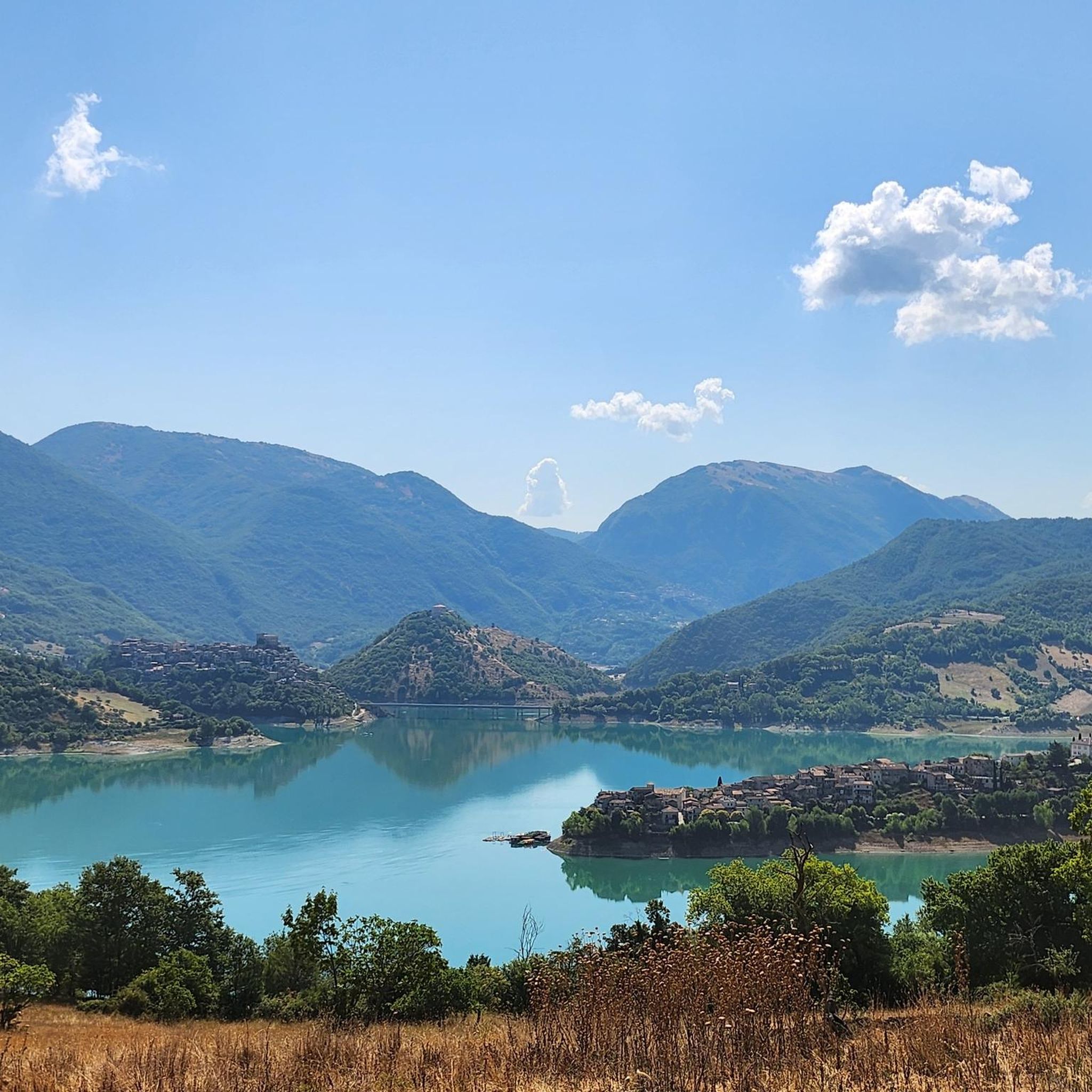
Rocca Sinibalda dominates the lush Turano Valley from above, the second most important river in Sabina after the Velino. The village is dominated by a castle founded around 1060. It was rebuilt as a fortress and noble residence in the 1630s by Cardinal Alessandro Cesarini who hired the famous Sienese architect Baldassarre Peruzzi for the occasion. It can only be visited on certain days. It is therefore advisable to inform yourself before departure.
0
0

The Castle of Rocca Sinibalda, located in the province of Rieti, has a rich and fascinating history. Its construction dates back to the 10th century and was built to defend the surrounding area and control the territory. Over the centuries, the castle passed between various noble families, including the Savellis, the Orsinis and the Sinibaldis, from which it takes its name.
1
0


Orvinio is an Italian municipality of 387 inhabitants in the province of Rieti, in Lazio, which stands on a hill around its imposing castle belonging to the family of the Marchesi Malvezzi Campeggi. It is part of the club of the most beautiful villages in Italy. I highly recommend a night walk through its alleys
3
0

Frequently Asked Questions
What historical castles can I visit near Poggio Moiano?
The region around Poggio Moiano is rich in medieval history. You can explore the impressive Rocca Sinibalda Castle, a 10th-century fortress rebuilt in the 17th century, which dominates the Turano Valley. Another notable site is the village of Orvinio, which boasts an imposing castle belonging to the Marchesi Malvezzi Campeggi family and is recognized as one of Italy's most beautiful villages.
Are there any castles that offer a unique experience, like a luxury stay?
Yes, Castello Orsini, located in a small town, operates as a luxury hotel. While primarily a hotel, its exterior is still a beautiful sight to behold and worth seeing if you are in the area.
What is the historical significance of Frasso Sabino?
Frasso Sabino is a village with deep historical roots, dating back to at least the early Middle Ages. It was closely linked to the Abbey of Farfa and served as an important territorial outpost. Its castle, mentioned in documents from 1055, passed through the hands of influential families like the Brancaleoni and Cesarini, shaping its identity for centuries.
What kind of outdoor activities can I do near these castles?
The area around Poggio Moiano offers diverse outdoor activities. You can find numerous hiking trails, such as the 'From Poggio Moiano to the Roman amphitheater - Circular walk' or longer routes like 'View of Monteleone Sabino – Church of Santa Vittoria loop'. For cyclists, there are challenging road cycling routes, including the 'Tour of Lake Turano' and various loops around historic centers. Explore more options on the Hiking around Poggio Moiano or Road Cycling Routes around Poggio Moiano guides.
Are there family-friendly options when visiting castles in this region?
While specific 'family-friendly' designations for castle interiors are not always available, exploring the historic villages surrounding castles like Orvinio or Frasso Sabino can be enjoyable for families. These charming settlements often have ancient facades and a relaxed atmosphere, perfect for a stroll. Additionally, the nearby natural areas offer easy walking trails suitable for all ages.
What is the best time of year to visit the castles and surrounding areas?
The Sabina region generally enjoys pleasant weather from spring through early autumn (April to October). Spring offers lush greenery and comfortable temperatures for exploring, while autumn provides mild weather and beautiful foliage. Summer can be warm, but mornings and evenings are ideal for visits. Winter visits are possible, but some castle interiors or specific tours might have reduced hours or require advance booking.
Can I find viewpoints near the castles for scenic photography?
Absolutely. Rocca Sinibalda Castle, for instance, is strategically positioned to dominate the lush Turano Valley, offering spectacular views. The village of Orvinio, perched on a hill around its castle, also provides excellent vantage points for panoramic photos of the surrounding landscape.
Are there any ancient Roman sites near Poggio Moiano?
Yes, near Osteria Nuova, you can visit the Grotta dei Massacci. This significant Roman mausoleum dates back to the 2nd century BC and features a megalithic tomb constructed from large travertine blocks, showcasing characteristic Sabine funerary architecture. It's a fascinating glimpse into the region's ancient past.
What are some cultural highlights within Poggio Moiano itself?
Within Poggio Moiano, you can explore the 10th-century Church of San Martino, known for its rose window made from Roman-era stone. The Church of St. John the Baptist and Mary Immaculate, built in 1572, is another key religious landmark. The historic center also features ancient facades restored and decorated with murals depicting scenes of village life, offering a glimpse into local culture.
How can I learn more about the history of the Poggio Moiano region?
The history of Poggio Moiano is deeply intertwined with medieval fortifications and influential families like the Anguillara, Savelli, Borghese, and Torlonia. The town's origins are documented as early as 1083 in the records of the Farfa Abbey. For more general information about the region, you can visit the official tourism website for Lazio: visitlazio.com.
Are there running trails available near the castles?
Yes, the area provides several running trails. For example, you can find the 'Castel Di Tora – S.Maria del Piano Trail' or loops around Castel di Tora. These routes offer a great way to combine exercise with exploring the scenic surroundings of the historic villages and castles. More options are available in the Running Trails around Poggio Moiano guide.
Most popular attractions around Poggio Moiano

Get inspired with the komoot mobile app


Explore more
Looking for the best castles somewhere else? Discover other guides around Poggio Moiano:
