Top 10 Castles around Serra de São Mamede
Best castles around Serra de São Mamede are found within a region characterized by its elevated terrain and historical significance. The Serra de São Mamede Natural Park provides a diverse natural landscape, with castles often strategically positioned on high points. This area, located in the Alto Alentejo region, played a crucial role in historical conflicts, leading to the construction of numerous fortifications. The castles offer insights into medieval architecture and the region's past.
Best castles around Serra de São Mamede
…Last updated: June 29, 2026
Historic Village of Marvão
Highlight • Settlement
Translated by Google •
Tip by

Marvão Castle
Highlight • Castle
Translated by Google •
Tip by

Sign up now to discover places like this
Get recommendations on the best single tracks, peaks, & plenty of other exciting outdoor places.
Sign up for free
Porta do Rodão of Marvão
Highlight • Historical Site
Translated by Google •
Tip by

Castelo de Vide
Highlight • Settlement
Translated by Google •
Tip by
Marvão Walled Town and Castle
Highlight • Castle
Tip by

Castle Garden of Marvão
Highlight • Castle
Translated by Google •
Tip by
Entrance to Castelo de Vide Castle
Highlight • Castle
When the settlement …
Translated by Google •
Tip by
São Roque Fort
Highlight • Castle
Showing Translation
Tip by

Alegrete Castle and Praça da Feira
Highlight • Castle
Translated by Google •
Tip by

Castelo do Alegrete
Highlight • Castle
Translated by Google •
Tip by

Sign up for free to discover even more castles around Serra de São Mamede.
Sign up for free
Already have an account?
Start today with a free account
Your next adventure awaits.
Login or Signup

Tips from the Community

The S. Roque Fort is an example of modern bastion military architecture, consisting of four bastions arranged at the vertices of an internal polygon forming a rectangle with an access gate to the NW. It was ordered to be built by Manuel Azevedo Fortes between 1705-1710, governor of the Castelo de Vide Fortress. This construction is made of coursed stone masonry with lime mortar, scarped on the outside and with earthworks on the inside. The bastions are pointed with solid brick turrets and revetments. The materials used are: stone (granite), brick, lime, hydraulic lime, sand, and earth. The S. Roque Fort, as well as the entire fortification of Castelo de Vide, have undergone several interventions, the last of which in 2002.
2
0

For those planning to hike in the Alegrete area, the main reference route is the PR3 PTG – Percurso de Alegrete. This circular route offers a complete immersion in the Serra de São Mamede Natural Park, combining the medieval heritage of the village with montado landscapes and water lines. The Main Route (PR3 PTG) The PR3 PTG - Percurso de Alegrete is about 11.4 km long and is classified as medium/low difficulty. The recommended starting and ending point is near Fonte Nova, although many hikers start their journey in the village of Alegrete itself to explore the historic center right away. Castle and Village: The Castle of Alegrete is the (literal) highlight of the hike. Situated at about 500 meters above sea level, it offers a panoramic view of the Alentejo border region. Don't miss the Clock Tower (Torre do Relógio). Nature and Biodiversity: The trail crosses areas of cork oak montado, pine forests, and riparian areas. It is an excellent place for bird watching (such as the robin or the titmouse) and, near the water lines, you can find rare vegetation like the royal fern. Religious Heritage: During your passage through the village, you can also visit the small Chapel of Mercy (Capela da Misericórdia), which is part of the local historical complex. Practical Hiking Tips Time of Year: Avoid the months of July and August due to the extreme temperatures in the Alentejo. Autumn and spring are ideal for the colors of the vegetation and mild temperatures. In winter, be careful with the ground, which can become quite slippery on cobblestones and rocky trails. Equipment: Use footwear with good grip (the ascents and descents to the castle and river have sections of loose stones). Bring enough water, as outside the village, refueling points are scarce. Safety and Respect: Always follow the official signage (yellow and red marks).
0
0

Far in the northeast of Alentejo lies Castelo de Vide, just a few kilometers from the border with Spain. The town is often called Cidade branca (white city), which is primarily due to the pretty whitewashed houses of the town. The highlight of the town (besides its great location in the Parque Natural da Serra de São Mamede) is the 14th-century Castelo de São Roque. From the castle, you have a fantastic view of the old town. Other sights in Castelo de Vide include the old Jewish quarter with the oldest synagogue in Portugal and the numerous churches and chapels of the town.
1
0
This vaulted cistern is located within the castle walls and was probably built around the 9th century to store rainwater for the then Arab village of Ibn Maruán, despite clear signs of remodeling in the late Middle Ages. An impressive site. http://www.monumentos.gov.pt/site/app_pagesuser/SIPA.aspx?id=36148
2
0

A place to visit every month. It's wonderful.
2
0
Castelo de Vide Castle, locally known as Castelo de Vide Castle, is located in the town of the same name in the Alto Alentejo region of Portugal. When the settlement and castle of Castelo de Vide were founded is unknown, but they were first mentioned in 1232, when it was in Portuguese hands. Afonso III of Portugal donated the town and castle, along with the towns and castles of Arronches, Marvo, and Portalegre, to one of his young sons, also called Afonso, around 1272. ... ...The destruction caused during the last two Spanish wars led to the abandonment of Castelo de Vide's fortifications in 1823, after which it fell into disuse... https://www.castles.nl/castelo-vide-castle Due to the small, insignificant castle and access restrictions, we decided not to visit the actual castle.
1
0
The current pillory dates from the years immediately following the granting of the New Charter by King Manuel in 1512 and reflects his Manueline, albeit very rustic, style. The monument stands in front of the 16th-century district jail building and next to the clock tower, also from the 16th century, in the square that bears his name. It stands on a base with four octagonal steps and consists of an octagonal shaft set directly into the upper step, formed by five drums with mortar joints.
2
0
The Porta de Marvão is a medieval gate in the fortified town of Marvão, serving as the village's main entrance. The town is situated in the Serra de São Mamede mountains and offers panoramic views of the surrounding Alentejo region. Marvão's narrow streets are lined with whitewashed houses featuring Gothic arches and Manueline doorways. The well-preserved 13th-century castle is a focal point, offering visitors a glimpse into the town's rich history and strategic importance. The Porta de Rodão was built much later, in the 17th century, to bolster defenses during the War of Independence against Spain in the mid-17th century. A small parking area is located in front of it. Due to the narrow streets and almost complete lack of parking, driving through the gate into Marvão is strongly discouraged. Another fortified gate, providing pedestrian access to Vila Marvão, is located to the east. This one is also worth a visit.
2
0
Frequently Asked Questions
What makes Marvão Castle a significant historical site in Serra de São Mamede?
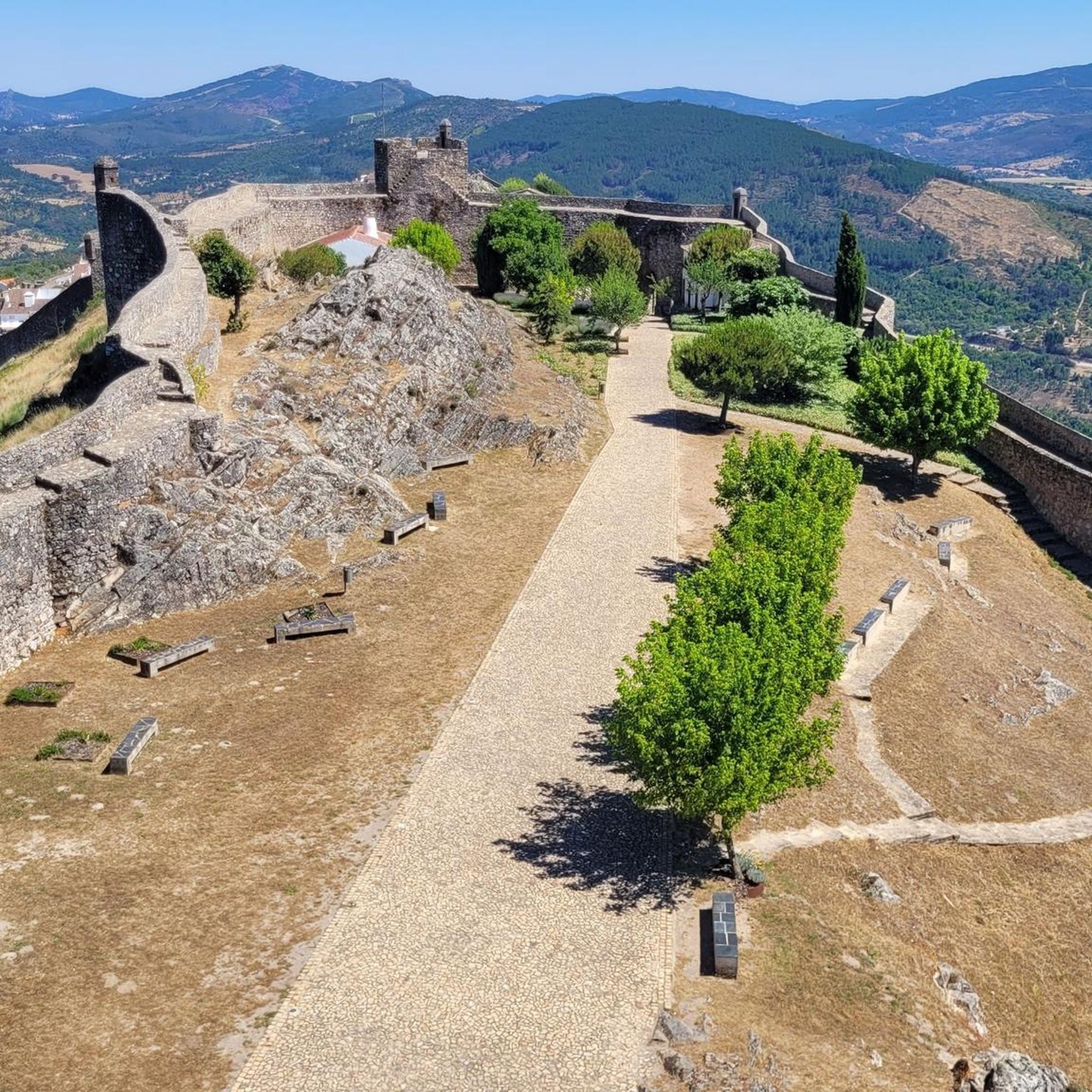
Perched at an elevation of 843 meters, Marvão Castle is a prime example of medieval fortification in the region. Its strategic location provided a natural defensive advantage, offering extensive panoramic views that stretch beyond Portuguese borders. The castle, dating back to the 13th century, played a crucial role in conflicts between the Portuguese and Spanish, making it a testament to the region's rich history and the Reconquista era.
Are there opportunities for hiking near the castles in Serra de São Mamede?
Yes, the Serra de São Mamede Natural Park, where many castles are located, offers diverse natural landscapes and numerous hiking trails. You can find a variety of routes, from moderate trails like the Marvão Hiking Trail to more challenging options. For detailed information on routes, explore the Hiking around Serra de São Mamede guide.
What kind of views can I expect from the castles in this region?
The castles in Serra de São Mamede, particularly Marvão Castle, are renowned for their stunning panoramic views. From its tower and walls, you can enjoy unparalleled 360-degree vistas of the surrounding rugged mountains, the Alentejo region, and even Spain. It's often said you can 'see the backs of the birds' from its keep.
Are there any family-friendly castles to visit in Serra de São Mamede?
Many castles in the region are integrated into charming villages, offering an engaging experience for families. The Historic Village of Marvão, with its castle and gardens, provides a wonderful setting for exploration. Additionally, Castelo de Vide is a settlement featuring a castle and historical sites that are considered family-friendly.
What is the best time of year to visit the castles in Serra de São Mamede?
While the region can be visited year-round, spring and autumn offer pleasant temperatures for exploring the castles and their surrounding villages. Summers can be hot, so if visiting then, plan your castle tours for the cooler parts of the day, such as early mornings or late afternoons. Wearing light, breathable clothing and comfortable shoes is advisable for summer visits.
Can I find easy walking trails around the castles?
Yes, the area around Serra de São Mamede offers easy walking trails suitable for a relaxed exploration. For example, you can find routes like the Apartadura Reservoir loop or the Beirã – Gravel road loop. More options are available in the Easy hikes around Serra de São Mamede guide.
What other historical sites are near Marvão Castle?
Beyond the main castle, the medieval village of Marvão itself is a historical treasure. You can explore the Historic Village of Marvão with its narrow streets, whitewashed houses, Gothic arches, and Manueline doorways. The Porta do Rodão of Marvão, a medieval gate, also offers a glimpse into the town's defensive history.
Are there any mountain biking trails near the castles?
Yes, the Serra de São Mamede region also caters to mountain biking enthusiasts. You can find various MTB trails, including moderate loops from Póvoa e Meadas or more difficult routes like the loop from Castelo de Vide to Marvão. Check the MTB Trails around Serra de São Mamede guide for more details.
What do visitors particularly enjoy about the castles in Serra de São Mamede?
Visitors frequently praise the spectacular locations and the wonderful all-round views offered by the castles. The charm of the medieval villages, such as Marvão, with their well-preserved architecture and historical atmosphere, is also a major draw. The opportunity for wonderful walks within the castle walls and surrounding areas is often highlighted.
Is there parking available at Castelo de Vide?
While specific parking facilities are not detailed, Castelo de Vide is a settlement known for its historical architecture. Like many medieval towns, parking within the oldest parts might be limited, but typically, designated parking areas are available on the outskirts or nearby for visitors.
Are there any 'hidden gem' castles in the Serra de São Mamede region?
While Marvão Castle and Castelo de Vide are well-known, the region also features less prominent but historically significant sites like Alegrete Castle. These offer a quieter experience while still providing insights into the region's past and often beautiful views.
What kind of wildlife can be spotted in the Serra de São Mamede Natural Park near the castles?
The Serra de São Mamede Natural Park is known for its diverse natural landscapes. While specific wildlife sightings near castles aren't guaranteed, the park is home to various bird species, including raptors, due to its elevated terrain. Mammals like wild boar and deer can also be found in the wider park area, especially during quieter times.
Most popular routes around Serra de São Mamede
Most popular attractions around Serra de São Mamede

Get inspired with the komoot mobile app


Explore more
Looking for the best castles somewhere else? Discover other guides around Serra de São Mamede:
