Top 14 Gorges in the Peloponnese Mountains
Canyons in the Peloponnese Mountains offer diverse landscapes, from dramatic river-carved gorges to heavily forested valleys. This region in Greece is characterized by its deep canyons, rich vegetation, and significant historical sites. The Peloponnese provides a range of outdoor activities within these natural formations, including hiking and exploring ancient monasteries.
Best canyons in the Peloponnese Mountains
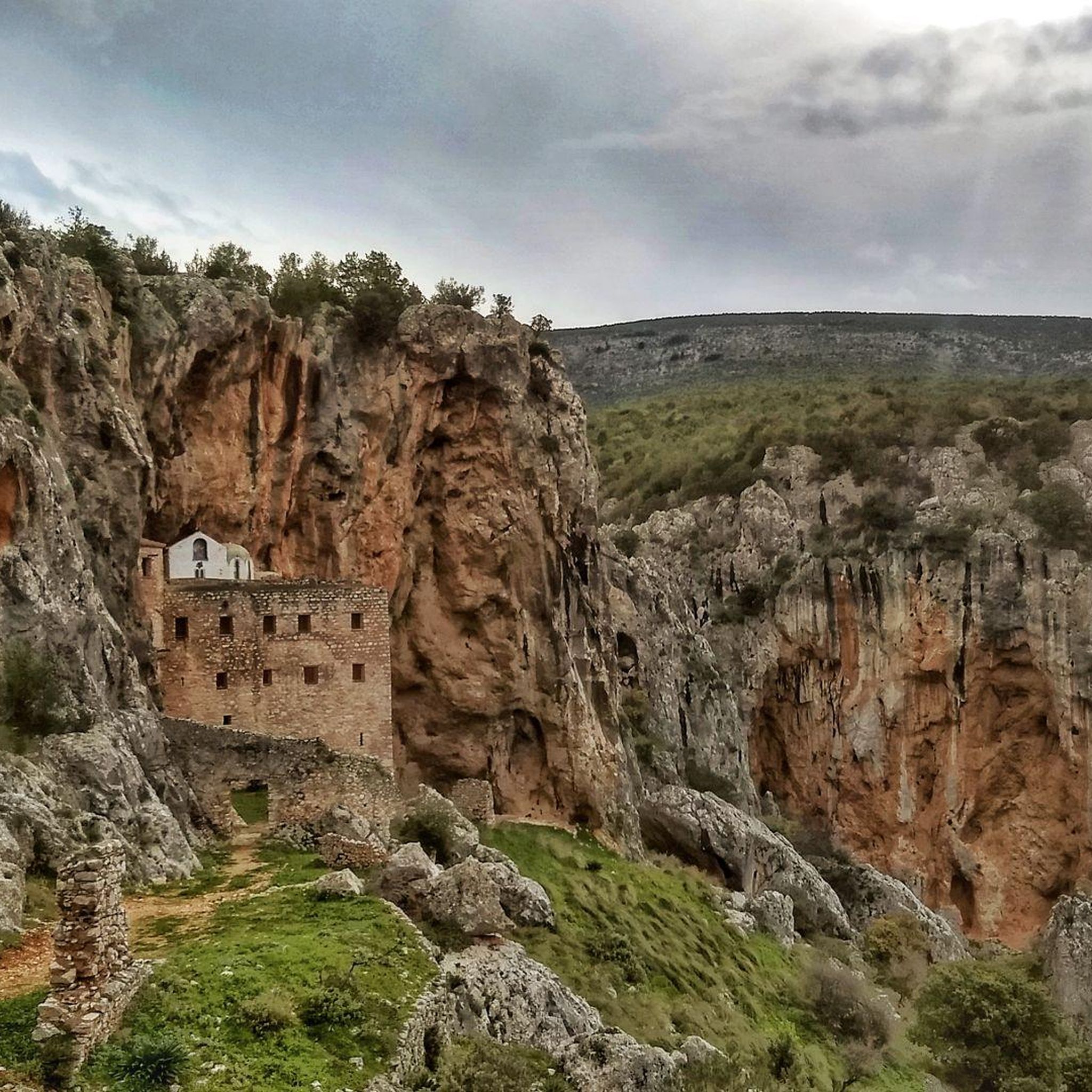
- The most popular canyons is New Monastery of the Philosopher, a religious building that is several hundred years old and played an important role during the Revolutionary War. It is set amongst wonderful landscapes and has remarkable frescoes.
- Another must-see spot is Vouraikos Railway Bridges, a bridge within the Vouraikos Gorge. Visitors can experience adventurous walking over these bridges, which are part of the historic Diakofto-Kalavryta Railway.
- Visitors also love Wooden Bridge in the Lousios Gorge, a bridge over the Lousios River. This bridge is located between the Prodromou and Philosopher's monasteries, offering views of the steep river.
- Peloponnese Mountains is known for deep, heavily forested, and dramatic natural canyons. The region offers a variety of gorges carved by rivers, featuring steep cliffs, rich vegetation, and impressive rock formations to see and explore.
- The canyons in the Peloponnese Mountains are appreciated by the komoot community, with 134 upvotes and 72 photos shared across its highlights.
Last updated: October 14, 2026
New Monastery of the Philosopher
Highlight • Religious Site
During the Revolutionary War it played an important role as a hiding place. The Ottomans gouged out the eyes of many images in the chapel in revenge.
Translated by Google •
Tip by

Wooden Bridge in the Lousios Gorge
Highlight • Bridge
The river holds mythological importance, believed to be where Zeus washed after his birth, and was considered the coldest river in the world by Pausanias. This gorge is often called the "Mount Athos of the Peloponnese" due to the many monasteries along its walls, like Timiou Prodromou, Philosophou, Aimyalon and Panagias Kalamiou. It also boasts ancient water-mills for tobacco and gunpowder production, and at its southern end, you'll find the ancient city of Gortys.
Tip by

Sign up now to discover places like this
Get recommendations on the best single tracks, peaks, & plenty of other exciting outdoor places.
Odontotos Rack Railway (Diakopto–Kalavryta Railway)
Highlight • Structure
Unfortunately in Greece information is not always easily accessible or up-to-date.
We wanted to take the train up through the spectacular Vouraikos gorge. Unfortunately the train didn't run because of a landslide. So we had to take a taxi to Kalavrita because the bus did not go on Saturday either: ((
Conversations with other E4 hikers on the route showed that the earth rush is not so severe and that you can hike up the tracks without any problems. It is also very relaxing when you know there is no train when you walk through the tunnel.
Definitely recommended, but be careful!
Translated by Google •
Tip by

Vouraikos Railway Bridges
Highlight • Bridge
Translated by Google •
Tip by

Vouraikos Gorge Pedestrian Tunnel
Highlight • Gorge
Translated by Google •
Tip by
Rock Wall of Agios Nikolaos-Gourna
Highlight • Natural Monument
The rock here consists mainly of two types:
Red conglomerates: These are particularly striking and give many rock faces their characteristic, coarse structure and reddish color. Conglomerates are sedimentary rocks consisting of rounded rock fragments (such as pebbles) that have been "cemented" together by a fine matrix.
Limestone: Large parts of the Chelmos-Vouraikos UNESCO Global Geopark, to which this area belongs, consist of limestone. This is often heavily karstified, which has contributed to the formation of the many caves and distinctive rock formations in the gorge.
Showing Translation
Tip by

Neda Stone Bridge
Highlight • Bridge
Translated by Google •
Tip by

Vouraikos Gorge
Highlight • Gorge
Translated by Google •
Tip by
Great Waterfall
Highlight (Segment) • Waterfall
Translated by Google •
Tip by

Vouraikos River
Highlight • River
Translated by Google •
Tip by

Sign up for free to discover even more gorges in the Peloponnese Mountains.
Already have an account?
Start today with a free account
Your next adventure awaits.
Popular around Peloponnese Mountains

Other adventures in the Peloponnese Mountains


Tips from the Community

Shortly before the Filosophou monastery, the path is impassable due to a landslide. There is a rope hanging in the wall that you can pull yourself up on and theoretically overcome the spot. Not highly recommended for the inexperienced.
0
0

The rock faces in the Agios Nikolaos-Gourna region and the adjacent Vouraikos Gorge are geologically very distinctive. The rock here consists mainly of two types: Red conglomerates: These are particularly striking and give many rock faces their characteristic, coarse structure and reddish color. Conglomerates are sedimentary rocks consisting of rounded rock fragments (such as pebbles) that have been "cemented" together by a fine matrix. Limestone: Large parts of the Chelmos-Vouraikos UNESCO Global Geopark, to which this area belongs, consist of limestone. This is often heavily karstified, which has contributed to the formation of the many caves and distinctive rock formations in the gorge.
0
0
Tickets, including seat reservations, can be booked online through Hellenic Train or purchased at the Diakopto train station. Advance booking is highly recommended, especially during peak season and on weekends, as the train is very popular with groups. Many visitors use the train for a combined tour. A popular stop is the Zachlorou (Mega Spileo) station. From there, you can hike to the famous Mega Spileo Monastery or walk part of the way through the gorge along the railway tracks. The route is considered one of the most beautiful public transport routes in Europe and offers fantastic photo opportunities at a leisurely speed of 30-40 km/h. Unfortunately, bicycles are not permitted on the train.
1
0
The Odontotos Rack Railway (Greek: Οδοντωτός) is one of Greece's most spectacular railway lines, connecting the coastal town of Diakopto on the Gulf of Corinth with the mountain village of Kalavryta. The railway winds through the impressive Vouraikos Gorge, past steep cliffs, through narrow tunnels, and over numerous bridges. The line is approximately 22 kilometers long. The journey takes about 60 minutes. It is a narrow-gauge railway (750 mm) with rack-and-pinion sections to overcome the steep gradients (over 700 meters of elevation gain). Modern multiple units from the Swiss manufacturer Stadler Rail are used.
1
0

As long as you're not afraid of heights, it's an absolutely wonderful experience. And don't worry, you'll hear the train coming beforehand. :-)
1
0
Here begins the first of the three steep cogwheel sections
0
0

Flower-filled monastery and friendly monks.
0
0

The trail leads directly through the monastery grounds
0
0
Frequently Asked Questions
What unique natural features can I expect to see in the Peloponnese canyons?
The canyons of the Peloponnese offer diverse natural beauty. In the Vouraikos Gorge, you'll find dramatic cliffs, rich vegetation, and massive rock formations, along with waterfalls and caves. The Lousios Gorge is characterized by deep, forested landscapes, crystal-clear river waters, and lush vegetation. The Neda Gorge features unspoiled environments with narrow rocky passages, impressive ponds, and beautiful waterfalls, including one that is 20-30 meters high. The Ridomo Gorge showcases grand scenery with vertical slopes and unique geomorphological elements.
Are there historical or cultural sites within the Peloponnese canyons?
Yes, several canyons are rich in history and culture. The Lousios Gorge is particularly notable for its ancient monasteries clinging to the cliffs, such as the New Monastery of the Philosopher, which played an important role during the Revolutionary War. The Viros Gorge is believed to be an ancient Royal Road and features Byzantine churches and monastery ruins. The Ridomo Gorge also contains historical remnants like old cobbled paths and stone bridges.
What are the best hiking opportunities in the Peloponnese canyons?
The Peloponnese canyons offer excellent hiking. The Lousios Gorge has a popular section that is part of the Menalon trail, connecting monasteries and ancient ruins. The Vouraikos Gorge allows hiking along its scenic riverside path, with notable sections like "Niamata" and "Portes." The Viros Gorge provides outstanding walks with breathtaking views of the Messinian coastline. For a challenging experience, the Ridomo Gorge is popular among hikers, especially for walking over huge boulders and through narrow corridors.
What adventurous activities, like canyoning or rafting, are available in the Peloponnese canyons?
For adventure seekers, the Neda Gorge is an excellent choice for river trekking and canyoning, offering an experience of walking in the river and swimming in natural pools. The Vouraikos Gorge also provides opportunities for rafting and canyoning. The Lousios Gorge is known for rafting on its rapid waters.
What is the best time of year to visit the Peloponnese canyons?
The best time to visit depends on the canyon and activity. For river trekking in the Neda Gorge, late summer to early autumn is ideal when water levels are lower. For hiking in the Ridomo Gorge, late spring or early summer is recommended. Generally, spring and autumn offer pleasant temperatures for exploring most canyons, avoiding the intense summer heat or winter floods.
Are there any family-friendly options or unique experiences for visitors with children?
Yes, the Vouraikos Gorge offers a unique family-friendly experience with the historic Diakofto-Kalavryta Railway, also known as the Odontotos Rack Railway. This rack railway winds through the gorge, providing stunning views from the train. There's also a pedestrian tunnel in the Vouraikos Gorge, offering a safe walking path separate from the train tracks.
What kind of wildlife can be observed in the Peloponnese canyons?
The canyons are home to diverse flora and fauna. The Viros Gorge, located in the Taygetus Mountains, is rich in plant life and includes lizards and snakes. The Vouraikos Gorge, part of the Chelmos-Vouraikos National Park, features characteristic habitats with pine forests, rare wildflowers, and riparian plant species, offering opportunities to spot local flora and wild wildlife.
What do visitors enjoy most about the Lousios Gorge?
Visitors particularly enjoy the combination of natural beauty and historical significance in the Lousios Gorge. The New Monastery of the Philosopher is appreciated for its peaceful atmosphere, remarkable frescoes, and stunning landscapes. The Wooden Bridge in the Lousios Gorge is also a popular spot, offering views of the steep and wild river.
Can I find any unique bridges or railway features in these canyons?
Absolutely. The Vouraikos Gorge is famous for its historic Diakofto-Kalavryta Railway, featuring adventurous Vouraikos Railway Bridges and Odontotos Railway Tunnels. In the Lousios Gorge, you can cross the picturesque Wooden Bridge over the Lousios River. The Neda Gorge features the Neda Stone Bridge, and the Ridomo Gorge boasts the rare double-arched Pigadiotiko Bridge.
Are there any routes nearby for waterfall hikes?
Yes, you can find several waterfall hikes near the canyons. For example, there are routes like the "Neda Waterfall – Neda Waterfall loop from Figalia" and the "Neda Waterfall – Great Waterfall loop from Platania." You can explore more options in the Waterfall hikes in the Peloponnese Mountains guide.
Where can I find easy hiking trails in the Peloponnese Mountains?
For easier hikes, consider routes such as the "Chapel of St. John the Baptist – Monastery Water Reservoir loop from Monastery of St. John the Baptist (Prodromos)" or the "Wooden Bridge in the Lousios Gorge loop from Μάρκος." More easy options are available in the Easy hikes in the Peloponnese Mountains guide.
What are some challenging hiking routes in the Peloponnese canyons?
If you're looking for a challenge, consider routes like the "Small Waterfall – Wooden Bridge in the Lousios Gorge loop from Dimitsana" or the "Vouraikos Railway Bridges – Vouraikos Gorge Railway Tunnel loop from Διακοπτό." You can find more difficult trails in the Hiking in the Peloponnese Mountains guide.
Most popular routes in the Peloponnese Mountains
Most popular attractions in the Peloponnese Mountains

Get inspired with the komoot mobile app


Explore more
Already discovered everything in this region? See additional gorges in the Peloponnese Mountains for your next adventure:
