Top 7 Castles in Kerteminde
Castles in Kerteminde and the surrounding East Funen region offer a glimpse into Denmark's rich history and architectural heritage. This charming Danish town serves as a gateway to several notable castles and manors, each with distinct features. The area combines historical estates with natural landscapes, providing diverse exploration opportunities. Visitors can discover a blend of traditional Danish architecture and well-maintained grounds.
Best castles in Kerteminde
- The most popular castles is Nyborg Castle, a castle built around 1170 as a…
Last updated: August 7, 2026
Nyborg Castle
Highlight • Castle
Showing Translation
Tip by

Hofmansgave Manor and the Danish Potato Museum
Highlight • Historical Site
Translated by Google •
Tip by

Sign up now to discover places like this
Get recommendations on the best single tracks, peaks, & plenty of other exciting outdoor places.
Sign up for free
Ulriksholm Castle
Highlight • Castle
Showing Translation
Tip by

Lykkesholm Castle
Highlight • Castle
Translated by Google •
Tip by

Magelund Castle Mound (Voldsted)
Highlight • Historical Site
Translated by Google •
Tip by
Sign up for free to discover even more castles in Kerteminde.
Sign up for free
Already have an account?
Start today with a free account
Your next adventure awaits.
Login or Signup

Other adventures in Kerteminde

Tips from the Community

The bright yellow color of the houses is absolutely striking. A beautiful ensemble of buildings is revealed. Those traveling by bike should possibly expect increased riding demands due to the cobblestones.
0
0

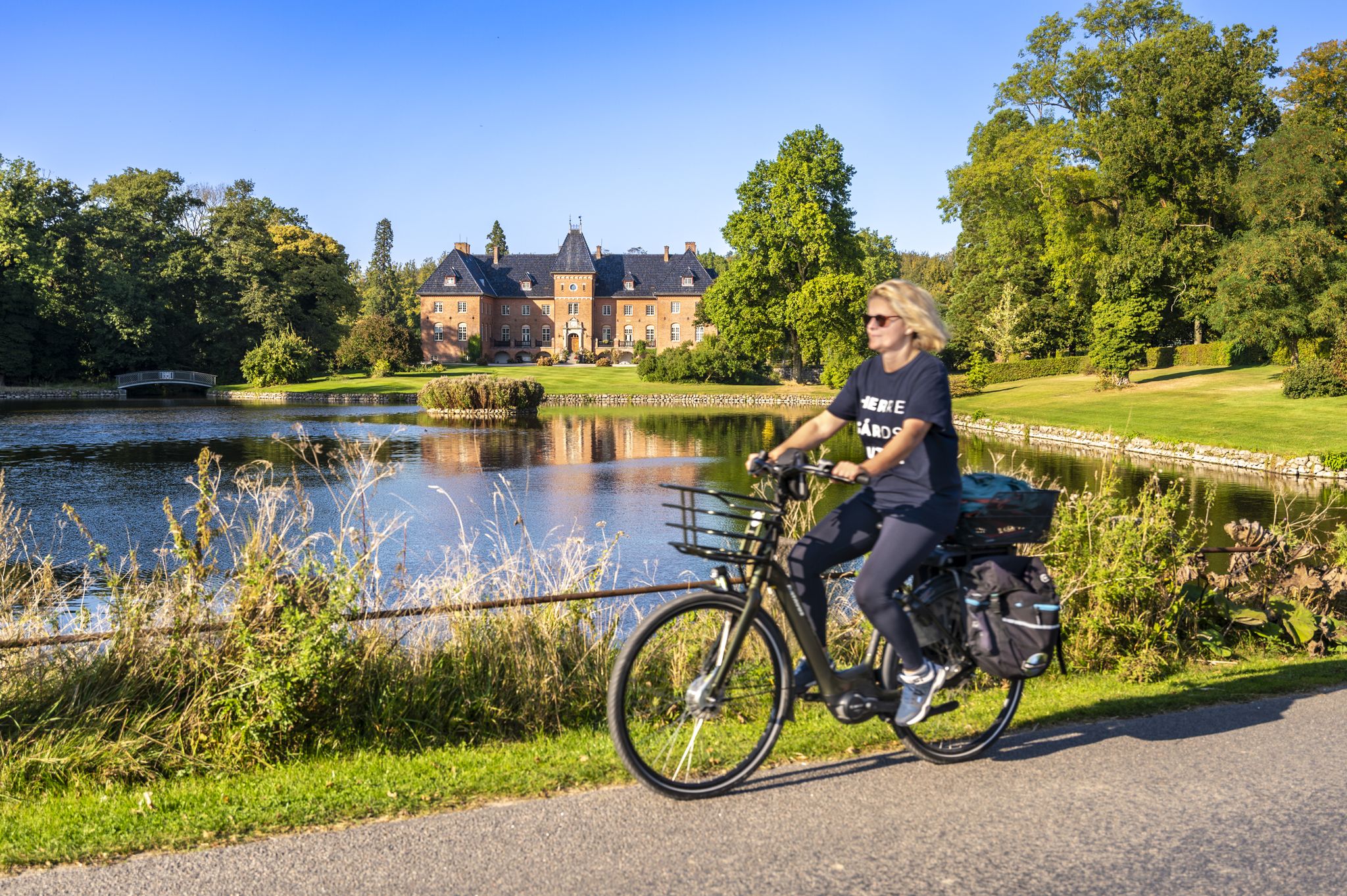
Schloss Ulriksholm is an idyllic Renaissance manor house just a few kilometers from Kerteminde. It is picturesquely situated at the foot of the Kerteminde Nor bay and is considered one of the most historic places in the region. The castle was named after one of Christian IV's illegitimate sons. The castle is privately owned today and is not regularly open to the public. An exception is made for occasional garden events and the "Herregårdsspil" performances (Danish open-air summer theatre), where visitors are allowed to enter the grounds. You can find out when these performances take place via Facebook.
0
0

Great large property accessible via a tree-lined avenue.
1
0

Ulriksholm is a privately owned castle that formerly belonged to the king's illegitimate son, Ulrik Christian Gyldenløve. In 1616, King Christian IV bought the main estate Skinnerup at the foot of Kerteminde Nor. In 1632, the king decided to erect new, stately buildings, which were to serve as a residence for the king's then two-year-old illegitimate son, Ulrik Christian Gyldenløve. Therefore, the name of the castle was changed to Ulriksholm. After the death of Christian IV, his mistress and mother of Ulrik Christian Gyldenløve, Vibeke Kruse, fell into disgrace. After her death, Vibeke Kruse was buried on a poor farm outside the city walls of Copenhagen. Ulrik Christian Gyldenløve, however, ensured that his mother's body was brought to the Kølstrup Church. He himself died at the age of only 28 after a brave engagement in the Swedish War. The castle is privately owned today. There is no public access to the castle or garden, except during the castle's open garden events and when the castle is visited as part of the Herregårdsspil. https://www.visitkerteminde.de/kerteminde/reiseplanung/ulriksholm-schloss-gdk613635
2
0
Nyborg Castle (Danish: Nyborg Slot, also Danehofslottet) is located in the town of Nyborg, about 29 kilometers southeast of Odense on Funen. The castle was built around 1170 by Duke Knud Prislavsen, a nephew of Valdemar the Great, for protection against the Wends. In 1282, Erik V. Glipping signed the first Danish charter (Danehof) here. Through this, the supreme court passed from the king to the Danehof, the first Danish parliament, which convened in Nyborg Castle. When Erik VII. moved to Copenhagen, the castle there became the center of royal power in Denmark until 1416. Nyborg, however, remained another royal residence. Later, the castle was used as an armory and granary. During the Count's Feud (1533–1536), the castle was conquered twice. Christian III. subsequently ensured an expansion of the castle and fortified it with a large rampart system. Christian IV. had the castle further expanded in 1607 by the Italian architect Domenicus Badiaz. During the war with Sweden (1658–1660), three-quarters of the castle was destroyed. The building material was partly reused in 1722 for the new construction of the castle in Odense. Nyborg itself remained a garrison town until 1913. After the dissolution of the garrison, the castle was reconstructed by Morgen Clemmensen from 1917–1923. Today, a museum is housed in the castle. Two half-towers and the gatehouse from Erik's time can still be visited. A wing with a large banqueting hall remains from the former royal palace. Three halls display Nyborg's history during the time of the Danehof, Queen Margarethe I, and Christian III. https://de.wikipedia.org/wiki/Schloss_Nyborg
3
0

Very nice building ensemble in a great area.
0
0


Beautiful park with many moats that served as protection in earlier times. In addition, the "castle" or defensive structure is to be restored.
0
0
Frequently Asked Questions
Which castles and manors near Kerteminde offer public access?
While many historical estates in the Kerteminde area are privately owned, some offer public access or can be appreciated from the outside. Nyborg Castle, a significant royal castle, is undergoing restoration and will reopen to visitors. Hofmansgave Manor features a publicly accessible park and the Danish Potato Museum. Additionally, the ramparts of Magelund Castle Mound are open to the public. Ulriksholm Castle and Hverringe Gods are privately owned, but Ulriksholm occasionally hosts open garden events, and group tours of Hverringe Gods can be arranged.
Are there family-friendly castles or historical sites to visit near Kerteminde?
Yes, several sites are suitable for families. Nyborg Castle, once reopened, will offer an engaging historical experience. Hofmansgave Manor and the Danish Potato Museum provides an interesting and educational outing for all ages, with its park and unique museum. The open ramparts of Magelund Castle Mound offer space for exploration and imagination.
What kind of historical significance do the castles and manors in the Kerteminde region hold?
The castles and manors in the Kerteminde region are rich in Danish history. For example, Nyborg Castle served as a royal castle and defense against the Wends, and was a residence for Danish kings. Ulriksholm Castle was built for King Christian IV's illegitimate son. Hverringe Gods has a history spanning centuries, including a role in the Napoleonic War. These sites offer insights into medieval defense, royal life, and the evolution of Danish estate architecture.
Can I find hiking trails near the castles and manors in Kerteminde?
Yes, the Kerteminde area offers various hiking opportunities that can include views of or lead near historical estates. For instance, the hiking guide for Kerteminde features routes like the Fyns Hoved Trail or the Sybergland Loop Trail, which allow you to explore the natural landscapes surrounding the region's historical sites. The Magelund Castle Mound is also accessible via a short walk from Route 51.
Are there cycling routes that pass by castles in the Kerteminde area?
Absolutely. The region is known for its scenic cycling. The 'Castle Route' (Herregårdsruten) is a 34 km cycling path connecting Nyborg to Kerteminde, offering opportunities to see several beautiful castles and manors, including Holckenhavn Castle. You can find more cycling options in the road cycling guide for Kerteminde, which includes routes like 'Kerteminde to Fynshoved' or 'Coastal Route With Sea View'.
What is the best time of year to visit the castles and manors in Kerteminde?
The best time to visit is generally during the warmer months, from late spring to early autumn (May to September). During this period, the weather is more pleasant for exploring exteriors, walking in gardens, and enjoying outdoor activities like cycling or hiking. Special events, such as Ulriksholm Castle's open garden days, are also more likely to occur in these seasons.
Are there any less-known historical sites or 'hidden gems' in the Kerteminde area?
Beyond the more prominent castles, the region holds sites like Skovsbo Manor, a Renaissance-style manor house with history dating back to the 14th century, offering a glimpse into historical Danish architecture. While privately owned, its exterior and historical context are notable. The Magelund Castle Mound, one of the largest ramparts on Fyn, is another less-known but historically significant site open to the public.
What natural features can I expect to see around the castles in Kerteminde?
The castles and manors in the Kerteminde area are often set amidst beautiful natural landscapes. You can expect to see well-kept parks and green gardens, such as those at Ulriksholm Castle, which features a beautiful lake. Hverringe Gods is situated in a rural setting, and the nearby coastal areas offer stunning sea views and natural beauty, especially along cycling and hiking routes.
Can I bring my dog to the castles or nearby trails in Kerteminde?
Public access policies for dogs vary by location. While the interiors of most castles and manors are generally not dog-friendly, many outdoor areas and trails are. For instance, the ramparts of Magelund Castle Mound are open to the public and suitable for walks. When exploring hiking or cycling trails, such as those found in the Kerteminde hiking guide, dogs are often welcome on leashes, but it's always best to check specific signage at each location.
Are there cafes or accommodation options near the castles in Kerteminde?
Kerteminde town itself offers a range of cafes, restaurants, and accommodation options. While specific cafes might not be directly adjacent to every castle, you'll find amenities within a short drive or cycle. Hverringe Gods, for example, manages a nearby beach campground. For specific castle visits, it's advisable to plan your refreshments and lodging in Kerteminde or nearby towns like Nyborg.
What makes the castles and manors in Kerteminde unique compared to other regions?
The castles and manors in the Kerteminde region are unique for their blend of traditional Danish architectural features, their deep historical ties to Danish royalty and noble families, and their integration into the East Funen landscape. Many, like Ulriksholm Castle and Hverringe Gods, remain privately owned and operational, offering a living history rather than just museum pieces. The region also features unique sites like the Danish Potato Museum at Hofmansgave Manor and the ancient Magelund Castle Mound.
How long should I plan for a visit to a castle or manor in the Kerteminde area?
The duration of your visit depends on the specific site and your interest. For sites with public access like the park at Hofmansgave Manor and the Danish Potato Museum, you might spend 1-2 hours. Exploring the ramparts of Magelund Castle Mound could take 30 minutes to an hour. For Nyborg Castle once it reopens, a more in-depth visit could easily take 2-3 hours or more. If you're cycling the 'Castle Route' to see multiple exteriors, plan for a half to full day.
Most popular attractions in Kerteminde

Get inspired with the komoot mobile app


Explore more
Looking for the best castles somewhere else? Discover other guides in Kerteminde:
