The 8 Most Amazing Peaks in Lisbon
Best mountain peaks in Lisbon are found within its famed "City of Seven Hills" and the nearby Serra de Sintra and Montejunto mountain ranges. Lisbon's elevated areas offer panoramic viewpoints over the city and the Tagus River. The surrounding region provides rugged terrain for outdoor activities, with the Serra de Sintra being a UNESCO World Heritage site. These diverse landscapes combine urban vistas with natural mountain experiences.
Best mountain peaks in Lisbon
- The most popular mountain peaks is Peninha Sanctuary, a religious building located at an altitude of 448 meters in the Sintra Mountains. It offers spectacular views over the coast and inland, including a baroque chapel and the Peninha Palace.
- Another must-see spot is Cruz Alta — Highest point in Sintra with views of the Pena Palace, a summit and the highest point in the Serra de Sintra at 528 meters. Visitors can expect fantastic views of the Pena Palace and the surrounding region, including Lisbon and Cascais.
- Visitors also love Serra de Montejunto Watchtower, a viewpoint offering a beautiful panorama of the region north of the Serra. It provides extensive views from the highest mountain in the broader Lisbon region.
- Lisbon is known for summits, viewpoints, and historical sites. The region offers a variety of mountain peaks to see and explore, from urban hills to more rugged mountain ranges.
- The mountain peaks in Lisbon are appreciated by the komoot community, with 192 upvotes and 171 photos shared across 8 highlights.
Last updated: October 14, 2026
Peninha Sanctuary
Highlight • Religious Site
Translated by Google •
Tip by

Cruz Alta — Highest point in Sintra with views of the Pena Palace
Highlight • Summit
you have a fantastic view
and a wonderful view of the
palace 🏰.
Translated by Google •
Tip by

Sign up now to discover places like this
Get recommendations on the best single tracks, peaks, & plenty of other exciting outdoor places.
Cruz Alta Trail
Highlight • Summit
Here's a little bit about the history of the cross (very brief), courtesy of "Parques de Sintra"
"It is the highest point in the Serra de Sintra, at an altitude of 528 meters, from where it is possible to see the most beautiful views over Lisbon and Cascais, to the south, the Atlantic Ocean, to the west, and the saloia region, to the north.
In this place, by order of D. João III, a cross was placed (ca. 1522) which was later destroyed by a storm. In place of the original cross, King Fernando II had a new cross installed in the same location, which was, in turn, destroyed by lightning in 1997.
In 2008 a new replica of the cross was built in a single block of limestone. This new cross, 3.5 meters high, 1.5 meters wide and weighing approximately 1,700 kilos, imitates intertwined trunks and is hollowed out at several points, which made the execution of the replica and its transport to the location, particularly difficult."
A "sonnet" by Francisco José Lopes Costa is engraved on the site. I refer only to one of the blocks:
"...
Go well to your simple majesty
This place given to you O Cruz
Because on this top the light is more intense
And the storm is more intense and beautiful.
..."
Translated by Google •
Tip by

Serra de Montejunto Watchtower
Highlight • Viewpoint
Translated by Google •
Tip by
Top of the eastern side of Montejunto mountain.
Highlight • Summit
A part of the trail that passes through this point is a bit technical with some loose rock, it may not be very recommended for gravel bikes with thin tires.
Tip by

Cabeço da Silheira
Highlight • Summit
You can reach Cabeço da Silheira via a small asphalt road (very steep) or via one or two existing trails. If you choose to go along the trails, we recommend a mountain bike.
Translated by Google •
Tip by
Summit of Monte Redondo
Highlight • Summit
Whether it is due to the various trails that allow you to observe the surrounding landscape, including the Ota plain and the Tagus River, or due to its proximity to the Chã Alta dam, Monte Redondo is a point of interest for hikers, gravel bikers and nature lovers in general.
Translated by Google •
Tip by
Cabeço Pardal
Highlight • Viewpoint
Translated by Google •
Tip by
Cabeço do Monfarinho - Elevation 308 m
Highlight • Summit
Showing Translation
Tip by
Espigão Peak - Elevation 460 m
Highlight • Summit
Showing Translation
Tip by
Start today with a free account
Your next adventure awaits.
Popular around Lisbon

Triathlon 360 – my journey around the world
EuroVelo 1 Portugal – Cycle the Atlantic Coast
Portugal's Atlantic coast (north) – from Caminha to Lisbon
The breaking waves – cycle along the Atlantic coast of Portugal
Around the World in 80 Days
Lisbon to Santo António – The Atlantic Coast of Portugal (south)
Bike Touring along Portugal's Atlantic Coast from Lisbon to Porto
Hiking in Lisbon
Running Trails in Lisbon
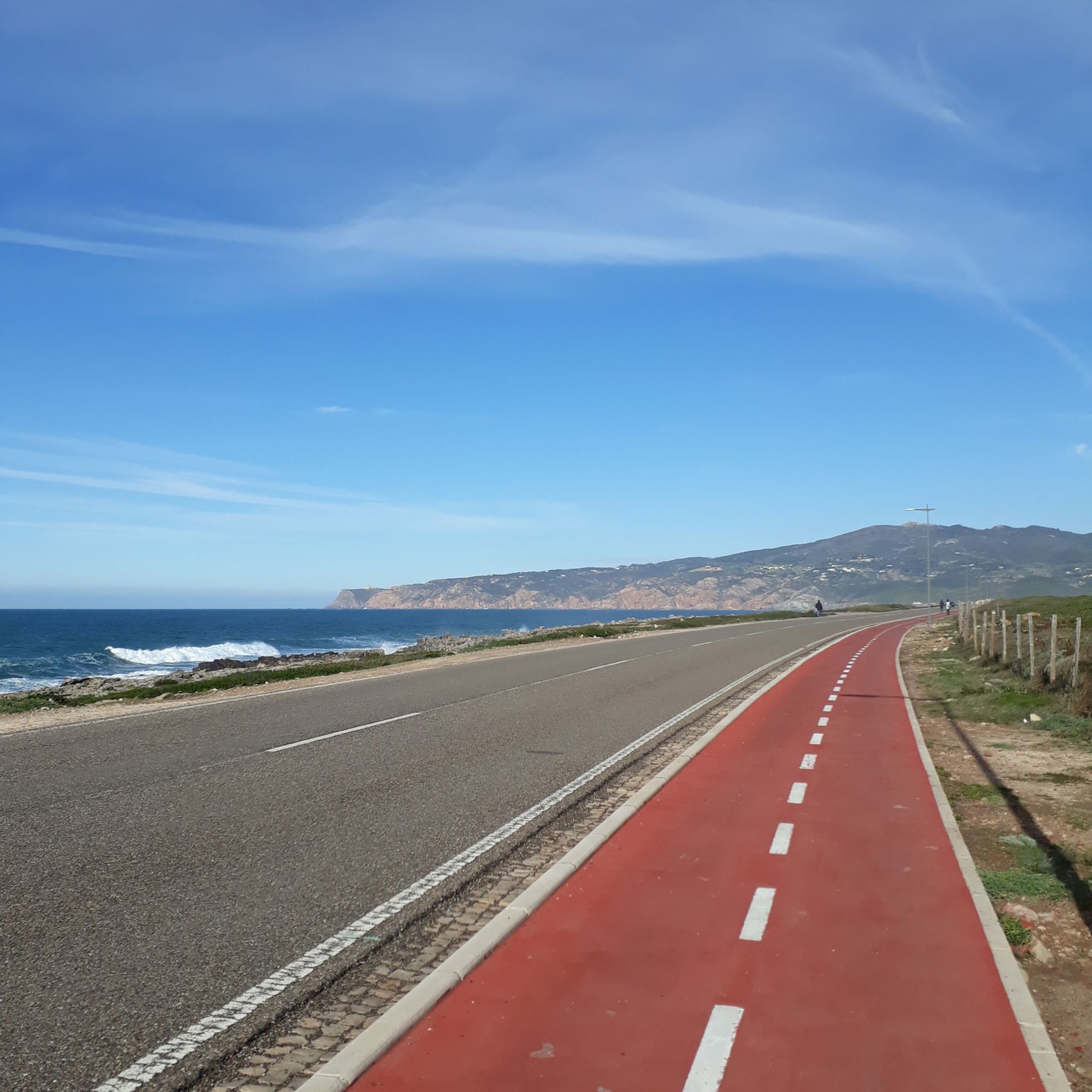
Cycling in Lisbon
Other adventures in Lisbon


Tips from the Community

The real access trail to Cabeço de Monfarinho does not start at the point indicated on the Komoot map, but about a hundred meters before. Pay attention to the path that will lead you to it.
0
0
The geodetic marker that marks this peak is a few dozen meters from the trail that passes next to it, and is only accessible on foot.
0
0

A sanctuary built by popular devotion. High above, at an altitude of 488 meters, the Peninha Sanctuary enchants with its unshakable magic and mystique. Built by popular devotion, the Chapel of Our Lady of Penha (Peninha) arose following a supposed apparition of Our Lady to a poor shepherdess. This architectural complex also includes the centuries-old chapel of São Saturnino and an enigmatic Romantic-Revival mansion commissioned in 1918 by António Augusto Carvalho Monteiro (owner of Quinta da Regaleira). Source: parquesde sintra.pt
3
1
Monte Redondo is a limestone elevation with an altitude of around 212 metres. It is located near the town of Ota, and is distinguished by its rounded shape. Whether it is due to the various trails that allow you to observe the surrounding landscape, including the Ota plain and the Tagus River, or due to its proximity to the Chã Alta dam, Monte Redondo is a point of interest for hikers, gravel bikers and nature lovers in general.
1
0

I personally recommend climbing up from Sintra (From Lisbon there are many trains). Cycling on those roads gives you amazing landscapes, and from the peak with a clear day it is possible to see the whole of the Lisbon area, from bridge to bridge and much more. No bar nor facilities on the top, all the buildings are closed.
2
0
Locally, these small hills are called "cabeços". Cabeço da Silheira is one of the highest in the region, reaching 200m in altitude. It is therefore natural that it was chosen as the site for the installation of water tanks that supply the region's public water supply network. You can reach Cabeço da Silheira via a small asphalt road (very steep) or via one or two existing trails. If you choose to go along the trails, we recommend a mountain bike.
1
0

Mythical climb of the Serra de Sintra, from where you can see the entire Cascais coastline.
4
0

From the highest point with the summit cross you have a fantastic view and a wonderful view of the palace 🏰.
16
0
Frequently Asked Questions
What are the most prominent mountain peaks or elevated areas in and around Lisbon?
For true mountain experiences, the Serra de Sintra range features peaks like Cruz Alta, its highest point at 529 meters, and the elevated Peninha Sanctuary. Further north, Montejunto is the highest mountain in the broader Lisbon region at 668 meters, offering extensive views from the Serra de Montejunto Watchtower. Within Lisbon itself, hills like São Jorge and Miradouro da Nossa Senhora do Monte provide stunning panoramic viewpoints.
Where can I find the highest point in the broader Lisbon region?
The highest point in the broader Lisbon region is Montejunto, reaching an altitude of 668 meters. You can experience its extensive panoramic views, particularly from the Serra de Montejunto Watchtower, which offers a beautiful panorama of the region north of the Serra.
What kind of views can I expect from the mountain peaks near Lisbon?
From the mountain peaks and elevated areas, you can expect diverse and breathtaking views. For instance, Cruz Alta in the Serra de Sintra offers fantastic views of the iconic Pena Palace and the surrounding region, including Lisbon and Cascais. The Peninha Sanctuary provides spectacular views over the coast and inland. Within Lisbon, viewpoints like Miradouro da Nossa Senhora do Monte offer exceptional 360-degree panoramas of the city, the Tagus River, and landmarks like São Jorge Castle and the 25 de Abril Bridge.
Are there family-friendly hiking options around the mountain peaks near Lisbon?
Yes, the areas around the mountain peaks offer options suitable for families. The Serra de Sintra, a UNESCO World Heritage site, has lush hills and enchanting palaces like Pena Palace and the Moorish Castle, which are popular attractions. While some trails can be challenging, many paths in the natural parks are accessible for walks with children. Always check specific trail difficulty before heading out.
What outdoor activities can I do near these mountain peaks?
The region around Lisbon's mountain peaks is excellent for various outdoor activities. You can find numerous trails for hiking, running, and mountain biking. For example, the Serra de Sintra is ideal for hiking and exploring. If you're interested in running, you can explore trails like the 'Rota do Cabo Raso' in Parque Natural Sintra-Cascais, detailed in the Running Trails in Lisbon guide. For mountain biking, the 'Sintra Mountains and Coast MTB Loop' is a popular choice, found in the MTB Trails in Lisbon guide.
What historical or cultural sites are located on or near these elevated areas?
Many elevated areas near Lisbon are rich in history and culture. In the Serra de Sintra, the Peninha Sanctuary includes a baroque chapel from 1710 and the Peninha Palace from 1918. The iconic Pena Palace and the ancient Moorish Castle are perched on the hills of Sintra, offering historical exploration alongside panoramic views. Within Lisbon, São Jorge Hill is home to the ancient Moorish fortress, Castelo de São Jorge, providing a deep dive into the city's past.
What is the best season to visit the mountain peaks and elevated areas around Lisbon?
The best seasons to visit the mountain peaks and elevated areas around Lisbon are generally spring (March to May) and autumn (September to November). During these times, the weather is typically mild and pleasant, making it ideal for hiking and exploring. Summers can be hot, especially at midday, while winters are cooler and can bring rain, though sunny days are still common.
Are there any challenging or advanced hiking trails near Lisbon's mountain peaks?
Yes, for those seeking more challenging experiences, the Serra de Sintra offers rugged terrain with trails that can be quite demanding. For instance, the area around Montejunto mountain can feature technical sections with loose rock, which may be more suitable for experienced hikers. Always check trail conditions and difficulty ratings before embarking on an advanced hike.
What kind of wildlife can be observed in the mountain areas near Lisbon?
The natural parks surrounding Lisbon's mountain peaks, particularly the Serra de Sintra, are home to diverse flora and fauna. While specific wildlife sightings can vary, these areas are known for various bird species, including raptors. Mammals such as foxes and wild boars can also be found, though they are often more elusive. The lush vegetation itself is a significant natural feature.
Where can I find good viewpoints within Lisbon itself, beyond the mountain ranges?
Lisbon, known as the 'City of Seven Hills,' boasts numerous stunning viewpoints (*miradouros*). The Miradouro da Nossa Senhora do Monte is often cited as the highest point within the city, offering an exceptional 360-degree panorama. Other popular viewpoints include Miradouro de São Pedro de Alcântara in Bairro Alto, Miradouro da Graça with views of São Jorge Castle, and Miradouro de Santa Catarina, known for its Tagus panorama and vibrant atmosphere.
Are there any circular walks or trails available around the mountain peaks?
Yes, there are options for circular walks and trails, particularly in the natural parks. For example, the 'Rota do Cabo Raso' is a circular route in Parque Natural Sintra-Cascais, suitable for running, as highlighted in the Running Trails in Lisbon guide. Many other trails in the Serra de Sintra and Montejunto areas can be combined to form circular routes, allowing you to return to your starting point.
What makes the Serra de Sintra a unique mountain range near Lisbon?
The Serra de Sintra is unique due to its status as a UNESCO World Heritage site, combining lush natural landscapes with enchanting historical architecture. It features dramatic cliffs, diverse flora and fauna, and notable peaks like Cruz Alta. The presence of iconic palaces like Pena Palace and the Moorish Castle perched on its hills adds a distinctive cultural and historical dimension to its natural beauty, making it a truly special destination.
Most popular routes in Lisbon
Most popular attractions in Lisbon

Get inspired with the komoot mobile app


Didn’t find what you were looking for?
Discover Lisbon’s best peaks and summits by region:
Explore more
See even more amazing summits in Lisbon with these guides:
