Top 19 Caves around Manubach
Best caves around Manubach are primarily former slate mines and exploration tunnels located in the broader Middle Rhine Valley region. This area, where the Rhine and its tributaries have cut deep valleys into the Hunsrück plateau, is historically significant for slate mining. These sites offer insights into the region's geological landscape and industrial past. While not traditional natural caverns, they represent human interaction with the natural environment.
Best caves around Manubach
- The most popular caves is Old Slate Mine,…
Last updated: August 20, 2026
Steeg Slate Mine
Highlight • Cave
To the right …
Translated by Google •
Tip by

Old slate cave in the Upper Middle Rhine Valley
Highlight • Cave
Translated by Google •
Tip by

Sign up now to discover places like this
Get recommendations on the best single tracks, peaks, & plenty of other exciting outdoor places.
Sign up for free
Old Slate Mine
Highlight • Cave
Translated by Google •
Tip by

Slate cave on the Serpentine Path Kaub
Highlight • Cave
Translated by Google •
Tip by
Slate Mine
Highlight • Cave
Translated by Google •
Tip by

Sign up for free to discover even more caves around Manubach.
Sign up for free
Already have an account?
Start today with a free account
Your next adventure awaits.
Login or Signup
Tips from the Community

This adit entrance is not locked and looks a bit wild. The slate slabs around the mouth are reminiscent of shark teeth.
0
0

This is how food was stored in the past.
1
0


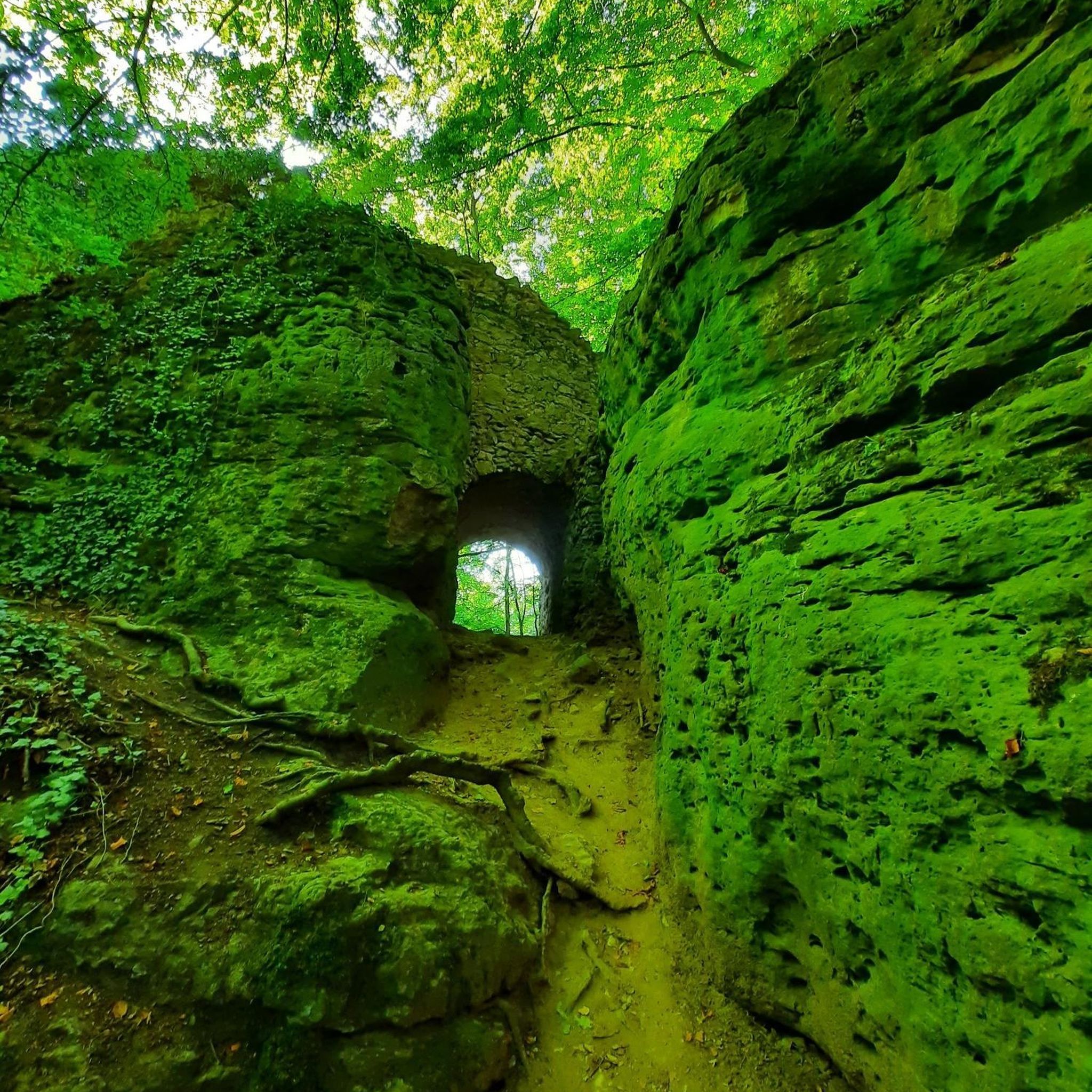
The Rhine and its tributaries have cut deep valleys into the high plateau of the Hunsrück in the Bacharach area, on the slopes of which slate occurs, which was used in construction and especially for roofing. You are standing here in front of an old slate tunnel.
2
0

On the serpentine path (World Heritage Trail) to the Traumschleifchen there is a small shelter
1
0

Spectacular insight into slate mining
0
0

There are several slate mines around Steeg where mining continued until the 20th century. The mines are closed with steel bars for safety reasons.
0
0

Slate was probably mined here a long time ago.
3
0
Frequently Asked Questions
What kind of caves can I expect to find around Manubach?
The caves around Manubach are primarily former slate mines, exploration tunnels, and historical slate caves. They offer a glimpse into the region's geological landscape and its industrial past, rather than large natural caverns with extensive formations.
What is the historical significance of the caves in this region?
The caves are historically significant as they are mostly remnants of the slate mining industry that thrived in the Middle Rhine Valley. The Rhine and its tributaries cut deep valleys into the Hunsrück plateau, exposing slate deposits that were mined for construction and roofing. Sites like the Old Slate Mine and Steeg Slate Mine showcase this important past.
Can I walk through any of the old mine tunnels?
Yes, at the Steeg Slate Mine, visitors can walk through parts of a tunnel. Be aware that parts may have water on the ground, so appropriate footwear is recommended. A smaller adjacent tunnel also shows clear machining marks from historical mining activity.
Are there hiking trails that incorporate these caves?
Several caves are located along hiking routes. For example, the Old slate cave in the Upper Middle Rhine Valley is a natural monument found along hiking paths. The Slate cave on the Serpentine Path Kaub is also part of an access route to a world heritage site, making it accessible during walks.
What other outdoor activities can I do near the caves around Manubach?
The region around Manubach offers various outdoor activities. You can explore numerous running trails, mountain biking routes, and road cycling routes. For detailed information and routes, you can check out the guides for Running Trails around Manubach, MTB Trails around Manubach, and Road Cycling Routes around Manubach.
Are the caves around Manubach suitable for families?
Many of the historical slate caves and mines can be interesting for families, offering a unique educational experience about the region's history and geology. The Slate cave on the Serpentine Path Kaub, for instance, is described as suitable for a group as a shelter and is easily accessible.
What should I wear when visiting the caves?
When exploring the old mine tunnels, especially those where you can walk through, it's advisable to wear sturdy, waterproof footwear as parts may be wet. A flashlight or headlamp is also recommended for better visibility inside the darker sections.
Are there any natural caves with stalactites or stalagmites near Manubach?
No, the caves directly around Manubach are primarily former slate mines and exploration tunnels, not natural caverns with extensive formations like stalactites or stalagmites. Impressive show caves with such formations exist in other regions of Germany, but not in the immediate vicinity of Manubach.
Is parking available near the caves?
While specific parking information for each individual cave is not always detailed, many of these sites are located along hiking trails or in areas accessible by road. It is generally recommended to look for designated parking areas at trailheads or nearby villages like Kaub or Bacharach, and then proceed on foot.
Are permits required to visit any of the caves?
For the publicly accessible historical slate caves and former mines mentioned, such as the Steeg Slate Mine or the Slate cave on the Serpentine Path Kaub, no specific permits are typically required for general visitation. However, some older mines may be closed off for safety reasons.
What is the best time to visit the caves around Manubach?
The caves, being mostly former mines or shallow shelters, can generally be visited year-round. However, for comfortable hiking to and from the cave sites, spring and autumn offer pleasant temperatures. During hot summer days, some tunnels like the Grube Viktoria exploration tunnel can offer a refreshingly cool experience.
What do visitors enjoy most about the caves around Manubach?
Visitors appreciate the unique historical insight these sites provide into the region's slate mining past. The opportunity to walk through old tunnels, observe machining marks, and experience the geological landscape of the Middle Rhine Valley are often highlighted. The caves also serve as interesting points along scenic hiking routes.
Most popular routes around Manubach
Most popular attractions around Manubach

Get inspired with the komoot mobile app


Explore more
Extend your search for the best caves by checking out these guides of the top ones around Manubach:
