Top 15 Caves around Seesbach
Caves around Seesbach are primarily located in the surrounding Hunsrück region, offering a mix of natural formations and historical mining sites. The area is characterized by its forested landscapes and valleys, providing a unique setting for exploration. These geological features and man-made tunnels contribute to the region's appeal for outdoor enthusiasts.
Best caves around Seesbach
- The most popular caves is Schinderhannes Cave, a historical cave that was a hideout for the robber Schinderhannes. This 13-meter-long cave is accompanied by…
Last updated: June 27, 2026
Schinderhannes Cave
Highlight • Cave
Translated by Google •
Tip by

Stollen mouth
Highlight • Cave
Translated by Google •
Tip by

Sign up now to discover places like this
Get recommendations on the best single tracks, peaks, & plenty of other exciting outdoor places.
Sign up for free
Leimberg mine
Highlight • Cave
Translated by Google •
Tip by
Cave Entrance at Lametbach
Highlight • Cave
de.wikipedia.org/wiki/Mengerschied?wprov=sfla1
Translated by Google •
Tip by

Slate gallery
Highlight • Cave
Translated by Google •
Tip by
Sign up for free to discover even more caves around Seesbach.
Sign up for free
Already have an account?
Start today with a free account
Your next adventure awaits.
Login or Signup

Tips from the Community

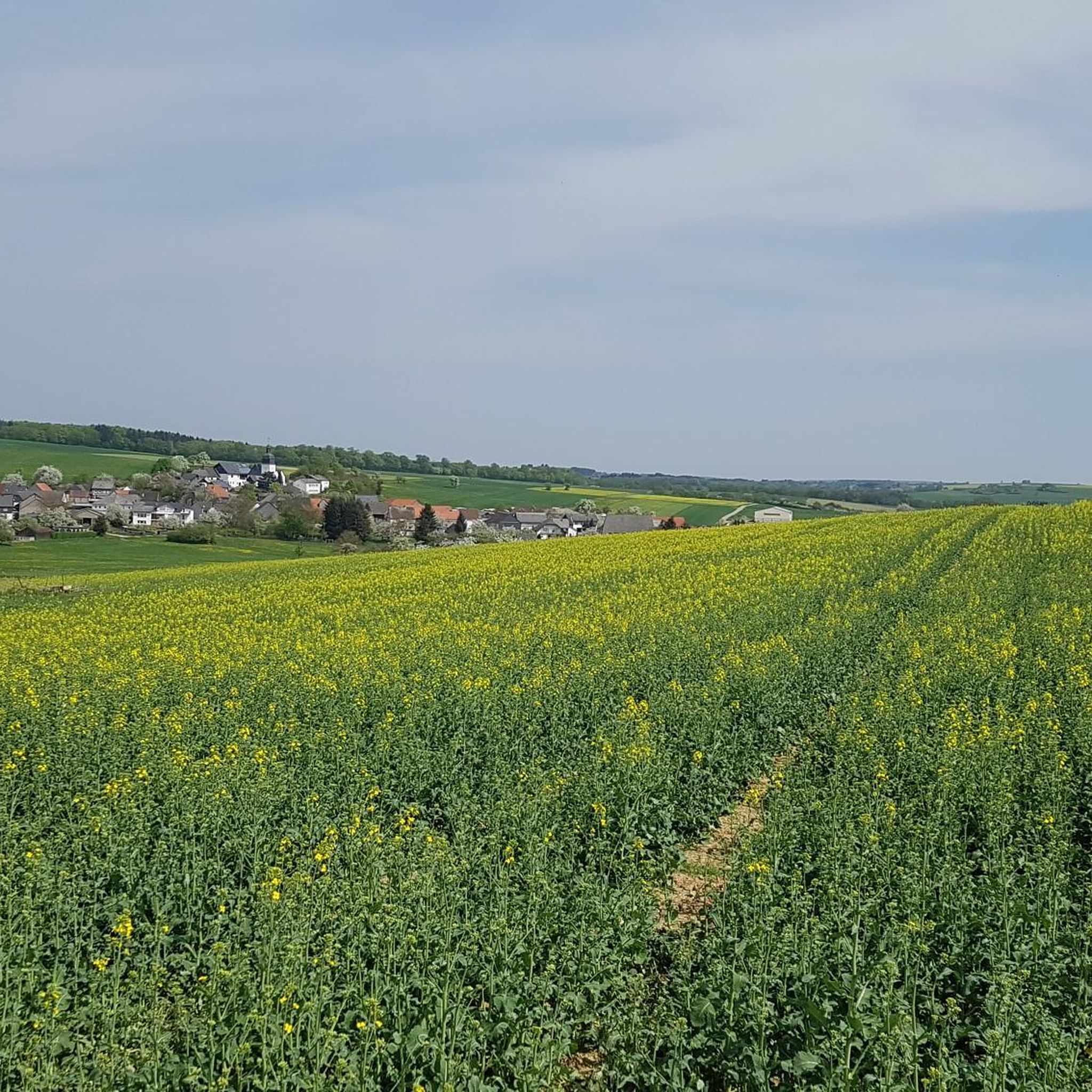
At the refuge - view of Gemünden & Baroque castle
0
0

Very cool corner for biking
0
0

The cave entrance is located behind Mengerschied & Eichenmühle on the Lametbach https://de.wikipedia.org/wiki/Mengerschied?wprov=sfla1
0
0

The tunnel leads a few meters into the mountain before opening into a large, cubic mining chamber (approx. 30 x 10 m, >5 m high). Several tunnels extend further into the mountain from this chamber. Remains of the walls of former farm buildings can still be found in front of the tunnel entrance. There are five more tunnels in the Leimberg mountain, but no building remains. It is unclear whether this is the "Three Men" mine, the only one mentioned for the Gehlweiler district.
0
0
The tunnel mouth is about 50m from the path of the dream loop (forest path) away above the slope behind the fenced garden plots on a forgotten and overgrown farm road. After the low entrance, you come across a rusty ladder after 10 meters and only looking back reveals that the entrance was probably earlier. Then it gets exciting, because it's a bit slippery on a slope 15 meters further and a good 5 meters down(!). If you are at the bottom, turn left at right angles. This level leads through several excavation rooms, which are wide but not high, a good 70 meters far into a dome that is also low, from which tunnels lead off on both sides. But you can also go straight ahead 60 meters, then you would have to go through knee-deep water for a good 20 meters and then you might have to go further. The tunnel to the right leads 50 meters to a cathedral and then another 50 meters further. The left tunnel ends after about 45 meters. So you have a lot to do!
1
0

So my daughter was a bit disappointed with the "cave". Even as a child, it was difficult to crawl a few meters into the tunnel. But a flashlight helps with the Schinderhannes Cave adventure. In front of the cave there is a small stream and picnic tables that invite you to linger.
1
1

Hidden tunnel mouth, one of several in the region. Exciting.
0
0
The former mining activity is clearly visible at a slate heap by the roadside. To the right and above the heap is a side tunnel leading into the mountain (therefore not directly visible from the path). This tunnel extends approximately 10 meters into the mountain before reaching a sluice gate with two steel doors. Passing through these doors, one enters a large mining chamber. This tunnel was likely used as a blasting chamber. A few meters further to the right, i.e., to the south, is another tunnel that forks at a right angle after a few meters. The right branch ends after a few meters, while the left branch continues for at least 50 meters further into the mountain and then opens into a large mining chamber where spoil heaps have been piled up.
1
0
Frequently Asked Questions
What types of caves can I explore around Seesbach?
The Seesbach region, particularly the surrounding Hunsrück area, offers a variety of underground sites. These include natural rock caves, historical mine tunnels, and slate galleries. You'll find formations with local legends, as well as remnants of past mining activities.
Which caves have historical significance in the Seesbach region?
Several sites are rich in history. The Schinderhannes Cave is famously associated with the robber Schinderhannes. You can also explore historical mine tunnels like the Altlayenkaul Mine Tunnel at Steinbach, which dates back to the 17th century, and the Leimberg mine. The Stollen mouth and Slate gallery also represent historical mining activities in the area. Additionally, the Wildfrauenloch (Wild Women's Cave) is steeped in local folklore.
Are there any family-friendly cave experiences near Seesbach?
While many of the mine tunnels and galleries can be challenging due to their nature, the Schinderhannes Cave offers a more accessible experience. It's a relatively small cave (13 meters long) with tables and benches outside, making it a good spot for a rest during a family walk. The circular path around the Wildfrauenloch also provides an interesting, legend-filled walk suitable for families.
What are the difficulty levels for exploring caves around Seesbach?
Many of the historical mine tunnels and slate galleries, such as the Altlayenkaul Mine Tunnel, Stollen mouth, and Slate gallery, are categorized as challenging. They often involve low entrances, slippery sections, or require careful navigation through multiple chambers and tunnels. The Schinderhannes Cave is less challenging and more suitable for general visitors.
Can I find any hidden or less-known caves in the Seesbach area?
Yes, the region has several less-known historical tunnels. The Stollen mouth is described as a hidden historical tunnel, located off the main path, offering an exciting exploration with multiple chambers. The Slate gallery is also a side tunnel not directly visible from the path.
What outdoor activities can I combine with a visit to the caves?
The Seesbach area is excellent for combining cave exploration with other outdoor activities. You can find numerous routes for mountain biking, cycling, and running. For example, there are several running trails that include the Schinderhannes Cave. You can explore more options on the MTB Trails around Seesbach, Cycling around Seesbach, and Running Trails around Seesbach guide pages.
What is the best time of year to visit the caves around Seesbach?
The caves and mine tunnels can generally be visited year-round. However, for exploring the surrounding forested landscapes and enjoying the outdoor trails leading to them, spring through autumn offers the most pleasant weather conditions. Some tunnels, like the Slate Mine Tunnel (Bat Cave) in the broader Saar-Hunsrück Nature Park, are important bat habitats, so be mindful of hibernation periods if visiting during winter.
Are there any caves around Seesbach that are accessible for people with mobility challenges?
Most of the historical mine tunnels and natural caves in the region involve uneven terrain, narrow passages, or steps, making them generally not suitable for wheelchairs or those with significant mobility challenges. The outdoor areas around sites like the Schinderhannes Cave might offer more accessible paths, but direct cave entry is typically limited.
Where can I find parking when visiting the caves near Seesbach?
Specific parking information for each cave can vary. For the Schinderhannes Cave, it is located about two kilometers northeast of Seesbach in the Hoxbachtal, and typically visitors park nearby and walk the rest of the way. For other sites, parking might be available at trailheads or nearby villages, requiring a hike to reach the cave entrance.
What geological features characterize the caves in the Seesbach region?
The caves around Seesbach are primarily located in the Hunsrück region, characterized by forested landscapes and valleys. While some are natural rock formations, many are historical mine tunnels and slate galleries, reflecting the region's past mining activities. These man-made tunnels often lead into large mining chambers with various branching tunnels, showcasing the geological composition of the area, particularly slate.
What do visitors particularly enjoy about the caves around Seesbach?
Visitors appreciate the blend of natural beauty and historical intrigue. The Schinderhannes Cave is popular for its historical story and the pleasant trail leading to it. The mine tunnels, like the Stollen mouth, are enjoyed for their exciting exploration opportunities and the sense of discovery. The overall appeal comes from the unique setting for outdoor exploration and the rich history embedded in these underground sites.
Are there any local legends or folklore associated with the caves?
Yes, the Wildfrauenloch (Wild Women's Cave) is a notable example. Local folklore tells of a woman of unusual size and ferocity, left behind by the Huns, who lived in this rock cave. She was said to wield a crooked Hunnish dagger and a club. A circular path allows visitors to explore the area and its associated myths.
Can I find places to eat or stay near the caves in Seesbach?
While Seesbach itself is a smaller village, the broader Landkreis Bad Kreuznach region offers various options for accommodation, cafes, and pubs. You'll find more choices in larger nearby towns. It's advisable to check local listings for specific establishments in Seesbach or neighboring communities like Bad Kreuznach for dining and lodging.
Are there any specific safety considerations for exploring these caves?
Given that many sites are historical mine tunnels and natural caves, safety is important. Some tunnels are described as challenging, with low entrances, slippery sections, and potential for knee-deep water. It's recommended to bring appropriate gear, including headlamps, sturdy footwear, and to be aware of your surroundings. Always exercise caution and consider local conditions before entering any unmaintained underground sites.
Most popular routes around Seesbach
Most popular attractions around Seesbach

Get inspired with the komoot mobile app


Explore more
Extend your search for the best caves by checking out these guides of the top ones around Seesbach:
