Top 9 Caves around Seibersbach
Best caves around Seibersbach are found within the Hunsrück region, an area characterized by its forested hills and river valleys. This landscape features both natural geological formations and sites shaped by historical mining activities. Seibersbach provides access to the natural and historical points of interest in the surrounding Hunsrück-Nahe region. The local terrain includes varied elevations, offering diverse outdoor exploration opportunities.
Best caves around Seibersbach
- The most popular caves is Old Slate Mine, a cave that features an old…
Last updated: October 13, 2026
Steeg Slate Mine
Highlight • Cave
To the right …
Translated by Google •
Tip by

Mönchholzkopf Slate Mine
Highlight • Historical Site
Translated by Google •
Tip by
Sign up now to discover places like this
Get recommendations on the best single tracks, peaks, & plenty of other exciting outdoor places.
Small Cave Entrance
Highlight • Cave
Translated by Google •
Tip by

Schinderhannes Cave
Highlight • Cave
To the …
Translated by Google •
Tip by
Old quarry and gallery
Highlight • Cave
Translated by Google •
Tip by
Sign up for free to discover even more caves around Seibersbach.
Already have an account?
Start today with a free account
Your next adventure awaits.
Tips from the Community


Spectacular insight into slate mining
0
0

There are several slate mines around Steeg where mining continued until the 20th century. The mines are closed with steel bars for safety reasons.
1
0

Located directly on the street.
1
0


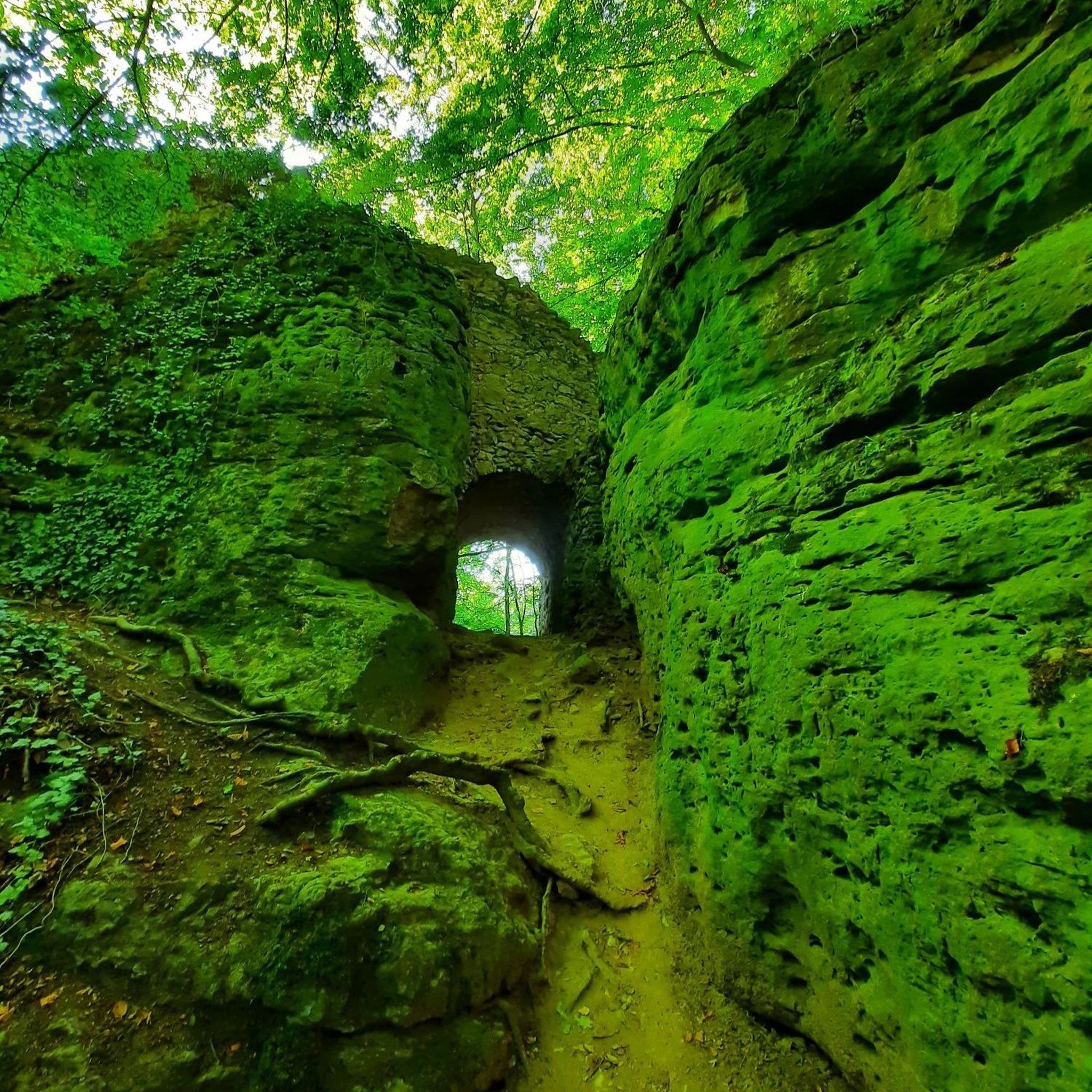
A small quarry opens up directly on the path. There a tunnel leads about 10 m into the mountain, then turns left and ends after another 10 m. If you climb straight up from here, halfway up the ridge you will find a much larger quarry with a 40m long tunnel.
1
0
At the foot of the rock face of the quarry on the Schönblick ridge, a tunnel leads just over 40 meters into the mountain.
3
0
Frequently Asked Questions
What types of 'caves' can I explore around Seibersbach?
The 'caves' around Seibersbach are primarily historical slate mines and small natural cave formations. These sites offer insights into the region's industrial past and its geological features. For example, the Old Slate Mine showcases how the Rhine shaped the Hunsrück plateau, where slate was historically mined.
Are there any caves I can walk through near Seibersbach?
Yes, you can walk through sections of the Steeg Slate Mine. Be aware that some parts may be filled with water, so your feet might get wet. It offers a direct experience of historical mining operations.
What other natural attractions are there near Seibersbach besides caves?
The Hunsrück region around Seibersbach is rich in natural beauty. You can explore the unique Steckeschlääferklamm, a 'Tree Spirits Trail' with over 60 carved figures, or visit the scenic Saar-Hunsrück and Soonwald-Nahe Nature Parks. The Geierlay Suspension Bridge, Germany's most beautiful hanging rope bridge, is also nearby for an adventurous experience.
Are the caves around Seibersbach suitable for families with children?
While the 'caves' are mostly old mines or small entrances, some offer an interesting historical or natural observation point. The Small Cave Entrance is a natural monument that is only a few meters deep and located directly on the street, making it an easy stop. For more active family outings, consider the numerous hiking trails in the region.
What historical sites can I visit near the caves in Seibersbach?
Many of the 'caves' themselves are historical sites, such as the Old Slate Mine and Steeg Slate Mine, which highlight the region's mining past. Beyond these, the area surrounding Seibersbach is rich in historical sites, including numerous castles and ruins like Rheinstein Castle, Burg Reichenstein, and the Rossel Ruins.
Are there any caves near Seibersbach that are home to bats?
Yes, the Mönchholzkopf Slate Mine is typically barred to protect bats that live there. While you cannot enter, you can still see the remains of buildings and tools in the large quarry nearby.
What outdoor activities can I do near the caves in Seibersbach?
The region offers diverse outdoor activities. You can find numerous hiking trails, such as those detailed in the Hiking around Seibersbach guide, or explore running routes like those in the Running Trails around Seibersbach guide. Road cycling is also popular, with routes available in the Road Cycling Routes around Seibersbach guide.
What is the best time of year to visit the caves and surrounding area?
The Hunsrück region is beautiful year-round. Spring and autumn offer pleasant temperatures for hiking and exploring the outdoor sites. Summer is also suitable, though it can be warmer. Winter visits are possible, but some paths might be slippery, and access to certain mine entrances like the Schinderhannes Cave might be affected by conditions or even insects.
Is parking available near the cave sites?
Parking availability varies by specific location. Many of the highlights, especially those popular with hikers, are accessible via local roads where parking might be found. It's advisable to check specific trailheads or highlight descriptions for detailed parking information.
Are dogs allowed at the cave sites and on nearby trails?
Generally, dogs are welcome on most hiking trails in the Hunsrück region, provided they are kept on a leash. For specific cave entrances or mine sites, it's best to observe local signage. For example, areas like the Mönchholzkopf Slate Mine, which are barred for bats, would not be accessible to dogs.
What should I bring when visiting the slate mines or cave entrances?
When exploring the slate mines or cave entrances, especially those you can walk into like the Steeg Slate Mine, a flashlight is highly recommended. Sturdy, waterproof footwear is also advisable, as some sections may be wet. For other outdoor activities, appropriate hiking gear and water are essential.
Are there any guided tours available for the caves or mines?
The provided data does not specify guided tours for the individual cave or mine highlights listed. However, the Hunsrück region has various visitor centers and nature parks that may offer guided experiences for the broader area's natural and historical sites. It's recommended to check with local tourist information for such opportunities.
Most popular routes around Seibersbach
Most popular attractions around Seibersbach

Get inspired with the komoot mobile app


Explore more
Extend your search for the best caves by checking out these guides of the top ones around Seibersbach:
