The 16 Most Amazing Peaks around Deining
Mountain peaks around Deining, a municipality in Bavaria, Germany, are characterized by rolling hills, dense forests, and undulating plateaus rather than alpine summits. The region offers numerous elevated natural features and viewpoints popular for hiking. Deining itself is situated at an elevation of 471 meters. These locations provide scenic vistas and opportunities to explore the Bavarian Jura landscape.
Best mountain peaks around Deining
- The most popular mountain peaks is Pilgrimage Church of the Visitation of Mary, Habsberg, a religious…
Last updated: June 27, 2026
Heinzburg Ruins on Schlossberg
Highlight • Historical Site
Translated by Google •
Tip by

Pilgrimage Church of the Visitation of Mary, Habsberg
Highlight • Religious Site
The construction of the second and larger church on the Habsberg, hereinafter referred to as the “pilgrimage church” to distinguish it …
Translated by Google •
Tip by

Sign up now to discover places like this
Get recommendations on the best single tracks, peaks, & plenty of other exciting outdoor places.
Sign up for free
Viewpoint at the summit cross
Highlight • Viewpoint
Translated by Google •
Tip by

Summit Cross at Helfenberg Castle Ruins
Highlight • Summit
Translated by Google •
Tip by

Limpelberg Summit (641 m)
Highlight • Summit
Translated by Google •
Tip by

Sign up for free to discover even more peaks around Deining.
Sign up for free
Already have an account?
Start today with a free account
Your next adventure awaits.
Login or Signup
Popular around Deining



Tips from the Community

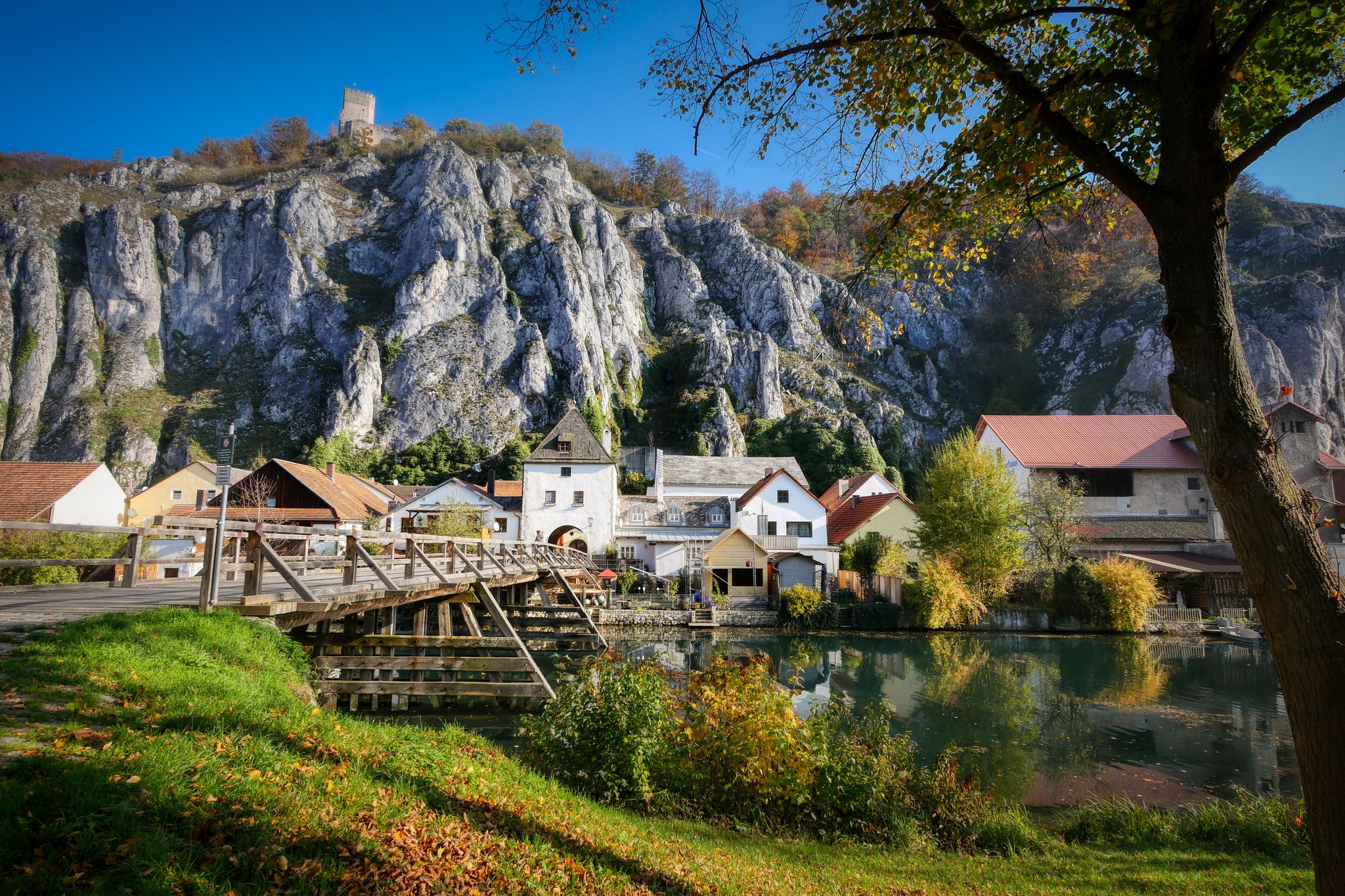
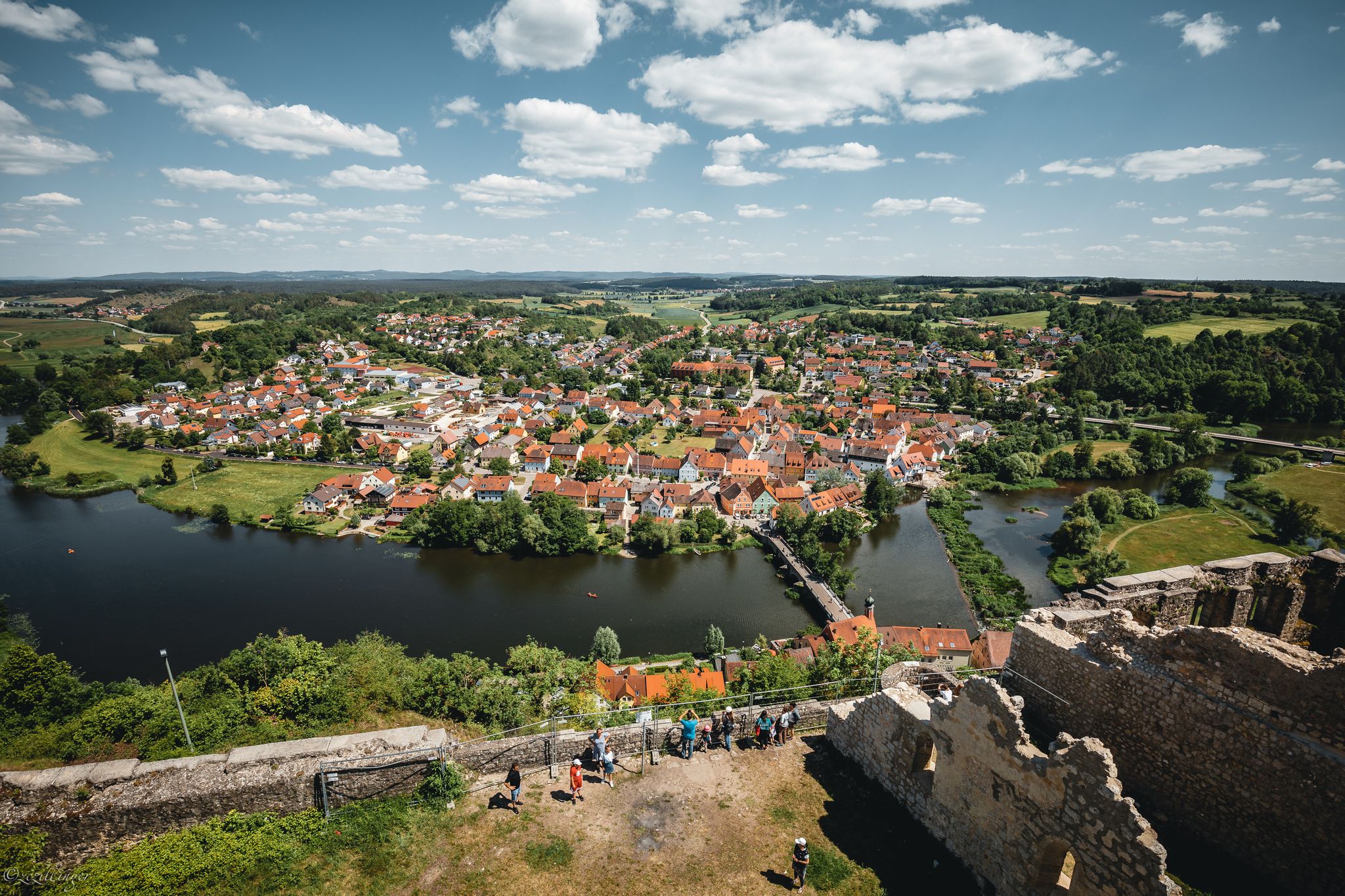
The medieval castle was first mentioned in 1198 as the property of the Counts of Velburg. In 1217 the last Count Ulrich ceded his rights to the Bishop of Regenburg, who enfeoffed Wirnto von Plankenstein. After Wirnto's death in 1232, he passed it on to his ministerials at Hohenfels in exchange for Falkenstein Castle, who then called themselves "von Helfenberg" (coat of arms on the left). But they later run into financial difficulties, so they have to sell their property. In 1373, a new owner, Hans Ehrenfelser, pledged the castle to Count Palatine Ruprecht, who from then on staffed it with caretakers. Hans himself goes to Pfaffenhofen as a nurse. It is said to have been destroyed in the Landshut War of Succession. In 1624, the heavily neglected Helfenberg Castle and the Upper Palatinate came to Bavaria; Elector Maximilian gave it, along with Breitenegg Castle, to his general Tilly. His descendant Lorenz Count Tilly had a new baroque palace built between 1696 and 1707 by the then Italian star architect Viscardi; the paintings were done by Hans Georg Asam, the father of the famous Asam brothers. After the Battle of Deining in 1796, the castle was looted and pillaged by defeated French revolutionary troops. Sold for demolition in 1807 for 2,200 guilders, much of it was demolished
0
0

Pilgrimage Church of the Visitation of the Virgin Mary The construction of the second and larger church on the Habsberg, hereinafter referred to as the “pilgrimage church” to distinguish it from the Chapel of Grace, goes back to the initiative of the Helfenberg manor. The structure of the church (40 x 16.5 m), which is visible from afar, has a retracted choir in the north, followed by a nave with three window axes and a tower 37 m high in the south. The older tower of the Maria Hilf Church in Amberg was unmistakably the model for the double onion dome with lantern and cross (18 m). Construction of the church began in 1761 following planning by the Munich court master mason, Leonhard Matthäus Gießl, and the participation of the electoral master mason Johann Fischer from Ingolstadt. In 1764, accounts were already settled with the plasterer Josef Dietmayer from Wessobrunn and the fresco painter Johann Michael Wild from Amberg. The organ was installed in 1767 by Johann Conrad Funtsch from Amberg. In the same year, the high altar with tabernacle, the pulpit and a reliquary, as well as probably the two side altars, were completed by Georg Leonhard Dänthl from Velburg. The year 1769 brought the completion of the church. The focal point of the room is the mighty high altar. In the excerpt, God the Father graciously bends down. In the large central shrine framed by angels, the Mother of God floats upwards as the Immaculata. She takes all the prayers and needs of those seeking help with her and brings them before the face of God. Four powerful sculptures on the left, John the Baptist and Zacharias, and on the right, Joachim and John the Evangelist, refer to the earthly and spiritual family of Mary. The side altars are of similar quality to the high altar. Two columns each flank a central shrine. This contains a sculpture of St. in the left altar. Florian, to the left is St. Elizabeth, on the right St. Ottilie. The right side altar contains the figure of St. in the central shrine. George, to the left is St. Francis Xavier, on the right St. John Nepomuk, see. The highlight of the church's decoration is the large ceiling fresco in the nave. Its theme is: Healing of the sick,” says the banner of the angel in the center of the picture under the figure of Mary. Source: Excerpts from the Habsberg pilgrimage church guide
4
0

Considered one of the most beautiful rococo churches in western Upper Palatinate.
3
0

Large wooden cross on the summit of the Lengenfeld Schlossberg
1
0

Magnificent section of the route, a fantastic highlight for mountain bikers
4
0

beautiful place with a wonderful view and mega "summit" cross next door is a panorama lounger to comfortably enjoy the view
4
0
yay, I've found the highest point in the district of Neumarkt. Unfortunately no sign, I looked up the picture of the highlight again and lo and behold, it has to be here. Great
3
0

Nice view from the top of the Limplberg, in the direction of the Hirtenberg, it's a really steep descent. Mixed beech forest with an unusually large number of larks. Native orchids such as bird's nestroot and pale forest birds feel at home here.
0
0
Frequently Asked Questions
What kind of elevated natural features can I expect around Deining?
The Deining area is characterized by rolling hills, dense forests, and undulating plateaus, rather than towering alpine peaks. You'll find numerous elevated natural features, viewpoints, and historical sites that offer scenic vistas and diverse hiking opportunities. These include prominent hills, rock formations, and historical summits.
What are some of the most popular viewpoints in the Deining region?
For expansive views, consider visiting the Pilgrimage Church of the Visitation of Mary, Habsberg, which is visible from a distance and offers an elevated perspective. Another excellent spot is the Viewpoint at the summit cross, providing a quiet place with panoramic views over Neumarkt and the surrounding hills. Additionally, the nearby King Otto Tower is highly recommended for its magnificent panoramic views over Deining and the Altmühl valley.
Are there any historical sites among the elevated features near Deining?
Yes, the region features several historical sites. The Heinzburg Ruins on Schlossberg are a notable historical site and summit, featuring an impressive wall and ditch system that represents the remains of the Heinzburg castle. The Pilgrimage Church of the Visitation of Mary, Habsberg is also a significant historical and religious building situated on an elevated position.
What is the highest point in the Deining district?
The highest point in the district of Neumarkt i.d. Opf. is the Limpelberg Summit (641 m). While it doesn't offer extensive views directly from the summit, it's a notable elevated feature in the area.
Can I find unique natural rock formations near Deining?
Yes, the Jurasteig, a long-distance hiking trail passing through Deining, features impressive rock formations. Notable examples include the Schlossbergfelsen and the Teufelstisch. These geological features offer unique natural beauty and a chance to explore the 'bizarre rocks and caves' of the Bavarian Jura, particularly along the section between Deining and Holnstein.
Are there family-friendly elevated spots or trails in the Deining area?
Many of the elevated features and trails around Deining are suitable for families. The Pilgrimage Church of the Visitation of Mary, Habsberg and the Viewpoint at the summit cross are both categorized as family-friendly. The Menhir below the Burnt Mountain is also a family-friendly natural monument with a viewpoint.
What outdoor activities are popular near Deining's elevated features?
The region around Deining offers a variety of outdoor activities. Hiking is very popular, with numerous trails exploring the hills and forests. You can find many options in the Hiking around Deining guide. Road cycling and gravel biking are also excellent ways to explore the scenic countryside, with routes available in the Road Cycling Routes around Deining and Gravel biking around Deining guides.
Are there specific hiking trails recommended for exploring the elevated areas around Deining?
Yes, there are many trails that lead to and around the elevated features. For example, the Jurasteig long-distance trail passes through Deining and offers sections with impressive rock formations. You can find various hiking routes, including easy to moderate options like the 'Trail No. 8 – Labertal Hiking Trail loop from Deining' in the Hiking around Deining guide.
What do visitors enjoy most about the elevated spots around Deining?
Visitors particularly appreciate the quiet spots with fantastic panoramic views, such as those found at the Viewpoint at the summit cross. The natural beauty of the area, including the impressive rock formations and dense forests, is also highly valued. The historical significance of sites like the Heinzburg Ruins on Schlossberg adds another layer of interest for explorers.
Is it possible to access these elevated features by public transport?
Deining is a municipality in Bavaria, Germany. While specific public transport options directly to every trailhead or elevated feature might vary, the region is generally accessible. For detailed information on public transport to Deining and its surrounding areas, it's advisable to check local transport schedules.
What is the best time of year to visit the elevated areas around Deining?
The region's rolling hills and forests are beautiful throughout the year. Spring and autumn offer pleasant temperatures for hiking and cycling, with vibrant foliage in autumn. Summer is also popular, though it can be warmer. Winter can provide a different, serene experience, especially if there's snow, but some trails might be less accessible.
Are there any amenities like cafes or restaurants near the elevated features?
The Pilgrimage Church of the Visitation of Mary, Habsberg is noted to have a restaurant nearby. For other elevated features, amenities might be found in the closest villages or towns. It's always a good idea to check local listings for cafes, pubs, and accommodation in Deining and surrounding communities before your visit.
Most popular routes around Deining
Most popular attractions around Deining

Get inspired with the komoot mobile app


Explore more
See even more amazing summits around Deining with these guides:
