Top 11 Castles around Pressig
Best castles around Pressig are located in the surrounding region of Upper Franconia, Germany, which features a variety of historical fortifications and ruins. This area offers insights into centuries of defensive architecture and regional history. Visitors can explore sites ranging from well-preserved fortresses to ancient stone fortifications and castle ruins. The landscape provides a backdrop for exploring these historical landmarks.
Best castles around Pressig
- The most popular castles is Rosenberg Fortress, a castle that is one of Europe's largest…
Last updated: June 27, 2026
⚔️ Festung Rosenberg
Highlight • Castle
Translated by Google •
Tip by

🏛️ Heunischenburg
Highlight • Castle
The Urnfield-time Heunischenburg is due to the archaeological research of the years 1983 to 1987 as the oldest …
Translated by Google •
Tip by

Sign up now to discover places like this
Get recommendations on the best single tracks, peaks, & plenty of other exciting outdoor places.
Sign up for free
Haig Castle
Highlight • Castle
Translated by Google •
Tip by

Heunischenburg — Bronze Age Fortification
Highlight • Historical Site
landschaftsmuseum.de/Seiten/Ausgrab/Aus-Heunbg.htm
Translated by Google •
Tip by

Sonneberg Castle Hill
Highlight • Structure
Translated by Google •
Tip by

Sign up for free to discover even more castles around Pressig.
Sign up for free
Already have an account?
Start today with a free account
Your next adventure awaits.
Login or Signup
Other adventures around Pressig

Tips from the Community

Haig Castle, also known as Haiger Castle or Haig Manor, is located in the Haig district of Stockheim in the Upper Franconian district of Kronach. It is considered an art-historical gem of the region, as it has a direct connection to one of the most renowned Baroque architects. For a long time, the authorship of the castle's design remained unclear. It wasn't until the 1980s that a plan was discovered in the archives of Mitwitz Water Castle, definitively proving that Balthasar Neumann, the famous architect of the Würzburg Residence and the Basilica of the Fourteen Holy Helpers, was the creator of the design. The foundation stone was laid in 1731, and the building's completion is dated to around 1733. Johann Veit Freiherr von Würtzburg, an influential cathedral dean, commissioned the construction after the original manor house was destroyed in the Thirty Years' War.
0
0

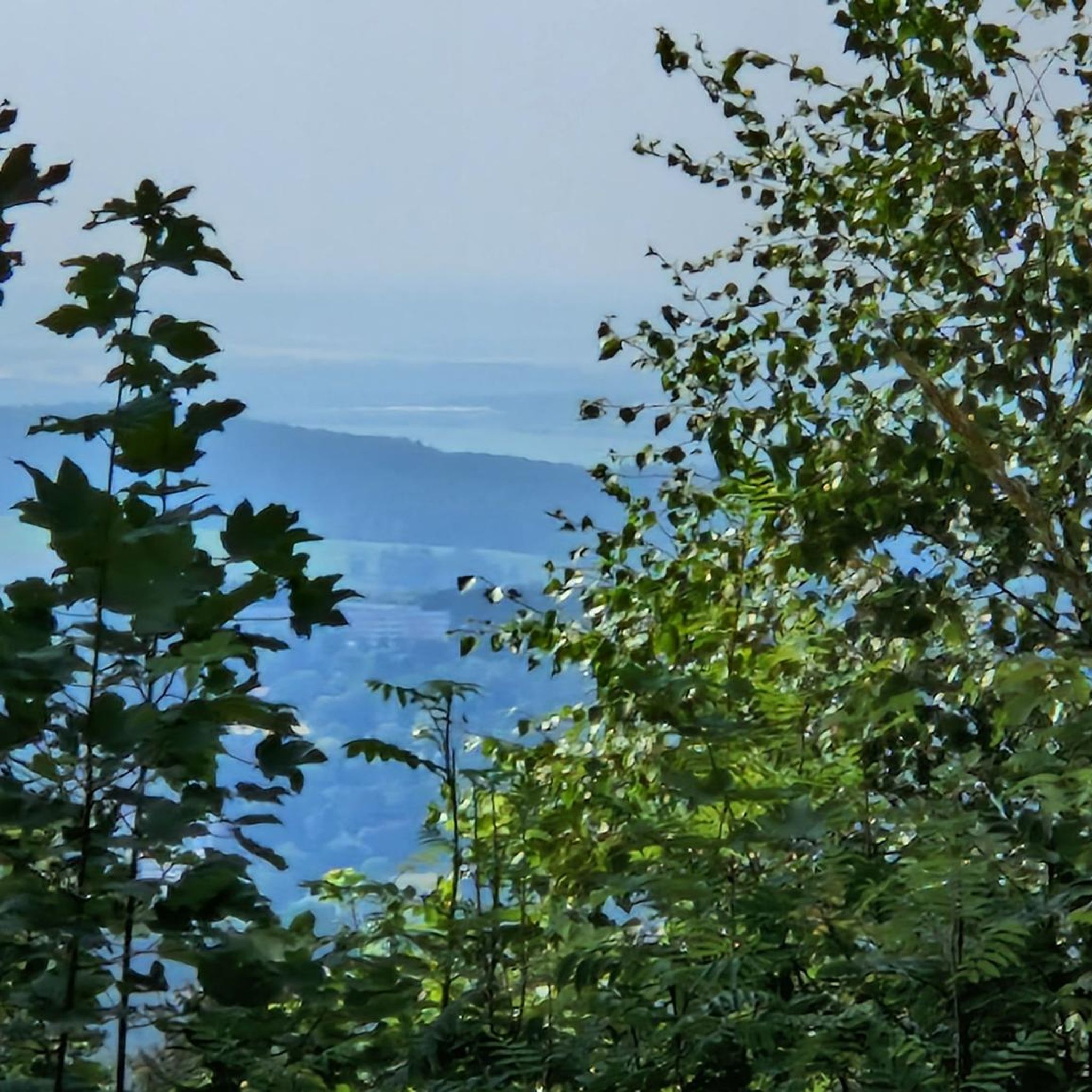
View from the castle to Sonneberg is already quite overgrown;
0
0

Sonneberg Castle, situated on the 502-meter-high Schlossberg (Castle Hill), was completely destroyed around 1150. The Augustenverein, founded by Duke Bernhard II of Saxe-Meiningen, built a shooting range with a tavern and a ballroom in the Neo-Gothic style between 1844 and 1850, based on plans by the architect Carl Alexander Heideloff. The ballroom also featured a lookout tower, which was raised to 20 meters in 1877 and given its characteristic spire. The shooting range was rebuilt in the Neo-Classical style in 1953. From 1997 to 2014, the castle served as a hotel; since 2015, it has been an event venue.
0
0

A late Bronze Age fortification that served to monitor a copper and tin trade route in the 9th century.
0
0
The Heunischenburg near Kronach-Gehülz is an important Late Bronze Age fortification dating back to the 9th century BC. It is considered the oldest scientifically researched stone castle north of the Alps. Its mighty stone walls and complex gate system indicate Mediterranean influences. The Heunischenburg served to monitor an important trade route for copper and tin. Numerous weapons finds indicate fierce fighting, which led to the destruction of the castle around 800 BC. Today, the Heunischenburg is an archaeological monument, whose reconstructed wall sections and the gate system provide a vivid impression of early castle construction. Hiking trails lead to this historically significant site.
0
0

The tour near Mitwitz was a fantastic experience. Beautiful scenery and fantastic views. Highly recommended 👍
0
0
Even though it is a steep climb, the path is definitely worth it for hikers interested in history.
1
0

Haig Castle In the years 1323 and 1348, the Bishop of Bamberg had his rights and income recorded from place to place. Haig is recorded as a wasteland, as "desolatum". Since the Bishop of Bamberg wanted protection against the Thuringians, he enfeoffed the Lords of Schaumberg. The former castle in Haig was surrounded by a moat and connected to the mainland by a drawbridge. In 1631, a group from Kronach plundered the village and castle. The indebted property was bought in 1727 by cathedral dean Johann Veit von Würtzburg, who laid the foundation stone for the current castle in 1731. https://www.stockheim-online.de/gemeinde-und-verwaltung/gemeindeteile-mit-ortsgeschichte/haig/
2
0
Frequently Asked Questions
What are some historically significant castles and fortifications near Pressig?
The region around Pressig in Upper Franconia boasts several sites of historical importance. Rosenberg Fortress in Kronach is one of Europe's largest and best-preserved fortress complexes, never having been conquered. Another significant site is 🏛️ Heunischenburg, which is the oldest scientifically researched stone castle in Europe north of the Alps, dating back to the 9th century BC. Additionally, Burg Rothenkirchen, a historic castle ruin, offers a glimpse into the region's turbulent past.
Are there any well-preserved fortresses I can visit near Pressig?
Yes, Rosenberg Fortress in Kronach is an outstanding example. It's renowned as one of Europe's largest and best-preserved fortress complexes. Its formidable design and strategic location meant it was never conquered, and it showcases distinct construction phases from medieval to Baroque military architecture.
Can I explore castle ruins in the Pressig area?
Absolutely. Burg Rothenkirchen, located shortly after Pressig on the B 85, is a historic castle ruin with roots in the 12th century. While largely a ruin, remnants like a gatehouse with loopholes still stand, offering a tangible connection to regional history. 🏛️ Heunischenburg also represents an ancient stone fortification, providing a unique ruin experience.
What kind of historical architecture can I expect to see at these castles?
At Rosenberg Fortress, you can observe a fascinating blend of medieval, Renaissance, and Baroque military architecture. The complex illustrates the evolution of defensive construction through its various phases, from a medieval keep to 15th and 16th-century walls and towers, and a late Baroque pentagon. Burg Rothenkirchen, though a ruin, shows remnants of its medieval origins.
Are there family-friendly castles to visit around Pressig?
Yes, both Rosenberg Fortress and 🏛️ Heunischenburg are considered family-friendly. Rosenberg Fortress offers guided tours, including a fascinating underground tunnel system, which can be exciting for children. Heunischenburg, as an ancient fortification, allows families to explore remnants and imagine its ancient past.
What unique features do the castles around Pressig offer?
Rosenberg Fortress is unique for its never-conquered status and its extensive underground tunnel system, which can be explored during tours. 🏛️ Heunischenburg stands out as the oldest scientifically researched stone castle in Europe north of the Alps, offering a rare glimpse into pre-Celtic times. Haig Castle, first mentioned in the 14th century, features a castle, a leaseholder's house, and a brewery, all stately buildings.
Are there hiking opportunities near these castles?
Yes, the region offers various outdoor activities. For example, you can find several mountain biking routes that pass by historical sites like Rothenkirchen Castle Ruins. Check out the MTB Trails around Pressig guide for routes like the 'Rothenkirchen Castle Ruins – Cycle Path to Heinersdorf loop from Pressig'. There are also numerous running and road cycling routes in the vicinity.
What is the oldest fortification in the Pressig area?
The 🏛️ Heunischenburg is the oldest scientifically researched stone castle in Europe north of the Alps. It dates back to the 9th century BC and served to monitor a copper and tin trade route during the Urnfield period.
What is the best time of year to visit the castles around Pressig?
The castles and their surroundings are generally pleasant to visit from spring through autumn, when the weather is mild for exploring the outdoor complexes and any nearby hiking trails. Summer offers longer daylight hours, while spring and autumn provide beautiful natural scenery. Winter visits are possible, but some outdoor areas or specific tours might have reduced availability or require appropriate weather gear.
Where can I find information about parking or public transport to these castles?
For Rosenberg Fortress, it's located above the old town of Kronach, which typically has parking options. Public transport to Kronach is also available. For Burg Rothenkirchen, it's situated shortly after Pressig on the B 85, suggesting roadside access or nearby parking. For other sites, local signage or tourist information in Pressig or Kronach would provide the most current details.
Are there any castles with interesting stories or historical events associated with them?
Rosenberg Fortress is famous for never having been conquered or captured, a testament to its formidable design. Burg Rothenkirchen has a turbulent history, having been damaged during the Peasants' War in 1525 and severely destroyed during the Thirty Years' War in 1633. It's also notable as the birthplace of Prince-Bishop Veit II of Bamberg in 1519.
Can I find cafes or accommodation near the castles?
While Pressig itself is a smaller town, the larger town of Kronach, where Rosenberg Fortress is located, offers a range of cafes, restaurants, and accommodation options. For other castles or ruins in more rural settings, it's advisable to check nearby villages or towns for amenities.
Most popular routes around Pressig
Most popular attractions around Pressig

Get inspired with the komoot mobile app


Explore more
Looking for the best castles somewhere else? Discover other guides around Pressig:
