Top 17 Caves around Rheinböllen
Best caves around Rheinböllen are primarily found within the Rhein-Hunsrück-Kreis district, a region known for its deep valleys and slate deposits. The area's geological history has resulted in numerous former mining tunnels and unique underground structures. These sites offer insights into historical slate extraction and the region's industrial past. The wider Rhineland-Palatinate region also features basalt rock cellars, providing diverse underground experiences.
Best caves around Rheinböllen
- The most popular caves is Old Slate Mine, a historical site and quarry…
Last updated: June 26, 2026
Steeg Slate Mine
Highlight • Cave
To the right …
Translated by Google •
Tip by

Old slate cave in the Upper Middle Rhine Valley
Highlight • Cave
Translated by Google •
Tip by

Sign up now to discover places like this
Get recommendations on the best single tracks, peaks, & plenty of other exciting outdoor places.
Sign up for free
Old Slate Mine
Highlight • Cave
Translated by Google •
Tip by

Slate cave on the Serpentine Path Kaub
Highlight • Cave
Translated by Google •
Tip by
Grube Viktoria exploration tunnel
Highlight • Cave
Explore at your own risk
Translated by Google •
Tip by

Sign up for free to discover even more caves around Rheinböllen.
Sign up for free
Already have an account?
Start today with a free account
Your next adventure awaits.
Login or Signup
Tips from the Community

This is how food was stored in the past.
1
0


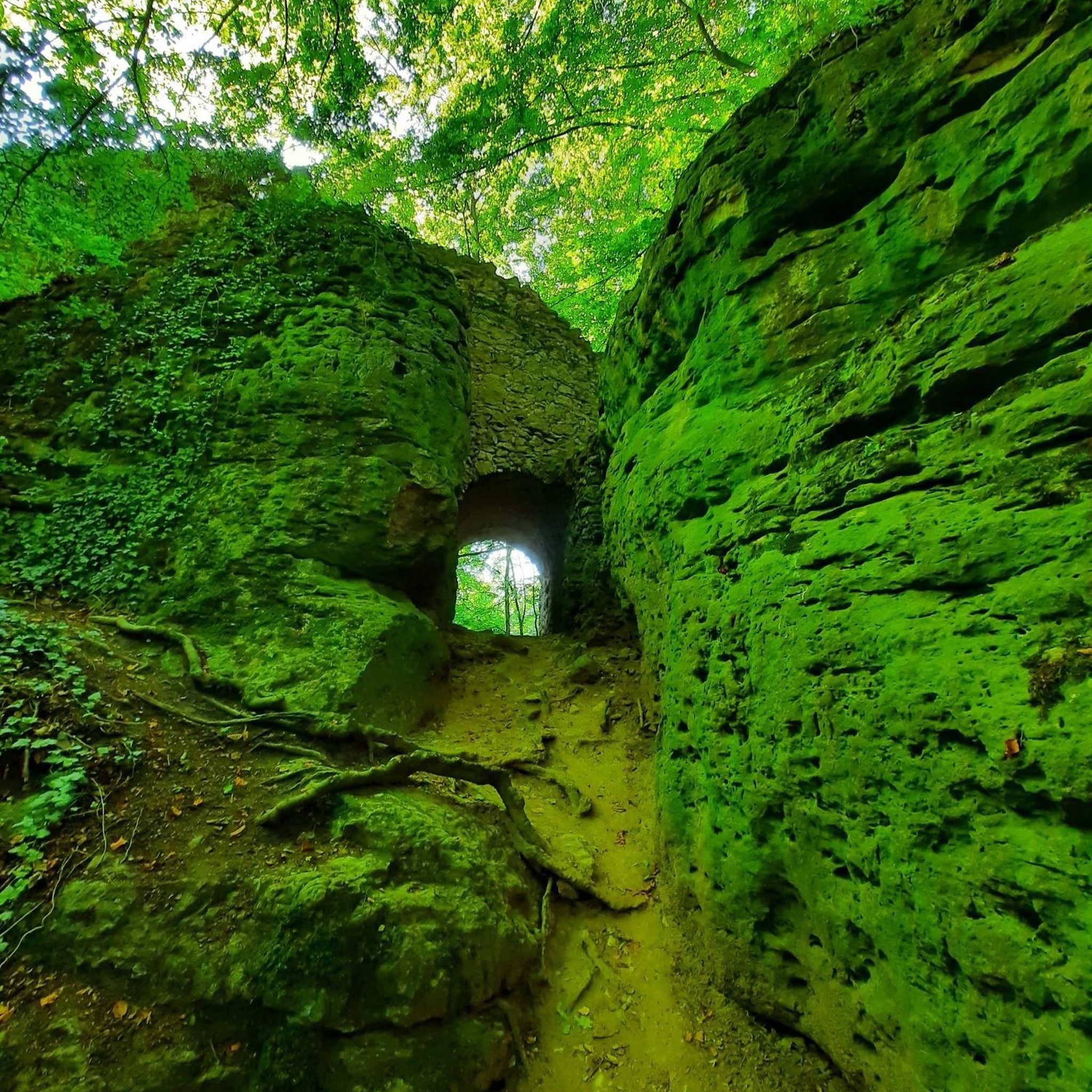
The Rhine and its tributaries have cut deep valleys into the high plateau of the Hunsrück in the Bacharach area, on the slopes of which slate occurs, which was used in construction and especially for roofing. You are standing here in front of an old slate tunnel.
2
0

On the serpentine path (World Heritage Trail) to the Traumschleifchen there is a small shelter
1
0

Spectacular insight into slate mining
0
0

Short VIDEOs about my hikes in this area could be found at my YouTUBE Channel under the following link:https://www.youtube.com/@konstantinschilin5685/playlists (please, select PLAYLIST - RHEINSTEIG_RHEINBURGENWEG
0
3

There are several slate mines around Steeg where mining continued until the 20th century. The mines are closed with steel bars for safety reasons.
0
0

I just saw it by chance and didn't investigate it further. It could be a useful weather protection during a thunderstorm.
1
0
Frequently Asked Questions
What types of underground experiences can I find around Rheinböllen?
The region around Rheinböllen, particularly the Rhein-Hunsrück-Kreis district, is known for its historical mining tunnels and unique geological formations. You'll find former slate mines, such as the Old Slate Mine and Steeg Slate Mine, which offer insights into the area's industrial past. Additionally, the wider Rhineland-Palatinate region features unique basalt rock cellars, like the Mendig Lava Cellars, providing diverse underground exploration opportunities.
What is the historical significance of the caves and tunnels in this region?
Many of the 'caves' around Rheinböllen are actually former mining tunnels, primarily for slate. Sites like the Baybachtal Bat Cave and the Laykaul Slate Caves were active mining operations, employing workers and shaping the local economy. During World War II, these tunnels also served as shelters for residents during air raids, adding a layer of historical importance. The Mendig Lava Cellars, while not natural caves, are historical sites of basalt mining, later used for beer storage due to their consistently cold temperatures.
Are there any specific historical mining tunnels I can visit?
Yes, several historical mining tunnels offer unique experiences. The Baybachtal Bat Cave (a former roof slate pit) allows visitors to observe mighty slate slabs and explore tunnel entrances. The Upper and Lower Laykaul Slate Caves are impressive former mining tunnels with large systems and high domes. Another option is the Grube Viktoria exploration tunnel, part of a larger mining complex near Kaub, which offers a glimpse into the extensive slate extraction of the past.
What are the Mendig Lava Cellars, and how are they different from other caves?
The Mendig Lava Cellars are not natural caves but rather gigantic underground halls created by centuries of basalt and lava mining. They are supported by mighty basalt pillars left standing during extraction. Historically, these cellars were used by breweries for storing beer due to their consistently cold temperatures. A guided tour provides insight into their unique history and the region's volcanic past, offering a different kind of underground experience compared to the slate mines.
Are there hiking trails that lead to or past these caves?
Yes, many of the cave sites are accessible via hiking trails. For instance, the Old slate cave in the Upper Middle Rhine Valley is located along a route. The Slate cave on the Serpentine Path Kaub is found on the serpentine path from the Kaub ferry. You can find numerous hiking routes around Rheinböllen, some of which may pass by these historical sites. For more hiking options, explore the Hiking around Rheinböllen guide.
What other outdoor activities can I do near the caves around Rheinböllen?
Beyond exploring the caves, the Rheinböllen region offers a variety of outdoor activities. You can enjoy gravel biking on routes like the Schinderhannes Cycle Path, or embark on cycling tours with scenic views of the Rhine and its castles. The area also has numerous hiking trails, including those leading to lookout towers and natural monuments. For detailed routes, check out the Hiking, Gravel Biking, and Cycling around Rheinböllen guides.
Are the caves around Rheinböllen suitable for families?
Many of the former mining tunnels and slate caves are accessible and can be an interesting educational experience for families, offering a glimpse into history and geology. However, some tunnels might be dark, wet, or require stooping, as noted for the Steeg Slate Mine. It's advisable to check specific access details for each site. The Mendig Lava Cellars often offer guided tours that are generally suitable for families.
Can I visit the caves with my dog?
While many outdoor areas and hiking trails in the Hunsrück region are dog-friendly, access to specific cave interiors, especially former mining tunnels, can vary. Some tunnels might be narrow, dark, or have uneven, wet surfaces, which might not be ideal for all dogs. It's best to check local regulations or visitor information for each specific cave or mine site regarding dog access.
What should I wear when exploring the caves?
When exploring the former mining tunnels and caves, it's recommended to wear sturdy, waterproof footwear, as some areas can be wet and muddy. Layers of clothing are advisable, as underground temperatures can be consistently cool, even in summer. A headlamp or flashlight is essential for navigating dark sections, as mentioned by visitors to the Steeg Slate Mine.
What is the best time of year to visit the caves?
The historical mining tunnels and basalt cellars maintain a relatively consistent cool temperature year-round, making them suitable for visits in various seasons. However, access to some outdoor slate quarries or tunnel entrances might be easier during drier months (spring to autumn) when paths are less muddy. For sites like the Mendig Lava Cellars, which are indoors, any time of year is suitable.
How long does it typically take to explore these caves?
The duration of exploration varies significantly by site. Some smaller slate tunnels, like the Grube Viktoria exploration tunnel, might only take a few minutes to walk into. Larger systems, such as the Laykaul Slate Caves, could involve more extensive exploration. Guided tours, like those at the Mendig Lava Cellars, typically last an hour or more. Plan according to the specific site you intend to visit.
Is parking available near the cave sites?
Parking availability varies by location. For many of the historical mining sites and slate caves, you'll often find parking areas at nearby trailheads or small villages. For more established visitor attractions like the Mendig Lava Cellars, dedicated parking facilities are usually provided. It's always a good idea to check specific access and parking information for each site before your visit.
Are there any hidden gems or less-known caves worth exploring?
Beyond the more prominent sites, the region has numerous smaller, less-known slate caves and tunnels. For example, the Slate cave on the Serpentine Path Kaub is described as a small shelter along a hiking route. Exploring the various hiking trails in the Rhein-Hunsrück-Kreis can often lead to discovering these smaller, intriguing underground features that offer a quiet glimpse into the region's geology and history.
Most popular routes around Rheinböllen
Most popular attractions around Rheinböllen

Get inspired with the komoot mobile app


Explore more
Extend your search for the best caves by checking out these guides of the top ones around Rheinböllen:
