Attractions and Places To See around Delme - Top 9
Best attractions and places to see around Delme include a mix of historical landmarks, cultural sites, and natural features in the Moselle department of France. The region is characterized by its varied landscape, from the Seille valley to elevated viewpoints. Visitors can explore 9 hidden gems, offering insights into the area's heritage and natural environment.
Best attractions and places to see around Delme
- The most popular attractions is Grémecey, a small town located on the GR 5 route. It…
Last updated: July 5, 2026
Grémecey
Highlight • Other
Translated by Google •
Tip by

Saint-Rémi Church & war memorial
Highlight • Religious Site
Translated by Google •
Tip by

Sign up now to discover places like this
Get recommendations on the best single tracks, peaks, & plenty of other exciting outdoor places.
Sign up for free
Burgruine
Highlight • Other
Translated by Google •
Tip by
Château d'Aulnois
Highlight • Other
Translated by Google •
Tip by
Saint-Laurent Church (Attilloncourt)
Highlight • Religious Site
Translated by Google •
Tip by
Sign up for free to discover even more attractions around Delme.
Sign up for free
Already have an account?
Start today with a free account
Your next adventure awaits.
Login or Signup

Tips from the Community

The church of Attincourt is an example of sober rural architecture, probably rebuilt or renovated in the 19th or early 20th century. It has a simple rectangular plan with a bell tower on the west side. The facades are built of local natural stone, with pointed arch windows that refer to the neo-Gothic style. Inside, the interior is functional and modest, in keeping with the rural character of the village.
7
0
The neo-Gothic Église Saint-Rémi was built after 1920, probably to replace an earlier church that was damaged during the First World War. Next to the church is the village memorial to the fallen, a modest memorial that pays tribute to the people of Bioncourt who lost their lives in the Great War.
7
0
Originally a medieval fortification of the bishopric of Metz, this castle was rebuilt in the 18th century in a classical style by architect Germain Boffrand. Picturesquely situated above the Seille, it combines ancient towers with elegant facades. Today it serves as a primary school and cultural centre, and is listed as a historical monument.
8
0
In the heart of Nomeny lie the remains of a medieval castle that was once a strategic stronghold of the bishops of Metz. Built in the 12th century and fortified in the 14th century, the castle had a rich history until it was largely dismantled in the 17th century. Today, a few towers, walls and moats are still visible — silent witnesses to a glorious past.
5
0

Unfortunately not open to visitors.
2
0

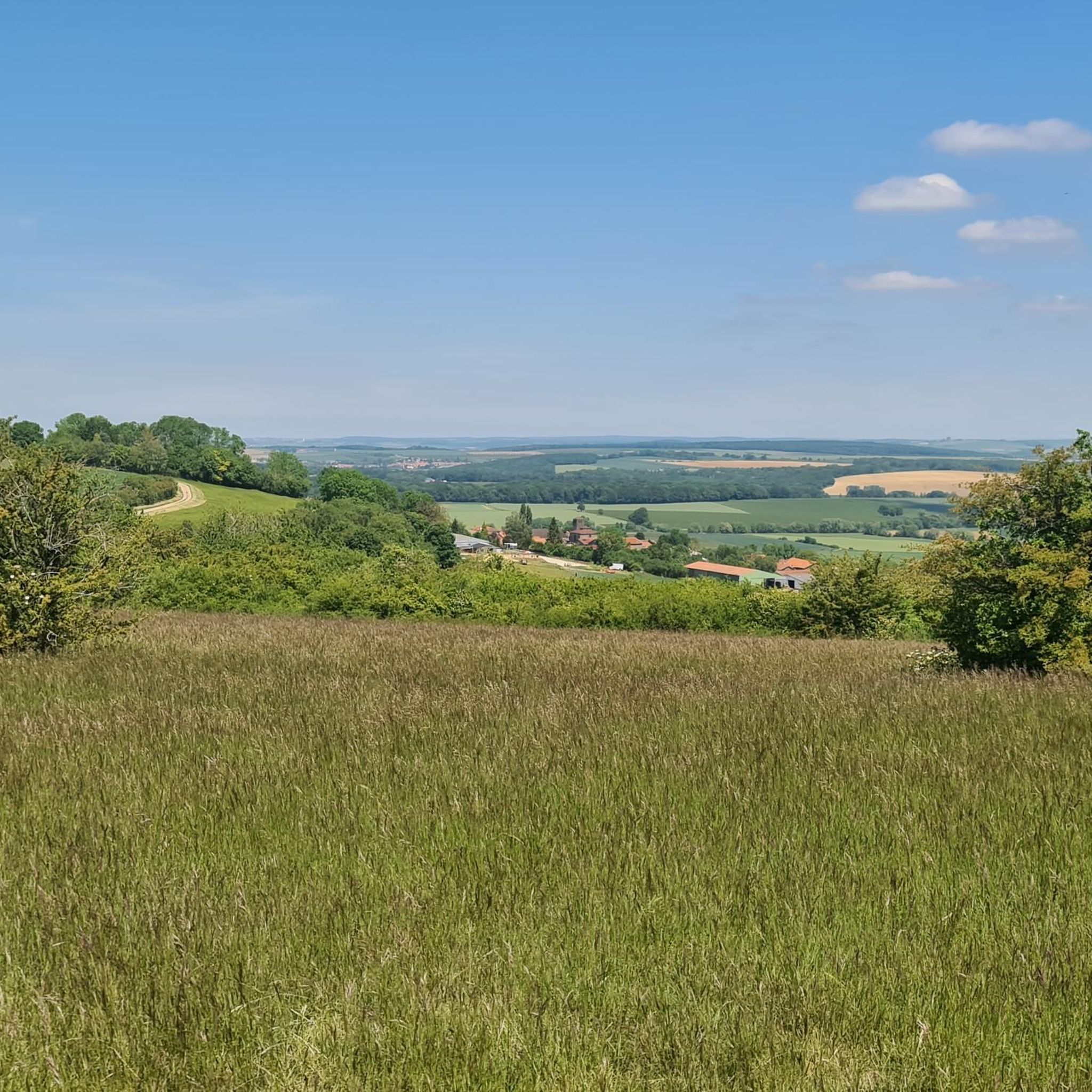
Grémecey is a small town of around a hundred inhabitants on the GR 5 route. Without shops, you can still stop in the village to ask the inhabitants for water or have a bite to eat.
1
0
Frequently Asked Questions
What are some notable historical landmarks to explore around Delme?
Delme and its surroundings offer several historical landmarks. You can visit the impressive Château d'Aulnois, a historical castle rebuilt in the 18th century, which combines ancient towers with elegant facades. Another significant site is the Saint-Rémi Church & war memorial, a neo-Gothic religious building constructed after 1920. Additionally, the remains of a medieval castle, known as Burgruine, can be found in Nomeny, though it's not open to visitors, its visible towers and walls tell a story of a strategic stronghold.
Are there any natural features or viewpoints worth visiting near Delme?
Absolutely. The most prominent natural feature is the Côte de Delme, a regional nature reserve. From its highest point of 403 meters, it offers superb panoramic views over the Saulnois and the Nied river. This area is known for its unique flora and fauna, including calcareous grasslands, various lizards, insects, and 14 species of orchids blooming in spring. Orientation tables are available for visitors to enjoy the remarkable landscapes.
What kind of outdoor activities can I do around Delme?
The Delme area is excellent for outdoor enthusiasts. You can find numerous routes for both cycling and hiking. For cycling, consider routes like the 'Côte de Delme via Liocourt loop from Delme' or the 'Bike loop from Prévocourt'. If you prefer hiking, popular options include the 'Ras – Delme Hill Climb loop from Xocourt' or the 'Côte de Delme loop from Puzieux'. You can find more details and routes in the Cycling around Delme and Hiking around Delme guides.
Are there any cultural sites or art centers in the Delme region?
Yes, Delme is home to the Centre d'Art Contemporain, which is housed within a former synagogue. Established in 1993, this contemporary art center is known for its experimental approach and has hosted over 60 exhibitions, making it a significant cultural hub in the region.
What is Grémecey and why is it mentioned as an attraction?
Grémecey is a small town located directly on the GR 5 route. It's considered an attraction primarily as a convenient stopping point for travelers and hikers undertaking longer journeys, offering a chance to rest and potentially interact with locals, though it doesn't have shops.
Are there any other religious buildings of interest besides Saint-Rémi Church?
Yes, you can also visit the Saint-Laurent Church (Attilloncourt). This church is an example of sober rural architecture, likely rebuilt or renovated in the 19th or early 20th century, featuring local natural stone and neo-Gothic elements.
What is the Jardin du château and can I visit it?
The Jardin du château is a classic terraced garden in Delme, drawing inspiration from Germain Boffrand. It is overlooked by the grand facade of a château. While the garden itself is a point of interest, specific visitor access information would need to be confirmed locally.
Is there anything for those interested in ancient history near Delme?
For those interested in ancient history, the Oppidum protohistorique de Tincry, a large fortified Iron Age settlement, is located near Delme. It offers a glimpse into the region's ancient past and early human settlements.
What is the best time of year to visit Delme for outdoor activities?
Given the description of the Côte de Delme with its blooming orchids in spring and diverse insect life, spring and early summer would be ideal for experiencing the natural beauty and outdoor activities. The weather is generally pleasant for hiking and cycling during these seasons.
Are there any specific cycling routes recommended for road biking around Delme?
Yes, road cycling is popular in the area. You can explore routes like the 'Delme Hill loop from Delme' or the 'Haut de la Bise loop from Delme'. For longer rides, the 'Canal Path in Einville-au-Jard – Lunéville Castle loop from Delme' offers a more challenging option. More routes are available in the Road Cycling Routes around Delme guide.
What makes the Côte de Delme nature reserve unique?
The Côte de Delme is unique due to its dry, poor soil, which creates an environment similar to Mediterranean basins. This allows for a distinctive ecosystem, featuring calcareous grasslands, beech woodlands, and a rich biodiversity including sand and wall lizards, praying mantises, blue-winged grasshoppers, 72 species of butterflies (like the Marsh Fritillary), and 14 species of orchids. It's also recognized as a Natura 2000 site.

Get inspired with the komoot mobile app


Explore more
Still not found the Highlight you’re looking for? See guides of the top attractions in other regions:
