Attractions and Places To See around Roye - Top 7
Best attractions and places to see around Roye include a variety of historical and religious sites, alongside natural green spaces. Located in the Somme department of Hauts-de-France, Roye offers insights into its past as a border town and its reconstruction after significant conflicts. The area is characterized by its historical landmarks, religious architecture, and the presence of the Avre River. Visitors can explore sites that reflect the region's heritage and natural surroundings.
Best attractions and places to see around Roye
…Last updated: August 25, 2026
Château de Boulogne-la-Grasse
Highlight • Castle
Translated by Google •
Tip by

Nécropole militaire allemande de Lassigny
Highlight • Other
The cemetery was created in 1919 by the …
Translated by Google •
Tip by

Sign up now to discover places like this
Get recommendations on the best single tracks, peaks, & plenty of other exciting outdoor places.
Sign up for free
Church of the Assumption of Our Lady & war memorial
Highlight • Religious Site
Translated by Google •
Tip by
Église Saint-Jean-Baptiste in Plessis-de-Roye
Highlight • Religious Site
Translated by Google •
Tip by
Canny-sur-Matz
Highlight • Other
Translated by Google •
Tip by
Sign up for free to discover even more attractions around Roye.
Sign up for free
Already have an account?
Start today with a free account
Your next adventure awaits.
Login or Signup



Tips from the Community

Each cross indicates the function of the warrior.
4
0
The Lassigny military cemetery is an impressive and sober memorial site where 1,777 German soldiers from the First World War are buried. The cemetery was created in 1919 by the French military authorities, initially as a Franco-German communal cemetery. Its origins lie in a mass grave from the summer of 1918, in which 55 unknown French soldiers were buried. In 1922, the French bodies were transferred to another cemetery, after which the site was converted into a German military cemetery. The fallen came from more than 27 municipalities in the region, up to 18 km away. In 1977, the cemetery took on its current form, with metal crosses bearing the names and dates of the fallen. A monolithic memorial marks the entrance to the site.
4
0
The Église Saint-Jean-Baptiste in Plessis-de-Roye is an exceptional example of reconstruction architecture with a deeply symbolic meaning. Originally built in the first half of the 15th century, the church was almost completely destroyed during the First World War. It was rebuilt between 1930 and 1932 by the architect André Collin, who deliberately chose to leave the nave unfinished. This gave the church the character of a small cloister — a powerful symbol of loss and remembrance of the devastation of war.
4
0
The village played an important role during the First World War. It was occupied on 30 August 1914 and was the scene of fierce fighting during the “Race to the Sea” and again during the Battle of Matz in June 1918. The village was badly damaged and was awarded the Croix de Guerre for its suffering and courage.
4
0
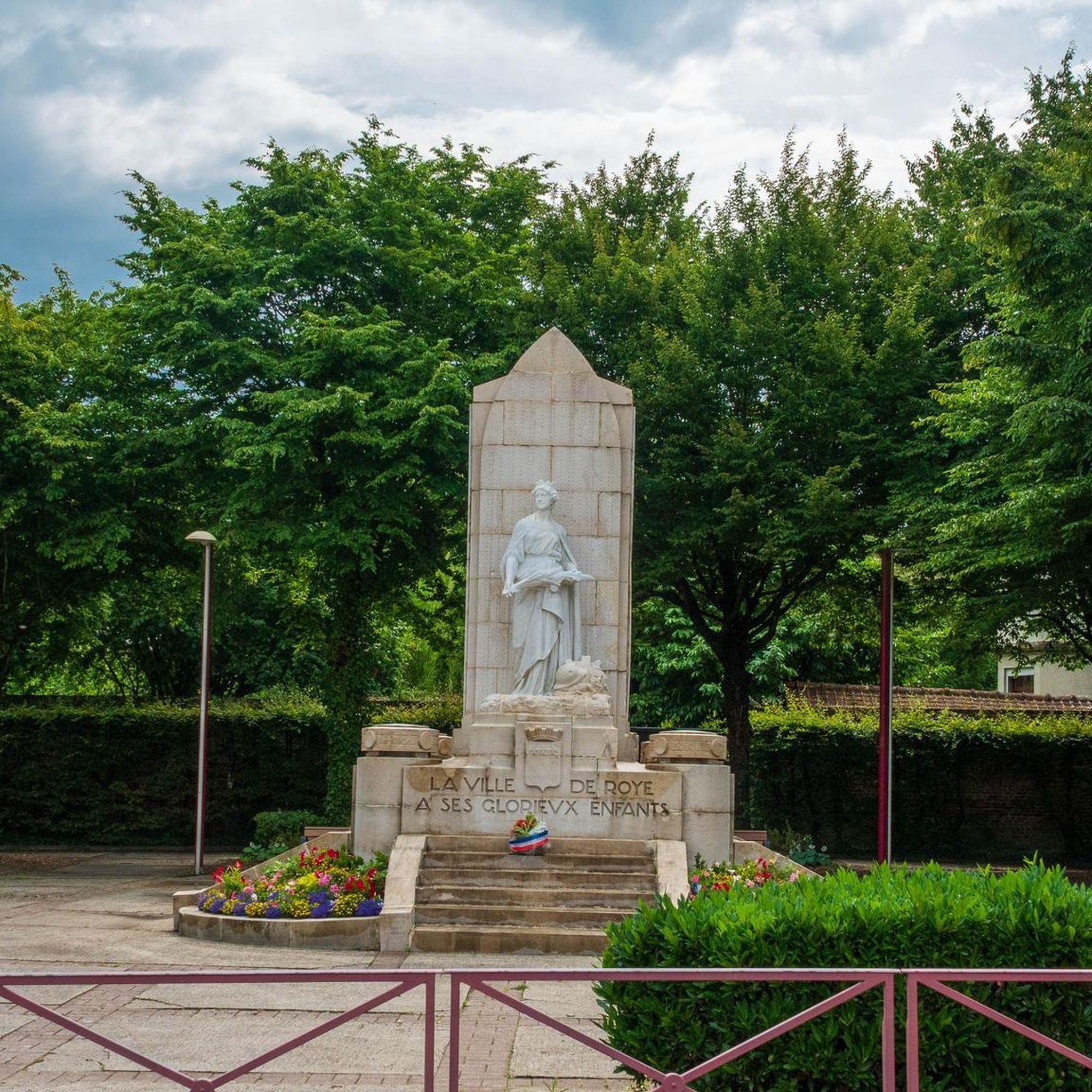
After the devastation of the First World War, a new church dedicated to Our Lady of the Assumption was built in Fresnières in 1929-1930. Its architecture reflects the spirit of the time: a combination of neo-Romanesque forms and Art Deco elements. The round arched windows and the barrel vault in the nave refer to the classical Romanesque style, while the mosaic portal and the straight lines of the bell tower clearly reveal the influence of Art Deco. Above the portal, a fresco with a historical inscription dating back to the time of Louis XIV is a subtle reminder of the long history of this place.
5
0

You made me want to take a trip there soon. Thanks Leo
2
0

The Château de Boulogne is unlike any other. With an architecture drawing its inspiration from history and esotericism, it was born in the imagination of Charles de Boulogne (1864 - 1940), a rich Belgian landowner who purchased the title of Count and who undertook the construction of the castle in 1896 on the remains of the Lancry family castle. For 25 years, he put all his energy and his fortune into creating his 'Great Work', a philosopher's residence, a castle of Mysteries which unfortunately was largely destroyed during the Battle of Matz in 1918. For his fellow citizens, Count Charles de Boulogne was the builder of a spooky residence. An incomprehensible man, a little crazy, an “enlightened person”? And yet the sentence he had engraved on the portal gives us the key: “Sortis patiens esto nulli clauderis honesto” ("Be patient, nothing is closed to an honest man")
4
1
Frequently Asked Questions
What historical sites can I explore in and around Roye?
Roye and its surroundings are rich in history, particularly reflecting its past as a border town and its experiences during the World Wars. You can visit the remains of the Ramparts and St. Lawrence Tower, which date back to the 11th century. Other significant historical sites include the Château de Boulogne-la-Grasse, a unique castle with architecture inspired by history and esotericism, largely destroyed in 1918 but still a fascinating ruin. The village of Canny-sur-Matz also played a crucial role during World War I and was awarded the Croix de Guerre.
Are there any significant religious buildings to visit in Roye?
Yes, Roye features several notable religious buildings. The Saint-Gilles Church, a 15th-century brick church, retains its distinctive Picardy-style hipped roof. St. Peter's Church, rebuilt in concrete in 1930, is known for its beautiful 16th-century choir. Further afield, the Église Saint-Jean-Baptiste in Plessis-de-Roye is an exceptional example of reconstruction architecture, with its deliberately unfinished nave symbolizing loss and remembrance from WWI. The Church of the Assumption of Our Lady & war memorial in Fresnières combines neo-Romanesque and Art Deco elements.
What natural attractions or green spaces can I find near Roye?
Roye is known for its significant greenery and offers several natural escapes. The Demouy Recreational Area is a one-hectare public park with multiple islands and diverse flora, perfect for a serene escape. The Avre River traverses the town, adding to the local landscape. For a more extensive natural experience, Fignières Mountain (Montagne de Fignières), located near Montdidier, is a 4-hectare natural site with a 3-kilometer marked walking trail and diverse flora, including wild orchids.
Are there opportunities for hiking around Roye?
Yes, the countryside around Roye offers numerous opportunities for hiking. You can find various marked paths and country roads for walks. For specific routes, explore the Hiking around Roye guide, which includes trails like the 'Ruins of the Cemetery Chapel loop from Guerbigny' (11.1 km, moderate) or the 'Park Bench – Castany loop from Saint-Mard' (7.2 km, easy).
Can I go cycling near Roye?
Absolutely! Roye is a great starting point for cycling adventures. There are dedicated guides for different cycling styles. For road cycling, check out the Road Cycling Routes around Roye guide, featuring routes like the 'Roadbike loop from Roye' (47 km, easy). If you prefer off-road experiences, the MTB Trails around Roye guide offers options such as the 'VBois de Gueule loop from Conchy-les-Pots' (18 km, easy).
What sites commemorate World War I in the Roye region?
The Roye region bears many scars and memorials from World War I. The Nécropole militaire allemande de Lassigny is an impressive and sober memorial site where 1,777 German soldiers are buried. The German Military Cemetery in Roye also serves as a poignant reminder. Many churches, like St. Peter's Church and the Église Saint-Jean-Baptiste in Plessis-de-Roye, were rebuilt after being destroyed during the war, with the latter deliberately left unfinished as a symbol of remembrance. The village of Canny-sur-Matz was also heavily impacted and recognized for its courage during the conflict.
Are there any family-friendly attractions in Roye?
For families, the Demouy Recreational Area offers a pleasant public park with islands and green spaces, ideal for a leisurely stroll or picnic. The Church of the Assumption of Our Lady & war memorial is also considered family-friendly, offering a glimpse into local history and architecture in a serene setting.
What is the Metallic Market Hall in Roye?
The Metallic Market Hall, constructed in 1878, is a significant symbol of Roye's commercial heritage. This historic structure continues to host a weekly market on Friday mornings, offering a vibrant local experience and a chance to see a piece of the town's past still in use today.
What is the best time of year to visit Roye for outdoor activities?
The best time to visit Roye for outdoor activities like hiking and cycling is generally during the spring (April to June) and autumn (September to October). During these months, the weather is typically mild and pleasant, making it comfortable to explore the natural sites and countryside. Summer can also be enjoyable, but be prepared for warmer temperatures.
What makes the Château de Boulogne-la-Grasse unique?
The Château de Boulogne-la-Grasse is truly unique due to its architecture, which draws inspiration from history and esotericism. It was the 'Great Work' of Charles de Boulogne, who poured his energy and fortune into creating a 'philosopher's residence' or 'castle of Mysteries' starting in 1896. Although largely destroyed during the Battle of Matz in 1918, its remains and the story behind its creation make it a fascinating and enigmatic historical site.
Are there any viewpoints or scenic spots around Roye?
While specific viewpoints are not highlighted, the general 'greenery' of Roye and the surrounding countryside offer many pleasant spots. The Demouy Recreational Area provides a serene setting with its islands and diverse flora. Exploring the marked walking trails on Fignières Mountain will also offer scenic views of the natural landscape.

Get inspired with the komoot mobile app


Explore more
Still not found the Highlight you’re looking for? See guides of the top attractions in other regions:
