Attractions and Places To See in the Grapevine Mountains - Top 5
Best attractions and places to see in the Grapevine Mountains include a rugged and isolated landscape primarily within Death Valley National Park. This mountain range, stretching along the California-Nevada border, features notable natural landmarks and historical points of interest. Visitors can explore deep canyons, significant peaks, and sites reflecting the region's mining history. The area offers diverse opportunities for outdoor exploration and discovering natural wonders.
Best attractions and places to see in the Grapevine Mountains
- The most popular attractions is…
Last updated: July 8, 2026
Keane Wonder Mine
Highlight • Historical Site
Tip by

Chloride City
Highlight • Historical Site
Tip by

Sign up now to discover places like this
Get recommendations on the best single tracks, peaks, & plenty of other exciting outdoor places.
Sign up for free
Chloride Cliff Road
Highlight (Segment) • Trail
Tip by
Daylight Pass Climb from Beatty Junction
Highlight (Segment) • Climb
Tip by

View of Corkscrew Peak
Highlight • Viewpoint
Tip by

Start today with a free account
Your next adventure awaits.
Login or Signup
Popular around Grapevine Mountains
Tips from the Community

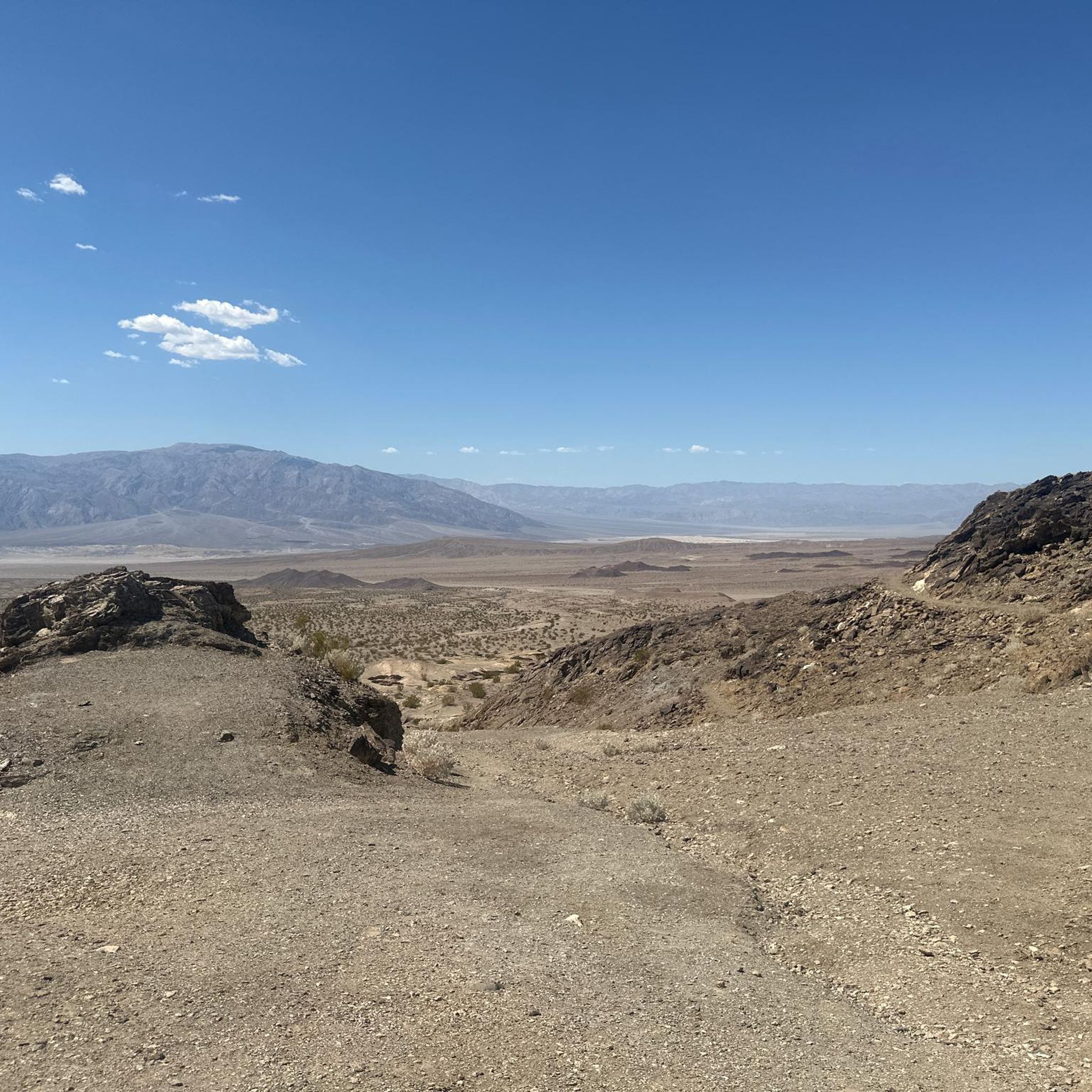
Climbing Daylight Pass from Beatty Junction offers you a journey through stark and colourful desert mountain ranges. This 8-10 mile climb gains around 1,000-1,300ft to the 4,317ft pass, featuring a gentle overall gradient of around 2-3%. Enjoy the arid landscape with expansive views into Death Valley. With zero shade and no services at all, self-sufficiency and attempting in the cooler months are key.
0
0

Chloride City, California, sits at an elevation of 4,770 feet and is one of Death Valley's oldest mines. Established in 1905 after the silver and gold discovery, legend has it that in 1871, August J. Franklin picked up a rock to strike a rattlesnake and found silver ore. Today, all that is left are numerous adits, dumps, old buildings (some of the only shade here), and the grave of James McKay. The town also has the remains of three stamp mills. You'll find more remnants scattered around Chloride Cliff Road and its side trails.
0
0
Chloride Cliff Road offers an exciting ride near the Nevada-California border, popular with off-road vehicles and hikers. The 14.6-mile road from US-95 leads to the ghost town of Chloride City, with old mining relics still rusting in the desert sun. Be cautious of larger, sharp rocks, and it does not hurt to have a patch kit just in case. The road ends at 5,278 feet above sea level, with narrow shelf roads and amazing views into Death Valley and Nevada. There is no shade here, so plan accordingly.
0
0

The trail up to Corkscrew Peak is a well maintained trail, that gives you great views of the canyons and cliffs in the area. The trail is popular, so there is a good chance you will see others out on the trail
0
0

Corkscrew Peak has been given its name because, with a little bit of imagination, it resembles a corkscrew. It's not the highest mountain in the range but definitely one of the most recognizable peaks. The hike to the peak is popular because of its pleasant route, incredible views, and rugged canyons and cliffs on the way there.
1
0

Death Valley became a place of legend for people traveling westward, for its extremes and its potential as a place to strike it rich. Today as a protected landscape the modern history is still visible when you visit the park. There are over 18,000 mining features, including structures such as the aerial tramway towers and terminals at the Keane Wonder Mine. These impressive pieces of our past inspire us to imagine one of many similar stories that took place across not only Death Valley, but much of the west. Claims were staked in December of 1903, and by 1907 the Keane Wonder Mine was in full operation. The ore buckets you can still observe along the mile-long aerial tramway would have transported 70 tons of gold ore a day during peak production. The extreme environmental conditions that are present in the park today were a factor in the lives of the workers at the mine. Summer temperatures that limit our daytime activities caused equipment to overheat. Reduced spring output made water less abundant and limited production. By 1912, the value of the Keane Wonder Mine ebbed with a lack of raw material to continue mining profitably, and by 1942 the last attempt to continue operations came to a close. From 2008 to 2017, the area was closed for structural stabilization, mine mitigation and soil sampling. The preserved structures at Keane Wonder inspire us to imagine the miners who walked these same trails in search of a different value in the landscape. Visitors can hike up the steep mile-long trail, climbing 1,500 feet in the Funeral Mountains. To find out more: https://www.nps.gov/deva/learn/historyculture/keane-wonder-mine.htm
0
2

If you follow the canyon and a faint road, you will get from the lower Keane Wonder Mill to a line of tramway towers and finally to the actual mining area for harvesting gold.
5
0
Frequently Asked Questions
What natural features can I explore in the Grapevine Mountains?
The Grapevine Mountains are rich in natural wonders. You can explore the dramatic limestone formations and ancient petroglyphs within Titus Canyon. Other notable features include Moonlight Canyon, home to several natural bridges like Moonlight Bridge, and Fall Canyon, known for its colorful ravines. Don't miss the distinctive View of Corkscrew Peak, a recognizable summit with rugged canyons and cliffs.
Where can I find the best views in the Grapevine Mountains?
For incredible vistas, the View of Corkscrew Peak offers expansive scenes of canyons and cliffs. Another excellent spot is Daylight Pass Climb from Beatty Junction, which provides broad views into Death Valley and the surrounding arid landscape. Chloride Cliff Road also offers amazing views into Death Valley and Nevada.
What historical sites can I visit in the Grapevine Mountains?
The region has a rich mining history. You can visit the Keane Wonder Mine, where you can see tramway towers and the actual gold harvesting area. Explore the ghost town of Chloride City, with its old buildings, adits, and dumps. Titus Canyon also contains the ghost town of Leadfield and ancient petroglyphs.
Are there any ghost towns to explore in the Grapevine Mountains?
Yes, the Grapevine Mountains are home to several ghost towns. You can visit Chloride City, established after silver and gold discoveries, where remnants of old buildings and mining relics still stand. Another ghost town, Leadfield, can be found along Titus Canyon Road.
What hiking trails are available in the Grapevine Mountains?
The Grapevine Mountains offer a variety of hiking experiences. Popular trails include the Corkscrew Peak Trail, known for its pleasant route and views, and the Fall Canyon Trail. You can also explore the Keane Wonder Mine Trail, which leads to historical mining areas. For a different experience, consider the Ubehebe Crater Loop Trail. Find more details on these and other routes in the Hiking in the Grapevine Mountains guide.
Are there any challenging hikes in the Grapevine Mountains?
Yes, many trails in the Grapevine Mountains are considered challenging. The hike to Grapevine Peak, the highest point in the range, requires significant route-finding skills as there's no maintained trail. The Corkscrew Peak Trail is also noted for its rugged canyons and cliffs. The Keane Wonder Mine trail involves a steep climb. Always be prepared for arid conditions and lack of shade on these routes.
What is the best time to visit the Grapevine Mountains?
The Grapevine Mountains, being part of Death Valley National Park, are best visited during the cooler months, typically from late fall to early spring (October to April). Summer temperatures can be extreme, making outdoor activities challenging and potentially dangerous due to intense heat and lack of shade. Always plan for self-sufficiency, especially when attempting climbs like Daylight Pass Climb from Beatty Junction.
What unique geological discoveries have been made in the Grapevine Mountains?
The Grapevine Mountains are significant for containing Late Miocene trackways and vertebrate fossils, including those of camels, horses, gomphotheres, and aquatic birds, associated with ancient shallow freshwater lakeshores. Additionally, Moonlight Canyon is notable for its extraordinary natural bridges, including Moonlight Bridge, the tallest natural bridge in Death Valley, discovered in 2013.
What kind of outdoor activities can I do near these attractions?
Beyond exploring the attractions themselves, the Grapevine Mountains offer excellent opportunities for hiking. You can find various routes, from the moderate Fall Canyon Trail to the more difficult Corkscrew Peak Trail. For a mix of history and activity, the Keane Wonder Mine Trail is also available. Discover more options in the Hiking in the Grapevine Mountains guide.
Are there any specific roads or passes known for scenic drives?
Yes, Titus Canyon Road offers a scenic 27-mile drive through a narrow gorge, showcasing incredible rock formations and leading to the ghost town of Leadfield. Chloride Cliff Road also provides an exciting ride with amazing views into Death Valley and Nevada, popular with off-road vehicles.
What makes Corkscrew Peak a popular attraction?
Corkscrew Peak is popular due to its distinctive shape, which, with a bit of imagination, resembles a corkscrew. The hike to the peak is well-regarded for its pleasant route, offering incredible views and passage through rugged canyons and cliffs, making it a favorite among visitors.
What can I expect when visiting Chloride City?
When visiting Chloride City, you'll find the remnants of a ghost town established after silver and gold discoveries. Expect to see numerous adits, mining dumps, and old buildings scattered around Chloride Cliff Road. It's a glimpse into the region's past, offering a sense of the historical mining operations.
Most popular routes in the Grapevine Mountains

Get inspired with the komoot mobile app


