Top 11 Mountain Passes around Montmajor
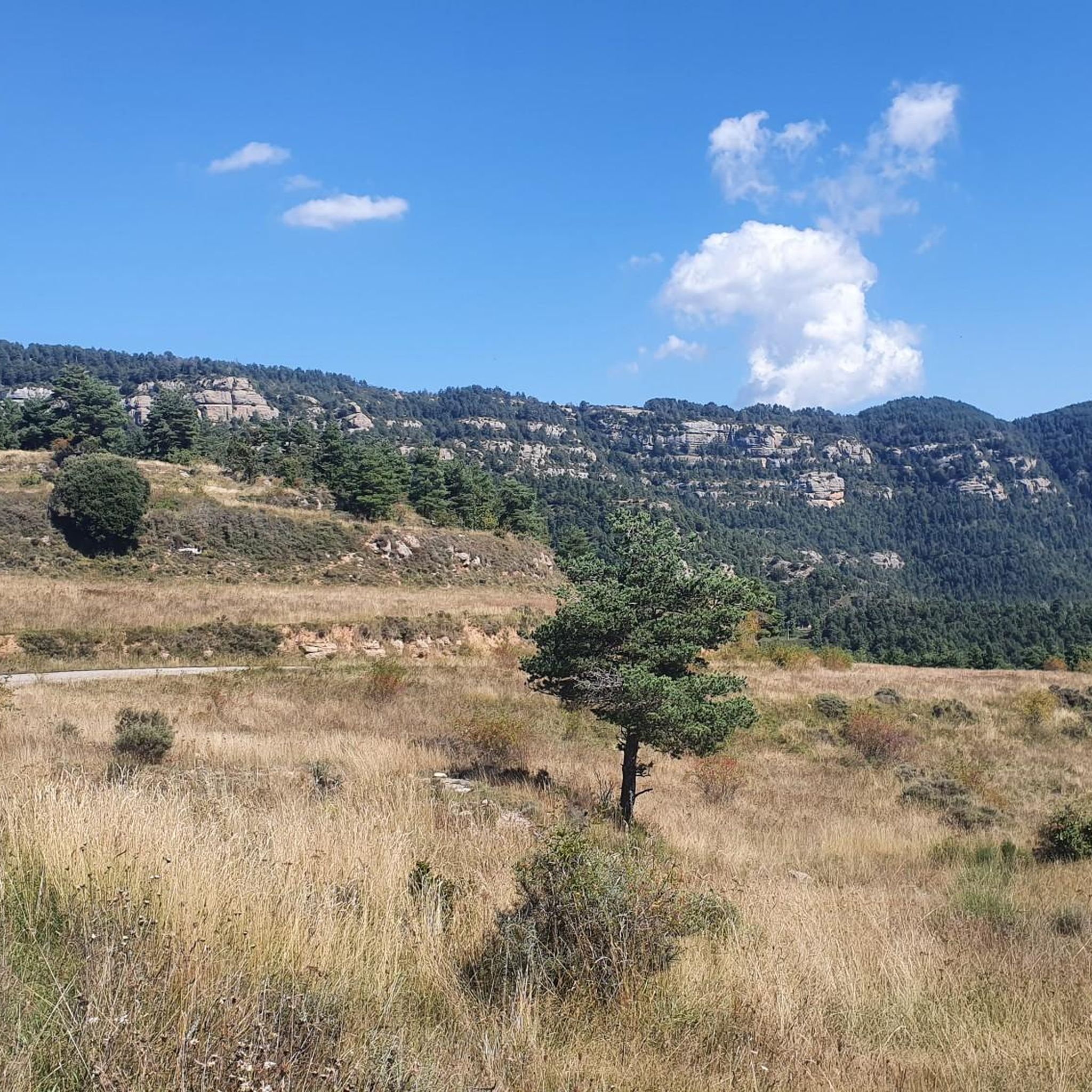
Best mountain passes around Montmajor serve as a gateway to the Parc Natural del Cadí-Moixeró and the wider Catalan Pyrenees. This region, located in the Berguedà comarca of Catalonia, Spain, offers numerous passes. The area is valued for its scenic beauty, challenging routes for cycling and hiking, and opportunities to explore a rich natural landscape.
Best mountain passes around Montmajor
- The most popular mountain passes is Rasos de Peguera, a climb known for its smooth tarmac and great views.…
Last updated: June 26, 2026
Rasos de Peguera
Highlight • Climb
Tip by

Coll de Busa
Highlight (Segment) • Mountain Pass
Translated by Google •
Tip by

Sign up now to discover places like this
Get recommendations on the best single tracks, peaks, & plenty of other exciting outdoor places.
Sign up for free
Coll de Pradell
Highlight • Mountain Pass
Translated by Google •
Tip by

La Mina Tunnel
Highlight • Structure
Translated by Google •
Tip by
Mal Pas de Capolat
Highlight • Mountain Pass
Translated by Google •
Tip by
Sign up for free to discover even more mountain passes around Montmajor.
Sign up for free
Already have an account?
Start today with a free account
Your next adventure awaits.
Login or Signup


Tips from the Community

Very pleasant port of passage between Berga and Sant Llorenç de Morunys, with a very characteristic tunnel at the top. The two slopes are constant and accessible, with a lot of curves and along a very well paved and signposted mountain road. You can also reach the Mine through the port of Malpás de Capolat. It is a narrow road, with good asphalt, very quiet, a continuous up and down, although from the Mine it goes up more than down.
1
1
Ideal port on its southern slope for those who like climbs with high percentages. Mostly concreted road with a spectacular layout as it is excavated in the rock.
0
0
Spectacular climb to one of the most demanding peaks in Catalonia. Long climb, with sustained percentages and reaching almost 2000 meters. It is characterized by long straights and a very twisty and spectacular final stretch. Road in perfect condition.
0
0


The climb itself is very steep, and on concrete surface. But the rolling hills to Capolat afterwards are surrounded by very beautiful Catalan country side.
0
0
The gravel connection to the northern side has improved a lot. It's still very rough gravel. But rideable the whole way down on a road bike.
2
0

Between Solsona and Navès begins the hard gate of the Sierra de Busa with 14.4km long and 750m of positive difference in altitude. We will find maximum slopes of up to 17% and an average slope of 5.2% thanks to two long breaks that we will find halfway up the climb. It should be noted that km 11 is done at 9.6% and the last 400m have an average gradient of 11.7%. A demanding terrain that rewards you as soon as you reach the top where you can enjoy exceptional views of Solsonès and Bages, drawing Montserrat on the horizon. The Pla de Busa is located at 1372m.
1
0

Hard step, which links the Vallcebre massif -in old mining basins- with the Saldes valley. It is a very hard port that can be climbed by 3 slopes. The smoothest is its west face, from the town of Saldes. The other two come from the Llobregat valley, either through the Sant Corneli and Creu de Fumanya neighborhoods or through the town of Vallcebre.
1
0
Frequently Asked Questions
What are some of the most scenic mountain passes near Montmajor?
The region around Montmajor offers numerous passes known for their scenic beauty. Coll de Busa provides exceptional views of Solsonès and Bages, with Montserrat visible on the horizon. Mal Pas de Capolat is known for its photogenic road ascending through a cliff, with parts excavated in the rock. Further afield, Tancalaporta Pass offers breathtaking views within the Parc Natural del Cadí-Moixeró, and Port del Cantó provides outstanding views and beautiful scenery in the Alt Pirineu Natural Park.
Are there challenging mountain passes for experienced cyclists in the area?
Yes, Montmajor is known for challenging climbs. Rasos de Peguera is a demanding climb with smooth tarmac and great views, offering a real test of endurance. Coll de Busa features maximum slopes of up to 17%. Coll de Pradell is considered one of the toughest passages in Catalonia, with stretches up to 20%. Additionally, Vallter in the eastern Catalan Pyrenees is Catalonia's highest point accessible by road, with an average gradient of 7.3% and sections reaching 15%.
What kind of natural features and wildlife can I expect to see around these mountain passes?
The passes are often located within or near natural parks like the Parc Natural del Cadí-Moixeró and Alt Pirineu Natural Park. You can expect to see diverse flora, including black pine and Scots pine forests, alpine passes, and rocky terrains. Wildlife observation opportunities include symbolic species like bearded vultures and alpine choughs, particularly around Coll de Pal and Coll de la Creueta. The region is also known for diverse Pyrenean bird species.
Are there any historical mountain passes in the region?
Yes, Pas de Gosolans is a historical pass located between the municipalities of Gósol and Bellver de Cerdanya. It's a significant highlight for trekkers in the Cadí-Moixeró Natural Park and provides access to the GR 150.1 route.
What outdoor activities can I do near the mountain passes around Montmajor?
The area offers a wide range of outdoor activities. You can find numerous running trails, road cycling routes, and mountain biking trails. Many passes are excellent starting points for hiking, cycling, and exploring the natural landscape.
Are there specific hiking trails near these mountain passes?
Yes, many passes offer access to hiking trails. From Pas de Gosolans, hikers can access the GR 150.1 route. For more options, explore the running trails around Montmajor, which include routes like the Rasos de Peguera loop from Castellar del Riu, often suitable for hiking as well.
Which mountain passes are suitable for a scenic drive?
Coll de Pal and Coll de la Creueta are both accessible by road within the Cadí-Moixeró Natural Park, offering opportunities to observe wildlife and unique landscapes directly from your vehicle. Port del Cantó also provides quiet roads and beautiful scenery, making it ideal for a scenic drive.
What makes the <a href="https://www.komoot.com/highlight/840166" target="_blank" rel="noopener">Rasos de Peguera</a> pass unique?
Rasos de Peguera is highly regarded for its perfect smooth tarmac, hardly any traffic, and great views, making it a challenging yet rewarding climb. Visitors also note the possibility of continuing on a gravel path to connect with a northern road for a loop, offering beautiful landscapes.
Can I find mountain bike routes near Montmajor's passes?
Absolutely. The region is well-suited for mountain biking. You can find various MTB trails around Montmajor, including routes like the Serra de Busa and Vall d'Ora Loop, or the Abandoned Village of Peguera – Rasos de Peguera loop.
What do visitors enjoy most about the mountain passes around Montmajor?
Visitors appreciate the challenging climbs, the exceptional views from viewpoints like Coll de Busa, and the unique geological features such as the road excavated in rock at Mal Pas de Capolat. The variety of passes caters to different skill levels, from demanding ascents to picturesque drives, all within a rich natural landscape.
Is it possible to visit these mountain passes during winter?
Some passes, particularly those in higher subalpine terrains like Coll de Pal and Coll de la Creueta, are accessible by road. Vallter, being Catalonia's highest point accessible by road, is also a popular ski destination, indicating that access is maintained. However, conditions can vary, and it's advisable to check local weather and road conditions before planning a winter visit, especially for higher elevations.
Are there any passes that are particularly good for exploring unique geological formations?
Yes, Mal Pas de Capolat is notable for its road that ascends through a cliff, with parts spectacularly excavated in the rock. The Cadí-Moixeró mountain range, where passes like Tancalaporta and Pas de Gosolans are located, is also characterized by its impressive limestone formations.
Most popular routes around Montmajor
Most popular attractions around Montmajor

Get inspired with the komoot mobile app


Explore more
See even more epic mountain passes by checking out these guides around Montmajor:
