Attractions and Places To See around Bustelo - Top 11
Attractions and places to see around Bustelo include a variety of natural landscapes and historical sites. The region is characterized by the Bestança River valley and the Montemuro mountain range, offering diverse terrain for exploration. Bustelo features historical bridges, ancient trails, and religious buildings, providing insights into the area's heritage and natural environment. There are 11 distinct places to explore in and around Bustelo.
Best attractions and places to see around Bustelo
- The most popular attractions is Bridge Over the…
Last updated: June 18, 2026
Bridge Over the Bestança River
Highlight • Bridge
Translated by Google •
Tip by

Path along the Bestança
Highlight (Segment) • Trail
Translated by Google •
Tip by
Sign up now to discover places like this
Get recommendations on the best single tracks, peaks, & plenty of other exciting outdoor places.
Sign up for free
Nossa Senhora da Oliveira
Highlight • Religious Site
Translated by Google •
Tip by

Portas de Montemuro
Highlight • Mountain Pass
Translated by Google •
Tip by
Cabrum Natural Pools
Highlight • Lake
Translated by Google •
Tip by

Sign up for free to discover even more attractions around Bustelo.
Sign up for free
Already have an account?
Start today with a free account
Your next adventure awaits.
Login or Signup
Popular around Bustelo

Tips from the Community

We have incredible things throughout this country.
0
0

At Portas de Montemuro, the landscape stretches out without limits. Here, tables and benches invite you to take a break and enjoy the view, while the national road 321, popular with cyclists, marks the 1,215 metres of altitude. The highest peak of the Montemuro mountain range, at 1,381 metres, is nearby, to the east. Nearby, the ruins of the Wall of Portas de Montemuro preserve echoes of a distant past. Mentioned in the Inquiries of 1258, they reveal traces of an ancient fortified settlement from the Iron Age, possibly linked to the Castro culture. Later, the site was reused by the Romans and, at the time of the Reconquista, by D. Afonso Henriques, the first king of Portugal.
0
0

very beautiful landscape with a good park3 to have a snack..worth visiting
0
0
At Portas de Montemuro, the landscape stretches out without limits. Here, tables and benches invite you to take a break and enjoy the view, while the national road 321, popular with cyclists, marks the 1,215 metres of altitude. The highest peak of the Montemuro mountain range, at 1,381 metres, is nearby, to the east. Nearby, the ruins of the Wall of Portas de Montemuro preserve echoes of a distant past. Mentioned in the Inquiries of 1258, they reveal traces of an ancient fortified settlement from the Iron Age, possibly linked to the Castro culture. Later, the site was reused by the Romans and, at the time of the Reconquista, by D. Afonso Henriques, the first king of Portugal.
1
0
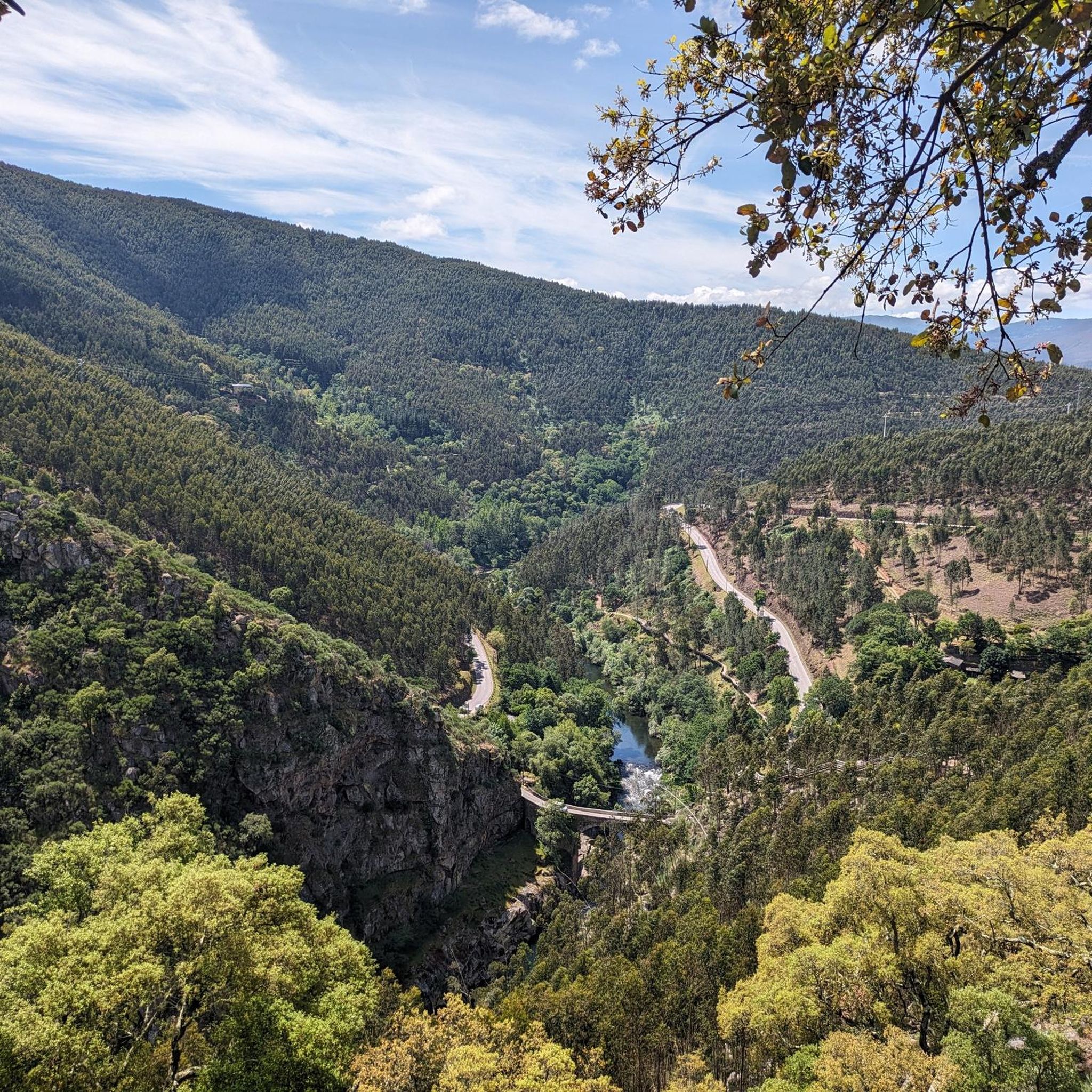
This is one of the many bridges that span the Bestança River, each inviting you to pause and take in the verdant serenity and the hypnotic murmur of the crystal-clear waters. Some, like the Soutela Bridge, date back to the Middle Ages, while others, more recent, blend harmoniously into the landscape. Whether ancient or modern, they all share one thing in common: breathtaking views.
1
0
This path descends through the valley of the River Bestança along one of the old roads that lead to the Prado area. The Bestança rises at Portas de Montemuro and flows into the Douro: 13.5 kilometres of crystal-clear water, it is one of the purest rivers in Europe. Its ecological balance sustains otters, trout and genets, while since ancient times, mills scattered throughout the valley have used its waters to grind cereals, especially corn, preserving a valuable rural heritage.
1
0

A beautiful discovery on the edge of the EN222. Easily accessible natural pools with fresh running water (so-called wells). On foot it is possible to advance up the river to a waterfall. There is a picnic area nearby and a drinking fountain in the parking lot on the opposite side of the road.
2
0
Frequently Asked Questions
What historical and cultural sites are worth visiting near Bustelo?
You can explore several significant historical sites. The Ermida do Paiva, a 12th-century Romanesque monument, is notable for its enigmatic symbols and architectural beauty. The ruins at Portas de Montemuro preserve traces of an ancient fortified settlement. Additionally, the region boasts the 12th-century Monastery of Bustelo, known for its baroque altarpiece and cloister, and the iconic St. Gonçalo Bridge in Amarante, a significant landmark with a rich history.
Are there any natural trails or scenic walks around Bustelo?
Yes, the area is rich in natural beauty. The Path along the Bestança offers a scenic descent through the Bestança River valley, known for its crystal-clear water and ecological balance. You can also enjoy the views from Nossa Senhora da Oliveira, which provides a beautiful landscape viewpoint. The Bestança River itself is spanned by many bridges, including the Bridge Over the Bestança River, offering serene views.
What outdoor activities can I do near Bustelo's attractions?
The region around Bustelo is excellent for outdoor activities, especially cycling. You can find numerous road cycling routes, including challenging loops like the "Portas de Montemuro – Serra de Montemuro loop from Mosteirô" (135.1 km) or the "Serra de Montemuro – Portas de Montemuro loop from Castro Daire" (84.9 km). For touring cyclists, options like the "Albufeira de Pretarouca loop from Panchorra" (29 km) or the "Rio Paiva – Ermida do Paiva loop from Ester" (29.6 km) are available. You can find more details on these routes in the Road Cycling Routes around Bustelo and Cycling around Bustelo guides.
Are there any family-friendly attractions or activities in the Bustelo area?
While specific family-friendly activities within Bustelo are limited, the nearby Nossa Senhora da Oliveira is considered family-friendly, offering a beautiful landscape viewpoint with a good park for snacks. For broader family fun, the Amarante Water Park is a popular option in the vicinity.
What is the Bestança River known for?
The Bestança River is renowned for its crystal-clear water and exceptional ecological balance, making it one of the purest rivers in Europe. It sustains diverse wildlife, including otters, trout, and genets. The river valley also features ancient mills that historically used its waters for grinding cereals, preserving a valuable rural heritage.
Where can I find panoramic views or viewpoints around Bustelo?
For breathtaking panoramic views, head to Portas de Montemuro. Here, the landscape stretches out without limits, and you'll find tables and benches to relax and enjoy the scenery at 1,215 meters of altitude. Nossa Senhora da Oliveira also offers a beautiful landscape viewpoint.
What are the characteristics of the bridges in the Bustelo area?
The bridges around Bustelo, such as the Bridge Over the Bestança River, are integral to the region's charm. Some, like the Soutela Bridge, date back to the Middle Ages, while others are more recent. They all offer stunning views of the verdant landscape and the Bestança River's clear waters. The St. Gonçalo Bridge in nearby Amarante is particularly notable for its unique architecture, featuring three unequal round arches and Baroque spires.
Are there any challenging hikes or mountain passes nearby?
Yes, the region offers challenging terrain. Portas de Montemuro is a mountain pass at 1,215 meters, popular with cyclists, and is near the highest peak of the Montemuro mountain range (1,381 meters). The surrounding Montemuro mountain range provides opportunities for more strenuous hikes and exploration.
What kind of wildlife can be found along the Bestança River?
The Bestança River's pristine ecological balance supports a variety of wildlife. You might spot otters, trout, and genets thriving in its crystal-clear waters and surrounding habitats.
What is the significance of the Monastery of Bustelo?
The Monastery of Bustelo is a Benedictine monastery with origins dating back to the 12th century. It underwent significant renovations in the 17th and 18th centuries, resulting in its impressive baroque altarpiece and a cloister featuring six arcades of Tuscan columns surrounding a fountain. It also houses a small museum, offering insights into its long history.
What is the best time to visit Bustelo for outdoor activities?
While specific seasonal recommendations for Bustelo are not provided, regions like the Douro Valley (which Amarante is part of) generally offer pleasant weather for outdoor activities during spring (April-May) and autumn (September-October) when temperatures are mild and the landscapes are vibrant.
Most popular routes around Bustelo
Most popular attractions around Bustelo

Get inspired with the komoot mobile app


Explore more
Still not found the Highlight you’re looking for? See guides of the top attractions in other regions:
