The best MTB trails around Castro Daire
50
riders
12
rides
Mountain biking around Castro Daire offers diverse terrain in central Portugal. The region is characterized by rolling hills, river valleys, and the foothills of the Serra de Montemuro, providing varied landscapes for mountain bikers. Trails often navigate through rural areas, offering a mix of natural paths and gravel roads. The elevation changes provide both challenging climbs and rewarding descents.
Best mountain bike trails around Castro Daire
- The most popular mountain bike trail is Loop from Castro Daire towards Mões,…
Last updated: June 24, 2026
3
riders
26.6km
02:34
880m
880m
Moderate mountain bike ride. Good fitness required. Suitable for all skill levels.
2
riders
34.1km
03:01
740m
740m
Moderate mountain bike ride. Good fitness required. Suitable for all skill levels.

Sign up for free
1
riders
43.8km
04:06
1,210m
1,210m
Hard mountain bike ride. Very good fitness required. Suitable for all skill levels.
21.5km
01:45
460m
460m
This 13.4-mile mountain biking loop from Castro Daire to Moura Morta offers a moderate challenge with 1524 feet of elevation gain.
60.8km
05:53
1,770m
1,770m
This difficult 37.8-mile mountain biking loop from Castro Daire towards Portas de Montemuro offers challenging climbs and panoramic views.
Get access to more routes and recommendations from other explorers.
Sign up for free
Already have an account?
Our route recommendations are based on thousands of hikes, rides, and runs completed by other people on komoot.
Start today with a free account
Your next adventure awaits.
Login or Signup
Popular around Castro Daire

Tips from the Community

At Portas de Montemuro, the landscape stretches out without limits. Here, tables and benches invite you to take a break and enjoy the view, while the national road 321, popular with cyclists, marks the 1,215 metres of altitude. The highest peak of the Montemuro mountain range, at 1,381 metres, is nearby, to the east. Nearby, the ruins of the Wall of Portas de Montemuro preserve echoes of a distant past. Mentioned in the Inquiries of 1258, they reveal traces of an ancient fortified settlement from the Iron Age, possibly linked to the Castro culture. Later, the site was reused by the Romans and, at the time of the Reconquista, by D. Afonso Henriques, the first king of Portugal.
0
0

The Ermida do Paiva, also known as the Igreja de Nossa Senhora da Conceição or the "Templo das Siglas", is a remarkable Romanesque monument from the 12th century. Originally, this church was part of a Premonstratensian monastery, the only one of this order in Portugal, founded by two French monks, D. Roberto and D. Afonso. The ruins of the cloister attached to the church are still visible today. The church is famous for its many sculptures and enigmatic symbols engraved in the stones, both inside and outside. It is believed that these "siglas" were the signatures of the master builders who worked on the construction. Its architectural lines, although simple, are robust and integrate beautifully into the surrounding green landscape. Today, the Ermida do Paiva is classified as a National Monument and represents a fascinating testimony to medieval Portuguese architecture and spirituality.
0
0
Here the adventure takes shape and to cross the Paiva River at this point you have to carry your bike on your shoulder, or push it with the wheels in the river, and jump from one rock cube to another to reach the other bank. You can also take advantage of the nearby beach for a refreshing break.
0
0
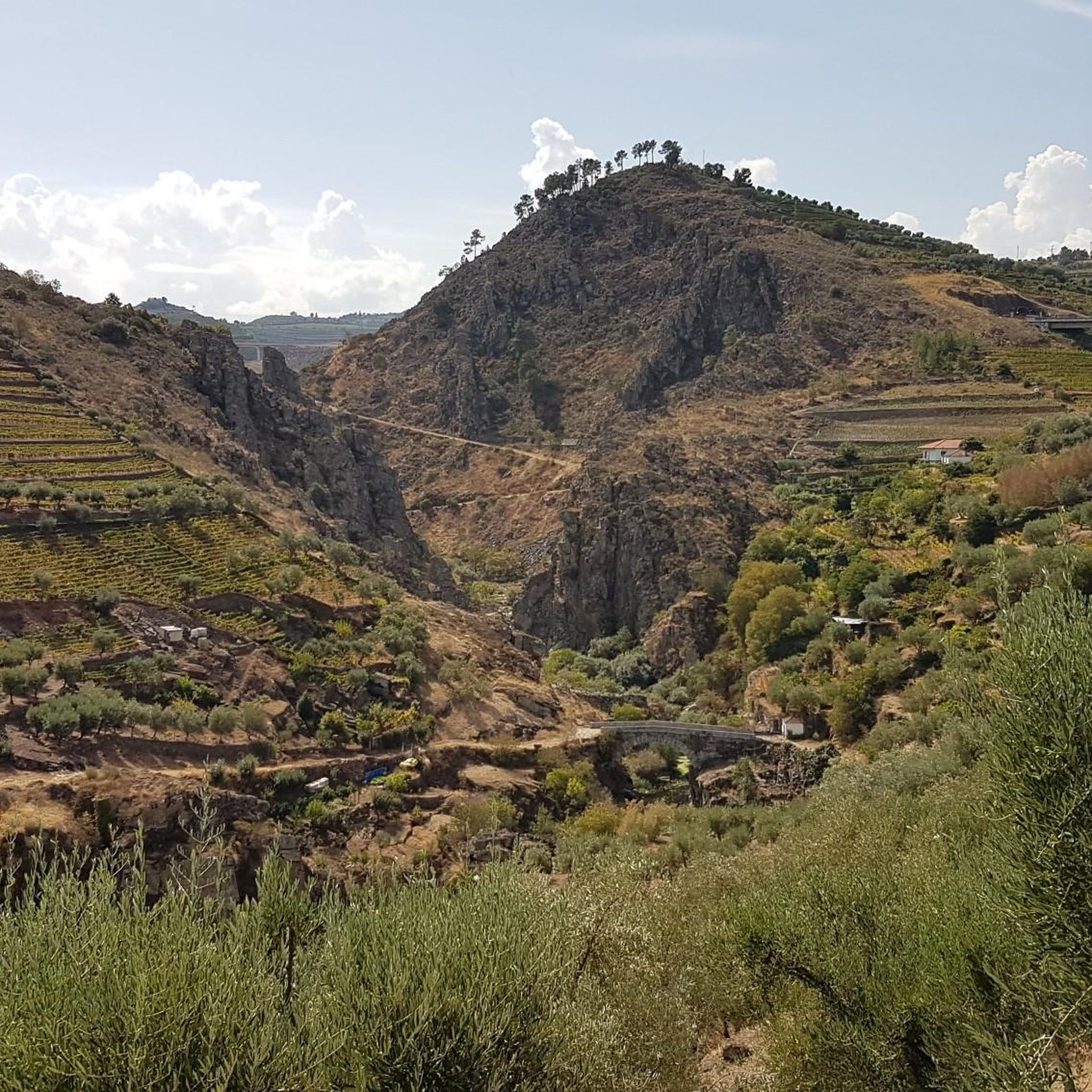
Pedaling here, the road offers you a beautiful view of the terraced hills. The Paiva River cuts through the green valley and on the crests of the hills you can see the clusters of houses.
0
0
The Pelourinho de Mões is an old pillory (stone column that was once used as an instrument of public punishment) believed to date back to the 17th century. Its current appearance is the result of a restoration carried out in 1957.
0
0
The Santuário de Nossa Senhora da Ouvida is a place known for its elevated and panoramic position, offering spectacular views of the surrounding landscape. It is a place of Marian devotion, characterized by an atmosphere of peace and spirituality, you can stop for a well-deserved break.
0
0
Moura Morta is a small village located on the slopes of the Serra do Montemuro. It is a rural area with really nice traditional houses.
0
0
Castro Daire is a Portuguese municipality located in the district of Viseu, in the Centro region. It is characterized by a predominantly mountainous landscape, dominated by the Serra do Montemuro, which gives it a rich and uncontaminated natural environment. The municipality is known for its rural traditions, archaeological heritage (with several "castros", ancient fortified settlements) and a typical cuisine that I recommend you try!
0
0
Frequently Asked Questions
How many mountain bike trails are available around Castro Daire?
There are over 10 mountain bike trails around Castro Daire documented on komoot. These routes offer a mix of moderate and difficult options, catering to various skill levels.
Are there any easy or family-friendly mountain bike trails in Castro Daire?
While there are no trails specifically rated as 'easy' in the komoot guide for Castro Daire, several 'moderate' routes could be suitable for families or beginners with some experience. These trails typically feature less extreme elevation changes and more manageable terrain. Always check the route details for specific difficulty and elevation before heading out.
What are some challenging mountain bike trails in the Castro Daire region?
For experienced riders seeking a challenge, Castro Daire offers several difficult routes. The Montemuro e Paiva MTB Center: Black Route is a demanding 37.8-mile (60.8 km) trail with over 5,790 feet (1766 m) of elevation gain. Another option is the Serra de Montemuro Black Route, which spans 49.5 miles (79.7 km) and includes over 7,310 feet (2228 m) of climbing.
Are there mountain bike trails that are loop routes in Castro Daire?
Yes, many of the mountain bike trails around Castro Daire are designed as loops, allowing you to start and finish at the same point. Examples include the Loop from Castro Daire towards Moura Morta, a 21.2-mile (34.1 km) moderate route, and the longer Loop from Castro Daire to Ermida do Paiva, which is 27.2 miles (43.8 km) and rated difficult.
What is the best season for mountain biking in Castro Daire?
The best seasons for mountain biking in Castro Daire are typically spring (April to June) and autumn (September to October). During these months, the weather is generally milder, with pleasant temperatures and less rainfall, making for more comfortable riding conditions. Summer can be very hot, especially in July and August, while winter can bring colder temperatures and increased precipitation.
What kind of terrain can I expect on mountain bike trails around Castro Daire?
The terrain around Castro Daire is diverse, characterized by rolling hills, river valleys, and the foothills of the Serra de Montemuro. You can expect a mix of natural singletrack, gravel roads, and sometimes paved sections through rural areas. Elevation changes are common, providing both challenging climbs and rewarding descents.
Are there any scenic viewpoints or attractions along the mountain bike trails?
Yes, the region offers several points of interest. While riding, you might pass by cultural landmarks such as Nossa Senhora da Oliveira or the Parish Church of Gosende - St. Peter. The mountainous terrain also provides natural viewpoints, particularly around areas like Portas de Montemuro.
What should I wear for mountain biking in Castro Daire?
Given the varied terrain and potential for elevation changes, it's advisable to wear appropriate mountain biking gear. This includes a helmet, padded shorts, moisture-wicking layers, and sturdy cycling shoes. Depending on the season, bring a lightweight jacket for cooler mornings or descents, and always carry enough water and snacks, especially on longer routes.
Is there parking available near the mountain bike trailheads in Castro Daire?
While specific parking information for each trailhead isn't always detailed, Castro Daire is a rural area, and you can generally find parking in or near the main town or smaller villages where routes often begin. Look for public parking areas or designated spaces. Always be mindful of local regulations and private property.
Are there any cafes or places to refuel along the mountain bike routes?
Many routes pass through or near small villages where you might find local cafes or small shops to refuel. However, it's always recommended to carry sufficient water and snacks, especially on longer or more remote trails, as amenities can be sparse. Plan your route in advance and check for potential stops.
What makes mountain biking in Castro Daire unique compared to other regions?
Mountain biking in Castro Daire stands out due to its blend of river valleys, rolling hills, and the more rugged mountainous terrain of the Serra de Montemuro. This combination provides a diverse riding experience, from scenic routes along the Paiva river to challenging climbs with panoramic views, all within a relatively untouched natural landscape of central Portugal.
Most popular routes around Castro Daire
Most popular attractions around Castro Daire

Get inspired with the komoot mobile app


Explore more
Browse the best MTB trails in other regions.
