The best road cycling routes around Botija
5.0
(3)
120
riders
10
rides
Road cycling routes around Botija traverse a landscape characterized by agricultural fields, rolling hills, and historical sites. The region features varied terrain, including sections near ancient Roman structures and medieval castles. Elevation gains are present on many routes, offering challenges for different skill levels. The area provides a mix of open country roads and paths connecting small towns.
Best road cycling routes around Botija
- The most popular road cycling route is Road through fields – Roman Theatre of Mérida loop…
Last updated: October 11, 2026
5.0
(1)
54
riders
110km
05:02
890m
890m
Hard road ride. Very good fitness required. Mostly well-paved surfaces and easy to ride.
19
riders
46.2km
02:32
670m
670m
Moderate road ride. Good fitness required. Mostly well-paved surfaces and easy to ride.

7
riders
77.5km
03:24
600m
600m
Moderate road ride. Good fitness required. Mostly well-paved surfaces and easy to ride.
8
riders
84.2km
04:18
1,060m
1,060m
Hard road ride. Very good fitness required. Some segments of this route may be unpaved and difficult to ride.
8
riders
Moderate road ride. Good fitness required. Some segments of this route may be unpaved and difficult to ride.
Get access to more routes and recommendations from other explorers.
Already have an account?
Our route recommendations are based on thousands of hikes, rides, and runs completed by other people on komoot.
Start today with a free account
Your next adventure awaits.


Tips from the Community

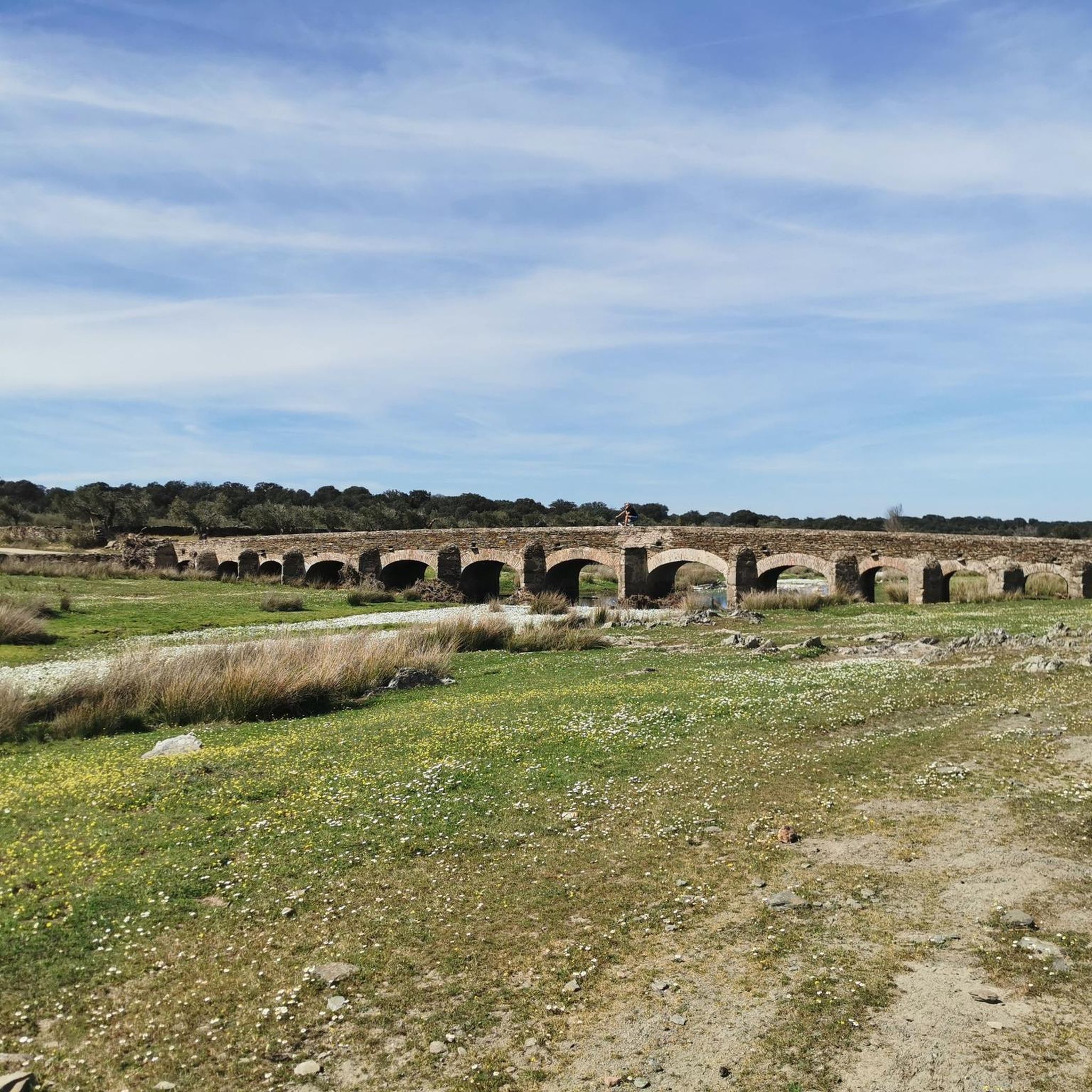
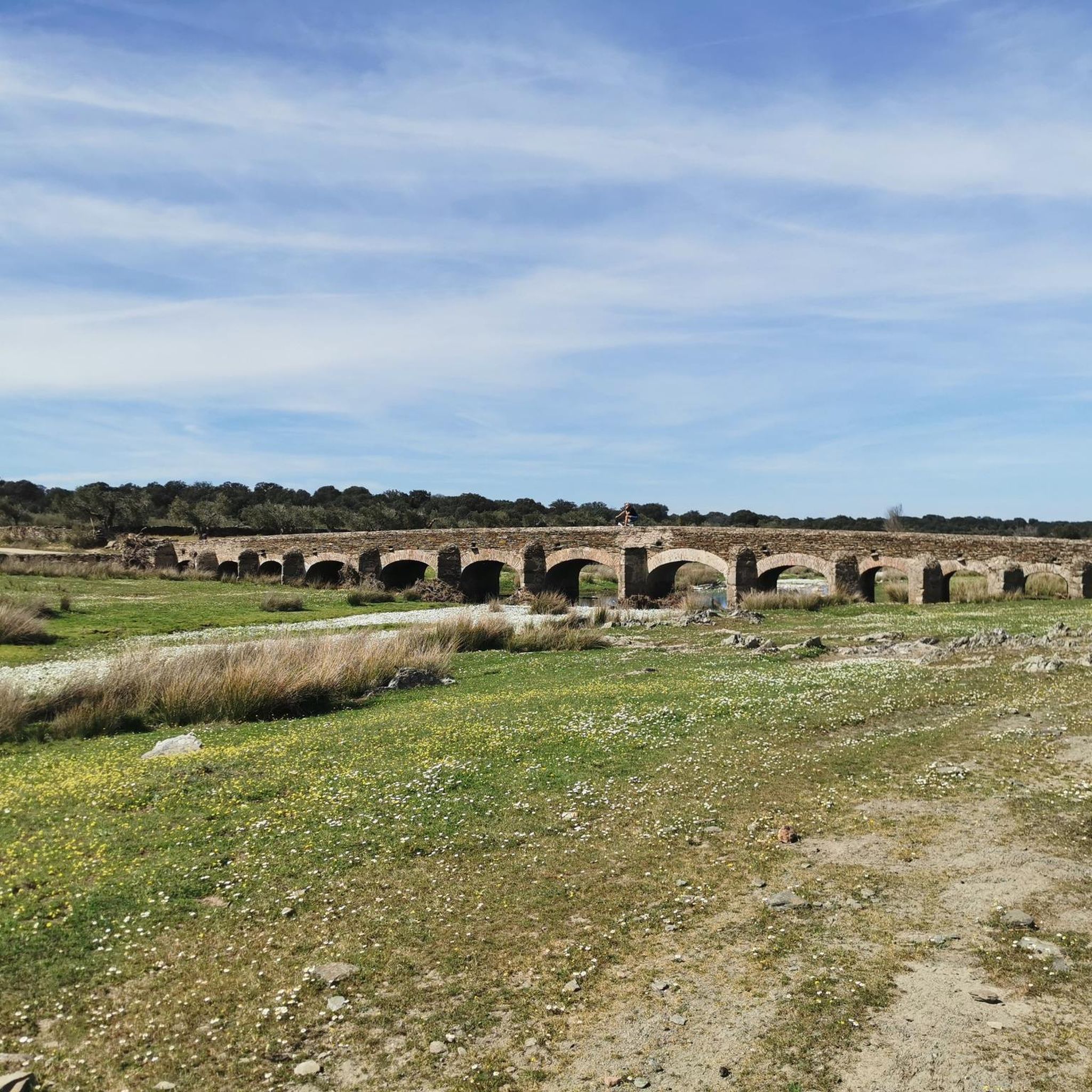
The Puente Romano crosses the Guadiana river and, with its 64 granite arches and a length of 800m, is one of the most striking remains from this period.
15
0
After Tarragona, Mérida has the most Roman remains, each one worth the effort. The city of Mérida is on the UNESCO World Heritage list.
13
0

It is located atop a hill in the Sierra de Montánchez, also known as the "balcony of Extremadura," at an altitude of approximately 700–900 meters above sea level. Founded on the site of an earlier Roman fortress, its main structure dates back to the Caliphate period of the 9th century (Almohad era). It preserves three underground cisterns built between the 11th and 13th centuries. Captured around 1156–1230, it passed to the Order of Santiago after being granted by Alfonso XI. Walls, a keep, and defensive enclosures were added. 17th century: A hermitage and an interior pond were added. In 1620, it served as a prison for Don Rodrigo Calderón.
1
0
Trujillo Castle (Cáceres, Extremadura) is one of Spain's most emblematic fortresses, boasting a fascinating history and architecture that blends Arab and Christian influences. Arab Origins (9th-12th centuries): It was built on Cabeza del Zorro hill during the Muslim period. The oldest remains are two Arab cisterns. Reconquest: In 1186, Alfonso VIII captured the city, although it fell under Almohad rule before being definitively incorporated into the Crown in 1232. Middle Ages: It played a key role in the border defense between Castile and Portugal and was the scene of conflicts such as the War of the Castilian Succession. Modern Era: It lost its military importance and became a stately residence.
7
0

The Plaza Mayor in Trujillo is an iconic and historic place in Extremadura. This Renaissance square, dating back to the 16th century, is known for its impressive architecture and vibrant social and cultural life. In the centre of the square is the equestrian statue of Francisco Pizarro, the famous conquistador born in Trujillo. The square is surrounded by historic buildings, such as the Palace of the Marquises of the Conquest and the Church of San Martín de Tours. In addition, it is a place where numerous cultural events and festivals are held throughout the year.
13
0
The city of Trujillo, a town located about 50 km east of Cáceres, sits on a huge granite batholith, on the old road to Madrid. It is an important urban complex formed by different periods and architectural-urban mentalities, whose testimonies have made it one of the most important towns in Extremadura, as far as architectural heritage is concerned.
16
0

Nice gentle climb and one of the longest in Montanchez
0
1
Frequently Asked Questions
How many road cycling routes are available around Botija?
There are over 10 road cycling routes around Botija, offering a variety of experiences for different skill levels. The komoot community has contributed to these routes, providing detailed information and reviews.
What kind of terrain can I expect on road cycling routes in Botija?
Road cycling routes in Botija feature a diverse landscape, including agricultural fields, rolling hills, and sections near historical sites. You'll encounter a mix of open country roads and paths connecting small towns, with varied elevation gains.
Are there road cycling routes suitable for beginners in Botija?
While many routes in Botija involve varied elevation, there are options suitable for those looking for a less strenuous ride. For example, the region offers some moderate routes that provide a good introduction to the area's cycling without excessive difficulty.
What are some challenging road cycling routes for experienced cyclists in Botija?
Experienced cyclists looking for a challenge will find several difficult routes with significant elevation gains. The Road through fields – Roman Theatre of Mérida loop from Valdefuentes is a demanding 68.5-mile route with nearly 900 meters of elevation gain. Another challenging option is the Trujillo Castle – Plaza Mayor of Trujillo loop from Plasenzuela, which covers 84.9 miles and over 1000 meters of climbing.
Are there any historical landmarks or points of interest along the road cycling routes?
Yes, Botija's road cycling routes often pass by significant historical sites. You can cycle near ancient Roman structures, medieval castles like Montánchez Castle, and other historical landmarks, offering a rich cultural experience alongside your ride.
What is the best time of year for road cycling in Botija?
The region generally experiences mild winters and hot summers. Spring and autumn are typically the most pleasant seasons for road cycling in Botija, offering comfortable temperatures and beautiful scenery. Summers can be very warm, so early morning or late afternoon rides are advisable if cycling during this period.
Are the road cycling routes in Botija primarily loops or point-to-point?
Most of the popular road cycling routes around Botija are designed as loops, allowing you to start and finish at the same location. Examples include the Beautiful Section – From Aldea del Cano to Albalá loop from Valdefuentes and the Montánchez Castle – Montánchez Castle loop from Ruanes.
What do other cyclists say about road cycling in Botija?
The road cycling routes in Botija are highly rated by the komoot community, with an average score of 5.0 stars from over 12 reviews. Cyclists often praise the varied terrain, the historical sites encountered along the way, and the mix of open country roads.
Can I find routes that connect small towns in the Botija region?
Absolutely. Many routes are designed to connect small towns, allowing you to experience the local culture and perhaps find places to rest or refuel. The Beautiful Section – From Aldea del Cano to Albalá loop from Valdefuentes is a great example, offering varied landscapes between small towns.
What is the typical duration for a road cycling route in Botija?
Route durations vary significantly based on distance and elevation. Shorter, moderate routes like the Montánchez Castle – Montánchez Castle loop from Ruanes can be completed in under 3 hours, while longer, more difficult routes such as the Road through fields – Roman Theatre of Mérida loop from Valdefuentes can take over 5 hours.
Are there any routes that offer significant elevation challenges?
Yes, for cyclists seeking substantial climbs, routes like the Trujillo Castle – Plaza Mayor of Trujillo loop from Plasenzuela feature over 1000 meters of elevation gain. The Montánchez Castle – Plaza de España, Montánchez loop from Valdefuentes also presents a significant challenge with over 950 meters of ascent.

Get inspired with the komoot mobile app


Explore more
Browse the best Road cycling routes in other regions.
