The best waterfall hikes and walks around Schneeberg
4.6
(15208)
50,090
hikers
14
hikes
Waterfall hiking trails around Schneeberg offer diverse experiences within a distinctive limestone massif. The region features steep slopes, alpine meadows, dense forests, and rugged rock formations, providing varied terrain for hikers. As the highest mountain in Lower Austria, Schneeberg's landscape includes significant elevation changes and panoramic views. The area is known for its rich Karst plateaus and natural features that contribute to its unique environment for outdoor activities.
Best waterfall hiking trails around Schneeberg
- The most popular waterfall hiking route is Fundgrube Company – Silberbach Reservoir loop from Heide und Moorwald am Filzteich, a 16.8 miles (27.0 km) trail that takes 7 hours 26 minutes to complete. This difficult route navigates through varied landscapes, including forest and reservoir areas.
- Another top favourite among local hikers is Bad Schlema Spa Park – Silberbach Reservoir loop from Schneeberg, a moderate 4.7 miles (7.5 km) path. This trail offers a more accessible option, winding through spa park surroundings and past the Silberbach Reservoir.
- Local hikers also love the Blauenthal Waterfall – Toellischer Graben Trail loop from Neustädtel, a 17.0 miles (27.4 km) trail leading through areas featuring the Blauenthal Waterfall, often completed in about 7 hours 43 minutes.
- Hiking around Schneeberg is defined by its limestone massif, romantic alpine meadows, and dense forests. The network offers options for different ability levels, from moderate walks to challenging ascents.
- The routes in Schneeberg are highly rated by the komoot community with an average score of 4.6 stars from over 1500 reviews. More than 6000 hikers have used komoot to explore Schneeberg's varied terrain.
Last updated: June 25, 2026
4.6
(19)
80
hikers
Hard hike. Very good fitness required. Easily-accessible paths. Suitable for all skill levels.
4.5
(15)
38
hikers
7.63km
02:08
150m
150m
Moderate hike. Good fitness required. Easily-accessible paths. Suitable for all skill levels.

Sign up for free
4.9
(8)
20
hikers
11.1km
03:06
200m
200m
Moderate hike. Good fitness required. Easily-accessible paths. Suitable for all skill levels.
5.0
(2)
13
hikers
8.32km
02:17
130m
130m
Moderate hike. Good fitness required. Easily-accessible paths. Suitable for all skill levels.
4.0
(1)
10
hikers
27.7km
07:45
530m
530m
Hard hike. Very good fitness required. Mostly accessible paths. Sure-footedness required.
Get access to more routes and recommendations from other explorers.
Sign up for free
Already have an account?
Our route recommendations are based on thousands of hikes, rides, and runs completed by other people on komoot.
Start today with a free account
Your next adventure awaits.
Login or Signup
Other adventures around Schneeberg


Tips from the Community

Artificial canals are water ditches that were used to supply mines with water to drive water wheels. The Hauptkunstgraben was an artificial watercourse to channel water from the Filz pond to the mining area.
0
0
The Fundgrube company belonged to the large and important mining facilities in the Neustädtl mining area. The preserved surface buildings include the headframe building (1830), the mining smithy (1839), the carpentry building, the pump house, and the powder house (1844). The wooden changing room above the turbine shaft was built as a protective building around 1984. The water channel is accessible to tourists up to the turbine shaft.
1
0
The Ziegelteich near Schneeberg (Erzgebirge) is located on or near one of the most famous mountains in the Ore Mountains - the Keilberg. The Ziegelteich is situated on the west flank of the Keilberg and is beautifully embedded in the landscape of Saxony. The Ziegelteich is the largest of several ponds in this area and formerly served as a drinking water reservoir.
0
0
located directly on the terrain paths, unfortunately without a resting place
0
0

A must-see for anyone interested in Erzgebirge folk art.
1
0

A wonderful sight in winter when it's nicely frosty.
1
0
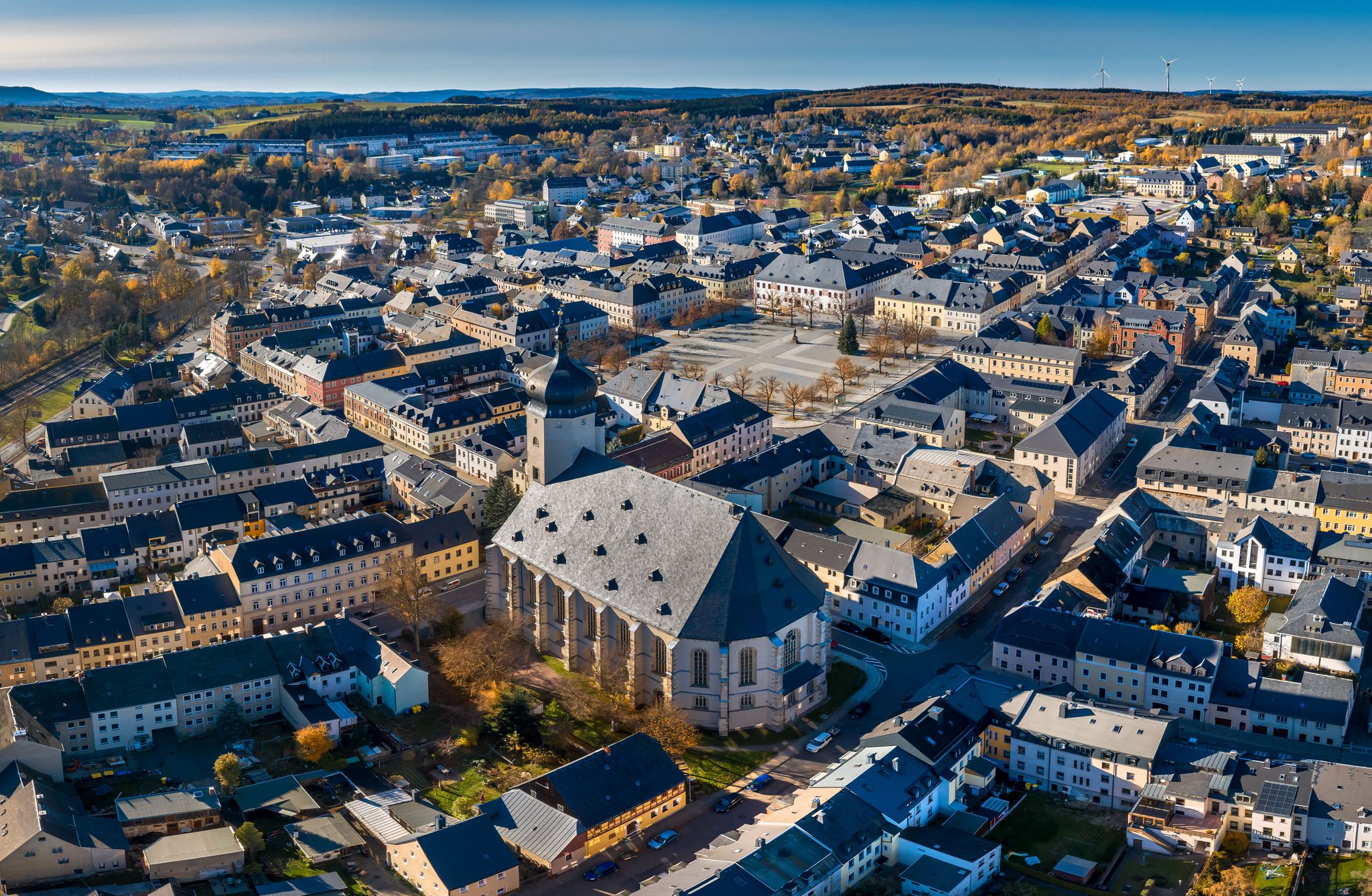
Schneeberg Town Hall was completed in 1852 and has been remodeled several times since. The building houses the city administration and is the third town hall in the city's history. A porcelain carillon has been located in its tower since 2006. The Schneeberg Town Hall was completed in 1852 and has been remodeled several times since.
1
0

The leaded glass windows in the corridors and in the city council chamber as well as the coffered ceiling by Prof. Josef Goller are impressive.
1
0
Frequently Asked Questions
How many waterfall hiking trails are there around Schneeberg?
The Schneeberg region offers a diverse network of over 10 waterfall hiking trails. These routes cater to various skill levels, from moderate walks to more challenging ascents, all set within the distinctive limestone massif.
What kind of terrain can I expect on waterfall hikes in Schneeberg?
You can expect varied terrain, characteristic of the Schneeberg's limestone massif. Trails often lead through romantic alpine meadows, dense forests, and rugged rock formations. The region is also known for its rich Karst plateaus, providing a unique natural environment for hiking.
Are there any easy waterfall hikes suitable for beginners or families?
Yes, there are several easy and moderate options. For a more accessible experience, consider the Bad Schlema Spa Park – Silberbach Reservoir loop from Schneeberg. This moderate 4.7-mile (7.5 km) path winds through pleasant spa park surroundings and past the Silberbach Reservoir, making it a good choice for those seeking a less strenuous walk.
What is the best time of year to visit the waterfalls in Schneeberg?
The best time to visit depends on your preference. Spring and autumn offer vibrant landscapes and pleasant temperatures for hiking. In winter, Schneeberg transforms into a picturesque snowy wonderland, and some trails are suitable for winter hiking, though conditions can be more challenging. The mountain is known for retaining its snow crown until late spring, which can contribute to impressive waterfall flows.
Are there any circular waterfall routes in the Schneeberg area?
Many of the waterfall trails in Schneeberg are designed as loops, allowing you to start and end at the same point. An example is the Fundgrube Company – Silberbach Reservoir loop from Heide und Moorwald am Filzteich, a challenging 16.8-mile (27.0 km) route that navigates through varied landscapes including forest and reservoir areas.
What are some notable waterfalls or natural attractions to see along the trails?
The region boasts several natural highlights. You can visit the impressive Blauenthal Waterfall, which is featured on the Blauenthal Waterfall – Toellischer Graben Trail loop from Neustädtel. Additionally, you might encounter the Small Cascades on the Floßgrabenweg, offering charming smaller water features.
How accessible are the starting points for these waterfall hikes, especially regarding parking and public transport?
Starting points like Puchberg am Schneeberg offer various routes and are generally accessible. The Schneeberg Railway and a chairlift also enhance accessibility to higher elevations. For specific routes, parking availability can vary, so it's advisable to check individual tour details. Public transport options to key starting points like Puchberg am Schneeberg are available, connecting the region to nearby towns.
What do other hikers say about the waterfall trails in Schneeberg?
The waterfall hiking trails around Schneeberg are highly rated by the komoot community, with an average score of 4.6 stars from over 1500 reviews. Hikers often praise the diverse terrain, breathtaking views, and the unique experience of exploring this prominent limestone massif.
Are there any challenging waterfall hikes for experienced hikers?
Yes, Schneeberg offers challenging routes for experienced hikers. The Blauenthal Waterfall – Toellischer Graben Trail loop from Neustädtel is a difficult 17.0-mile (27.4 km) trail that takes approximately 7 hours 43 minutes to complete, leading through areas featuring the Blauenthal Waterfall and significant elevation changes.
Can I find places to eat or stay near the waterfall trails?
Yes, the Schneeberg region provides amenities for hikers. Numerous mountain huts, such as the Fischerhütte and Edelweißhütte, offer refreshments and often local culinary specialties. The spa resort of Puchberg am Schneeberg also provides various options for cafes, pubs, and accommodation, serving as a convenient base for exploring the area.
Are dogs allowed on the waterfall hiking trails in Schneeberg?
While specific regulations can vary by trail, many hiking paths in the Schneeberg region are generally dog-friendly. It's always recommended to keep dogs on a leash, especially in nature protection areas or near wildlife, and to carry waste bags. Always check local signage for any specific restrictions on individual trails.
What is the elevation gain like on these waterfall hikes?
The elevation gain varies significantly across the trails, reflecting Schneeberg's character as the highest mountain in Lower Austria. For example, the difficult Silberbach Reservoir – Bad Schlema Spa Park loop from Schneeberg involves an ascent of approximately 367 meters (1,204 ft), while easier routes will have less dramatic changes.
Most popular routes around Schneeberg
Most popular attractions around Schneeberg

Get inspired with the komoot mobile app


Explore more
Browse the best Hikes in other regions.
