The 6 Most Amazing Peaks around Sant Jaume De Llierca
Mountain peaks around Sant Jaume De Llierca are primarily found within the Garrotxa region of Catalonia, Spain, an area known for its natural landscapes and hiking opportunities. The municipality is situated in a region rich with diverse natural attractions, including a volcanic landscape. Puig de Santa Magdalena is a notable elevated point offering historical intrigue and panoramic views over the Garrotxa region and the Fluvià river valley. The broader Garrotxa area, part of the Garrotxa Volcanic Zone Natural Park, provides…
Last updated: June 29, 2026
Mare de Déu del Mont Summit
Highlight • Summit
Tip by

Santa Bàrbara de Pruneres
Highlight • Religious Site
Translated by Google •
Tip by

Sign up now to discover places like this
Get recommendations on the best single tracks, peaks, & plenty of other exciting outdoor places.
Sign up for free
Montsacopa Volcano
Highlight • Volcano
Translated by Google •
Tip by

Sanctuary of Mare de Déu del Mont and Jacint Verdaguer Statue
Highlight • Religious Site
Translated by Google •
Tip by

Puigsallança Summit (1,026 m)
Highlight • Summit
Translated by Google •
Tip by

Sign up for free to discover even more peaks around Sant Jaume De Llierca.
Sign up for free
Already have an account?
Start today with a free account
Your next adventure awaits.
Login or Signup

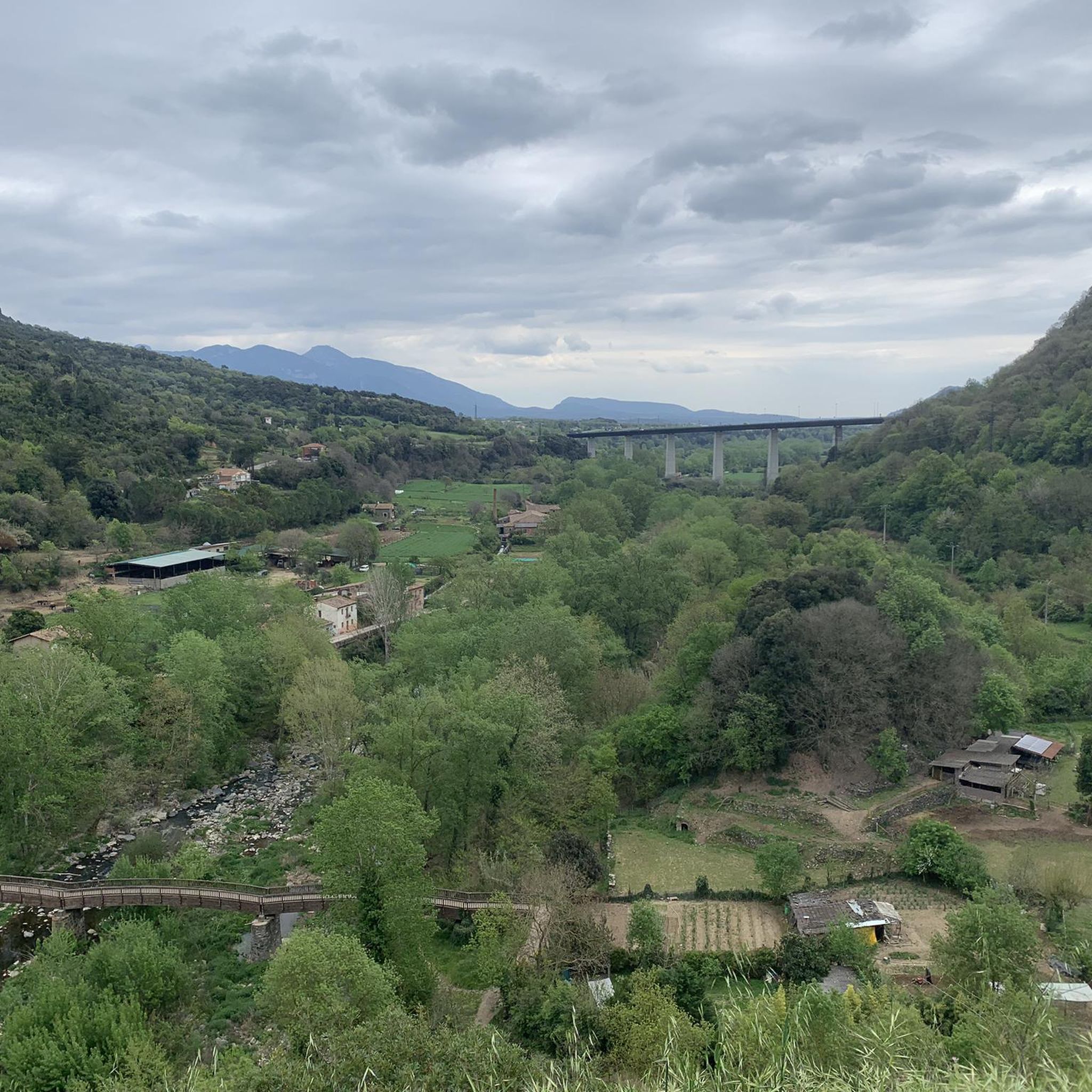
Tips from the Community

You can drive up, but I recommend walking up from Beuda, a beautiful hike of moderate difficulty.
0
0
The bar is closed on Mondays and Tuesdays. The restaurant is closed from Monday to Thursday, Spectacular 360° views of the Pyrenees, Garrotxa, Montseny Banyoles and the Pla de l'Estany.
0
0

Spectacular views of the Garrotxa and Ripolles Pyrenees peaks. From October to April, the bar-restaurant is only open at weekends (Friday, Saturday and Sunday).
3
0

Volcà del Montsacopa is an extinct volcano that died out 100,000 years ago. Running here is not easy because it is steep uphill or downhill, but the views are worth it. The crater is full of rabbits (at least there were when I visited) in the late afternoon and there are many nice trails around it. There is a church and a tower there too. If you visit Olot it is an easy walk that you must do.
0
0

With its 1026m height, Puisallança is the highest peak of the Sierra de Ventanas. It is located in the municipality of Sant Aniol de Finestres, in the Catalan region of Garrotxa. It is included in the list of the 100 summits of the FEEC.
1
0

The sanctuary of the Mare de Déu del Mont is located on the peak of the Sierra del Mont, at an altitude of 1,124 metres. Next to the sanctuary we find the statue of Jacint Verdaguer and an incredible viewpoint to appreciate the landscape that surrounds the mountain, from the Empordà plain, the Alta Garrotxa to the southern slopes of the Pyrenees.
4
0

the views upon arrival pay for all the effort of the climb
3
0

It is a building dating from the twelfth or early thirteenth century, although it probably existed before an earlier church. The word Prunarias appears in a document from the year 966 as belonging to Sant Pere de Camprodon. The building is mentioned again in 1017. It seems that from shortly after 966 it belonged to the priory of Santa Maria del Coll de Panissars, a situation that must have been maintained until the beginning of the 17th century. In 1617 the church was joined to that of Sant Llorenç d'Oix. In 1661 there were 3 altars: the one of Santa Bàrbara, the one of Santa Caterina and the one of Sant Bartomeu. The church was damaged during the Civil War of 1936-39. The whole complex was completely restored between 1972-1979 by the Friends of Alta Garrotxa. Inside, different artistic pieces were kept, such as a tombstone representing the burial of a lady from the castle of Bestracà, which was damaged during the riots of 1936. Some of the fragments were deposited in the Museum of Olot by Dr. Joaquim Danès. Until the end of the 19th century, a Romanesque carving was venerated there, today deposited in the Museu d'Art de Catalunya, from the Plandiura collection. The fragments of an altarpiece representing the life of the saint are kept in the Parish Museum of Olot. From 1972 to 1981, restoration work was carried out, which meant that the building built on the nave during the 17th and 18th centuries was abandoned, as well as the one that turned the old belfry into a tower, rebuilt after a lightning strike. destroyed it in September 1978.
0
1
Frequently Asked Questions
What are the most prominent mountain peaks and elevated points around Sant Jaume de Llierca?
The region features several notable elevated points. Within Sant Jaume de Llierca, Puig de Santa Magdalena is significant for its historical ruins and panoramic views. Further afield, you can explore the challenging climb to Mare de Déu del Mont Summit, the unique Montsacopa Volcano with its crater circuit, and Puigsallança Summit (1,026 m), the highest peak of the Sierra de Ventanas.
What historical sites can I find on the mountain peaks in this area?
The area is rich in history. On Puig de Santa Magdalena, you can explore the ruins of the ancient Castell de Montpalau, dating back to the 10th century, along with the Santa Magdalena chapel. The Montsacopa Volcano also features a small chapel on its crater rim. Additionally, the Sanctuary of Mare de Déu del Mont is a significant historical and religious site located on a peak.
Are there any family-friendly mountain peaks or hikes suitable for beginners?
Yes, Puig de Santa Magdalena is typically an easy and short hike, suitable for families, with a signposted circular walk from Sant Jaume de Llierca. The ascent passes through pleasant landscapes. While some peaks offer more challenging climbs, many trails in the broader Garrotxa area are accessible and enjoyable for various skill levels.
What kind of views can I expect from the mountain peaks?
The peaks offer extensive panoramic views. From Puig de Santa Magdalena, you can see over the Garrotxa region and the Fluvià river valley. The Mare de Déu del Mont Summit provides views over the Garrotxa, the Pyrenees, and even towards the Mediterranean Sea. The Montsacopa Volcano offers an all-round view of the city and other volcanic cones from its crater circuit. Puigsallança Summit (1,026 m) is also a renowned viewpoint in the Garrotxa region.
What natural features are prominent in the mountain areas around Sant Jaume de Llierca?
The region is known for its diverse natural landscapes, particularly its volcanic origins. The broader Garrotxa area is part of the Garrotxa Volcanic Zone Natural Park, featuring volcanic cones like Montsacopa Volcano. You'll also find numerous trails through shady forests, the Fluvià river valley, and various beauty spots like the Puda spring, all contributing to the scenic beauty.
What outdoor activities can I do near these mountain peaks?
Beyond hiking to the peaks, the area offers a variety of outdoor activities. You can find numerous running trails, such as the 'Mont-ros and Baumes de Caixurma Trail' or a 'Running loop from Sant Jaume de Llierca', which range from moderate to difficult. For cycling enthusiasts, there are gravel biking routes like the 'Sant Andreu de Guitarriu – Llierca Bridge loop' and road cycling options including the 'Besalú and Castellfollit de la Roca Loop'. You can explore more options on the Running Trails around Sant Jaume De Llierca, Gravel biking around Sant Jaume De Llierca, and Cycling around Sant Jaume De Llierca guide pages.
Are there any circular walks around the mountain peaks?
Yes, for Puig de Santa Magdalena, there is a signposted circular walk that starts from Sant Jaume de Llierca and crosses the Fluvià river to reach the summit. The Montsacopa Volcano also features a circular path around its crater, offering excellent views.
What is the difficulty level of hiking to the mountain peaks in the region?
The difficulty varies. Puig de Santa Magdalena is generally an easy and short hike. However, the Mare de Déu del Mont Summit is known as a challenging climb. Other highlights like Montsacopa Volcano and Puigsallança Summit (1,026 m) are typically considered intermediate. The region offers options for various fitness levels.
Are there facilities like cafes or restaurants at the mountain peaks?
Yes, at the Mare de Déu del Mont Summit, there is a restaurant/café with an outdoor terrace offering wonderful views. It's advisable to check their opening times, as they can vary seasonally.
What do visitors enjoy most about the mountain peaks around Sant Jaume de Llierca?
Visitors highly appreciate the rewarding scenery and panoramic views from the summits. The combination of historical exploration, such as the ruins of Castell de Montpalau, and the natural beauty of the Garrotxa region, including its volcanic landscapes, makes for a unique experience. The accessibility of some hikes, like the one to Puig de Santa Magdalena, also makes them popular for families.
What is the elevation of the highest peaks in the area?
The Puigsallança Summit reaches an elevation of 1,026 meters, making it the highest peak of the Sierra de Ventanas. The Sanctuary of Mare de Déu del Mont is located on the peak of the Sierra del Mont, at an altitude of 1,124 meters.
Is there a specific time of year that is best for visiting the mountain peaks?
While the region offers pleasant landscapes year-round, spring and autumn generally provide the most comfortable temperatures for hiking and exploring. These seasons avoid the peak heat of summer and potential winter conditions at higher elevations, making for ideal conditions to enjoy the panoramic views and historical sites.
Most popular routes around Sant Jaume De Llierca
Most popular attractions around Sant Jaume De Llierca

Get inspired with the komoot mobile app


Explore more
See even more amazing summits around Sant Jaume De Llierca with these guides:
