The best waterfall hikes and walks around Bad Schlema
4.6
(12768)
41,254
hikers
31
hikes
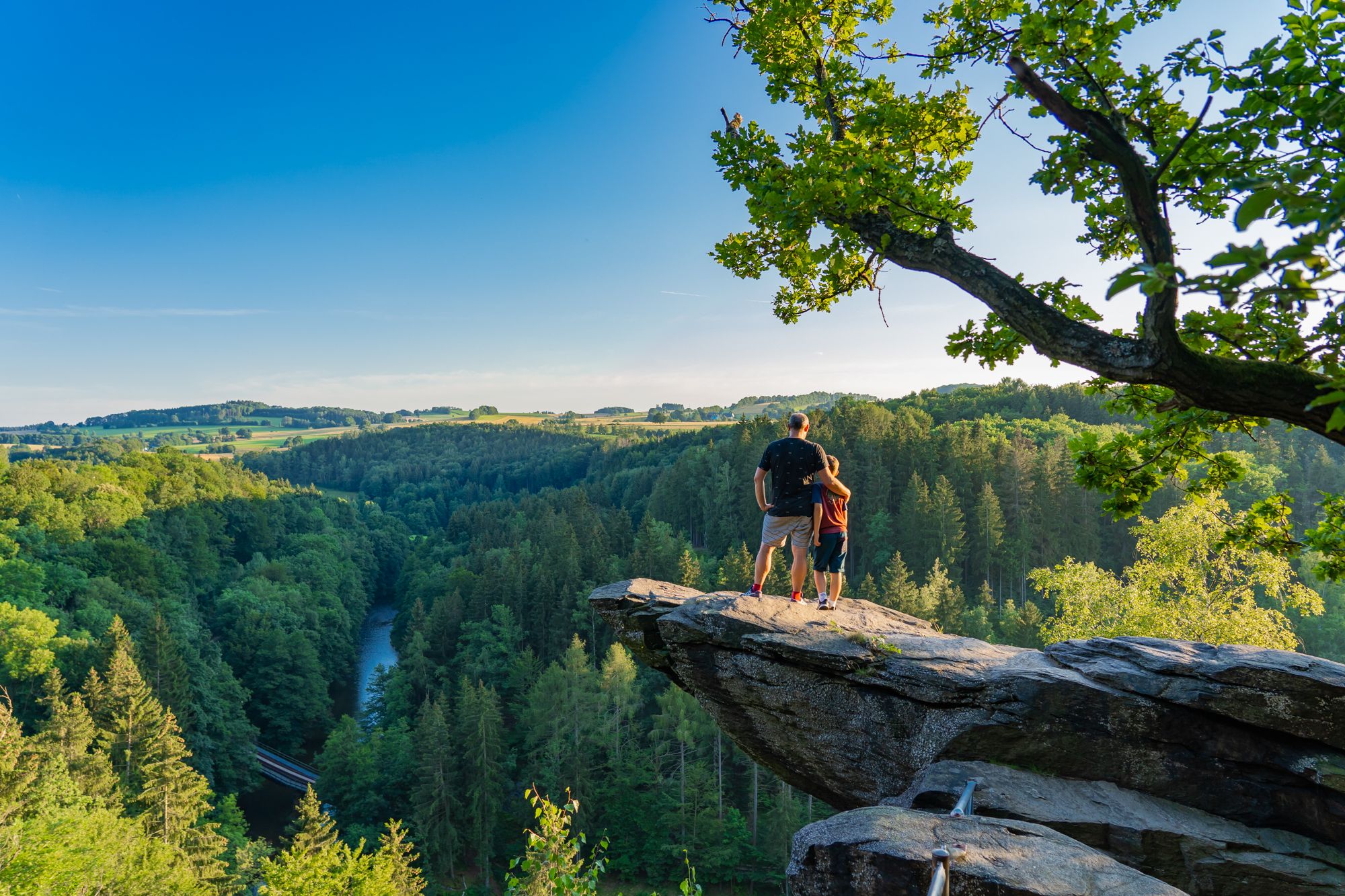
Waterfall hiking trails around Bad Schlema are set within the scenic southern Ore Mountains, characterized by picturesque, wooded hills and diverse landscapes. The region features the Zschopau Valley, known for its romantic and varied terrain, and is home to the Blauenthal Waterfall, Saxony's highest. Hikers can explore a network of paths that traverse these natural features, offering varied elevations and views.
Best waterfall hiking trails around Bad Schlema
- The most popular waterfall hiking route is Bad Schlema's Mining and Restoration…
Last updated: October 4, 2026
4.8
(75)
204
hikers
10.4km
02:56
230m
230m
Moderate hike. Good fitness required. Easily-accessible paths. Suitable for all skill levels.
4.5
(57)
136
hikers
9.77km
02:44
190m
190m
Moderate hike. Good fitness required. Easily-accessible paths. Suitable for all skill levels.

4.7
(44)
129
hikers
6.55km
01:49
110m
110m
Easy hike. Great for any fitness level. Easily-accessible paths. Suitable for all skill levels.
4.3
(23)
59
hikers
4.83km
01:23
110m
110m
Easy hike. Great for any fitness level. Easily-accessible paths. Suitable for all skill levels.
4.8
(10)
39
hikers
8.23km
02:21
190m
190m
Moderate hike. Good fitness required. Easily-accessible paths. Suitable for all skill levels.
Get access to more routes and recommendations from other explorers.
Already have an account?
Our route recommendations are based on thousands of hikes, rides, and runs completed by other people on komoot.
Start today with a free account
Your next adventure awaits.
Other adventures around Bad Schlema


Tips from the Community

The sculpture Stack by the British world artist Tony Cragg in the reconstructed spa park of Bad Schlema embodies the connection between nature and human intervention. The rich mining history is told through the abstract bronze, which evokes associations with broken earth. The sculptor was born in 1949 in Liverpool, Great Britain, and lives today in Wuppertal. https://www.sachsen-tourismus.de/poi/purple-path-stack-von-tony-cragg Size: 380 x 263 x 202 cm
0
0
Since mid-March 2014, the Huthaus has housed our restaurant and guesthouse. In our restaurant, we spoil you with hospitality from the Erzgebirge and hearty, regional cuisine. The two beautiful, individually furnished guest rooms invite you to linger and promise a relaxing time in the spa town of Schlema and the surrounding Erzgebirge. Opening hours Mon + Tue: Closed Wed + Thu: 11:30 - 20:00 Fri + Sat: 11:30 - 22:00 Sun + Holiday 11:30 - 20:00 http://www.zumhuthaus.de/wir.htm
0
0

With works by renowned international, national, and Saxon artists, the PURPLE PATH art and sculpture trail creates a unique exhibition in public space, connecting Chemnitz with the 38 surrounding towns and municipalities. It is the largest project of the European Capital of Culture Chemnitz 2025 – and extends into the region. The installations and sculptures are located at significant sites and tell stories of people, craftsmanship, and industry. They invite visitors to discover these story(ies). "Everything comes from the mountain" is the narrative of the PURPLE PATH art and sculpture trail; 850 years of mining have deeply shaped the landscapes around Chemnitz – the Ore Mountains, Central Saxony, the Zwickau region. The extraction of silver, tin, cobalt, iron, kaolin, and uranium has determined life. Since 2019, the Ore Mountains/Krušnohoří Mining Region has been a UNESCO World Heritage site.
0
0
located directly on the terrain paths, unfortunately without a resting place
1
0

historically valuable and with a miners' restaurant
0
0

A wonderful sight in winter when it's nicely frosty.
1
0

The 🟣 PURPLE PATH 🟣 is a sculpture trail that connects Chemnitz, the 2025 Capital of Culture, with 38 towns and cities in the region. Numerous artists have contributed works of various kinds, telling an unknown story of the region. More information at https://chemnitz2025.de/purple-path/ Tony Cragg "Stack" Bad Schlema Spa Park in Aue-Bad Schlema Material: Bronze "The patinated bronze of the abstract sculpture Stack by sculptor Tony Cragg, born in Liverpool, UK in 1949 and living in Wuppertal, evokes natural phenomena such as weathered rocks, polished wood, or volcanic smoke columns. Its layered geometric bodies and forms, repeated, rotated, and expanded into dynamic structures, also evoke ideas of geological models, digital data visualizations, or images from a scanning electron microscope. The iconic stacks, which Cragg has repeatedly modified in his work since the 1970s, have their artistic origins in geometrically stacked relics of industrial society, which are "keys to a bygone era that is our present" (Tony Cragg, 1987). The sculptures of the Turner Prize winner and multiple documenta participant evoke a state between nature and artificiality in a world of "semi-finished products" (Vilém Flusser). Placed in the Bad Schlema spa park, reconstructed after 1990, the 2019 sculpture Stack stands in direct proximity to the former Wismut Shaft 7b, from which uranium ore was mined at a depth of up to 278 meters since 1947. The Soviet-German Wismut AG extracted around 60% of its uranium ore requirements for its bomb production and nuclear power plants such as Chernobyl in the Ore Mountains and Thuringia, and destroyed spa houses, villages, and nature in Bad Schlema itself. Thus, Cragg's "Stack" also recalls this and simultaneously evokes the depiction of the earth's stratification in the Annaberg Mining Altar, created by Hans Hesse in the 16th century. (Text: Alexander Ochs / Ulrike Pennewitz)
0
0

As part of Chemnitz's 2025 European Capital of Culture, this beautiful sculpture by the artist Tony Cragg was installed in Bad Schlema. It is part of the Purple Path art project, which encompasses the entire region surrounding Chemnitz. A wonderful way to explore the culture, the country, its people, its cuisine, and more, and to get to know the area around Chemnitz through various art projects.
1
0
Frequently Asked Questions
How many waterfall hiking trails are there around Bad Schlema?
There are over 30 waterfall hiking trails around Bad Schlema, offering a variety of experiences. These include 16 easy routes, 15 moderate routes, and 2 more challenging options, ensuring there's something for every hiker.
What is the most prominent waterfall in the Bad Schlema area?
The most prominent waterfall in the vicinity of Bad Schlema is the Blauenthal Waterfall. While man-made, it holds the distinction of being Saxony's highest waterfall and is a significant natural attraction worth exploring.
Are there any family-friendly waterfall hikes in Bad Schlema?
Yes, Bad Schlema offers several family-friendly options. The region's diverse trails cater to all levels, including easy strolls suitable for families. The Bad Schlema Spa Park – Planetary Trail Earth loop from Bad Schlema is an easy 6.5 km route that takes you through the beautiful spa gardens, which feature ponds, a game enclosure, and rock gardens, providing an engaging experience for children.
Can I bring my dog on waterfall hikes around Bad Schlema?
Many trails in the Bad Schlema region are suitable for dogs, especially those through the extensive wooded hills and along natural features like the Zschopau Valley. It's always recommended to keep dogs on a leash and check specific trail regulations, but generally, the natural environment is welcoming for pets.
What historical sites or natural landmarks can I see along waterfall trails?
The trails around Bad Schlema often combine natural beauty with historical insights. You can discover the ruins of Isenburg Castle, or explore the region's mining heritage along routes like Bad Schlema's Mining and Restoration Trail – Terrainkurweg 7, which passes slag heaps and the Markus-Semmler-Stolln. The Silberbach Reservoir is another beautiful natural landmark you might encounter.
Are there any circular waterfall walks in the area?
Yes, many of the trails around Bad Schlema are designed as circular routes, allowing you to start and end at the same point. For example, the Silberbach Reservoir – Ruins of Isenburg Castle loop from Schneeberg is a moderate 13.1 km path that offers both natural scenery and historical landmarks.
What is the best time of year to go waterfall hiking in Bad Schlema?
The best seasons for waterfall hiking in Bad Schlema are spring and autumn, when temperatures are mild and nature displays vibrant colors. Even in summer, the dense, shady forests provide a welcome respite from the heat, making it enjoyable year-round. Winter hikes can also be beautiful, but require appropriate gear.
What do other hikers enjoy most about the waterfall trails in Bad Schlema?
The waterfall trails in Bad Schlema are highly rated by the komoot community, with an average score of 4.7 stars from over 870 reviews. Hikers often praise the diverse landscapes, the well-marked paths, and the combination of natural beauty with historical points of interest, such as the mining heritage and castle ruins.
Are there challenging waterfall hikes for experienced hikers?
While many routes are easy to moderate, Bad Schlema does offer more challenging options. The region's terrain, particularly around the Ore Mountains, includes demanding ascents and descents. For instance, the Small Gleesberg Circular Route (Terrainkurweg 11) is known for its varied terrain and rewarding views from the summit of Gleesberg.
Where can I find parking for waterfall hikes in Bad Schlema?
Parking is generally available at various trailheads and key attractions throughout Bad Schlema. Specific parking information can often be found on individual route pages or local tourist information sites, especially near popular starting points like the Spa Gardens or access points to the Blauenthal Waterfall.
Can I reach waterfall trails using public transport?
Bad Schlema has public transport connections that can bring you close to many hiking areas. While direct access to every trailhead might vary, local bus services often connect the town center with surrounding villages and points of interest, making it possible to reach many starting points for waterfall hikes.
Are there any trails that offer great views of the surrounding landscape?
Absolutely! The region is known for its scenic viewpoints. A popular trail leads to the 'Schlemablick' Lookout Point, offering breathtaking views over the valley. Additionally, ascents to mountains like Fichtenberg and Gleesberg (with its 'Köhlerturm' observation tower) reward hikers with spectacular panoramic views of the Ore Mountains.
Most popular routes around Bad Schlema
Most popular attractions around Bad Schlema

Get inspired with the komoot mobile app


Explore more
Browse the best Hikes in other regions.
