Easy hikes and walks in Bistrița-Năsăud
4.7
(128)
1,107
hikers
36
hikes
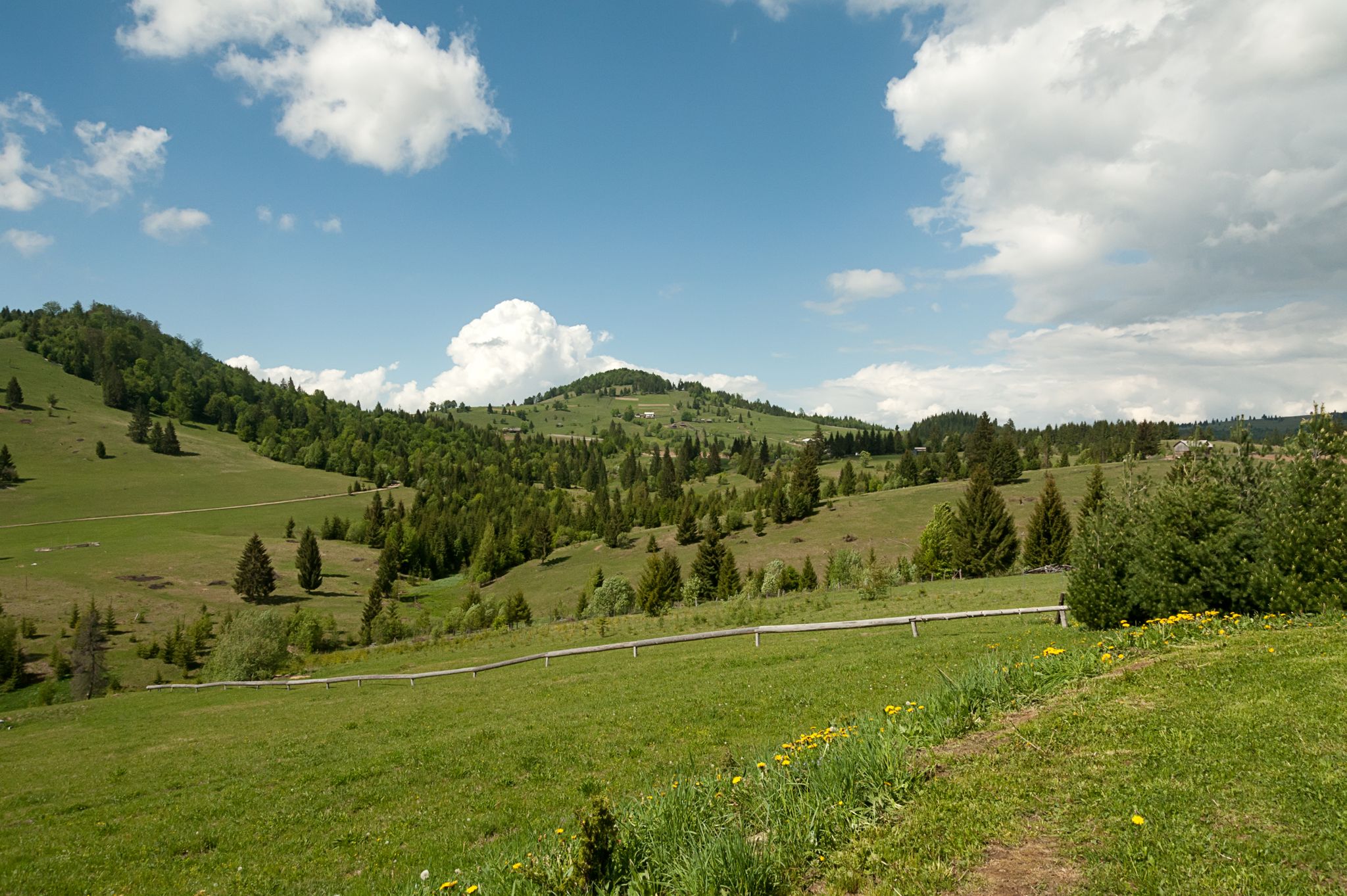
Easy hiking trails in Bistrița-Năsăud traverse a diverse landscape in northern Transylvania, Romania. The region features forested hills, wide plains, and the foothills of the Eastern Carpathians, including the Borgo hills. Notable natural features include Colibița Lake, often referred to as the "Sea in the Mountains," and various river valleys. The terrain offers a mix of gentle gradients suitable for accessible walks and more undulating paths through rural areas.
Best easy hiking trails in Bistrița-Năsăud
- The most popular easy hiking route is Dealul lui Pușcă loop from Colibița, a 1.9 miles (3.0 km) trail that takes 1 hour 9 minutes to complete. This route offers views around Colibița Lake and ascends a hill.
- Another top favourite among local hikers is Bistrița City Hall – Evangelical Church of Bistrița loop from Bistrița, an easy 2.7 miles (4.3 km) path. This route explores the urban landscape of Bistrița, passing by historical landmarks.
- Local hikers also love the Old Post Office, Bistrița – Bistrița City Hall loop from Bistrița, a 3.8 miles (6.2 km) trail leading through the city center, often completed in about 1 hour 34 minutes.
- Hiking in Bistrița-Năsăud is defined by forested hills, scenic lake views, and urban paths through historical towns. The network offers options for different ability levels, with a focus on accessible routes.
- The routes in Bistrița-Năsăud are highly rated by the komoot community with an average score of 4.6 stars from more than 50 reviews. More than 500 hikers have used komoot to explore Bistrița-Năsăud's varied terrain.
Last updated: August 24, 2026
5.0
(3)
9
hikers
3.03km
01:09
210m
210m
Easy hike. Great for any fitness level. Easily-accessible paths. Suitable for all skill levels.
7
hikers
3.94km
01:00
10m
10m
Easy hike. Great for any fitness level. Easily-accessible paths. Suitable for all skill levels.

Sign up for free
2
hikers
6.13km
01:33
10m
10m
Easy hike. Great for any fitness level. Easily-accessible paths. Suitable for all skill levels.
8
hikers
Easy hike. Great for any fitness level. Easily-accessible paths. Suitable for all skill levels.
Get access to more routes and recommendations from other explorers.
Sign up for free
Already have an account?
Our route recommendations are based on thousands of hikes, rides, and runs completed by other people on komoot.
Start today with a free account
Your next adventure awaits.
Login or Signup
Popular around Bistrița-Năsăud
Other adventures in Bistrița-Năsăud

Tips from the Community

Under the protection of the Hungarian Queen Elisabeth, the inhabitants of Bistriţa became the most important merchants in the region in the 15th century. They handled trade between Transylvania and Moldavia. The city was declared a "royal free city", a status that gave it economic, legal and political autonomy. The proud town houses, many of which are still well preserved, bear witness to this heyday.
14
0
Bistrița is located in a wide depression, surrounded by rolling hills that dominate the landscape. The settlement was founded when the region in the north-eastern corner of Transylvania, which at the beginning of the Middle Ages lay between the royal possessions, was settled by settlers from Hungary, but above all by groups of Flemish, Walloons, Saxons and Bavarians, who were later grouped together under the name "Transylvanian Saxons". Through the Golden Bull of the Saxons of 1224, they were endowed with a number of rights and freedoms that brought them high social status and economic privileges. The first mention of the place dates back to 1241, when in the codes of the Echternach monastery, between the settlements destroyed by the Mongols, "oppidum Nosna" is mentioned, the name given by the settlers to the settlement founded on the banks of the Bistrita river.
14
0
The Evangelical Church dominates the city views in the center of Bistriţa. The city's main landmark is a popular photo subject.
12
0
The Roman Catholic church, formerly the church of the Piarist monastery, dates back to the 18th century. The gymnasium founded in Bistriţa in 1717 was the first Piarist school in Transylvania. In that year, General Stephan Steinville bought the land previously owned by the Dominicans and brought the Piarists to the city. The church was built by the Piarists from 1781 onwards on the site of a building that was destroyed by fire in 1758 and demolished in 1779. The church was built in the Viennese Baroque style according to plans by the master engineer Paul Schmidt with financial support from the Viennese imperial court, which wanted to strengthen Catholicism in Transylvania. The work was led by the architect Anton Türk and completed in the spring of 1787, as evidenced by the inscription on the façade.
14
0
At the northern corner of the roundabout where Strada Gării meets Strada Gheorghe Șincai stands the imposing building of the "Old Post Office" of Bistrita. The prominent corner bay window with its turret is striking. The building is now used as a residential and commercial building.
13
0
On June 11, 2008 at 7 p.m., a fire broke out at the base of the church tower. Due to the fir wood framework with which the tower was covered during renovation work, the flames quickly spread to the top of the tower. In less than half an hour, the roof of the tower and the roofs of three of the small turrets collapsed. The fire was probably started by three children aged between 12 and 15 who were collecting scrap metal.
13
0
The Evangelical Church is an architectural monument from the second half of the 14th century, representing the transition from Gothic to Renaissance in Transylvania. The church tower is 75 meters high and is the highest medieval tower in Romania, only a few centimeters higher than the tower of the Evangelical Cathedral in Sibiu. An elevator takes you to the top of the tower and you can enjoy the view over the city. Under the walls of the current church are the foundations of the early 14th century church built by the first Saxon settlers. The Roman Catholic church, originally dedicated to Saint Nicholas, became Lutheran when the congregation converted to the Protestant faith during the Reformation.
13
0
Since 1983, the city administration under the current mayor Ioan Turc of the liberal-conservative PNL has resided in this building directly opposite the Evangelical Church.
12
0
Frequently Asked Questions
How many easy hiking trails are available in Bistrița-Năsăud?
Bistrița-Năsăud offers a selection of easy hiking trails, with 4 routes specifically categorized as easy. These trails are designed for accessibility, traversing diverse landscapes from forested hills to urban paths.
What kind of landscapes can I expect on easy hikes in Bistrița-Năsăud?
Easy hikes in Bistrița-Năsăud showcase a varied landscape. You can expect to find trails through forested hills, wide plains, and the foothills of the Eastern Carpathians, including the picturesque Borgo hills. Many routes also feature scenic views of Colibița Lake, often called the “Sea in the Mountains,” and urban paths through historical towns like Bistrița.
Are there any easy circular hiking routes in Bistrița-Năsăud?
Yes, several easy circular routes are available. For instance, the Dealul lui Pușcă loop from Colibița offers views around Colibița Lake. In the city of Bistrița, you can explore the Bistrița City Hall – Evangelical Church of Bistrița loop or the Old Post Office, Bistrița – Bistrița City Hall loop, both providing a pleasant urban walk.
What historical or cultural points of interest can I see on easy hikes in Bistrița-Năsăud?
Many easy routes, particularly those around Bistrița, pass by significant historical landmarks. You can explore the urban landscape of Bistrița, which is one of Transylvania's Saxon fortresses, and see structures like the Evangelical Church of Bistrița or the Old Post Office. The region also has historical paths like the Roman Road or Maria Theresia Road, part of the Via Transilvanica.
Are there easy trails with scenic views or natural landmarks?
Absolutely. The Dealul lui Pușcă loop from Colibița offers beautiful views of Colibița Lake. While many high peaks like Ineu Peak and Gârgălău Peak are part of more challenging routes, the foothills and lower elevations provide stunning vistas of the surrounding mountains and valleys. You can also find natural monuments like the Doll Ravine.
Can I find easy hikes that are suitable for families with children?
Yes, the easy trails in Bistrița-Năsăud are generally suitable for families. Routes like the Schullerwald Park – View of Bistrița loop offer gentle gradients and shorter distances, perfect for a leisurely family outing. The diverse terrain, from urban parks to lakeside paths, provides engaging options for all ages.
Are dogs allowed on the easy hiking trails in Bistrița-Năsăud?
Generally, dogs are welcome on most easy hiking trails in Bistrița-Năsăud, especially in natural areas. However, it's always advisable to keep them on a leash, particularly in populated areas or near wildlife, and to check local regulations for specific parks or protected areas. Always carry water for your dog and clean up after them.
What is the best time of year for easy hiking in Bistrița-Năsăud?
The best time for easy hiking in Bistrița-Năsăud is typically from spring to autumn (May to October). During these months, the weather is mild, and the landscapes are vibrant. Early summer offers the unique sight of the daffodils meadow on Mount Saca. While winter hiking is possible, some trails might be covered in snow, requiring appropriate gear and caution.
Are there easy hiking trails accessible by public transport in Bistrița-Năsăud?
Many easy trails, especially those within or close to the city of Bistrița, are well-connected by public transport. Routes like the Bistrița City Hall – Evangelical Church of Bistrița loop start directly in the city center, making them easily accessible without a car. For trails further afield, local buses might serve nearby villages, but checking schedules in advance is recommended.
Where can I find parking near easy hiking trails?
Parking availability varies by trail. For urban routes in Bistrița, public parking lots are generally available in the city center. For trails near Colibița Lake, designated parking areas can be found in the village. It's always a good idea to check the starting point of your chosen route on komoot for specific parking information.
What do other hikers say about the easy trails in Bistrița-Năsăud?
The easy hiking trails in Bistrița-Năsăud are highly rated by the komoot community, with an average score of 4.6 stars from over 50 reviews. Hikers often praise the accessibility of the routes, the diverse scenery ranging from lakeside views to historical urban paths, and the overall pleasant experience for all skill levels.
Are there any waterfalls accessible on easy hikes in Bistrița-Năsăud?
While many of the region's most dramatic waterfalls, like Cailor Waterfall in Rodnei Mountains National Park, are typically part of more challenging mountain treks, some smaller cascades or scenic river spots might be found along easier paths, particularly in areas with varied terrain and water features.
Most popular attractions in Bistrița-Năsăud

Get inspired with the komoot mobile app


Explore more
Browse the best Hikes in other regions.
