Easy hikes and walks in Hardt
4.5
(34737)
137,643
hikers
25
hikes
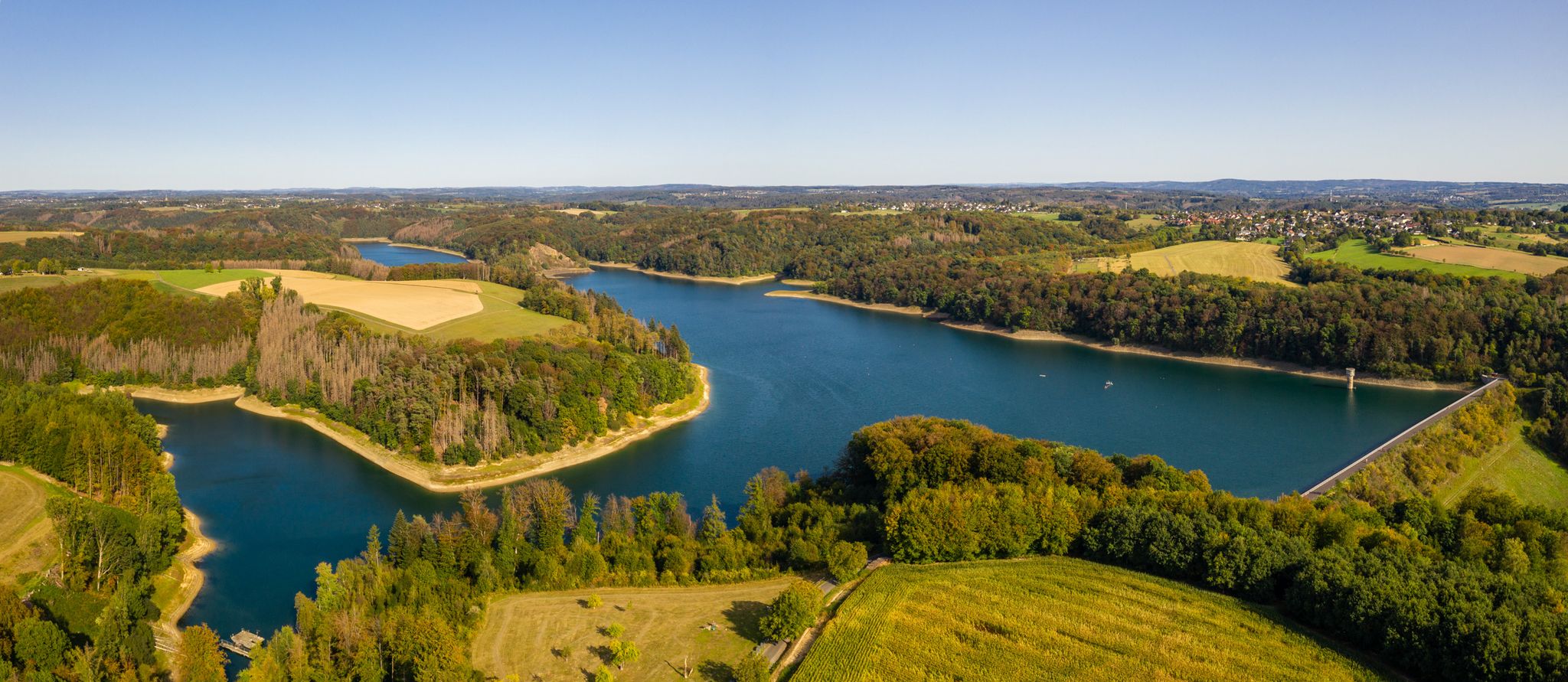
Easy hiking trails in Hardt traverse a landscape characterized by rolling hills, dense forests, and picturesque river valleys. The region, particularly in the Westerwald, features the Nister River and offers diverse terrain with varied elevations. These paths provide opportunities for exploring natural features and scenic viewpoints. The area's natural features include dense hardwood forests, rocky outcrops, and small waterfalls.
Best easy hiking trails in Hardt
- The most popular easy hiking route is St. Rochus Chapel, Sand – Gut Lerbach Milk…
Last updated: June 16, 2026
4.7
(195)
615
hikers
5.79km
01:38
130m
130m
Easy hike. Great for any fitness level. Easily-accessible paths. Suitable for all skill levels.
4.9
(81)
281
hikers
4.97km
01:20
60m
60m
Easy hike. Great for any fitness level. Easily-accessible paths. Suitable for all skill levels.

Sign up for free
4.3
(51)
170
hikers
Easy hike. Great for any fitness level. Easily-accessible paths. Suitable for all skill levels.
4.6
(28)
130
hikers
4.16km
01:12
110m
110m
Easy hike. Great for any fitness level. Easily-accessible paths. Suitable for all skill levels.
4.5
(15)
54
hikers
4.76km
01:22
120m
120m
Easy hike. Great for any fitness level. Easily-accessible paths. Suitable for all skill levels.
Get access to more routes and recommendations from other explorers.
Sign up for free
Already have an account?
Our route recommendations are based on thousands of hikes, rides, and runs completed by other people on komoot.
Start today with a free account
Your next adventure awaits.
Login or Signup
Popular around Hardt
Other adventures in Hardt

Tips from the Community

Eighty years after the end of the Second World War, which brought suffering and misery to so many countries in Europe, German Federal President Frank-Walter Steinmeier and Italian President Sergio Mattarella jointly commemorated the victims in Berlin on the occasion of the National Day of Mourning: “Today we remember the victims of violence and war, the children, women, and men of all nations. We remember the soldiers who died in the World Wars, the people who lost their lives through acts of war or afterwards in captivity, as displaced persons, and as refugees. We remember (…). We mourn with all who grieve for the dead and share their pain. But our lives are marked by the hope for reconciliation among people and nations, and our responsibility is for peace among people at home and throughout the world.” (F.-W. Steinmeier, November 16, 2025)
2
0
On hot, sunny days, this hollow path, carved into the soft loess soil by the growth of trees on both sides, is a very welcome, shady respite from the open fields. Following the ascent, the hiker reaches the beautiful, half-timbered St. Rochus Chapel.
10
0

Caution! The cave is currently closed due to rockfall.
4
0

<< Blücher Mine in the Hardt Nature Reserve >> "... Historical Development Industrial mining began here when the Blücher mining area was claimed on July 28, 1847. Advances in the zinc industry at that time led to a veritable zinc rush in the Bensberg ore district, in which Belgian businessmen played a significant role. The Blücher Mine was officially awarded to Charles Détilleux, a Belgian entrepreneur living in Paris, on June 28, 1850. At the same time, he was awarded the Napoleon Mine in the western part of the deposit. The mines, named after the Waterloo opponents, were managed jointly from the outset. They received permission to establish an associated ore processing plant in March 1855. All rights and facilities were transferred in 1857 to the Rheinischer Bergwerks-Aktienverein Saturn, which was founded in Cologne in the same year by predominantly Belgian shareholders. In the first years of operation, zinc ore was predominantly extracted from the older, pre-industrial dumps. The previously worthless zinc ore had simply been dumped by the "old men." For example, in 1854, approximately 3,800 quintals of zinc ore concentrate were extracted compared to only 13 quintals of lead ore concentrate. In the following years, this ratio normalized until it reached approximately 1 to 7 in 1862, thus adjusting to the geological conditions of the deposit. The underground mining operations also initially achieved good results, particularly at the 40- and 70-meter levels. In 1861, the machine shaft was modernized with a new steam boiler. The processing plant was expanded to include new crushing and rolling mills, as well as setting machines, and relocated upslope. Neighboring mining areas were acquired to enable permanent operation. In November 1862, the Katzbach and Wahlstatt mines were integrated. For a short time, the Blücher mine became one of the most profitable mines in the region, especially for the Saturn company. The number of employees rose to almost 280. Zinc production, in particular, was of great importance and was surpassed at the time only by the Lüderich mine. In 1869, other neighboring companies were incorporated, including Galvani, Madonna, and Norma. The "Consolidated Blücher Mine" now comprised 13 mining areas, extending across almost the entire Hardt forest area. THE FOLLOWING HISTORY AND FURTHER INFORMATION: https://www.kuladig.de/Objektansicht/KLD-267703
0
0
<< The Cox Mine >> Habitat for rare animals and plants "In the heart of Bergisch Gladbach, in the southwest of the Lerbach Forest, lies the former dolomite mine "Cox," a valuable piece of nature worthy of protection. Dolomite mining at the Cox Mine has left its mark. The original forest area at this location became a mine in 1969, and the forest dwellers fled to other parts of the Lerbach Forest. This begs the question: What is worth protecting about a quarry that destroyed intact forest areas? It neither arose naturally nor was it deliberately created as a habitat after the dolomite was extracted for the production of high-quality mirror glass. Originally, the pit was to be filled in and recultivated as a forest after mining was completed. This would have brought things full circle. Welcome to the "Cox Mine" In front of you is the "Cox Mine" nature reserve. Similar to the Wahner Heide, Königsforst, or Gierather Wald nature reserves, the Cox Mine is also open for walks and nature observation. You are cordially invited to explore the beauty of the mine site. Our visitor guidance system explains the special features of the area along the designated circular trail (aerial map). This circular trail is marked by oak fence posts with red-painted heads. Along the trail, you will find further information panels and a viewing point on the edge of the mine. To the east of the nature reserve, there are other worthwhile hiking destinations in the Lerbacher Forest and its surroundings. The History of the Cox Mine The Cox Mine is a product of modern times. In 1969, a dolomite deposit of exceptional purity was discovered at this location in the Lerbacher Forest. The dolomite found, which was particularly low in iron, was open-cast mined until around 1985 and used in glassworks in Cologne-Porz to produce high-quality mirror glass. The resulting pit was supposed to be completely filled in after mining was completed. However, rare animal and plant species, normally found only in river floodplains, quickly settled in the resulting habitat niche. For this reason, the Cox Pit was designated a nature reserve by the Cologne District Government in 1996. https://www.rbk-direkt.de/naturschutzgebiet-grube-cox.aspx
0
0

Lots of narrow, winding footpaths where no car has ever driven. This is the kind of thing I go to *nature* for. Hurry, the nature conservation authorities haven't closed them yet.
2
0
From the bench by the Lerbach stream, you can look out into an idyllic wetland. Supposedly, "special species" live there. But when asked, the authorities declined to reveal which ones exactly. Is this even true? The neighboring sand piles, embankments, and embankments are very popular with children for playing. This is permitted because the mine site—unlike the surrounding Hardt Nature Reserve—is exempt from nature conservation. https://nsg.naturschutzinformationen.nrw.de/nsg/de/fachinfo/gebiete/gesamt/GL-066
6
0

A beautiful hiking area 🥾🍀🤩
2
0
Frequently Asked Questions
How many easy hiking trails are available in Hardt?
Hardt offers over 25 easy hiking trails, providing a variety of options for exploring the region's natural beauty. All 26 trails listed in this guide are categorized as easy.
What kind of landscape can I expect on easy hikes in Hardt?
The easy hiking trails in Hardt traverse a landscape characterized by rolling hills, dense forests, and picturesque river valleys. Specifically, in the Westerwald region, you'll find routes along the Nister River, offering diverse terrain with varied elevations. The area features dense hardwood forests, rocky outcrops, and small waterfalls.
What do other hikers say about the easy trails in Hardt?
The easy hiking trails in Hardt are highly rated by the komoot community, with an average score of 4.7 stars from over 450 reviews. Hikers often praise the well-maintained paths, scenic views, and the peaceful atmosphere of the forests and river valleys.
Are there any natural attractions or landmarks to see on easy hikes in Hardt?
Yes, several natural attractions and landmarks can be found along the easy trails. You can explore areas like the Cadets' Pond in the Milchborn Valley, the Maiden's Pond, and the Milchbornbach Stream. There's also the Historic Washing Place Kaltenbroich and unique Remarkable Root Trees to discover.
Can I find viewpoints with scenic vistas on easy trails in Hardt?
Yes, some easy trails offer scenic viewpoints. For instance, the route View of Cologne – Nature Friends House Hardt loop from Hardt provides vistas, and the Grube Cox Lakes – View of Grube Cox Pond loop from Hardt offers picturesque views of the pond.
Are there trails that feature water elements like streams or lakes?
Absolutely. Many easy trails in Hardt incorporate water features. You can hike along the Milchbornbach Stream or enjoy the scenery around the Grube Cox Lakes. The region's rivers and ponds are a prominent part of the landscape.
Are there easy circular hiking routes in Hardt?
Yes, Hardt offers several easy circular hiking routes. Popular options include the St. Rochus Chapel, Sand – Gut Lerbach Milk Station loop from Hardt, the Grube Cox Lakes – View of Grube Cox Pond loop from Hardt, and the Milchbornbach Stream – Grube Cox Lakes loop from Hardt. These loops allow you to start and end at the same point, making planning convenient.
What is the best time of year to go hiking on easy trails in Hardt?
The Hardt region is beautiful year-round. Spring brings blooming flora, summer offers lush green forests, and autumn showcases vibrant fall colors. Even in winter, with appropriate gear, the trails can be serene. The best time depends on your preference for weather and scenery.
Is parking available near the easy hiking trails in Hardt?
Yes, parking is generally available near the starting points of many easy hiking trails in Hardt. Specific parking information can often be found on individual route pages on komoot or local signage at trailheads.
Are the easy hiking trails in Hardt suitable for families with children?
Yes, the easy hiking trails in Hardt are generally well-suited for families with children. Their manageable distances and gentle elevation gains make them enjoyable for younger hikers. Many routes pass by interesting natural features like streams and ponds, adding to the adventure.
Are there dog-friendly easy hiking trails in Hardt?
Most easy hiking trails in Hardt are dog-friendly, allowing you to enjoy the outdoors with your canine companion. It's always recommended to keep dogs on a leash, especially in nature protection areas, and to clean up after them. Check individual route details for any specific restrictions.
What is the typical elevation gain on easy hikes in Hardt?
Easy hikes in Hardt feature gentle elevation gains. For example, the Grube Cox Lakes – View of Grube Cox Pond loop from Hardt has a gentle gain of 206 feet (63 meters), while the St. Rochus Chapel, Sand – Gut Lerbach Milk Station loop from Hardt involves a moderate ascent of 411 feet (125 meters). These are generally manageable for most fitness levels.
Most popular routes in Hardt
Most popular attractions in Hardt

Get inspired with the komoot mobile app


Explore more
Browse the best Hikes in other regions.
