Attractions and Places To See in Nitra - Top 20
Best attractions and places to see in Nitra, one of Slovakia's oldest cities, offers a rich blend of historical landmarks and natural beauty. Situated at the foot of Zobor Mountain and bisected by the Nitra River, the city provides a captivating setting. This region is known for its ancient history, cultural sites, and picturesque landscapes, making it a diverse destination for exploration.
Best attractions and places to see in Nitra
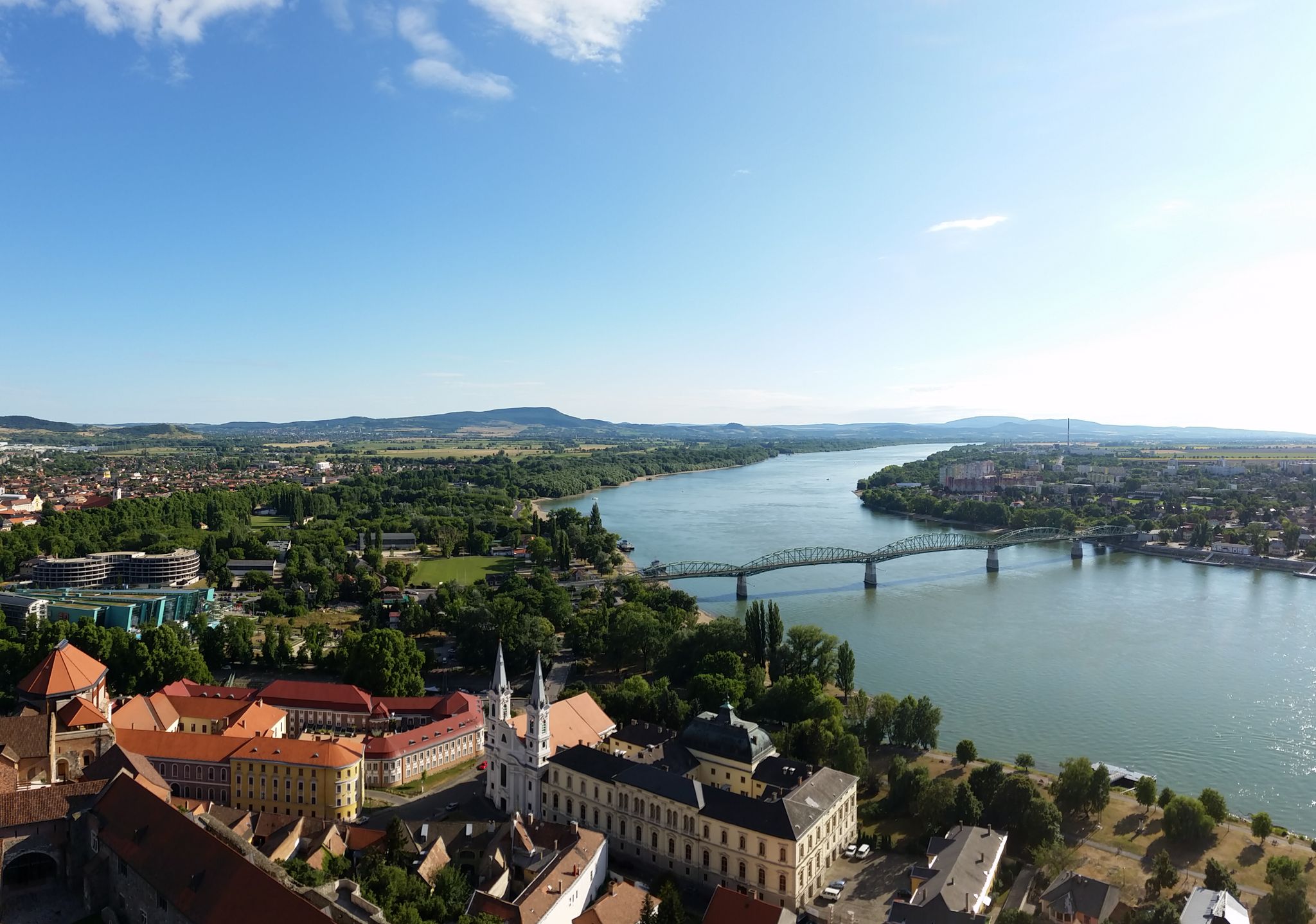
- The most popular attractions is Maria Valeria Bridge, a bridge that connects Slovakia with Hungary. It is one of the few bridges in the area, with the next one approximately 70 km away.
- Another must-see spot is Gýmeš Castle, a historical castle. Visitors can explore the majestic ruins, which document the continuous architectural development from late Romanesque to Baroque styles.
- Visitors also love Komárno, a settlement at the confluence of the Danube and Váh rivers. This town is Slovakia's principal port on the Danube and a center of the Hungarian community in Slovakia.
- Nitra is known for its historical landmarks, natural features, and cultural sites. The region offers a variety of attractions, from ancient castles and Roman forts to museums and scenic viewpoints.
- The attractions in Nitra are appreciated by the komoot community, with more than 210 upvotes and over 110 photos shared by visitors.
Last updated: October 9, 2026
Maria Valeria Bridge
Highlight (Segment) • Bridge
Translated by Google •
Tip by

400 Years Peace Memorial Turks-Habsburgs 🔔 Žitava Memorial
Highlight • Monument
Tip by

Sign up now to discover places like this
Get recommendations on the best single tracks, peaks, & plenty of other exciting outdoor places.
Cathedral and Castle of Esztergom
Highlight • Religious Site
The cathedral is dedicated to Mary, the Mother of God, who was taken into heaven, and to St. Adalbert of Prague. Its history extends from 1001 to 1869. As caput, mater et magistra ecclesiarum hungariae (“Head, Mother and Teacher of the Hungarian Churches”), it is the largest church in Hungary and is ranked 18th among the largest churches in the world (Wikipedia).
Translated by Google •
Tip by

Celemantia Roman Fort (Iža–Leányvár)
Highlight • Historical Site
A Germanic settlement "Celemantia" in this area is mentioned by Claudius Ptolemaios in the 2nd century AD. It can be identical with the remnants of a civil settlement found next to the castellum or with another unknown settlement or, as some historians assume, it is the name of both the castellum and the remnants of the civil settlement.
The construction of the castellum started in the 2nd half of the 1st century. It was conquered during the Marcomannic Wars (166-180) and burned down by Germanic tribes, and was rebuilt later. It ceased to exist around 400 (beginning of the Migration Period). The ruins were very well visible up to the late 18th century, but afterwards people used stones from the constructions to build the fortress and other buildings in Komárno.
According to a local legend, a Roman soldier, Valentin, kept his mistresses in the fortress. The fictitious story explains the origin of the name Leányvár, meaning Girl Castle in Hungarian. However the name probably refers to the fact that the ruins of the castle were donated by King Béla IV of Hungary to the Dominican nuns of Margitsziget who later built a small fortress among them. en.wikipedia.org/wiki/Celemantia
Tip by
St. Andrew's Basilica
Highlight • Religious Site
The first church was built by the Jesuits between 1674 and 1677, with a two-meter iron statue of the Apostle St. Andrew on its tower (which was also the watchtower of the city). There was a cemetery around the church. In addition to the old church, which proved to be cramped for the fast-growing city, a new church was erected between 1723 and 1734, also named after St. Andrew. The material of the destroyed Archbishop's Fortress was also used for its construction. However the poorly built church collapsed 1738. The Jesuits rebuild the church, in return the city donated the adjacent plots to them. They first built their headquarters (in 1748) and then their grammar school (in 1749). The cornerstone of the new church was built in 1748. it was laid down on August 3, 1756. The church was completed. The Baroque frescoes were made by Franz Anton Maulbertsch in 1760. The church was built in 1763. on June 28, the great Komárom earthquake ruined it, but it was rebuilt between 1768-1771, with lower towers. This time the frescoes were made by Johann Lucas Kracker. In 1773 the Jesuit order was dissolved, the church (along with the grammar school and the convent) wasreceived by the Benedictines of Pannonhalma. After another earthquake in 1783, at the request of the people of Komárom, the large bell of the church was rang every day at three o'clock in the afternoon to reconcile the heavens. This tradition has survived to this day.
1848 the church (along with the convent and grammar school) burned down. It was renovated from public donations in 1860. The towers remained truncated, the slender roof still visible today was erected in 1896 by the parish priest Gusztáv Károly Majláth. The church received several grenade hits during World War II, the roof was damaged, and some of the painted windows broke out. It was renovated in the 1970s as a listed building with state support. The church is famous for its good acoustics, organ competitions are often held here.
The statue of St. Florian and the coat of arms of the city can be seen on the east wall of the church. In 2013, the facade of the church and one of its towers were renovated. hu.wikipedia.org/wiki/Szent_Andr%C3%A1s-bazilika_(Kom%C3%A1rom)
Tip by
Ecofarm 🏕️ camping Ostrov
Highlight • Rest Area
Translated by Google •
Tip by

Komárno
Highlight • Settlement
Komárno is Slovakia's principal port on the Danube. It is also the center of the Hungarian community in Slovakia, which makes up 53.8% (2011 census) of the town's population. The town is the historic seat of the Serbian national minority in Slovakia. en.wikipedia.org/wiki/Kom%C3%A1rno
Tip by
Gýmeš Castle
Highlight • Castle
The first written mention of the castle dates back to 1253 in the deed of gift from King Bela IV, whereby Andrej Hunt-Poznan acquired the castle for his services.
The Bohemian king was unable to take the castle in 1271 and 1273.
Website: hradgymes.sk
Translated by Google •
Tip by

Charles Robert Bridge
Highlight • Bridge
It rises in Slovakia in the Slovak Ore Mountains (more precisely in the lower part of the Volovské vrchy) in central Slovakia at an altitude of around 1000 m in the mountains south of Brezno and east of the central Slovakian capital Banská Bystrica, near Lom nad Rimavicou (Wikipedia).
Translated by Google •
Tip by
General Klapka Square (Námestie Generála Klapku)
Highlight • Monument
Translated by Google •
Tip by

Sign up for free to discover even more attractions in Nitra.
Already have an account?
Start today with a free account
Your next adventure awaits.
Other adventures in Nitra

Tips from the Community

I have added a photo with the price list of the camping from 08/2026
0
0

Gen. Klapka Square presents its dominant feature – the statue of György Klapka, a representative of the Hungarian Revolution in 1848-49. In 1849, General Klapka took command of the defense of Komárno as the last fort of the revolutionaries against the Austrian Imperial Army. The building of Komárno Town Hall also serves as the municipal office today. The first town hall building, along with many other buildings in Komárno, was destroyed in 1763 by an extensive earthquake. From then on, the town hall was destroyed and rebuilt several times. It received its present form in 1875. At 10 AM, 12 PM, 2 PM, and 4 PM, the Hussar March can be heard in the square, while a figure of a Hussar comes out of a small door in the town hall tower. The original Zichy Palace was built in 1775 for Count Francis Zichy. Today it is a place where exhibitions of the museum called Podunajské múzeum are located. The building of former clinics was a residence of a savings bank during the time of the monarchy; currently, the building is not used. In front of the clinics are reproductions of Komárno's historical photos. https://www.komarno.com/en/small-journey/gen-klapka-square/
0
0

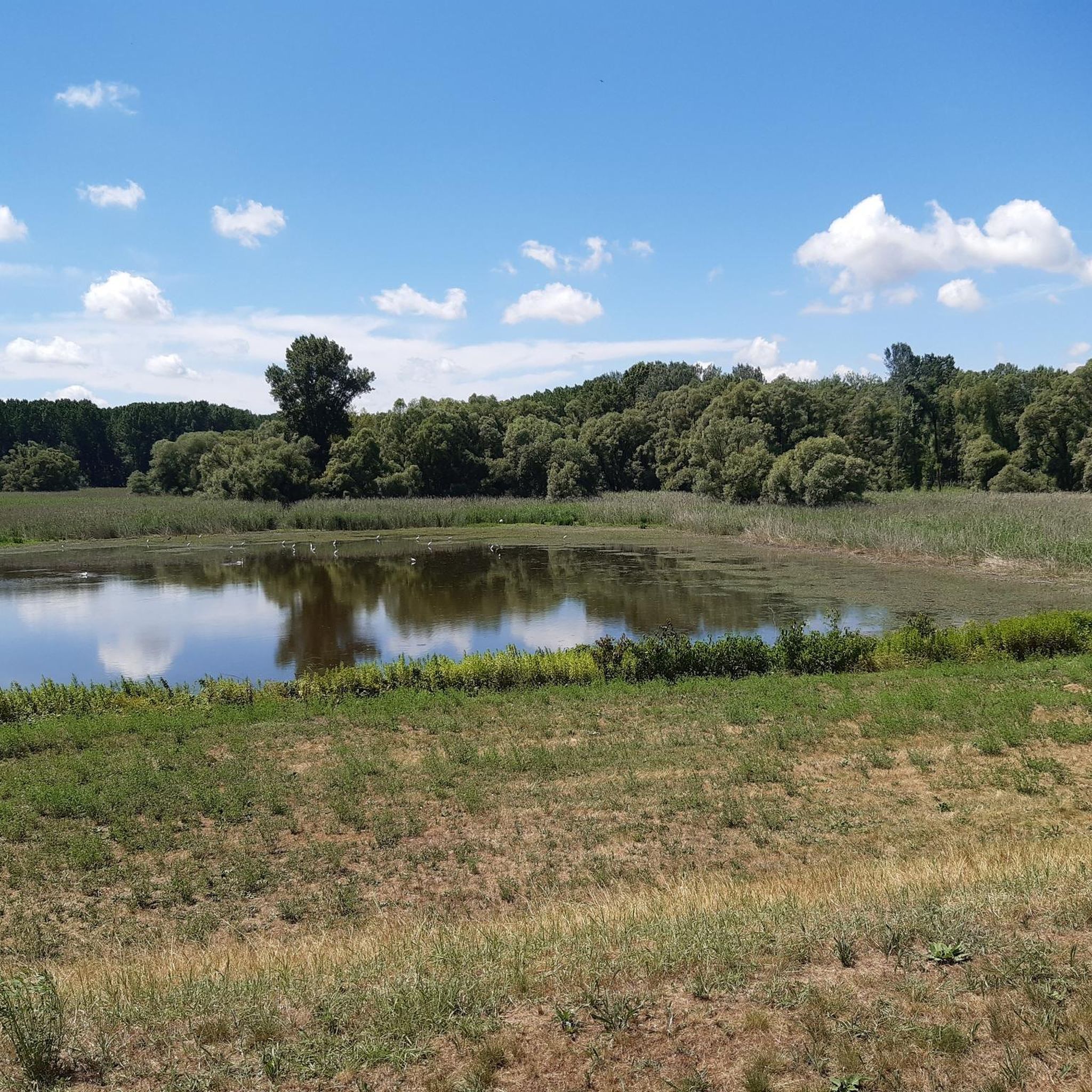
This is a real insider tip for nature lovers and families seeking tranquility away from the crowds. The place is located on an island in the Danube (in the Dunajské luhy nature reserve), about an hour's drive from Bratislava or Győr. It is an active organic farm. There are 300-400 year old oak trees, free-roaming animals (goats, horses, donkeys) and direct access to the river with small sandy beaches.
0
0
Komárno (Slovak Komárno, Hungarian Komárom) is a historically significant city at the confluence of the Váh and the Danube. Its history is shaped by its strategic location as a border fortress and its current division into a Slovak and a Hungarian city.
0
0
The Roman fort Celemantia (also known as Kelemantia or Leányvár) is a fascinating archaeological site in present-day Slovakia. It is particularly significant because it was one of the few Roman camps located directly on the "barbarian" side of the Danube.
1
0
The designation „Károly-Róbert-Brücke“ often leads to confusion, as in current usage it mostly refers to a small, new border bridge, while in Budapest it is more associated with a major traffic artery. The official Károly-Róbert-Brücke (Károly Róbert híd) is a road bridge over the river Ipoly, opened in 2023.
0
0
The Žitava Peace Monument (Slovak: Pamätník Žitavského mieru) commemorates a diplomatic event of world historical significance that took place in 1606 at the mouth of the Žitava river into the Danube. The monument is now located in the Žitavská Tôňa district of the municipality of Radvaň nad Dunajom (Southern Slovakia, near Komárno). On November 11, 1606, the peace treaty was signed here, ending the so-called "Long Turkish War" (1593–1606) between the Habsburg Empire and the Ottoman Empire.
0
0
The St. Andrew's Basilica (Slovak: Bazilika svätého Ondreja) is the most striking religious building in Komárno (Slovakia) and one of the largest churches in the country. It has a turbulent history behind it, marked by natural disasters and wars.
1
0
Frequently Asked Questions
What are the main historical attractions to visit in Nitra?
Nitra is rich in history, with its most prominent landmark being Nitra Castle, which includes the impressive Basilica of Saint Emmeram and the Diocesan Museum. Other significant historical sites include the Gýmeš Castle ruins, the ancient Church of St. Michael the Archangel in Dražovce, and the historic Nitra Synagogue, an Art Nouveau building now serving as a cultural center.
Where can I find the best panoramic views of Nitra?
For breathtaking panoramic views of Nitra, the river, and the surrounding plains, head to Zobor Hill. Another excellent spot is the Nitra Calvary, a pilgrimage site on one of the city's seven hills, which also offers beautiful vistas. The fortifications of Nitra Castle also provide elevated perspectives of the city.
Are there any family-friendly attractions in Nitra?
Yes, Nitra offers several family-friendly attractions. The Slovak Agricultural Museum is unique, featuring vintage farming equipment, a steam railway, and demonstrations of traditional crafts. Many historical sites like the Celemantia Roman Fort and the 400 Years Peace Memorial Turks-Habsburgs are also suitable for families. The Botanical Garden of the Slovak University of Agriculture provides a relaxed outdoor experience for all ages.
What outdoor activities can I do near Nitra's attractions?
The area around Nitra is ideal for outdoor enthusiasts. Zobor Hill is a popular destination for hiking, offering forest trails and the ruins of an old monastery. The wider Ponitrie region features numerous forests, hiking trails, and nature reserves. You can also explore various running trails, cycling routes, and gravel biking paths in the region.
What is the best time of year to visit Nitra?
Nitra is enjoyable throughout the year, but the spring and summer months (April to September) are particularly pleasant for exploring outdoor attractions like Zobor Hill and the Botanical Garden. The weather is generally mild, making it ideal for hiking, cycling, and enjoying the city's cultural events. Autumn also offers beautiful scenery with changing foliage.
Are there any natural features or reserves to explore in Nitra?
Beyond the city's historical sites, Nitra boasts significant natural beauty. The prominent Zobor Hill offers forest trails and stunning views. The Nitra River flows through the city, adding to its picturesque setting. The broader Ponitrie Protected Landscape Area is home to diverse flora and fauna, including 52 caves, and features reserves like Žibrica.
Where can I find cultural sites and museums in Nitra?
Nitra offers a rich cultural scene. The Nitra Synagogue hosts concerts and exhibitions, while the Ponitrianske Museum showcases archaeology and local folk culture. The Slovak Agricultural Museum is unique in the country. Art lovers can visit the Nitra Gallery, and the Andrej Bagar Theater provides a diverse repertoire of dramatic performances. The Diocesan Library in the Upper Town also holds valuable historical documents.
What do visitors enjoy most about the attractions in Nitra?
Visitors frequently appreciate the blend of history and natural beauty. Many are captivated by the majestic ruins of Gýmeš Castle and the strategic importance of the Maria Valeria Bridge. The city's historical depth, from Roman forts to medieval castles, combined with opportunities for outdoor activities like hiking on Zobor Hill, makes for a diverse and engaging experience.
Is there parking available near major attractions like Nitra Castle or Zobor Hill?
While specific parking details for every attraction can vary, Nitra generally provides parking options. For Nitra Castle, there are usually paid parking areas in the vicinity of the Upper Town. For Zobor Hill, parking is typically available at the base or designated trailheads. It's advisable to check local signage upon arrival for the most current information on parking availability and fees.
Can I reach Nitra's tourist attractions using public transport?
Yes, Nitra has a local public transport system that can connect you to many of its attractions. The city center, including Pribina Square and areas near Nitra Castle, is well-served. For attractions slightly outside the immediate city center, such as the Church of St. Michael the Archangel in Dražovce or the base of Zobor Hill, local bus routes are often available. Check local schedules for specific routes and timings.
Are there any unique experiences or hidden gems in Nitra?
Beyond the main highlights, consider exploring the casemates within Nitra Castle or the Vazula Tower for a deeper dive into its history. The Plague Column, a Baroque sculpture from 1750, offers a poignant historical detail. For a unique cultural experience, attend an event at the Nitra Synagogue. The Ponitrie region's lesser-known nature reserves also offer opportunities for quiet exploration and bird watching.
What is the significance of the Maria Valeria Bridge near Nitra?
The Maria Valeria Bridge is a significant landmark connecting Slovakia with Hungary. It's one of the few bridges in the area, with the next one approximately 70 km away, making it a crucial crossing point. It offers scenic views and is popular for those looking to cross the border, whether by car, bike, or on foot.
Most popular routes in Nitra
Most popular attractions in Nitra

Get inspired with the komoot mobile app


Didn’t find what you were looking for?
Are you keen on exploring more awesome places nearby? Browse our guides:
Explore more
Still not found the Highlight you’re looking for? See guides of the top attractions in other regions:
