Attractions and Places To See in Ternopil - Top 6
Best attractions and places to see in Ternopil include a blend of historical landmarks, natural features, and cultural sites in western Ukraine. The city and its surrounding region offer ancient castles, serene parks, and significant religious buildings. Visitors can explore a diverse landscape that combines urban history with natural beauty. The area presents a range of historical sites and natural monuments for exploration.
Best attractions and places to see in Ternopil
- The most popular attractions is Zbarazh Castle, a…
Last updated: October 10, 2026
Zbarazh Castle
Highlight • Castle
Translated by Google •
Tip by

Kremenets Castle
Highlight • Castle
In the 12th century, a wooden stronghold of the Ruthenian dukes …
Translated by Google •
Tip by
Sign up now to discover places like this
Get recommendations on the best single tracks, peaks, & plenty of other exciting outdoor places.
Church of St. Ignatius of Loyola and St. Stanislaus Kostka
Highlight • Religious Site
Translated by Google •
Tip by
Terebovlia Castle
Highlight • Castle
Translated by Google •
Tip by

Camping Area with Ponds and Shelters
Highlight • Rest Area
Translated by Google •
Tip by

Dychkiv Spring
Highlight • Natural Monument
uk.wikipedia.org/wiki/Дичківське_джерело
Translated by Google •
Tip by
Tips from the Community

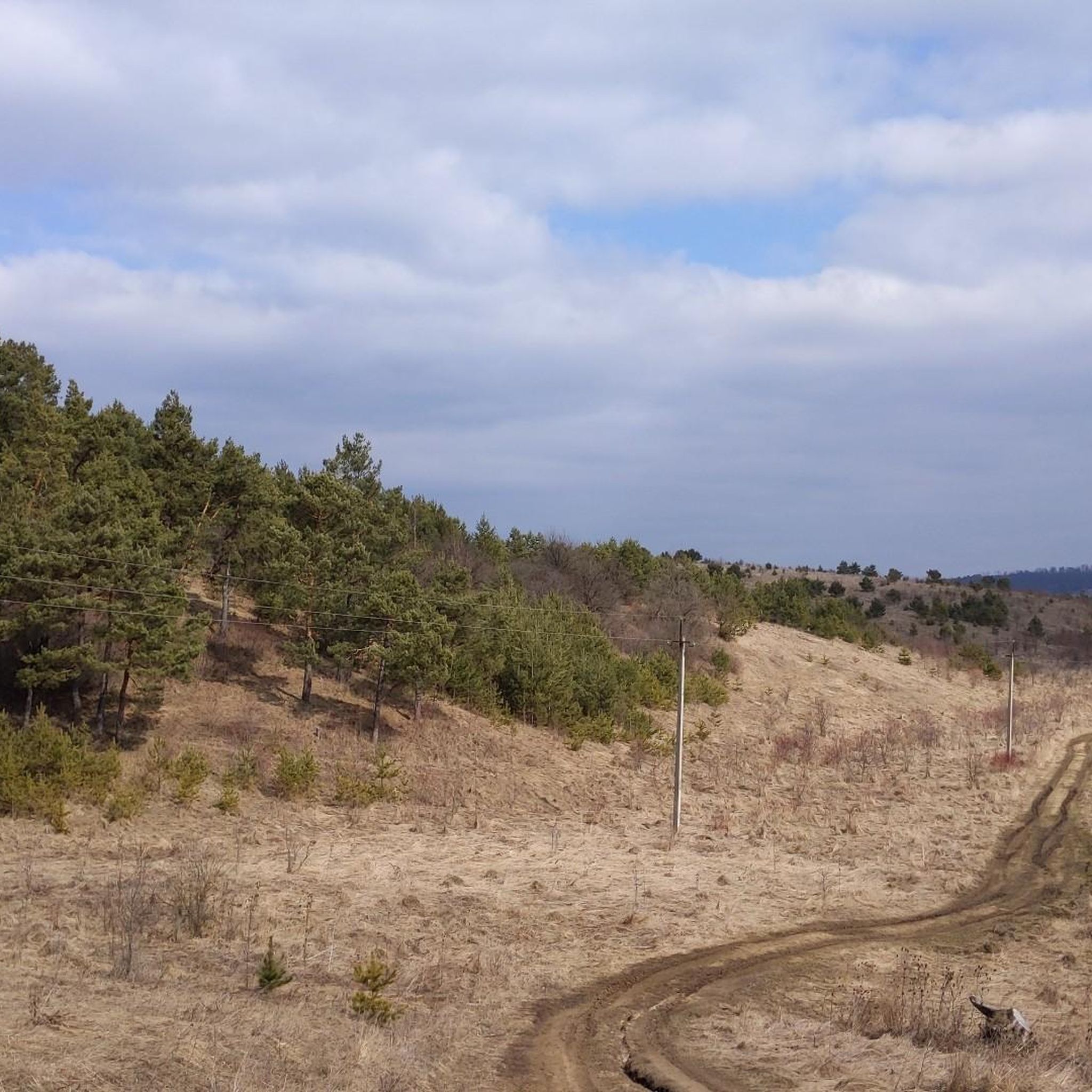
In fact, this is a place for fishing, but you can rent a gazebo without fishing: electricity, drinking water, summer shower, toilet. There are also caves nearby, but visits must be arranged in advance
0
0

Terebovlya Castle is a fortification in Terebovlya, 32 km from the regional center of Ternopil. A cobbled path leads to the castle by a steep slope through a dense park, which was laid by the mayor of the city of Yuri the Great. The trees were planted at the end of the 19th century, and now, due to the thick wood of the castle walls, which in some places reach 5 m in thickness, it is not clearly visible from the city.
1
0
Dychkivske spring is a hydrological natural monument of local significance in Ukraine. https://uk.wikipedia.org/wiki/Дичківське_джерело
1
0

Church of st. Ignacy Loyola and Stanisław Kostka, currently the Church of the Transfiguration of the Lord - a former Roman Catholic church located in Krzemieniec in the Tarnopol region in Ukraine, originally belonging to the Jesuit Order. In 1728, Prince Michał Serwacy Wiśniowiecki undertook to build a new church for the existing Jesuit residence in Krzemieniec. The monastery complex was built in the years 1731–1745 according to the design of Father Paweł Giżycki (possibly with the influence of Paweł Fontana) from the foundation of Prince Michał Serwacy Wiśniowiecki. It is the most perfect work of Paweł Giżycki, the genesis of which should be sought in the Roman classicizing baroque of the beginning of the 18th century. The construction of schools, started simultaneously from the south, was completed in 1753. The construction of the second northern wing of the monastery continued in the 1770s and was not completed, because in 1773 the Jesuit Order was abolished. After this fact, the monastic church became a parish church, and after the November Uprising, in 1832, it was taken over by the Orthodox Church. During the Second Polish Republic, it functioned again as a Catholic church, but after the annexation of Volhynia by the USSR and its inclusion into the Ukrainian SSR, a sports hall was arranged there. After the collapse of the USSR, it was handed over to the Ukrainian Orthodox Church and adapted for the Transfiguration Cathedral (until 2018 of the Ukrainian Orthodox Church of the Kiev Patriarchate, then the Ukrainian Orthodox Church). https://pl.wikipedia.org/wiki/Ko%C5%9Bci%C3%B3%C5%82_%C5%9Bw._Ignacego_Loyoli_i_%C5%9Bw._Stanis%C5%82awa_Kostki_w_Krzemie%C5%84cu https://www.youtube.com/watch?v=JAw9HeoUF1Y
3
0
Krzemieniec Castle - ruins of a castle from the 13th-14th centuries, rebuilt in the 16th century, located in Krzemieniec. In the 12th century, a wooden stronghold of the Ruthenian dukes was erected here, the wooden fortifications of which were replaced with brick ones in the 13th-14th centuries. The castle was fortified so strongly that in 1226 it could not be conquered by King Andrzej Węgierski, and in 1241 by the Tatars [1]. In 1321, Krzemieniec and Łuck came under the rule of Lithuania, and later of Poland, as the seat of the castle starosty in the Volyn voivodeship. In the years 1409-1418 his cousin Świdrygiełło was imprisoned here by prince Witold for allying during the Great War with the Teutonic Knights against Jagiello and Witold. The imprisonment was not difficult and the fugitive of the Teutonic Knights, Konrad of Falkenberg, who managed the castle, allowed Świdrygielle to receive guests, among whom the dukes Daszko Ostrogski and Aleksander Nos decided to help Świdrygielle escape. They sent two men who were part of the castle crew and on the night of March 24, 1418 they opened the gates of the castle, into which 500 people of Prince Ostrogski broke. The entire crew was murdered, including Konrad of Falkenberg, who defended himself with a sword in his hand. In 1536, Queen Bona received the Krzemieniec starosty from her husband, Sigismund the Old, and on her initiative, the castle was rebuilt into a Renaissance one and the fortifications were strengthened. Later, the castle belonged to successive Polish kings. In October 1648, after a 6-week siege, Cossack colonel Maksym Krzywonos captured the castle and demolished it. The unrebuilt castle fell into ruin that remains to this day. https://pl.wikipedia.org/wiki/Zamek_w_Krzemie%C5%84cu https://www.youtube.com/watch?v=d2d3U3La1Us
4
0
Castle in Zbaraż - a fortress in the type of palazzo in fortezza in Zbaraż (Nowe Zbaraż). It was built in the years 1620-26, at the request of Jerzy Zbaraski and Krzysztof Zbaraski, and was designed by Henryk van Peene from Flanders. From 1434, Zbaraż Stary was the seat of a wealthy family of the princes of Zbaraz, who came from the Ruthenian Korybuty. In 1474, Prince Wasyl Nieświcki, unable to defend himself against the Tatars, burned down in the castle with the entire crew. The castle was rebuilt, but in 1589 it was again destroyed by the Tatars. The construction of the new castle began in 1620. The castle, surrounded by earth fortifications, made with the participation of Krzysztof Arciszewski, was unsuccessfully besieged by the Cossacks in 1649. The siege was described by Henryk Sienkiewicz in Ogniem i Mieczem (Ogniem i Mieczem). During the war with Turkey 1672-1676, in August 1675, the Polish crew repelled two storms of Turkish troops with 30 cannons, after which they were attacked from the inside by peasants who took refuge within its walls. On the condition of saving their lives, on August 2, the peasants surrendered the castle, but the Turks did not keep their promise and slaughtered them all. After taking back the castle, Fr. Dymitr Jerzy Wiśniowiecki repaired the damage. In 1682, the castle passed into the hands of the Potocki family. Then it was occupied by the Russians in 1707 during the Third Northern War and in 1734 during the War of the Polish Succession. In the 18th century, the castle in ruin still belonged to the Potocki family. At the beginning of the 19th century, the Potocki family sold the Lubomirski castle. General Józef Bem resided in the castle for some time. It was seriously damaged by the Russians in 1914 during World War I. https://pl.wikipedia.org/wiki/Zamek_w_Zbara%C5%BCu https://www.youtube.com/watch?v=YQuSNUcsVNw
3
0
Frequently Asked Questions
What historical castles can I explore in the Ternopil region?
The Ternopil region is rich in historical castles. You can visit Zbarazh Castle, a 17th-century fortress known for its strong fortifications and historical sieges. Another significant site is Kremenets Castle, which features ruins from the 13th-14th centuries, rebuilt in Renaissance style. Additionally, Terebovlia Castle, located about 32 km from Ternopil, offers thick castle walls and is surrounded by a dense park.
Are there any significant religious buildings to visit in Ternopil?
Yes, Ternopil and its surroundings host several notable religious sites. The Church of St. Ignatius of Loyola and St. Stanislaus Kostka, now the Church of the Transfiguration of the Lord, is a former Roman Catholic church built in the 18th century with stunning Baroque architecture. Within the city, you can also find the Dominican Monastery, home to the Ternopil Regional Museum, and the Cathedral of the Immaculate Conception of the Blessed Virgin Mary, an 18th-century architectural marvel.
What natural features are prominent in Ternopil and its surrounding area?
Ternopil is known for its beautiful natural features. The Ternopil Pond, a large artificial reservoir in the city center, is popular for walks and boat rides. Shevchenko Park and Staryi Park offer lush green spaces for relaxation. Outside the city, the Dniester Canyon is one of Ukraine's Seven Natural Wonders, featuring breathtaking landscapes, rocky cliffs, and waterfalls like the Dzhurynsky Waterfall. The region is also home to extensive gypsum karst caves such as Verteba, Ozerna, and Crystal Cave.
What kind of outdoor activities can I do near Ternopil's attractions?
You can enjoy various outdoor activities, especially around the Ternopil Pond and in the city's parks. For running enthusiasts, there are several routes available, such as the 'Ternopil Lake loop' and 'Водограй – Тернопільський замок loop'. You can find more details on these and other running trails in the Running Trails in Ternopil guide. The Dniester Canyon also offers opportunities for hiking, camping, and rafting.
Are there family-friendly attractions in Ternopil?
Yes, Ternopil offers several family-friendly options. The Ternopil Pond is a great spot for family walks and boat rides. Shevchenko Park and Staryi Park provide open spaces for children to play. The Camping Area with Ponds and Shelters is another family-friendly highlight. Many historical sites, like Zbarazh Castle, can also be engaging for older children interested in history.
Where can I learn about the local history and culture of Ternopil?
To delve into Ternopil's history and culture, visit the Ternopil Regional Museum, housed in the Dominican Monastery, which offers insights into the region's past. The Ternopil Ethnographic Museum showcases traditional life, crafts, and folklore. For a unique experience, the Staryi Mlyn Museum-Restaurant combines traditional cuisine with a collection of authentic folk tools and antiques.
What are some unique historical sites in Ternopil beyond the main castles?
Beyond the prominent castles, Ternopil offers unique historical sites like the Ternopil Castle, the city's oldest surviving building, which now houses a museum. The Old City Hall, a 16th-century building, now hosts the Ternopil Art Museum. The Church of the Exaltation of the Holy Cross, an early 17th-century architectural gem, is Ternopil's oldest temple and was part of the city's defensive structures.
What is the best time of year to visit Ternopil?
The best time to visit Ternopil is generally during the spring (April-May) and autumn (September-October) when the weather is mild and pleasant for exploring historical sites and natural attractions. Summer (June-August) is also popular, especially for enjoying the Ternopil Pond and outdoor activities, though it can be warmer. Winters can be cold with snow, offering a different, often picturesque, experience for those interested in winter landscapes.
Are there any viewpoints in the Ternopil region offering scenic vistas?
Yes, several locations offer scenic viewpoints. The ruins of Kremenets Castle provide panoramic views of the surrounding area. You can also climb the bell tower of the Cathedral of the Immaculate Conception of the Blessed Virgin Mary for city views. The Dniester Canyon, with its rocky cliffs, offers numerous breathtaking landscapes and vistas.
What are some less crowded or unique attractions to discover in Ternopil?
For a less crowded experience, consider exploring the Karst Caves in the Ternopil region, such as Verteba, Ozerna, or Crystal Cave, known for their unique geological formations. The Dychkiv Spring, a hydrological natural monument, offers a serene natural escape. The Staryi Mlyn Museum-Restaurant provides a distinctive cultural and culinary experience away from typical tourist paths.
How can I get around Ternopil to visit its attractions?
Ternopil has a public transport system that can take you to many city attractions. For sites within the city center, walking is often a pleasant option, especially around the Ternopil Pond and Shevchenko Boulevard. For attractions outside the city, such as the castles or natural features like the Dniester Canyon, it's advisable to use local buses or taxis, or consider renting a car for more flexibility.
Are there any specific monuments or iconic architectural features in Ternopil?
Ternopil features several monuments dedicated to important figures like Taras Shevchenko, Solomiya Krushelnytska, and Josyf Slipyj. An iconic architectural feature is the Trystoronniy Hodynnyk (Tripartite Clock), a symbol of local heritage. The city's Freedom Square and Shevchenko Boulevard are also lined with monuments and offer pleasant areas for strolling.
Most popular routes in Ternopil

Get inspired with the komoot mobile app


Explore more
Still not found the Highlight you’re looking for? See guides of the top attractions in other regions:
