Top 20 Castles around Kortenberg
Castles around Kortenberg offer a glimpse into centuries of history within the Flemish Brabant province. This region is characterized by its historical significance and diverse landscapes, featuring both preserved architectural heritage and natural areas. The area provides opportunities to explore historical sites and enjoy the surrounding countryside. Many castles are situated amidst green spaces, offering a blend of cultural and natural exploration.
Best castles around Kortenberg
- The most popular castle is Het Steen or the Rubens Castle, a castle…
Last updated: October 12, 2026
Ter Heyden Keep
Highlight • Castle
Tip by

Het Steen or the Rubens Castle
Highlight • Castle
Translated by Google •
Tip by

Sign up now to discover places like this
Get recommendations on the best single tracks, peaks, & plenty of other exciting outdoor places.
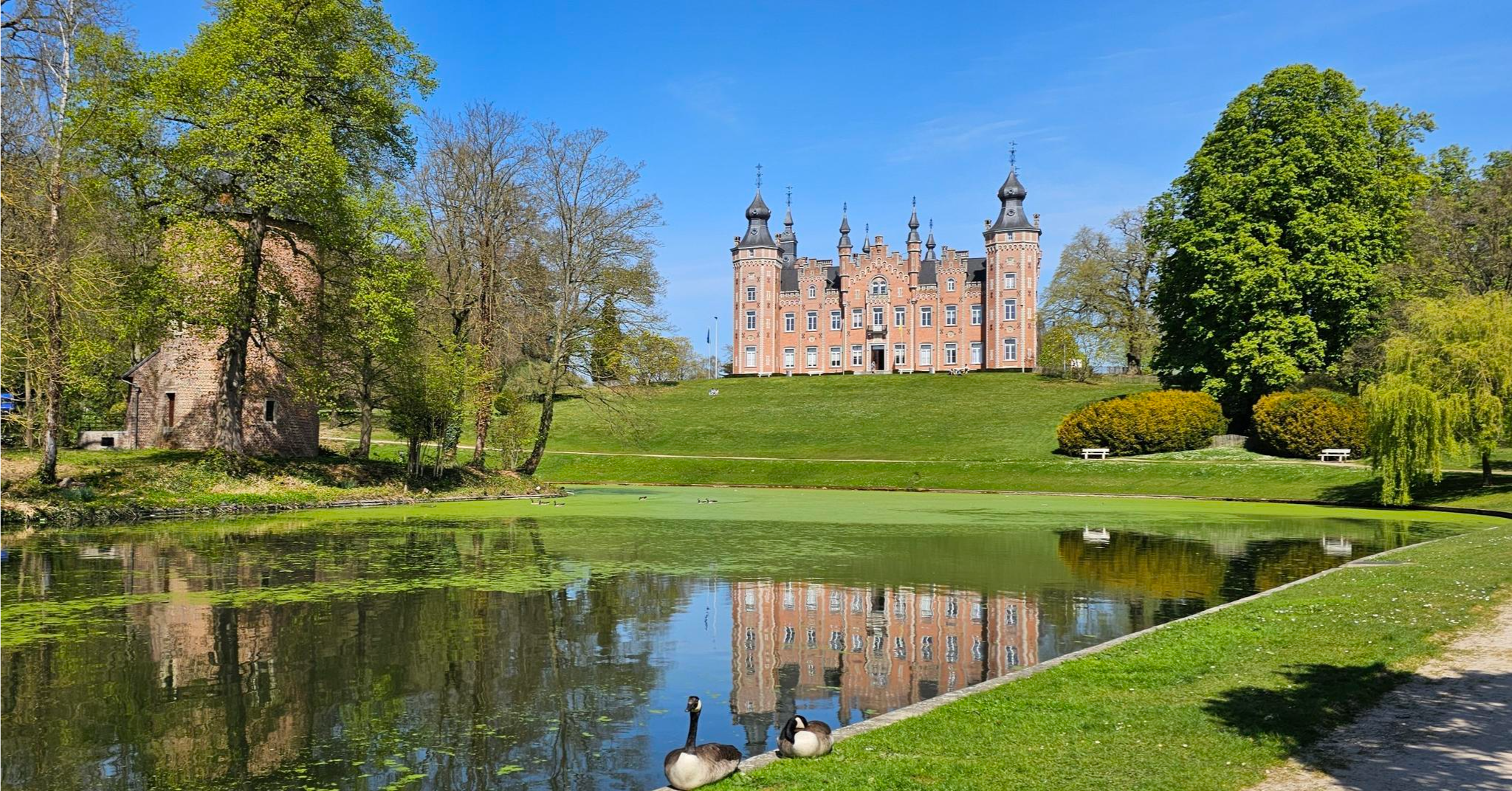
Mirror Pond with a view of the AfricaMuseum
Highlight • Lake
Translated by Google •
Tip by

Saint Hubert Chapel
Highlight • Religious Site
Translated by Google •
Tip by

Ter Heiden Tower
Highlight • Castle
Translated by Google •
Tip by

Sign up for free to discover even more castles around Kortenberg.
Already have an account?
Start today with a free account
Your next adventure awaits.
Other adventures around Kortenberg

Tips from the Community


A beautiful place for rest and walking: you can stroll along it, enjoy the greenery and water, and it is part of the historical and natural charm of Tervuren.
7
0

The veneration of Saint Hubert in Tervuren, the presumed place of death of the patron saint of hunters, dates back to at least the 16th century and is probably even older. Every year on the last Sunday in October, an open-air mass is celebrated there in honor of Saint Hubert, and horses and dogs are blessed to protect them from running amok.
4
0

Once a sturdy motte castle from the 11th century, Het Steen grew into a beautiful Renaissance castle that played a key role in the defense of Brabant against the Mechelaars for centuries. The castle is picturesquely situated in a meander of the Barebeek, surrounded by old moats and close to the Zenne, and breathes history - from knightly battles to Spanish garrisons. The most famous resident was Peter Paul Rubens, who spent his last summers here, painted, partied with artist friends such as Van Dyck and Teniers, and immortalized the surrounding nature on canvas.
0
0

The Donjon Ter Heyden, also known as the tower of Ter Heyden, is a residential tower in the Belgian town of Rotselaar (province of Flemish Brabant) from the mid-fourteenth century. The donjon was built between 1350 and 1363 by order of Gerard van der Heyden, the then bailiff of the Duchy of Brabant, when he acquired the status and funds through a marriage with a noblewoman to erect a building of such calibre.
3
0

Het Steen and appurtenances (Steendreef 77): protected monument (28/10/1948) in Flemish Renaissance style. Only the facades and roofs of the main building and outbuildings, with the exception of the stables and sheds from the first half of the 19th century, are protected. On the left in front of 't Steen, popularly known as 'Het Rubenskasteel', our attention goes to the second frame. Here we are looking in the direction of Perk where Rubens' friend David Teniers lived. Is that how Rubens saw it in his time? The castle grew out of a motte, a heavy stone residential tower on a hill, surrounded by water. The oldest known owner of the first castle was probably Rudolf van Wilre, who had the Steenvaart or the connection between the Barebeek and the Zenne dug in 1259. Later this was filled in and is now the toevaartdreef. In a deed from 1304 there was mention of a castle in white stone. It was a feudal castle, with towers and moats, like most castles from that time, comparable to the Steen in Antwerp or the Kantersteen in Brussels. As an advanced defense position it played its role for centuries in the wars between the people of Mechelen and Brussels.
1
1

Frequently Asked Questions
What are some notable castles to visit directly in or very close to Kortenberg?
Within Kortenberg itself, the Kasteel de Merode in Everberg is a significant historical site. This castle, still inhabited by the de Merode family, showcases architectural evolution from Renaissance to Classicist styles and features expansive English park grounds. While the interior is open on special occasions, the grounds offer a rich historical environment.
Are there other historically significant castles in the broader Flemish Brabant region near Kortenberg?
Yes, beyond Kortenberg, you can explore the picturesque Kasteel van Horst in Holsbeek, a well-preserved moated castle with medieval origins and 17th-century grandeur. Another notable site is Kasteel van Leefdaal in Bertem, a moated castle dating back to the 12th century, visible from public walking paths.
Which castles around Kortenberg are popular with visitors?
Visitors frequently enjoy Het Steen or the Rubens Castle, known for its history as an 11th-century motte castle and later as the residence of painter Peter Paul Rubens. Another popular spot is Ter Heyden Keep, a picturesque 14th-century residential tower situated in the middle of an artificial lake.
Are there family-friendly castles to visit near Kortenberg?
Many castles in the region are considered family-friendly due to their historical significance and surrounding grounds. Het Steen or the Rubens Castle, Ter Heyden Keep, and Arenberg Castle are all categorized as family-friendly, offering historical exploration and often green spaces for children to enjoy.
What kind of outdoor activities can I do near these castles?
The region around Kortenberg offers various outdoor activities. You can find numerous hiking and running trails. For example, near the castles, you can explore routes like the 'Boardwalks of Silsombos' or the 'St. Martin's Church – Tenant Farm The Biesthof loop'. Cycling is also popular, with routes such as the 'Lake in the Park van Tervuren' loop. You can find more details on these activities in the Hiking around Kortenberg, Running Trails around Kortenberg, and Cycling around Kortenberg guides.
Are there castles with public access to their grounds or parks?
Yes, several castles offer public access to their surrounding areas. The Kasteel de Merode in Everberg features an English park with impressive trees that can be enjoyed. While Kasteel van Leefdaal is a private residence, it is visible from public walking paths along the Voer river and the Kasteeldreef. The grounds of Arenberg Castle, now part of KU Leuven, are also publicly accessible and form a protected villagescape.
Can I visit Kasteel van Horst, and what should I expect?
Kasteel van Horst is currently undergoing extensive restoration. While the castle interior might have limited access, the picturesque grounds, including a brasserie, remain open. Guided restoration tours are typically offered on the fourth Sunday of each month, providing a unique insight into its preservation. Check their official website for the most current visiting information.
What is the best time of year to visit castles around Kortenberg?
The spring and summer months are generally ideal for visiting the castles and their surrounding areas. During these seasons, the weather is pleasant for exploring castle grounds and enjoying outdoor activities like walking and cycling, especially when fields bloom and paths become leafy tunnels. However, the historical significance of these sites makes them interesting year-round.
Are there any castles near Kortenberg that are wheelchair accessible?
Arenberg Castle in Heverlee is noted as wheelchair accessible. As it is now part of the KU Leuven campus for Science and Technology, efforts have been made to ensure accessibility to parts of the domain.
What kind of historical insights do these castles offer?
The castles around Kortenberg offer a deep dive into centuries of history. From the 11th-century origins of Het Steen or the Rubens Castle and its role in defending Brabant, to the 14th-century residential tower of Ter Heyden Keep, and the architectural evolution of Kasteel de Merode, these sites showcase medieval fortifications, Renaissance grandeur, and later Classicist and Neo-Gothic transformations, reflecting the region's rich aristocratic past.
Can I find walking routes that include castles in the Kortenberg area?
Yes, several walking routes in the area incorporate views of castles or pass through their grounds. For instance, the Kasteel de Merode is connected to the church of Everberg by a beautiful lime tree avenue, and its park is suitable for walks. Similarly, Kasteel van Leefdaal can be admired from public walking paths along the Voer river. You can find detailed hiking routes in the Hiking around Kortenberg guide.
What is unique about Schiplaken Castle?
Schiplaken Castle is an old medieval castle site with a distinctive high court and farmyard. Its 18th-century neoclassical structure was famously rebuilt in its original style after being damaged during World War I in 1914, making it a testament to resilience and historical preservation. An information board on-site explains its destruction during WWI.
Most popular routes around Kortenberg
Most popular attractions around Kortenberg

Get inspired with the komoot mobile app


Explore more
Looking for the best castles somewhere else? Discover other guides around Kortenberg:
