Attractions and Places To See around gmina Żarnów - Top 14
Best attractions and places to see around gmina Żarnów, located in central Poland within the Łódź Voivodeship, offers a blend of historical landmarks, diverse natural landscapes, and cultural sites. The region boasts a history dating back before 1065, situated amidst agricultural fields, forests, hills, and river basins. It features significant historical sites and natural reserves.
Best attractions and places to see around gmina Żarnów
- The most popular attractions is Małpi Most (Monkey Bridge) over the Pilica River, a bridge…
Last updated: October 11, 2026
Małpi Most (Monkey Bridge) over the Pilica River
Highlight • Bridge
Translated by Google •
Tip by

Maleniec Ironworks Museum
Highlight • Historical Site
Translated by Google •
Tip by

Sign up now to discover places like this
Get recommendations on the best single tracks, peaks, & plenty of other exciting outdoor places.
Suspension Bridge Over the Pilica River
Highlight • Bridge
Translated by Google •
Tip by

Ruins of a 15th-century defensive castle
Highlight • Castle
Translated by Google •
Tip by

St. Nicholas Church in Żarnów
Highlight • Religious Site
Church before 1913
The first mention of the temple comes from 1191. …
Translated by Google •
Tip by

Sign up for free to discover even more attractions around gmina Żarnów.
Already have an account?
Start today with a free account
Your next adventure awaits.

Tips from the Community

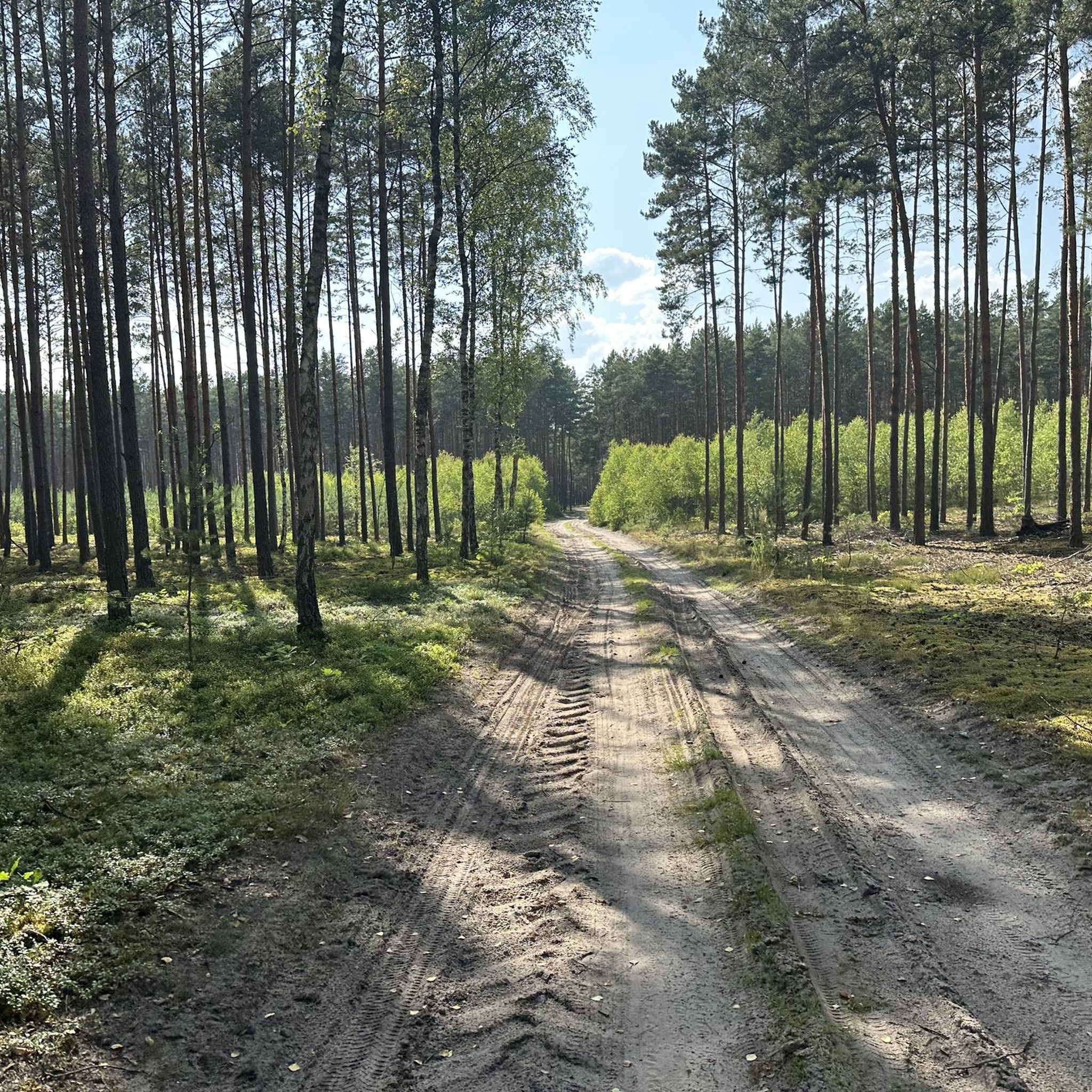
Beautiful place. Access from Dąbrówka/ Szarbka is sandy in places - but it's worth overcoming these inconveniences 😃
0
0

It is better to arrive from Stobnica, because from the east you have to cross a long section of forest sand.
0
0

You can test your skills and cross the rope bridge to the other side of the Pilica River... with your bike.
0
0

Crossing this structure by bike can make your legs shake. There is a ford nearby - water up to your knees
0
0
It is true that you cannot enter the ruins because of the risk of collapse, but at least you can look at the traces of our history.
0
0

In 1782, castellan Jacek Jezierski of the Nowina coat of arms purchased the Maleniec estate, located near Końskie in the Old Polish Basin, from Prażmowski for half a million złoty. There were rich deposits of iron ore on their territory, while in neighboring Miedzierza a blast furnace was already in operation at that time. Jezierski intended to develop industrial production on the purchased estate, linking his plans to the project of the Four-Year Sejm, which passed a resolution to increase the size of the Polish army to 100,000. In 1784, the castellan dammed the waters of the Czarna River flowing through Maleniec and created a pond with an area of 16 ha that exists to this day. The water was to be a source of energy for the planned plants and workshops. With the help of water outlets, it later became - thanks to water wheels - a source of energy for the mill, sawmill and fryery built by Jezierski. In neighboring Kawęczyn, the castellan also built a blast furnace. Production activity in Maleniec was interrupted in 1794 due to military operations during the Kościuszko Uprising. In 1824, the property was acquired by a former officer of Napoleon's army, Tadeusz Bocheński, who settled in Maleniec, introducing a number of innovations in local factories and significantly expanding production potential. The current building of the preserved plant, housing the museum, was erected around 1837 on the initiative of Bocheński, who additionally built a puddling shop and a rolling mill in neighboring Ruda Maleniecka. On June 21, 1967, the complex was officially recognized as a technical monument and entered under item number 340 in the register of monuments of the then Kielce province. A year later, a group of students from the Faculty of Metallurgy of the Silesian University of Technology became interested in the abandoned facility. Their activities led to the signing of an agreement in 1970, under which the plant was transferred to the care of the university. Actions were initiated to save the facility, which included preparing documentation of the facility, repairing parts of the machines and equipment, and buildings.
0
0


The parish is one of the oldest in the diocese, founded around 1191.
4
0
Frequently Asked Questions
What historical sites can I explore in Gmina Żarnów?
Gmina Żarnów is rich in history. You can visit the Maleniec Ironworks Museum, a fascinating industrial complex showcasing old steelworks powered by a water mill. Another significant landmark is the 12th-century St. Nicholas Church in Żarnów, which features original Romanesque and Gothic elements. Additionally, explore the site of an 11th-century Slavic gord, known as "Swedish Mountain" (Szwedzka Góra), and the historical Church of St. Luke in Skórkowice.
Are there any nature reserves in the area?
Yes, Gmina Żarnów is home to two notable nature reserves. The Diabla Góra Nature Reserve protects a forested hill with unique sandstone rock outcrops and is a site of historical significance from WWII. The Jodły Sieleckie Nature Reserve is dedicated to preserving natural fir stands and diverse forest ecosystems, also featuring circular depressions from 19th-century iron ore mining.
What natural features characterize the landscape of Gmina Żarnów?
The region boasts diverse natural features, including agricultural fields, forests, hills, and river basins. The Pilica River flows through the gmina, known for the Małpi Most (Monkey Bridge) and a nearby ford. Other rivers include the Czarna and Wąglanki. You'll also find an expansive reservoir covering 175 hectares, numerous hills, mounds, disused quarries, ravines, and valuable Jurassic sandstone deposits.
Are there any unique bridges or river crossings to experience?
Yes, the Pilica River offers a couple of interesting crossings. The Małpi Most (Monkey Bridge) is frequently damaged, but a nearby ford allows for crossing, typically with knee-deep water and a clean, sandy bottom. Another option is the Suspension Bridge Over the Pilica River, a footbridge made of boards that sways, offering an adventurous crossing.
Can I visit the Ruins of a 15th-century defensive castle?
The Ruins of a 15th-century defensive castle are on private property. While entry to the ruins is restricted due to collapse risk, visitors can view the historical traces from outside the property.
What kind of outdoor activities can I do near Gmina Żarnów?
The area offers various outdoor activities. You can find numerous routes for cycling, road cycling, and running. For example, explore the 'Skałki Piekło Nature Monument – Sielpia swimming area loop' for cycling, or try the 'Asphalt Road – Jachory loop' for road cycling. Runners can enjoy routes like the 'Running loop from Petrykozy'. You can find more details on these activities and routes in the respective guides: Cycling around gmina Żarnów, Road Cycling Routes around gmina Żarnów, and Running Trails around gmina Żarnów.
Are there marked tourist trails for hiking or cycling?
Yes, Gmina Żarnów features several marked tourist trails for hikers and cyclists. Notable examples include the "Romanesque Trail" (Szlak Romański), which likely connects historical sites, and the "Piekielny Szlak" (Hell's Trail), offering diverse scenic routes through the region's varied topography.
What do visitors particularly enjoy about the attractions in Gmina Żarnów?
Visitors appreciate the blend of historical and natural experiences. For instance, the Maleniec Ironworks Museum is highly regarded for its well-preserved industrial heritage, with some visitors noting that machines can be started for organized groups. The adventurous spirit of crossing the Pilica River at the Małpi Most (Monkey Bridge), even with a bike, is also a source of satisfaction for many.
What is the best way to experience the industrial heritage of the region?
To best experience the industrial heritage, visit the Maleniec Ironworks Museum. This site, recognized as a technical monument, offers a unique glimpse into 18th and 19th-century steel production powered by water mills. It's an engaging way to connect with the region's past as an industrial hub.
Are there options for rural getaways or local dining?
Yes, Gmina Żarnów offers a variety of agritourism farms, restaurants, and inns. These establishments provide excellent opportunities for rural getaways, allowing visitors to enjoy local hospitality and cuisine amidst the scenic agricultural fields and natural landscapes of the region.

Get inspired with the komoot mobile app


Explore more
Still not found the Highlight you’re looking for? See guides of the top attractions in other regions:
