The best gravel rides around Gessate
4.3
(311)
2,394
riders
94
rides
Gravel biking around Gessate is characterized by a network of trails along rivers and canals in the Lombardy region of Italy. The terrain primarily features flat to gently undulating paths, traversing agricultural areas and riverside landscapes. These routes often follow historic waterways such as the Martesana Canal and the Adda River, offering varied surfaces from paved cycle paths to dirt roads. Elevation changes are minimal, with most routes remaining below 200 meters.
Best gravel bike trails around Gessate
- The most…
Last updated: July 3, 2026
4.6
(12)
83
riders
67.3km
04:21
150m
150m
Moderate gravel ride. Good fitness required. Mostly paved surfaces. Suitable for all skill levels.
4.5
(16)
129
riders
70.8km
04:27
330m
330m
Hard gravel ride. Good fitness required. You may need to push your bike for some segments of this route.

Sign up for free
4.3
(45)
272
riders
57.8km
03:10
360m
360m
Moderate gravel ride. Good fitness required. Mostly paved surfaces. Suitable for all skill levels.
4.7
(10)
72
riders
60.6km
03:42
140m
140m
Moderate gravel ride. Good fitness required. Mostly paved surfaces. Suitable for all skill levels.
3.9
(8)
77
riders
44.5km
02:41
160m
160m
Moderate gravel ride. Good fitness required. Mostly paved surfaces. Suitable for all skill levels.
Get access to more routes and recommendations from other explorers.
Sign up for free
Already have an account?
Our route recommendations are based on thousands of hikes, rides, and runs completed by other people on komoot.
Start today with a free account
Your next adventure awaits.
Login or Signup
Other adventures around Gessate

Tips from the Community

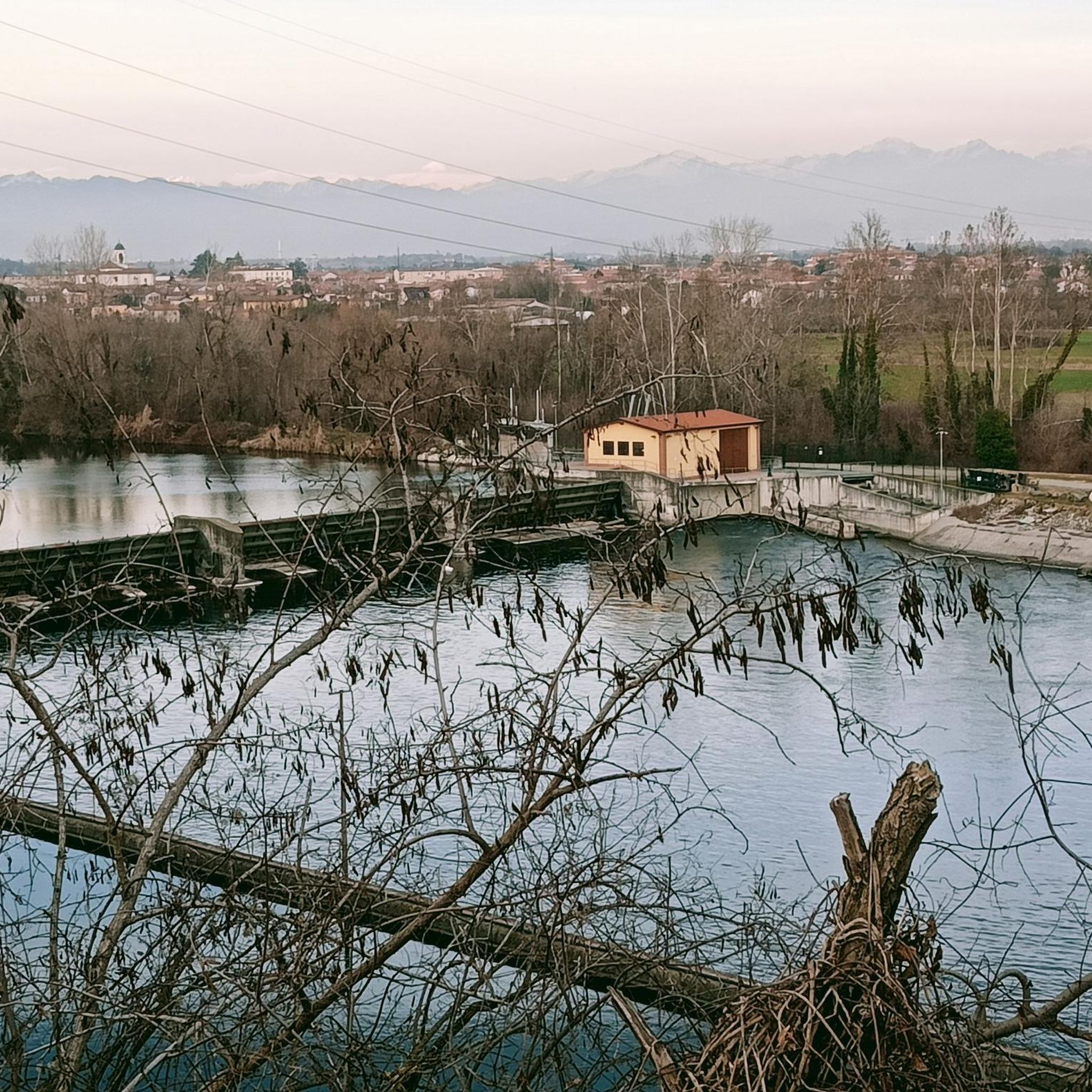
The Esterle power plant was particularly well-designed from an architectural point of view, as it was intended to be representative of the Edison company that built it. It looks more like a Lombard pleasure villa than a true industrial facility. The effort to integrate the building into the surrounding territory, made in the early 20th century during the construction of the plant, was remarkable. Today it represents a significant example of monumental industrial archaeology and is known for its particular beauty. Inside, the walls and ceiling of the engine room were decorated with great care, as were the floors, lamps, light fixtures, and numerous wrought-iron furnishings.
0
0

Any trail that winds through its vicinity is wonderful, a shame about the interruption between Zelo and Galgagnano of the path due to the hunting area, incidentally a beautiful place part of the ADDA sud Park but inexplicably in the hands of one or more private individuals who have made it their "hunting park" by fencing it all in. I happened to get inside by mistake, finding one of the numerous open gates and could no longer get out, finding the others closed, receiving a couple of shots in the air behind my back to make me understand that I was not welcome! A real shame because it interrupts the descent from Zelo towards Lodi along the Adda. Beyond the "hunting park" I believe that the passage along the river (state-owned area!!) SHOULD always be guaranteed without any ifs or buts!
0
0

The Adda River is the fourth longest watercourse in Italy with its 313 kilometers and is entirely within the Lombardy region. It represents one of the main left tributaries of the Po River and has a very large hydrographic basin that covers about a third of the regional territory
0
0
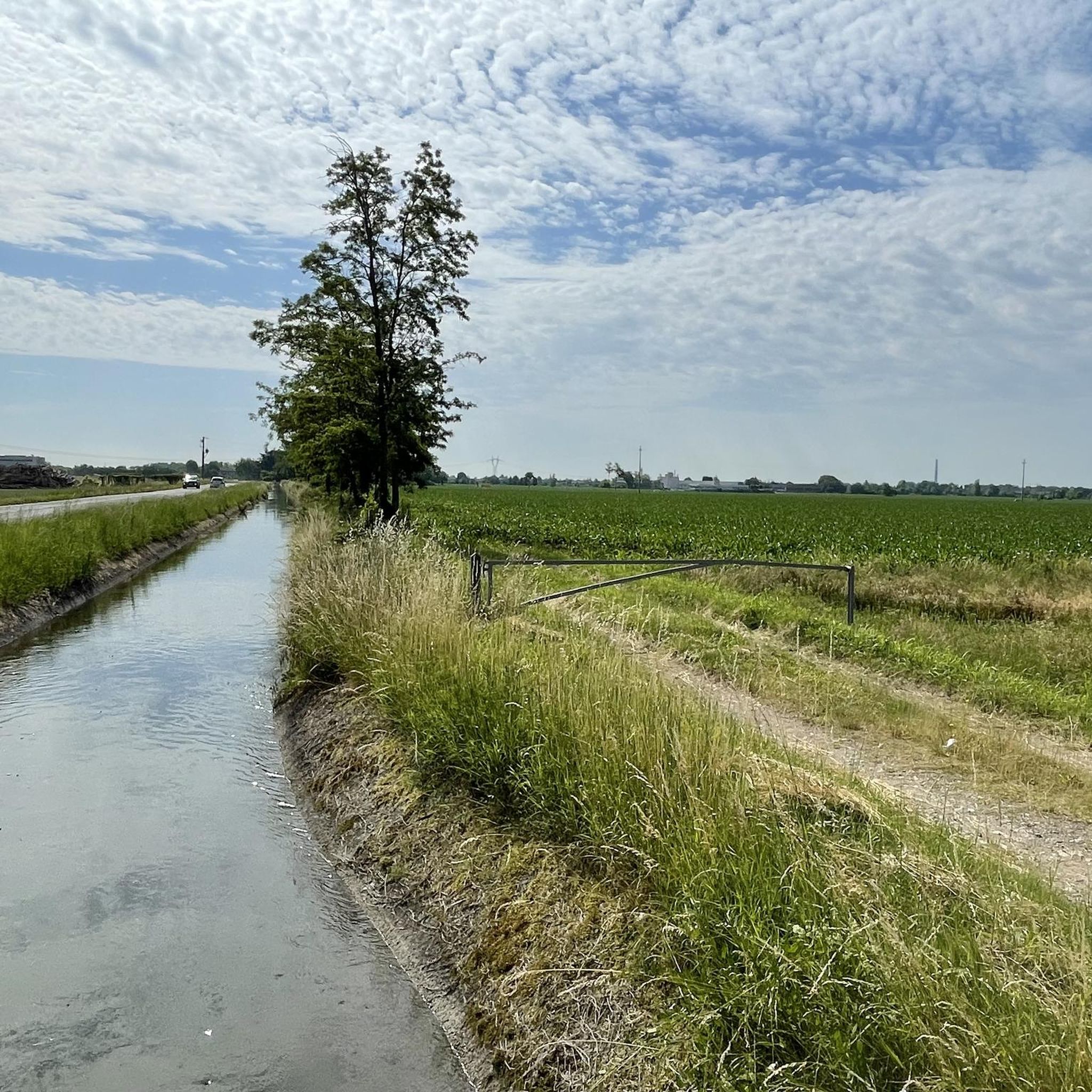
The Muzza canal (61 km long in total) is a branch of the Adda River and recently celebrated its 800th anniversary, making it one of the oldest in Europe. Its name, with slight variations over the centuries, still recalls the name of the Roman Mutia family who moved here in 90 BC, initiating the first land reclamation works. From the wide canal branch off smaller watercourses which, winding through the countryside for a total length of about 1000 kilometers, are mainly intended for agricultural irrigation. The landscape of countryside and farmhouses surrounding it is evocative, with alternating rows of trees and open fields. It is also very interesting from a naturalistic point of view as it attracts many water birds that can be observed along the route.
1
0
The Naviglio della Martesana, definitively completed in 1496 under the guidance of Ludovico il Moro, flows from Trezzo sull’Adda to Milan for a total length of 38 km. The route runs alongside the ancient Roman road (the current SS 11 padana superiore) which crossed the Adda with two branches: at Vaprio and Cassano. Irrigation of the land located above the spring belt was for a long time the predominant use of the canal, so much so that initially navigation was limited to two days a week; concurrently with the improvement of the agricultural structure thanks to irrigation, a notable flourishing of stately villas occurred in the Baroque era, intended to enjoy the convenience of travel on water and to control owned lands.
1
0
Naviglio della Martesana is perhaps the least known of the ancient artificial canals connecting Milan to the great Lombard rivers. It originates from the Adda in Concesa, a hamlet of Trezzo d’Adda, crosses the Martesana sub-region, northeast of the provincial capital, and once in the city, it plunges underground beneath Via Melchiorre Gioia, at the height of Cassina de’ Pomm. It measures approximately 38 km in length, with a width varying from 9 to 18 meters. However, once upon a time, the Naviglio della Martesana continued in the open air all the way to the center, where a lock system centered on the Conca dell’Incoronata connected it to the short Naviglio di S. Marco and the urban network of the Navigli. The lock was inaugurated in 1496, utilizing lock gates designed by Leonardo da Vinci. The canal had been opened in 1471, under Francesco Sforza. By connecting it to the other Navigli, Leonardo laid the foundations for realizing a dream of the Sforzas: to travel by water from the Ticino, and therefore from Lake Maggiore, all the way to the Adda.
1
0
The Naviglio della Martesana, initially known as Naviglio Piccolo, is one of the Milanese canals that connects Milan with the course of the Adda river through the municipalities of Martesana. Commissioned in the 15th century by Francesco Sforza, it was used for irrigating the countryside but also represented the ambitious project of connecting Milan with Lake Como and thus with the Alps and Ticino. The Naviglio della Martesana is a place rich in history and beauty, a heritage for everyone that, however, today is still little known and protected. Along the Naviglio runs a rather busy cycle path, which allows you to admire the landscape and cultural beauties, such as the rich flora, fauna, or the numerous historic villas, including the Renaissance Villa Melzi d’Eril in Vaprio d’Adda.
1
0

In Groppello d'Adda, along the Martesana Canal, there is a large waterwheel called "el rudun." It is not a mill, but a noria that was used to raise water for irrigation. It was built in 1618 at the behest of Cardinal Federico Borromeo. It was used to irrigate the vegetable gardens and gardens of the Archbishop's Villa. Tradition attributes the design to Leonardo da Vinci. The water also fed kitchens, washhouses, and livestock watering troughs. The original wheel was dismantled in the late 19th century. The current one is a 1989 reconstruction, restored several times. It has a diameter of 11 meters and eight large blades. Today, it is a historical and educational symbol that tells the story of the area's past.
2
0
Frequently Asked Questions
How many gravel bike trails are available around Gessate?
There are over 100 gravel bike trails in the Gessate area, offering a wide range of options for different skill levels. The komoot community has explored more than 119 routes here.
Are there easy gravel bike trails suitable for beginners around Gessate?
Yes, Gessate offers several easier gravel bike trails. Many routes follow the flat to gently undulating paths along the Adda River and various canals, which are generally suitable for beginners. Approximately 25 of the available routes are rated as easy.
What are some options for long-distance gravel biking near Gessate?
For a longer ride, consider the Muzza Canal Riverside Path – Castello di Peschiera Borromeo loop from Pozzuolo Martesana. This route is over 62 miles (100 km) long and explores the Muzza Canal riverside, passing by historical sites.
Are the gravel bike trails around Gessate typically circular?
Many of the gravel bike trails in the Gessate area are designed as loops, offering convenient circular routes. For example, the Adda River – Vacchelli Canal entrance loop from Pozzuolo Martesana is a moderate 64 km circular route.
What is the best season for gravel biking around Gessate?
Gravel biking around Gessate is enjoyable for much of the year. Spring and autumn offer pleasant temperatures and vibrant scenery along the canals and agricultural areas. Summer can be warm, but the riverside paths often provide some shade. Winter riding is possible, though conditions may be cooler and some paths could be muddy after rain.
Are there any scenic viewpoints or interesting sights along the gravel routes?
Yes, the routes often pass by interesting natural and historical sites. You can find highlights like the Pignone Park and Waterfall on the Adda River or the tranquil Le Foppe Oasis of Cavenago Brianza. The Groppello Water Wheel – Martesana Canal loop from Pozzuolo Martesana specifically passes by the historic Groppello Water Wheel.
Where can I find more challenging gravel bike routes in the Gessate area?
For a more challenging experience, Gessate offers a good selection of difficult routes. There are 41 routes rated as difficult, often featuring longer distances or more varied terrain. An example is the Martesana Canal – Groppello Water Wheel loop from Gorgonzola, which is a difficult 75 km ride.
Is parking available near the gravel bike trails in Gessate?
Parking is generally available in and around the towns that serve as starting points for these trails, such as Gessate, Pozzuolo Martesana, or Gorgonzola. Look for public parking areas in these localities to access the canal and river paths.
Can I access gravel bike trails around Gessate using public transport?
Many towns in the Gessate area, including Gessate itself, are connected by public transport, such as regional trains or buses. These can provide access points close to the canal and river networks, allowing you to start your gravel biking adventure without a car.
Are there places to stop for refreshments along the gravel bike trails?
Yes, the routes often pass through or near small towns and villages along the canals and rivers. You'll typically find cafes, bars, and trattorias where you can stop for a coffee, a snack, or a meal, especially in the larger settlements.
What do other gravel bikers enjoy the most about gravel biking in Gessate?
The gravel biking routes around Gessate are highly rated by the komoot community, with an average score of 4.4 stars. Reviewers often praise the peaceful canal-side paths, the flat and accessible terrain, and the opportunity to explore the local agricultural landscapes and historical water features.
Most popular attractions around Gessate

Get inspired with the komoot mobile app


Explore more
Browse the best Gravel rides in other regions.
