Attractions and Places To See around Nöda - Top 20
Attractions and places to see around Nöda include notable landmarks and natural features within the tranquil Thuringian Basin. This municipality in the Sömmerda district of Thuringia, Germany, is characterized by rolling hills and lush forests. It offers a setting for exploring historical sites and the surrounding natural landscape. The area provides opportunities for outdoor pursuits such as hiking and cycling.
Best attractions and places to see around Nöda
- The most popular attractions is Krämerbrücke, Erfurt, a bridge that is…
Last updated: August 16, 2026
Krämerbrücke, Erfurt
Highlight • Bridge
Translated by Google •
Tip by

Erfurt Fish Market
Highlight • Historical Site
Translated by Google •
Tip by
Sign up now to discover places like this
Get recommendations on the best single tracks, peaks, & plenty of other exciting outdoor places.
Sign up for free
Cathedral Square, Erfurt
Highlight • Settlement
Translated by Google •
Tip by

Erfurt Town Hall
Highlight • Monument
Translated by Google •
Tip by
St. Mary's Cathedral
Highlight • Religious Site
Translated by Google •
Tip by
Sign up for free to discover even more attractions around Nöda.
Sign up for free
Already have an account?
Start today with a free account
Your next adventure awaits.
Login or Signup
Tips from the Community

The cathedral square in Erfurt is a large market square with around 3.5 hectares, with intact or restored peripheral buildings. It was once the main market square and court square. On the square are the Minerva Fountain (1784) and the Erthal Obelisk erected in 1777 in honor of the Elector of Mainz. Since the 1920s there have been repeated plans to rebuild the northern cathedral square and thus reduce it to its historical size. They weren't realised. As part of the socialist urban development in all major cities of the GDR, a high-rise building with many other buildings, a monument and a huge staircase down to the cathedral square was to be built on the neighboring Petersberg. The change of power from Walter Ulbricht to Erich Honecker with a change in the focus of building activity in the GDR prevented the realization of the project. In the 1970s there were plans to build a cultural center on the square. In addition, the end of the Juri-Gagarin-Ring over the Domplatz and through the Andreasviertel was also planned in GDR times. There was resistance to this project from the Erfurt population as early as 1987, but it failed as a result of the Peaceful Revolution in 1989. At the end of the 1980s, the cathedral square was to become Ernst Thälmann-Platz with a large monument to dialectics depicting the history of the labor movement on the northwestern part of the square. An artist's model already existed, the eight flagpoles are still standing today (2019). The latter plans were also prevented by the political change in 1990. Source: Wikipedia
15
0
The town hall has a ballroom, which was designed by the historical painter Johann Peter Theodor Janssen and shows pictures of Erfurt's history and that of Martin Luther. The city's Golden Book and an honorary cup were on display in the ballroom (until 1920). The Golden Book was created in 1900 by the Berlin court goldsmiths Sy and Wagner on the occasion of a visit to Erfurt by Kaiser Wilhelm II. It was taken to Moscow as a trophy by the Red Army in 1945 and never returned to Erfurt.[2] The former Golden Book was replaced by “guest books” (in red cover). The richly painted staircases are freely accessible to the public and show works by Eduard Kaempffer from 1889/96. In addition to scenes from the Faust and Tannhäuser sagaes, it also depicts stories by Count von Gleichen. Since November 1876, there have been statues of Emperor Friedrich I (Barbarossa/Redbeard) and Emperor Wilhelm I (Barbablanca/Whitebeard) on the ballroom front of the town hall, on both sides of the town hall balcony, as symbols of the “reestablishment of the German Empire”. They were made from Kelheim limestone by Professor Georg Kugel. The two 2.80 meter high statues under ornate canopies are said to have fallen from their pedestals and shattered on July 4, 1945, shortly after the Red Army entered Erfurt.[3] However, in the Erfurt city archives there are minutes of a meeting of the Erfurt city council on June 6, 1950, which state: “The figures above the town hall entrance to the ballroom are to be removed.” A representative of Mayor Georg Boock also signed.[4] The former locations of the imperial statues remained empty for decades. As a donation from the Rotary Club of Erfurt, bronze figures of Boniface and Martin Luther were placed in their place in June and November 2017. Source: Wikipedia
18
1

the loving restoration of the houses on the fish market is fascinating
33
3

Central square between Domplatz and Anger
30
5

The impressive Domplatz is an approximately 3 hectare large and imposing market square, which is mainly dominated by the cathedral and the Severikirche.
20
0
The dominant structure of the fish market is the neo-Gothic town hall. It was built between 1869 and 1875 according to plans by August Thiede and Theodor Sommer on the same site as the old town hall. The historical wall and ceiling paintings inside the town hall are particularly impressive and interesting.
23
0

beautiful half-timbered houses also worth seeing at night
29
1

The Erfurt town hall is right at the fish market. The main building was built in the 1870s in a neo-Gothic style. and is a really nice building! Worth seeing.
21
0
Frequently Asked Questions
What historical landmarks can I explore in and around Nöda?
Nöda itself is home to the St. Marien Church, a Protestant church with origins dating back to the 13th century, first documented in 1308. Nearby, in Erfurt, you can visit significant historical sites such as the Krämerbrücke, Erfurt, a unique bridge lined with half-timbered houses, and Cathedral Square, Erfurt, a large historical site where various events take place. The Erfurt Fish Market also features historical architecture, including the neo-Gothic town hall and the Renaissance 'Haus zum Breiten Herd'.
Are there any natural features or viewpoints worth visiting near Nöda?
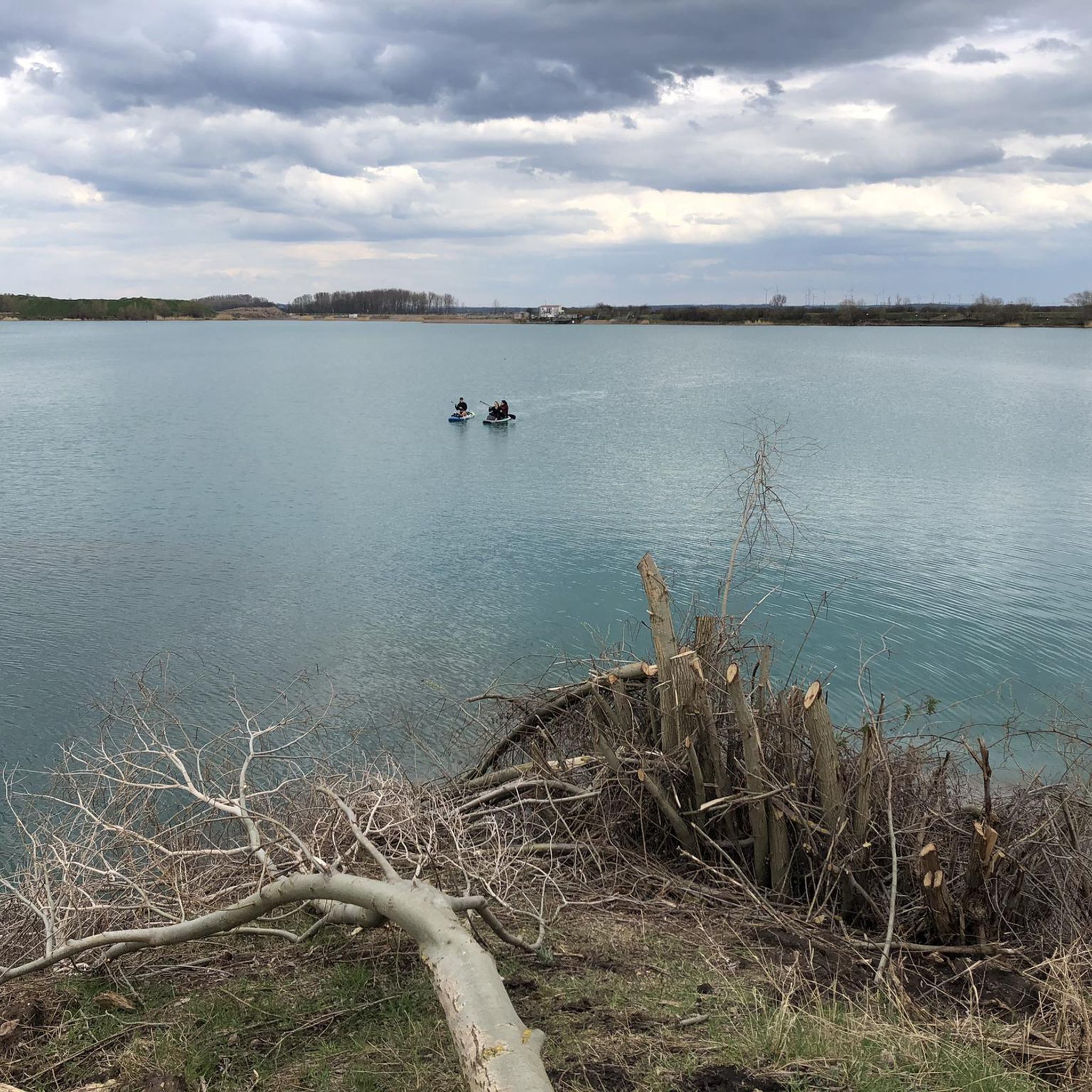
Yes, Nöda is situated in the picturesque Thuringian Basin, characterized by rolling hills and forests. The highest elevation in Nöda, the Nödaer Warthe, offers expansive views of the surrounding area, including the Erfurt Lakes. Just north of Erfurt, visible from Nöda, is the Alperstedter See, a popular leisure and sports destination formed from gravel mining.
What kind of outdoor activities can I do around Nöda?
The Thuringian Basin landscape around Nöda provides numerous opportunities for outdoor pursuits. You can find various cycling routes, including gravel biking and road cycling. For example, explore routes like the 'Terrace Bank Erfurt – Gera Cycle Path loop' for gravel biking or the 'Erfurt Cathedral – Krämerbrücke, Erfurt loop' for road cycling. There are also running trails, such as the 'ThürKies Campground – Alperstedter See loop'. You can find more details on these activities in the Gravel biking around Nöda, Road Cycling Routes around Nöda, and Running Trails around Nöda guides.
Are there family-friendly attractions in the Nöda area?
Many attractions in the broader Nöda region are suitable for families. The Krämerbrücke, Erfurt, with its unique shops and historical charm, is a great place for families to explore. Cathedral Square, Erfurt, often hosts events and offers ample space. The Erfurt Fish Market and Erfurt Town Hall are also considered family-friendly historical sites. Additionally, the Alperstedter See provides opportunities for water sports and leisure activities.
What is the Gera River and Arch Bridge at Gispersleben?
The Gera River and the Arch Bridge at Gispersleben is a notable spot along the Gera cycle path. This area saw the construction of a new sloping arch bridge after the demolition of an old weir and bridge, creating a river loop. It's a pleasant location for cyclists and those enjoying riverside walks.
What do visitors particularly enjoy about the attractions near Nöda?
Visitors appreciate the historical significance and unique architecture of sites like the Krämerbrücke, Erfurt, often described as the longest continuously built bridge in Europe. The vibrant atmosphere of Cathedral Square, Erfurt, especially during markets and festivals, is also highly rated. The blend of historical sites with opportunities for outdoor activities in the tranquil Thuringian Basin is a major draw.
Are there any easy hiking trails near Nöda?
While Nöda is surrounded by opportunities for various outdoor activities, specific easy hiking trails are not detailed in the provided data. However, the general landscape of the Thuringian Basin, with its rolling hills and forests, suggests that there are likely accessible paths suitable for leisurely walks. For running, an 'easy' rated trail is the 'Running loop from Stotternheim' which is 4.99 km long. You can explore more options in the Running Trails around Nöda guide.
Can I find cycling routes of different difficulties around Nöda?
Yes, the area offers cycling routes for various skill levels. For gravel biking, you can find routes ranging from 'easy' like the 'Stotternheimer Lake – Auenteich at Moskauer Platz loop' (28.85 km) to 'difficult' such as the 'Fahner Höhe Forest Trails – Seven Graves Memorial loop' (48.15 km). Road cycling also features 'easy' routes like the 'View of Erfurt – View of Erfurt loop' (28.17 km) and 'moderate' options. Check the Gravel biking around Nöda and Road Cycling Routes around Nöda guides for detailed information.
What is the significance of the Erfurt Town Hall?
The Erfurt Town Hall, located directly on the Fish Market, is a neo-Gothic building constructed between 1870-1874. Its origins trace back to the 11th century, and it was first mentioned in 1275 as the political centerpiece of medieval Erfurt. Today, it houses the city administration and features well-preserved murals depicting stories from Luther's life and Erfurt's history, which can be seen during guided tours.
Are there any places for water activities near Nöda?
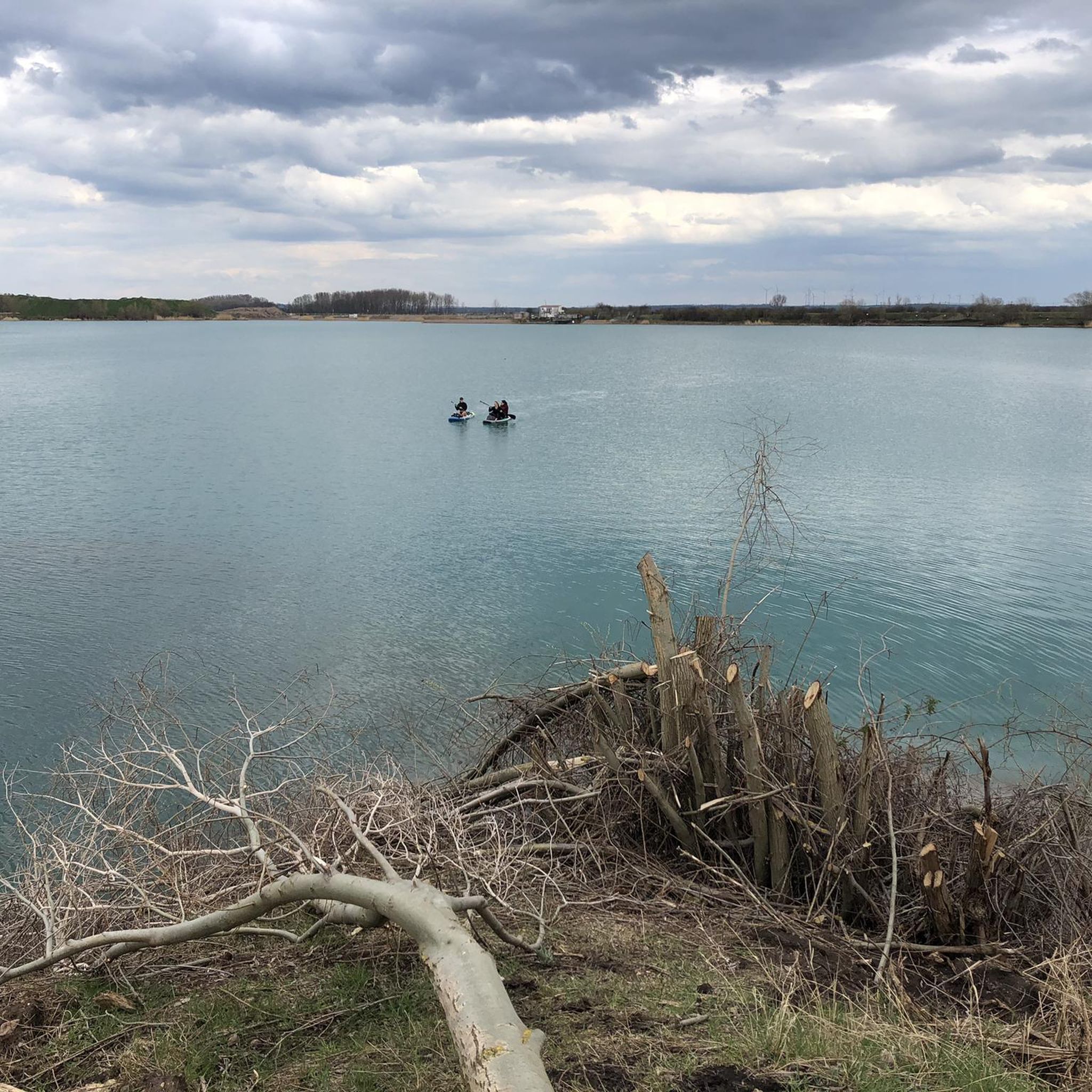
The Alperstedter See, located north of Erfurt and visible from Nöda, is a popular spot for water sports and leisure. Its waters were primarily formed through gravel mining, and the area around the lake offers various activities, making it a good destination for those interested in water-based recreation.
How can I explore the cultural heritage of Nöda?
Nöda's cultural heritage is primarily reflected in its historical sites. The St. Marien Church, a late Gothic church with roots in the 13th century, stands as a significant cultural landmark within the village. Exploring this church offers insight into the region's historical and religious past. Additionally, the tranquil atmosphere and picturesque environment of Nöda itself contribute to a sense of local culture.
Most popular attractions around Nöda

Get inspired with the komoot mobile app


Explore more
Still not found the Highlight you’re looking for? See guides of the top attractions in other regions:
