Attractions and Places To See around Gundelfingen - Top 20
Best attractions and places to see around Gundelfingen, near Freiburg, offer a blend of natural beauty and cultural insights at the western edge of the Black Forest. This region is characterized by protected landscapes, mountains, and rivers, providing diverse outdoor activities. Visitors can explore significant natural features and historical sites, making it a notable destination for those interested in both nature and culture. The area serves as a popular starting point for various hiking and cycling tours.
Best attractions and…
Last updated: October 9, 2026
Münsterplatz Freiburg
Highlight • Religious Site
Showing Translation
Tip by

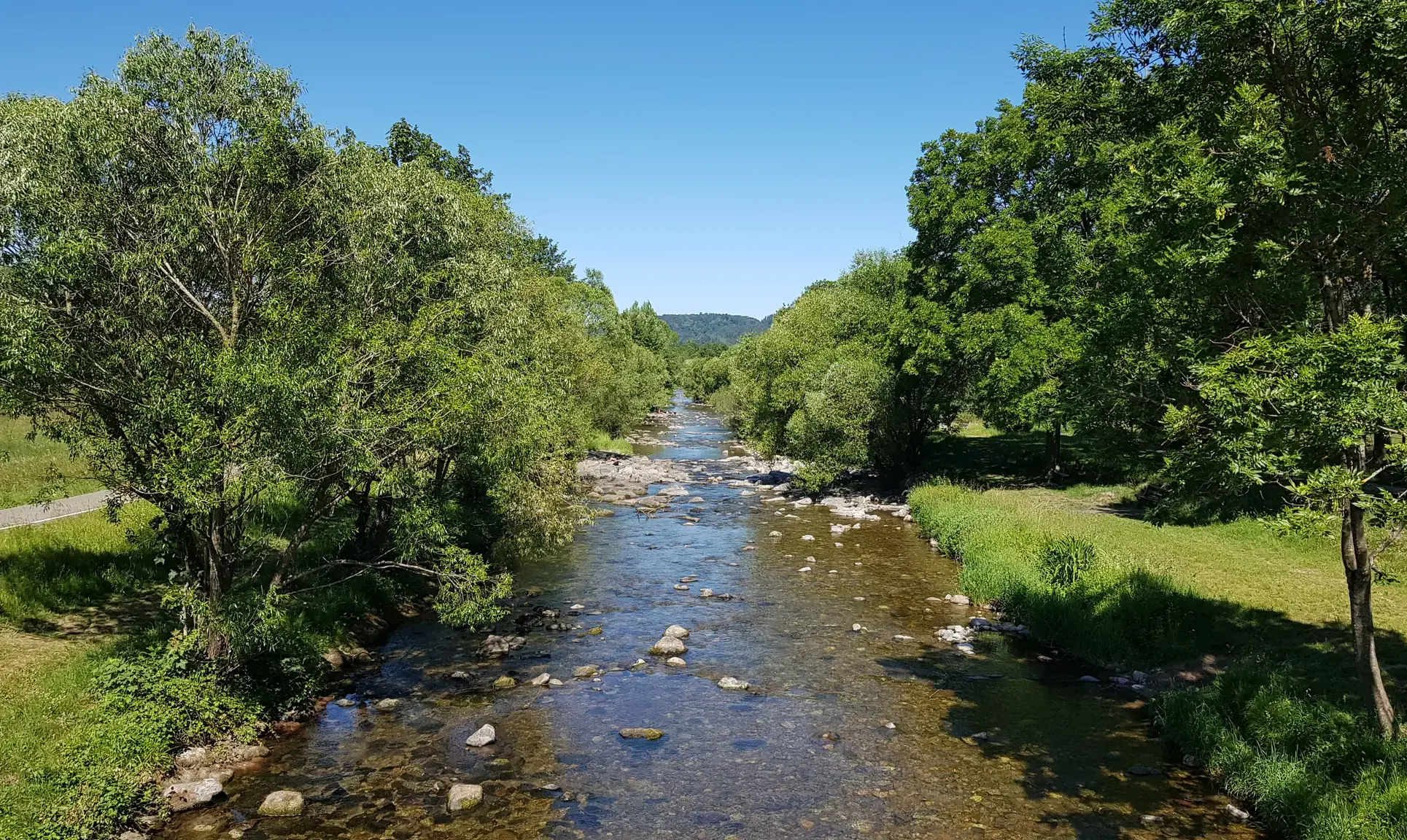
On the Dreisam bike path
Highlight (Segment) • Cycleway
Translated by Google •
Tip by

Sign up now to discover places like this
Get recommendations on the best single tracks, peaks, & plenty of other exciting outdoor places.
Kandel Summit and Lookout Pavilion
Highlight • Summit
Showing Translation
Tip by

Rosskopf Tower
Highlight • Viewpoint
Translated by Google •
Tip by
Schwabentor (Swabian Gate), Freiburg im Breisgau
Highlight • Historical Site
Today it houses the Zinnfigurenklause, a museum in which historical events are recreated with pewter figures.
Translated by Google •
Tip by

Sign up for free to discover even more attractions around Gundelfingen.
Already have an account?
Start today with a free account
Your next adventure awaits.
Other adventures around Gundelfingen

Tips from the Community

One of the beautiful old city gates that you should definitely see on a tour of Freiburg's city center. You'll almost automatically pass by it. Of course, you can also take the tram and drive through. 🙃
6
0
Brief information on accessibility: Schwabentor is wheelchair accessible from Salzstraße and can be viewed from the outside. Accessible restrooms are located at Augustinerplatz. The tin figure hermitage in Schwabentor is not wheelchair accessible.
10
2

Schwabentor, Freiburg im Breisgau The Schwabentor was built in the mid-13th century as a city gate within the fortifications to protect the citizens. Leaving the city walls behind must have been a real adventure in the Middle Ages: Unfamiliar forests and routes, and the constant fear of being attacked by robbers, created uncertainty for merchants and travelers alike. For all those not deterred by their own fear, the "Thorn Puller" warned against leaving the city. A tormented expression adorns the relatively large head of the small, neckless figure, which sits with crossed legs above the gateway of the defensive tower, pulling a thorn from its foot. Since antiquity, the thorn has been a symbol of sin and punishment, which is why historians assume that the small relief served as a warning not to stray from the right path. Those who nevertheless passed through the Schwabentor on the Salt Road could immediately cross the Dreisam Bridge and reach the most important trade routes of the Black Forest. A salt merchant from Swabia once traveled along one of these routes to Freiburg, having fallen in love with the city on his previous business trips. He intended to buy Freiburg with several barrels full of money, but the citizens only mocked and laughed at him, especially when he exuberantly opened the barrels and discovered that his miserly wife had taken precautions. Less enthusiastic about her husband's idea of spending all his money on a city, she had wisely traded the money for sand and stones before his departure. It is said that this legend gave the Schwabentor (Swabian Gate) its name. Therefore, the salt merchant and his wagon have adorned the inside of the city gate since the 17th century. On the outside, Freiburg's patron saint – St. George the dragon slayer – is prominently displayed. Text / Source: City of Freiburg, Rathausplatz 2-4, 79098 Freiburg https://visit.freiburg.de/attraktionen/schwabentor
21
2
Freiburg's Münsterplatz - archaeology and history After an introductory overview of the state of research, Chapter 1, taking into account the latest excavations, examines the archaeologically tangible burials up to the abolition of the churchyard in 1515 and the renewed use as a military cemetery in the 17th and 18th centuries. This is followed by a discussion of the cemetery's furnishings and in particular the course of the churchyard wall, with Renn partially questioning the phases of the wall's development reconstructed by Ralf Burgmaier in 1996. Chapter 3 explains other functions of the churchyard as a legal and judicial place and as a meeting place. Chapter 4 is devoted to the buildings on and around the square. Renn can show that parts of today's Münsterplatz were built up until the 14th century and that the facades of the surrounding houses were not initially facing the churchyard. It was only when the choir was built in the 14th century that the houses on the square were demolished and the facades of the other houses turned towards the square and magnificently decorated. Although the associated upgrading of the square led to increased building activity, the churchyard wall initially remained standing - as described in Chapter 5 - although sales arbors were added to its outside. It was not until 1785 that the churchyard wall and the corn arbors were torn down and a "representative open space" created. Text / Source: Hypotheses https://oberrhein.hypotheses.org/1384
21
0

Hikers should stop here to get some refreshment. Whether it's Brunner's sausage roasting shop, Meier's sausage stand, the organic sizzling stand, or Licht's sausage stand - the Lange Rote has long been a Freiburg institution: The grilled sausage without casing, which measures a full 35 cm, is on a par with the Münster, the Augustinermuseum or the Bächles on the Freiburgers' scale of attractions. So, go ahead and try Freiburg's crispiest landmark on Münsterplatz!
13
0

A very beautiful and worth seeing place. The climb to the tower can be reached via a long and narrow wall staircase, and you will be rewarded with a magnificent view. The bellworks can also be viewed, which are also very loud at the right time.
18
2

The Freiburg Minster "Our Lady" is today both the parish church and the cathedral of the Archdiocese of Freiburg. In addition, the Minster is a national cultural monument with one of the most beautiful towers on earth and is one of the few large Gothic churches that were completed in the Middle Ages and survived the numerous wars almost unscathed.
12
1

The cycle path is very well developed, but every time I cycled there was a lot of traffic, and there were also a few cyclists on the road who did not know the traffic rules
7
0
Frequently Asked Questions
What natural features can I explore around Gundelfingen?
Gundelfingen, situated at the edge of the Black Forest, offers several natural highlights. You can explore the Gundelfinger Moos, an important nature conservation area with riparian forests and diverse plant and animal species. The Protected Landscape Area Gundelfingen-Wildtal-Heuweiler also showcases the region's biodiversity. For scenic views, the Rosskopf Tower provides fantastic panoramas of Freiburg and the Black Forest. Additionally, the Dreisam cycle path runs along the river, offering picturesque views.
Are there any historical or cultural sites to visit in Gundelfingen?
Yes, Gundelfingen has a rich history. The Kulturpfad Gundelfingen (Cultural Path Gundelfingen) features around 40 stations highlighting historical sites within the community, including old buildings like the Zehntscheuer (tithe barn) and the former silver mine in Wildtal. The Protestant Church is also a notable site. Nearby, in Freiburg, you can visit Münsterplatz Freiburg, home to the magnificent Freiburg Minster, a Gothic cathedral.
What outdoor activities are popular in the Gundelfingen area?
The Gundelfingen area is a popular starting point for various outdoor activities. Hiking and cycling are prominent, with trails leading into the Black Forest. The Roßkopf mountain is known for mountain biking routes like "Baden to the Bone" and "Boarderline Downhill." You can also find numerous running, road cycling, and gravel biking routes starting from Gundelfingen. For example, explore the running trails around Gundelfingen or discover gravel biking options.
Are there family-friendly attractions around Gundelfingen?
Absolutely. The Dreisam cycle path is a great family-friendly option, offering a well-paved route along the river. For a broader experience, the nearby Mundenhof in Freiburg is a zoo and aquarium that families often enjoy. While a bit further, Europa-Park is a world-renowned amusement park less than 40 kilometers north of Freiburg, offering entertainment for all ages.
Where can I find panoramic views of the Black Forest and surrounding areas?
For breathtaking panoramic views, head to the Kandel Summit and Lookout Pavilion, which offers expansive vistas of the Black Forest. The Rosskopf Tower also provides fantastic views of Freiburg, the Black Forest, and the Rhine Valley. Another excellent spot is the Schlossberg Tower in Freiburg, offering views all the way to France.
What makes the Gundelfinger Moos special for nature lovers?
The Gundelfinger Moos is a significant nature conservation area characterized by its unique riparian forests. It is home to a diverse range of rare plant and animal species, making it an ideal spot for nature observation and quiet walks. There's also a birding trail and pond east of the railway, perfect for wildlife spotting.
Are there any easy hiking trails suitable for a relaxed walk?
Yes, Gundelfingen offers several options for relaxed walks. The Gundelfinger Moos provides flat paths through its unique natural landscape. The Rebberg and Leheneck areas also offer scenic landscapes suitable for easier exploration. For a paved option, the Dreisam cycle path is great for walking alongside the river.
What are some good options for cycling around Gundelfingen?
Cycling is very popular here. The Dreisam cycle path is highly recommended, offering scenic views along the river on a superbly paved route. For more challenging rides, you can explore various road cycling routes or gravel biking trails that venture into the Black Forest, such as the Kandel Serpentines or routes towards the Glotter Valley.
What do visitors enjoy most about the attractions near Gundelfingen?
Visitors particularly appreciate the stunning views from places like the Kandel Summit and Rosskopf Tower, often noting the 360-degree panoramas. The fresh, regional offerings at the weekly market around Münsterplatz Freiburg are also a highlight. Many enjoy the well-maintained Dreisam bike path for its pleasant scenery and family-friendly nature.
Are there any unique historical landmarks in the wider Freiburg area?
Beyond Gundelfingen, the wider Freiburg area boasts significant historical landmarks. The Freiburg Minster at Münsterplatz Freiburg is a Gothic masterpiece. The Martinstor is a historic city gate, part of Freiburg's 13th-century fortifications. The Kulturpfad Gundelfingen itself also features historical buildings like the Zehntscheuer and the old Winkler forge, offering insights into local heritage.
What is the best time to visit Gundelfingen for outdoor activities?
The spring and autumn months generally offer pleasant weather for hiking and cycling, with milder temperatures and beautiful natural scenery. Summer is also popular, especially for activities along the Dreisam or in higher elevations. While some trails are accessible in winter, conditions can vary, so checking local weather is always advisable for winter hikes.
Can I find places to eat or drink near the attractions?
Yes, especially in Freiburg and the larger villages. Near Münsterplatz Freiburg, you'll find numerous cafes and restaurants, including the famous Münster sausages at the weekly market. Some viewpoints, like the Rosskopf Tower, are also suitable for a break with a snack or drink. Gundelfingen itself has local inns and cafes.
Most popular routes around Gundelfingen
Most popular attractions around Gundelfingen

Get inspired with the komoot mobile app


Explore more
Still not found the Highlight you’re looking for? See guides of the top attractions in other regions:
