The best walks and hikes in Santa Rosa Mountains State Wilderness
4.6
(30)
385
hikers
10
hikes
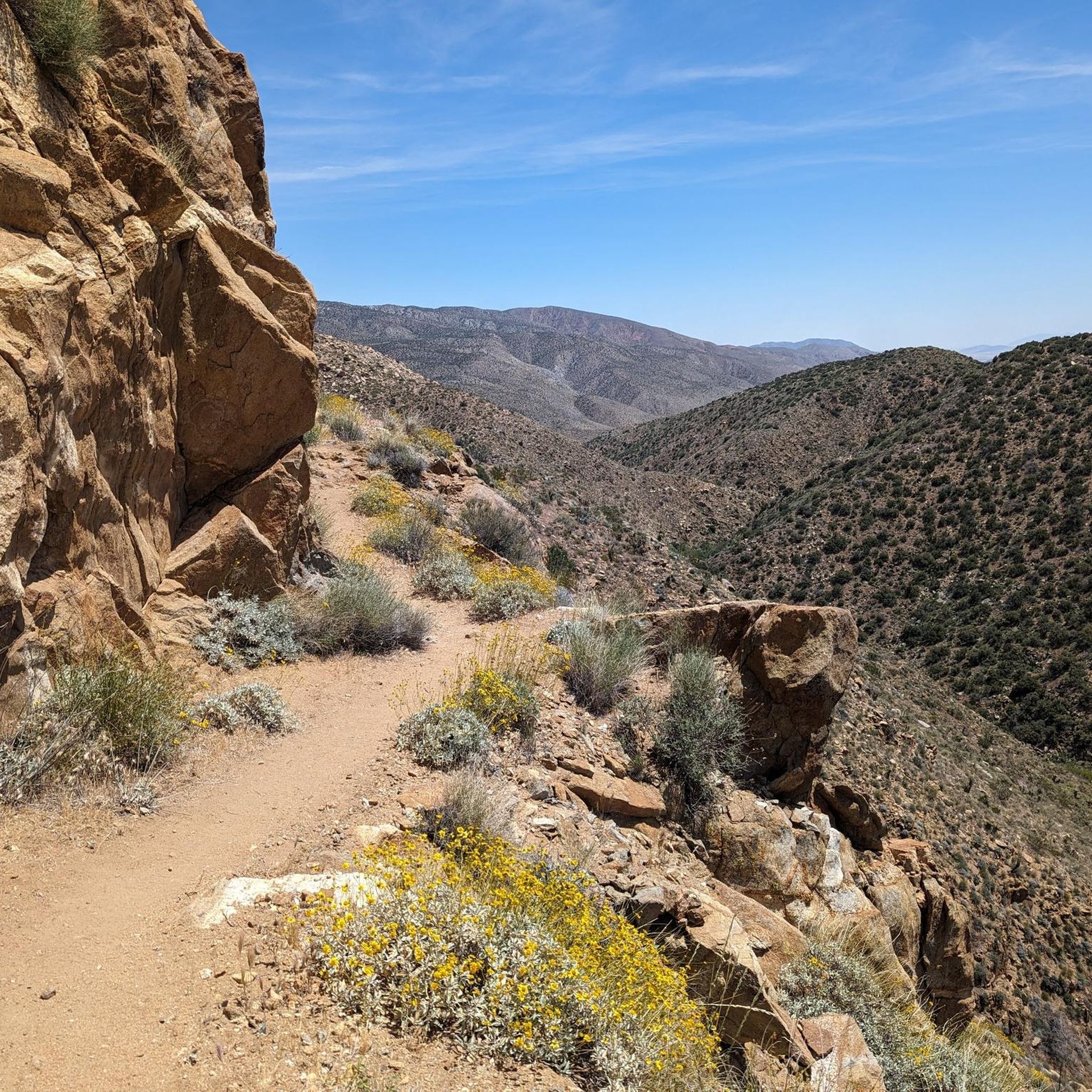
Hiking trails in Santa Rosa Mountains State Wilderness traverse a diverse landscape, transitioning from the Colorado Desert's arid flora to higher elevations with chaparral and pine-covered ridges. The region features rugged terrain, significant elevation changes, and a network of boulder-strewn canyons, deep washes, and riparian streams. Geologically, it is characterized by uplifted blocks of igneous and metamorphic rock.
Best hiking trails in Santa Rosa Mountains State Wilderness
- The most popular hiking route is South Fork Palm Wash Canyon to Calcite…
Last updated: July 8, 2026
4.08km
02:07
780m
0m
Moderate hike. Good fitness required. Easily-accessible paths. Suitable for all skill levels.
17.7km
04:48
310m
90m
Moderate hike. Good fitness required. Easily-accessible paths. Suitable for all skill levels.

Sign up for free
11.4km
03:29
230m
220m
Hard hike. Good fitness required. Sure-footedness, sturdy shoes and alpine experience required.
5.0
(1)
4
hikers
8.04km
02:17
190m
190m
Moderate hike. Good fitness required. Mostly accessible paths. Sure-footedness required.
6
hikers
21.9km
08:08
1,440m
1,440m
Hard hike. Very good fitness required. Easily-accessible paths. Suitable for all skill levels.
Get access to more routes and recommendations from other explorers.
Sign up for free
Already have an account?
Our route recommendations are based on thousands of hikes, rides, and runs completed by other people on komoot.
Start today with a free account
Your next adventure awaits.
Login or Signup
Popular around Santa Rosa Mountains State Wilderness
Frequently Asked Questions
How many hiking trails are available in Santa Rosa Mountains State Wilderness?
There are over 20 hiking trails in the Santa Rosa Mountains State Wilderness, catering to various skill levels. You'll find a mix of easy, moderate, and difficult routes to explore.
What is the best time of year to hike in the Santa Rosa Mountains State Wilderness?
The Santa Rosa Mountains State Wilderness offers diverse environments. Lower desert elevations are best explored during cooler months, typically fall through spring. Higher elevations, with their coniferous forests, can be pleasant in late spring, summer, and early fall, but always check weather conditions as temperatures can vary significantly with elevation.
What are the different difficulty levels for hiking trails in the Santa Rosa Mountains State Wilderness?
The trails range from easy to difficult. The guide includes 5 easy routes, 9 moderate routes, and 7 difficult routes. For example, Alcoholic Pass Trail — Anza-Borrego Desert State Park is an easy option, while Villager Peak Summit — Anza-Borrego Desert State Park is considered difficult.
Are there any notable landmarks or natural features to see while hiking?
Yes, the wilderness is rich with natural features. You can explore prominent canyons and oases like Bear Creek Oasis, Lost Canyon Oasis, Guadalupe Canyon, Devil Canyon, and Rockhouse Canyon. Martinez Canyon also features the historic Rockhouse (Jack Miller's cabin). For a challenging ascent, Rabbit Peak offers rewarding views.
Can I see wildlife while hiking in the Santa Rosa Mountains State Wilderness?
The Santa Rosa Mountains State Wilderness is a critical habitat for various wildlife. You might spot the rare Peninsular bighorn sheep, especially in designated lambing sites. Mule deer inhabit higher elevations, while the desert is home to numerous reptiles. Birdwatchers can look for great horned owls, falcons, and eagles.
Is parking available for hikers in the Santa Rosa Mountains State Wilderness?
Specific parking information varies by trailhead. Generally, access points to the wilderness, such as those for the Cactus Spring Trail or Boo Hoff equestrian trail, will have designated parking areas. It's advisable to research the specific trailhead you plan to visit for detailed parking instructions.
Are permits required for hiking in the Santa Rosa Mountains State Wilderness?
While many areas of the Santa Rosa Mountains State Wilderness are open for day use without permits, some activities or specific areas might require them, especially for overnight backpacking or certain group sizes. For the most accurate and up-to-date information on permits, it's best to consult the Bureau of Land Management (BLM) directly: blm.gov/visit/santa-rosa-wilderness.
Are there family-friendly hiking options in the Santa Rosa Mountains State Wilderness?
Yes, there are easy hiking options suitable for families. The wilderness offers 5 easy routes, which typically have less elevation gain and shorter distances, making them more accessible for hikers of all ages. Always check the specific trail details to ensure it matches your family's capabilities.
Are dogs allowed on trails in the Santa Rosa Mountains State Wilderness?
Regulations regarding dogs can vary within wilderness areas. While some trails may permit leashed dogs, others, particularly those protecting sensitive wildlife habitats like bighorn sheep lambing sites, may have restrictions. It's crucial to check the specific rules for the trail you intend to hike before bringing your dog.
What kind of terrain can I expect on the trails?
The terrain is incredibly diverse, transitioning from arid Colorado Desert landscapes with agave and creosote to higher elevations with chaparral, juniper, and pine forests. You'll encounter rugged, boulder-strewn canyons, deep washes, shallow drainages, and even year-round riparian streams. The geological foundation includes uplifted blocks of igneous and metamorphic rock.
What do other hikers say about the trails in Santa Rosa Mountains State Wilderness?
The trails in Santa Rosa Mountains State Wilderness are highly rated by the komoot community, with an average score of 4.9 stars from over 30 reviews. Hikers often praise the diverse landscapes, from desert washes to pine-covered ridges, and the opportunities for solitude and wildlife viewing.
Are there any challenging hikes for experienced hikers?
Absolutely. The Santa Rosa Mountains State Wilderness offers 7 difficult routes for experienced hikers seeking a challenge. These trails often feature significant elevation changes and longer distances, such as the Villager Trail and Rabbit Peak Trail — Anza-Borrego Desert State Park, which covers over 33 km with substantial ascent.
What historical or cultural sites can be found in the wilderness?
The Santa Rosa Mountains have been the ancestral homeland of the Cahuilla people for millennia. The wilderness contains numerous sites of cultural significance, including ancient game trails, roasting pits, milling stations, rock shelters, and examples of rock art. Sacred sites like Santa Rosa Mountain and Tahquitz Peak are also important to Cahuilla history.
Most popular routes in Santa Rosa Mountains State Wilderness

Get inspired with the komoot mobile app


Explore more
Browse the best Hikes in other regions.
