Attractions and Places To See around Hoort - Top 20
Best attractions and places to see around Hoort, a municipality in Mecklenburg-Vorpommern, offer insights into the region's rural character. Located in the Ludwigslust-Parchim district, the area is known for its natural landscapes and waterways. Visitors can explore historical structures and local architecture that reflect the area's heritage.
Best attractions and places to see around Hoort
- The most popular attractions is Stör Lift Bridge in Plate, a bridge that was converted into a lifting bridge in 2005. This historical site,…
Last updated: August 16, 2026
Stör Lift Bridge in Plate
Highlight • Bridge
Translated by Google •
Tip by

Banzkow Lock and Bascule Bridge
Highlight • Bridge
In the course of making the Stör navigable in 1576, the first lock was built in Banzkow. The sturgeon plays an increasingly important role as a transport route. It …
Translated by Google •
Tip by
Sign up now to discover places like this
Get recommendations on the best single tracks, peaks, & plenty of other exciting outdoor places.
Sign up for free
Village Church Banzkow
Highlight • Religious Site
Translated by Google •
Tip by
Lewitz Mill Banzkow
Highlight • Monument
Translated by Google •
Tip by
Mirow Village Church
Highlight • Religious Site
Translated by Google •
Tip by

Sign up for free to discover even more attractions around Hoort.
Sign up for free
Already have an account?
Start today with a free account
Your next adventure awaits.
Login or Signup

Other adventures around Hoort

Tips from the Community

The drawbridge is currently closed. It can't be opened. Therefore, the waterway is currently impassable for larger boats in both directions. The bike path along the Stör Waterway isn't affected by this, however. For the "Störkrug" restaurant, it's a good idea to read the Google reviews and get an idea. The path along the water is "natural or gravel, with coarse gravel in the lower section, like in the Lüneburg Heath or similar areas." 🙃
6
0

Banzkow is 15 kilometers south of Schwerin. The Stör waterway flows through the municipality. This connects Lake Schwerin with the Müritz and the Elbe via the Müritz-Elde waterway. The Banzkower lock in the course of the canal regulates the water level of Lake Schwerin next to the weir at its northern outflow. The lock is bypassed by the Mühlengraben. The New Canal branches off from this. https://de.wikipedia.org/wiki/Banzkow
4
6
The church in Mirow is located in the southern part of the village, west of the street "Unter den Linden" and close to the historic village center, on a hill. On March 25, 1270, Mirow first entered the spotlight of contemporary history. The reason for its first documented mention was the transfer of Mirow to Reinfeld Monastery. The existing church was granted independent status and the Lübesse and Uelitz churches became branches. Over time, the Mirow church underwent numerous renovations. As a result, this building, with its cemetery wall newly restored in 1999, is still well preserved and of interest to visitors to the village. It is surrounded by a well-maintained cemetery, which also houses a war memorial. The Mirow church is one of the finest neo-Gothic churches in the Schwerin area. It was built between 1842 and 1845 as a replacement building on a hilltop, one of the earliest examples of neo-Gothic architecture. A bell tower is located to the west of the five-axled nave with a flat gable roof, and a sacristy with a basement was later added to the side. The church tower was completed in 1883. The so-called pulpit altar is rare for Mecklenburg churches. The altarpiece depicts the "Disciples of Emmaus," a copy of a painting that the Grand Duke donated to St. George's Church in Parchim. Unfortunately, the visible structural damage to the village church has increased in recent years. Leaks in the roof have led to extensive moisture damage inside the building. Repairs to the roof and ceiling support structures are therefore urgently needed. https://www.gemeinde-banzkow.de/index.php/kirchengemeinde.html
6
2
The Banzkow church has belonged to the parish of Plate since the Middle Ages. According to the church visa protocol, a church building has existed in Banzkow since 1534 as a daughter church of Plate. In 1872 the old church was demolished and a new one was built. It is a typical neo-Gothic brick building. When designing the exterior, a certain amount of effort was not dispensed with, so an apse is attached to the four-bay nave, above which rises a panel-jointed east gable, in the west a three-storey tower with an octagonal (octagonal) top rises with a pointed helmet. A sacristy is attached to the north side of the church. The uniform equipment was created together with the new building. The small medieval bell from 1509 has been preserved. Twelve years later, the church received an altarpiece organ made by the organ builder Friese from Schwerin. On May 2, 1875, the new church was solemnly consecrated. On November 9, 1902, the Banzkow church received an altarpiece painted by Clara Möller. It is the copy of the Pfannenschmidt picture in the Serrahner church. In 1929 the second church bell was consecrated with the inscription: "God the glory, peace of the community". The first bell from the church was used for war purposes after it was confiscated in 1917. In 1996, the cemetery wall was renewed by 15 ABM volunteers from the Schwerin "Start" association. https://www.gemeinde-banzkow.de/index.php/kirchengemeinde.html
4
2
The thatched-roof "Lewitz Mill," built in 1874 on the hill toward Hasenhäge, is the only one still standing in Banzkow today. This Dutch windmill has been lovingly restored in recent years. It now houses the mill restaurant "Zur Lewitz Mühle," serving Mecklenburg cuisine. The hotel is part of the Lewitz Mill complex. lewitzmuehle.travdo-hotels.de https://www.gemeinde-banzkow.de/index.php/die-gemeinde/lewitz-muehle.html
7
3
Plate was first mentioned in 1191 and lies directly on the Stör waterway, which flows through the meadow-rich Lewitz lowlands. The first bridge over the Stör River was built in the village center as early as 1567, and this technically interesting lift bridge has been located there since 2005/2006. The Lewitz-Kieker Albert has its home port in Plate and invites you to unforgettable boat trips. https://www.die-lewitz.de/lewitz_erleben/Gesucht-und-gefunden/Orte/plate/
5
2

The cycle path along the Stör begins at this bascule bridge in Banzkow.
2
2

The bridge, first mentioned as such in 1567, has a very interesting and eventful history behind it. See: https://gemeinde-plate.de/gastronomie/stoerbruecken.html
3
0
Frequently Asked Questions
What historical sites can I visit around Hoort?
The area around Hoort features several historical sites. You can explore the Stör Lift Bridge in Plate, a historical bridge first mentioned in 1567 and converted into a lifting bridge in 2005. Another significant site is the Banzkow Lock and Bascule Bridge, with the first lock built in 1576. Additionally, there are several historic churches, including the Village Church Banzkow, the Mirow Village Church, and the Pampow Village Church, all showcasing local architectural heritage.
Are there any notable architectural landmarks near Hoort?
Yes, the region is home to several impressive architectural landmarks, particularly its Neo-Gothic churches. The Village Church Banzkow, built in 1872 and consecrated in 1875, is a Neo-Gothic hall church with a distinctive four-bay nave and polygonal apse. The Mirow Village Church, built in 1842, is considered one of the earliest examples of Neo-Gothic architecture in the area. The Pampow Village Church, constructed between 1896 and 1898, is another red brick Neo-Gothic building with a striking 42-meter-high square tower.
What outdoor activities are available near Hoort?
The rural setting around Hoort offers various outdoor activities. You can explore the natural landscapes through hiking or cycling. There are dedicated guides for hiking around Hoort, including easy and moderate trails. For cyclists, there are MTB trails around Hoort that cater to different skill levels.
Are there hiking trails suitable for different skill levels around Hoort?
Yes, you can find hiking trails for various skill levels near Hoort. The Easy hikes around Hoort guide features routes like the 'Rest Area in Revier Knieblübe loop from Viez' (4.2 km) and 'Green Tunnel Pathway loop from Rastow' (4.2 km). For more moderate options, the Hiking around Hoort guide includes trails such as the 'Bridge Over the Sude – Viezer Heide loop from Viez' (9.7 km).
Can I find cycling or mountain biking routes near Hoort?
Absolutely. For those interested in cycling or mountain biking, the MTB Trails around Hoort guide offers several routes. Examples include the 'Hagenow Town Church – Old Synagogue Hagenow loop from Strohkirchen' (28.3 km, easy) and the 'Grambower Moor Nature Trail loop from Pampow' (24.7 km, moderate).
What kind of natural landscapes can I expect to see around Hoort?
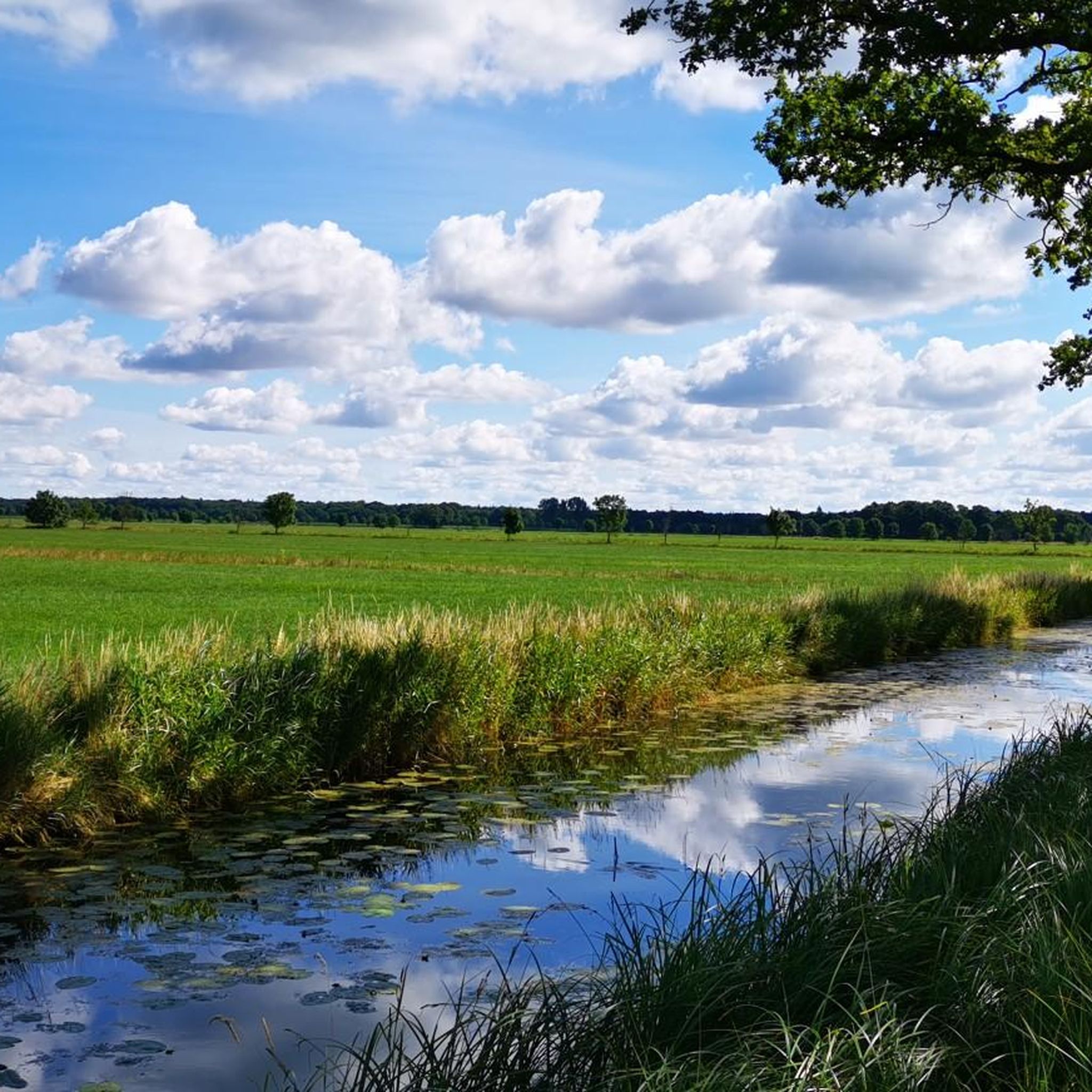
Hoort is situated in Mecklenburg-Vorpommern, a region known for its natural landscapes and waterways. While Hoort itself is a rural municipality, visitors can expect to see charming countryside, agricultural areas, and potentially small forests or water features characteristic of the wider district. The nearby Stör-Wasserstrasse, for instance, offers scenic views along its course.
Are there family-friendly attractions or activities near Hoort?
Many of the historical churches, such as the Village Church Banzkow and Mirow Village Church, are categorized as family-friendly, offering a glimpse into local history and architecture. Additionally, the easy hiking and cycling routes mentioned in the outdoor activity guides provide opportunities for families to enjoy nature together.
What do visitors enjoy most about the attractions near Hoort?
Visitors appreciate the historical significance and architectural beauty of the local landmarks. For example, the Stör Lift Bridge in Plate is noted for its interesting and eventful history. The churches, like the Village Church Banzkow, are admired for their Neo-Gothic design and well-preserved interiors. The overall rural charm and opportunities for quiet exploration are also highly valued.
What is the significance of the bridges around Hoort?
The bridges around Hoort, particularly along the Stör-Wasserstrasse, hold historical and practical significance. The Stör Lift Bridge in Plate has a history dating back to 1567 and was modernized in 2005. The Banzkow Lock and Bascule Bridge highlights the Stör's historical importance as a transport route, with the first lock built in 1576 and a new bascule bridge installed in 2002. These structures are integral to the region's heritage and waterways.
What is the best time of year to visit Hoort for outdoor activities?
The best time to visit Hoort for outdoor activities like hiking and cycling is generally during the warmer months, from late spring to early autumn (May to September). During this period, the weather is typically more favorable for exploring the rural landscapes and enjoying the trails. Always check local weather conditions before planning your trip.
Are there options for dog-friendly activities around Hoort?
Given the rural nature of Hoort and the abundance of hiking and cycling trails, many outdoor activities are suitable for visitors with dogs. The various routes listed in the hiking and MTB guides offer open spaces for walks. Always ensure dogs are kept on a leash where required and respect local regulations regarding pets in specific areas.
How can I best explore the attractions and natural beauty around Hoort?
The most immersive way to explore the attractions and natural beauty around Hoort is by walking or cycling. Many of the historical sites, such as the churches and bridges, are accessible via local paths. Utilizing the komoot guides for hiking and mountain biking will help you discover routes that connect these points of interest and showcase the region's rural charm.
Most popular attractions around Hoort

Get inspired with the komoot mobile app


Explore more
Still not found the Highlight you’re looking for? See guides of the top attractions in other regions:
