The best cycling routes in Hunedoara
4.8
(10)
170
riders
16
rides
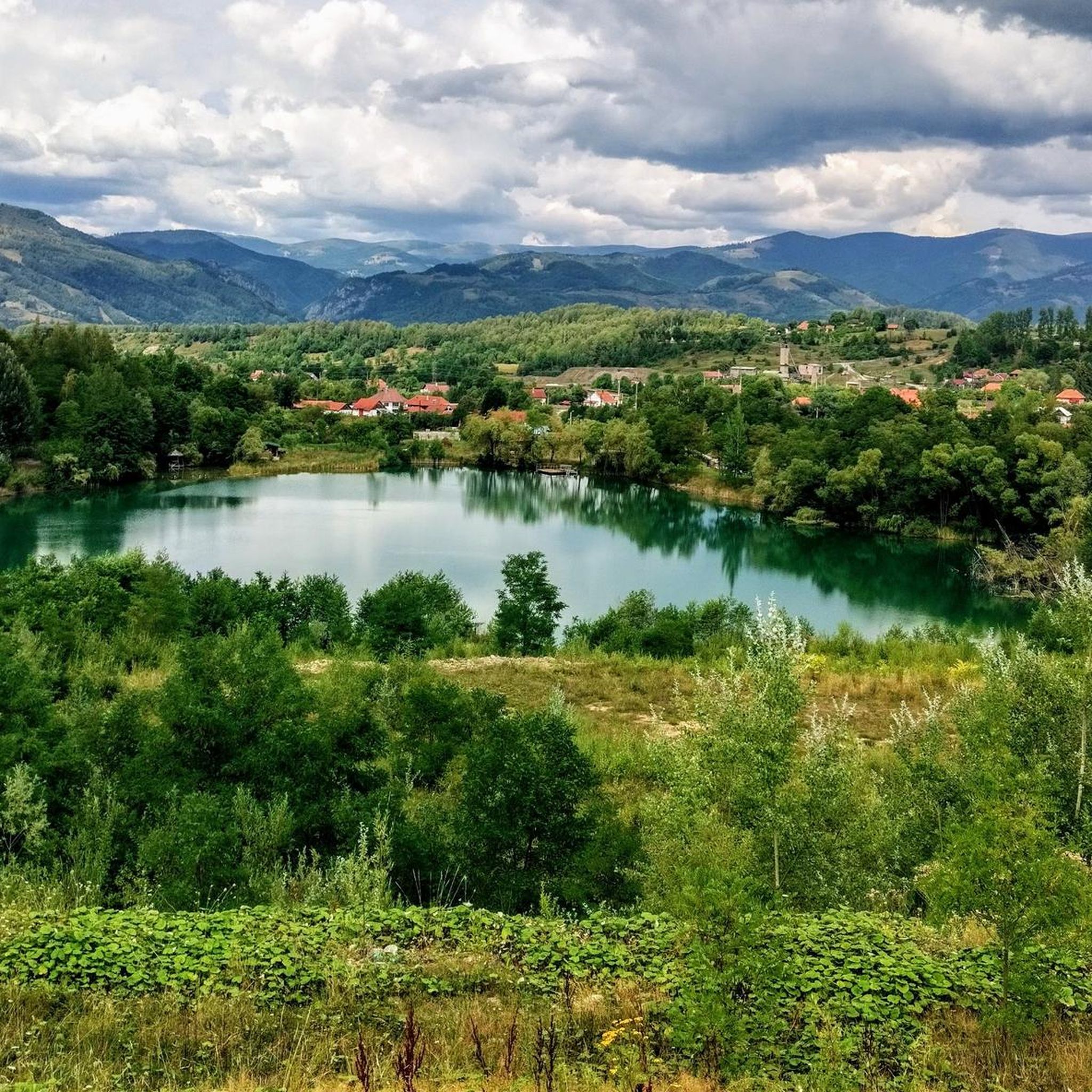
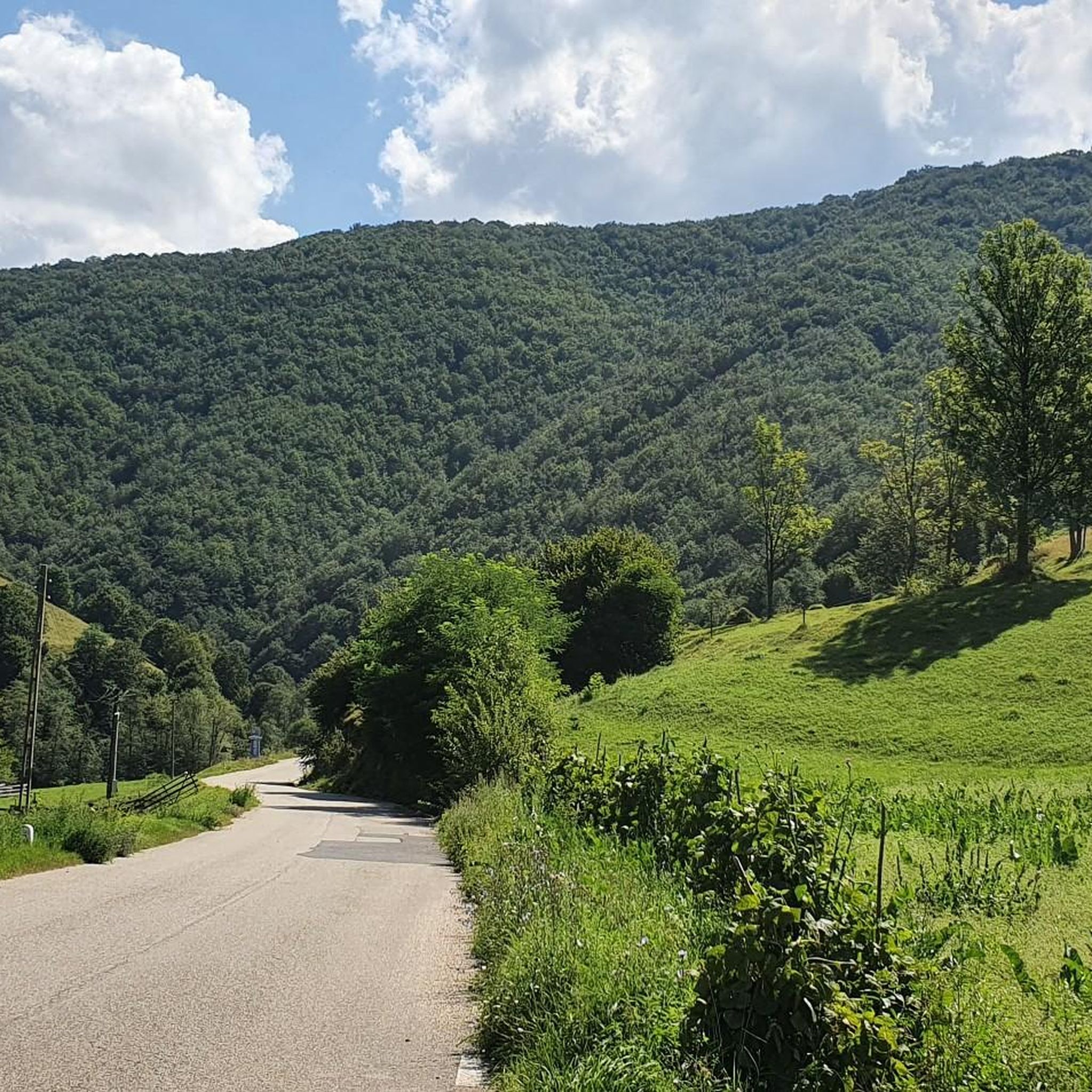
Touring cycling in Hunedoara offers diverse landscapes, from the foothills of the Carpathian Mountains to rolling hills and dense forests. The region features varied terrain, including river valleys, historical sites, and natural parks. Cyclists can explore areas characterized by ancient fortresses, medieval castles, and geological formations. The routes often traverse a mix of paved and unpaved surfaces, providing options for different cycling preferences.
Best touring cycling routes in Hunedoara
- The most popular touring cycling route is Bicycle Workshop on DN7…
Last updated: August 25, 2026
4.0
(3)
13
riders
47.6km
02:46
180m
180m
Moderate bike ride. Good fitness required. Mostly paved surfaces. Suitable for all skill levels.
5.0
(1)
10
riders
125km
07:16
570m
570m
Hard bike ride. Very good fitness required. You may need to push your bike for some segments of this route.

Sign up for free
8
riders
64.7km
03:42
190m
190m
Moderate bike ride. Good fitness required. Mostly paved surfaces. Suitable for all skill levels.
5.0
(1)
8
riders
16.7km
01:00
90m
90m
Easy bike ride. Great for any fitness level. Mostly paved surfaces. Suitable for all skill levels.
6
riders
76.1km
06:58
1,340m
1,340m
Hard bike ride. Very good fitness required. Mostly paved surfaces. Suitable for all skill levels.
5.0
(1)
8
riders
65.1km
03:44
260m
260m
Moderate bike ride. Good fitness required. Mostly paved surfaces. Suitable for all skill levels.
4
riders
16.4km
01:05
180m
180m
Hard bike ride. Good fitness required. You may need to push your bike for some segments of this route.
4
riders
51.1km
03:01
250m
250m
Hard bike ride. Good fitness required. You may need to push your bike for some segments of this route.
5.0
(3)
6
riders
28.7km
01:40
170m
170m
Moderate bike ride. Good fitness required. Mostly paved surfaces. Suitable for all skill levels.
5
riders
43.5km
02:35
250m
250m
Moderate bike ride. Good fitness required. Mostly paved surfaces. Suitable for all skill levels.
Get access to more routes and recommendations from other explorers.
Sign up for free
Already have an account?
Our route recommendations are based on thousands of hikes, rides, and runs completed by other people on komoot.
Start today with a free account
Your next adventure awaits.
Login or Signup

Tips from the Community

We can only recommend the restaurant
0
0

The Via Principalis was the main road connecting the two main gates of the ancient Roman castrum of Apulum, to the north and south. The road ran in front of the "Principia" of the Roman fort, the headquarters of the 13th Gemina Legion. Carts transporting salt, oil, wine, and military equipment for the camp's inhabitants drove along the stone-paved road. The remains of the road, along which the Roman soldiers walked, were uncovered during the fort's renovation. The Roman-era slabs can be seen here, as well as the masonry canal beneath the road's longitudinal axis, which was intended to ensure its drainage.
8
0
The bell depicts scenes from the three Romanian principalities of Transylvania, Wallachia, and Moldavia. As a whole, it is a monument to the unity of Greater Romania since 1918.
7
0
The coronation of Ferdinand of Hohenzollern-Sigmaringen, King Ferdinand I of Romania since October 10, 1914, and his wife Maria was the trigger for the construction of the new Trinity Cathedral in the center of the citadel of Alba Iulia in 1921 and 1922. Delayed by the turmoil of the First World War, Ferdinand and Maria's ceremonial coronation took place here on October 15, 1922.
10
0
The magnificent Royal Gate, with its high gate tower, was built as the portico of the new Holy Trinity Cathedral (Cathedral of the Reunification of the Nation) for the coronation of King Ferdinand I of Romania and Queen Maria in 1922. It is located slightly north of the existing fourth gate of the citadel and is accessible via a bridge from Union Park.
10
0
The Coronation Cathedral of Alba Iulia, dedicated to the Holy Trinity, was built with the support of the Romanian royal family between March 1921 and September 1922 according to the plans of the architect Victor Ștefănescu. Its Byzantine-style architecture is inspired by the Royal Church of Târgoviște, the ancient coronation site of the Wallachian voivodes. The coronation ceremony of King Ferdinand and Queen Maria as rulers of Greater Romania took place in the courtyard of this church on October 15, 1922, following a solemn mass in the cathedral. On December 1, 1948, following the ban on the Romanian Church united with Rome, a ceremony for the "Reunification of the Romanian Orthodox Church" was held here. The name of the church was changed to "Cathedral of the Reunification of the Romanian Orthodox Church." Since 1975, the place has served as the cathedral of the Orthodox Diocese of Alba Iulia.
11
0

Uricani (obsolete Uricani-Hobițeni, Uricani-Hobiceni; Hungarian Urikány or Hobicaurikány, German Goldenbach)[3] is a small town in Hunedoara County in Romania. Uricani is a relatively late settlement that has probably existed since the end of the 18th century. It was first mentioned in documents in 1786 under the name Uricani-Hobiceni (Hungarian Hobiczény és Felső Urikány). The first settlers were Romanians, came from the villages of Hobița and Uric in the Hațeg area and named the new settlement after their hometowns. At first, forestry and livestock farming were the most important industries. Soon, however, mining of hard coal and lignite played the main role.[4] In 1857, a coking plant was put into operation.[5] The rapid economic development led to a rapid increase in population. As a result of the First World War, the town passed from Austria-Hungary to Romania and was officially named Uricani. After the Second World War, coal mining was intensified again. In 1965, Uricani was granted town status.[4] The economic upheaval after the revolution in 1989 led to the closure of some of the coal mines and left many miners unemployed.
0
0
Petrila is located on the Jiul de Est river (Eastern Schil), between the Șureanu mountains in the north and the Parâng mountains in the south. Petrila experienced a significant boom after significant coal deposits were discovered in the 18th century and a mine opened in Petrila in 1859. Mining was the city's most important industry from the last third of the 19th century and throughout the 20th century. At times, 5,000 miners worked in the Petrila mine. The highest annual production was reached in 1983 with 1.2 million tons of coal.[3] When the Romanian state began to reduce its mining subsidies with the gradual transition to a market economy after 1990, production in Petrila also fell drastically; in 2014 it was still 110,000 tons. On November 15, 2008, two explosions occurred in the Petrila mine, which claimed a total of 13 lives.[4] The Petrila mine was closed at the end of October 2015. At the end of the day, about 300 miners were still employed there.
0
0
Frequently Asked Questions
How many touring cycling routes are available in Hunedoara?
Hunedoara County offers a wide array of touring cycling routes. While this guide features 17 curated routes, the region boasts over 300 cycling options, including 12 kilometers of well-maintained paths in Arsenal Park, catering to various preferences and skill levels.
What types of terrain can I expect on touring cycling routes in Hunedoara?
Touring cycling in Hunedoara offers diverse landscapes, from the foothills of the Carpathian Mountains to rolling hills and dense forests. You'll find routes traversing river valleys, historical sites, and natural parks. The terrain often includes a mix of paved and unpaved surfaces, providing options for different cycling preferences and challenges.
What are the best times of year for touring cycling in Hunedoara?
The best seasons for touring cycling in Hunedoara are typically spring (April-May) and autumn (September-October). During these months, the weather conditions are generally pleasant, making for enjoyable rides through the region's varied landscapes.
Are there any easy touring cycling routes suitable for beginners or families?
Yes, Hunedoara offers routes suitable for various skill levels, including easier options. For instance, the Deva Fortress loop from Deva is an easy 16.1 km (10 miles) route with minimal elevation gain, perfect for a relaxed ride. The region's diverse network ensures there are paths for everyone, from leisurely rides to more challenging mountain trails.
What historical landmarks can I explore along the cycling routes?
Hunedoara is rich in history, and many cycling routes pass by significant landmarks. You can explore ancient Dacian Fortresses, including the UNESCO World Heritage site Sarmizegetusa Regia, or visit the impressive Corvin Castle, one of Romania's most notable medieval fortresses. The Deva Citadel is also accessible on routes like the Deva Fortress – Bicycle Workshop on DN7 loop from Deva.
Are there any natural attractions or viewpoints along the touring cycling routes?
Absolutely. Hunedoara's landscape is dotted with natural beauty. You can find routes that offer stunning views of the Carpathian Mountains, pass through the pristine wilderness of Retezat National Park, or explore the picturesque valleys of Grădiștea Muncelului-Cioclovina Natural Park. The region also features charming gorges and waterfalls, such as the spectacular Bănița Gorges, adding to the scenic beauty of your rides.
What do other touring cyclists enjoy most about cycling in Hunedoara?
The touring cycling routes in Hunedoara are highly rated by the komoot community, with an average score of 4.8 stars from over 7 reviews. Cyclists often praise the diverse landscapes, the blend of natural scenery with historical landmarks, and the variety of routes available for different skill levels.
Are there any long-distance or challenging touring routes for experienced cyclists?
Yes, for experienced cyclists seeking a challenge, Hunedoara offers several difficult routes with significant elevation gains. The Via Principalis – Union Bell loop from Simeria is a challenging 124.4 km (77.3 miles) route, while The Crypt in Poieni Strâmbu loop from Dobra covers 76.1 km (47.3 miles) with over 1300 meters of ascent, providing a demanding and rewarding experience.
Can I find circular touring cycling routes in Hunedoara?
Many of the touring cycling routes in Hunedoara are designed as loops, allowing you to start and finish in the same location. Examples include the Bicycle Workshop on DN7 loop from Deva and the Balta Rosie Campsite loop from Subcetate, offering convenient options for exploring the region.
Are there any routes that pass through the Țara Hațegului Dinosaurs Geopark?
Yes, cyclists can explore the Țara Hațegului Dinosaurs Geopark, a UNESCO site, on various routes. A circuit through the hills of Hațeg provides an excellent perspective on the area's unique landscapes, where dinosaur fossils have been found, and allows for admiration of the Retezat Mountains' crest.
What kind of natural parks can I cycle through in Hunedoara?
Hunedoara is home to several natural parks offering excellent cycling opportunities. You can find routes in the Retezat National Park, known for its pristine wilderness and fragrant conifer forests. The Grădiștea Muncelului-Cioclovina Natural Park in the Șureanu Mountains also features rolling hills, dense forests, and well-maintained mountain biking trails.
Are there any routes that include the Bolii Cave?
Yes, the spectacular Bolii Cave, located at the foothill of the Dacian fortress of Bănița, can be integrated into cycling itineraries. This cave occasionally hosts concerts and offers a unique point of interest along your ride.
Most popular attractions in Hunedoara

Get inspired with the komoot mobile app


Didn’t find what you were looking for?
Check out more Cycling routes throughout Hunedoara below and find the perfect route in your destination.
Explore more
Browse the best Cycling routes in other regions.
