Top 5 Castles around Rüdnitz
Castles around Rüdnitz location Germany are primarily found in the broader vicinity, rather than within the town itself. The region, part of Brandenburg, is characterized by historical defensive structures and natural landscapes. While Rüdnitz itself does not host prominent castles, nearby areas offer significant historical sites. These locations provide insights into medieval architecture and regional history.
Best castles around Rüdnitz
- The most popular castles is Steintor and Hungerturm, Bernau near Berlin, a historical site that is a late Gothic…
Last updated: October 11, 2026
Bernau Town Wall
Highlight • Monument
Showing Translation
Tip by

Bunker Koralle (Object Koralle)
Highlight • Historical Site
Translated by Google •
Tip by

Sign up now to discover places like this
Get recommendations on the best single tracks, peaks, & plenty of other exciting outdoor places.
Steintor and Hungerturm, Bernau near Berlin
Highlight • Historical Site
Translated by Google •
Tip by

Kaiser-Friedrich-Tower Biesenthal
Highlight • Monument
Translated by Google •
Tip by

View of Schloss Lanke
Highlight • Castle
Translated by Google •
Tip by

Sign up for free to discover even more castles around Rüdnitz.
Already have an account?
Start today with a free account
Your next adventure awaits.
Tips from the Community

The facility was initially intended as a naval communications school and was only given the name "Koralle" later. Due to the ever-increasing danger from aerial bombs, it was decided to move the command center of the High Command of the Navy (OKM) from Berlin to a safer area in the middle of the forest. Construction began in 1939. On January 30, 1943, it moved into its headquarters in the Koralle camp. A little later, the main radio station of the Commander of the Submarines (BdU) was also set up on site. This meant that all communications for the submarine war now came into the station's bomb-proof communications bunker. At times, all German naval operations of the Second World War were coordinated here. The bunker was then blown up by the Soviets. Today, the bunker can be visited and many climbers practice on it.
7
0
Looks nice again now. After an eventful history, the castle, built in the style of the French Renaissance, is now a residential building with twelve apartments, event and office space.
7
0

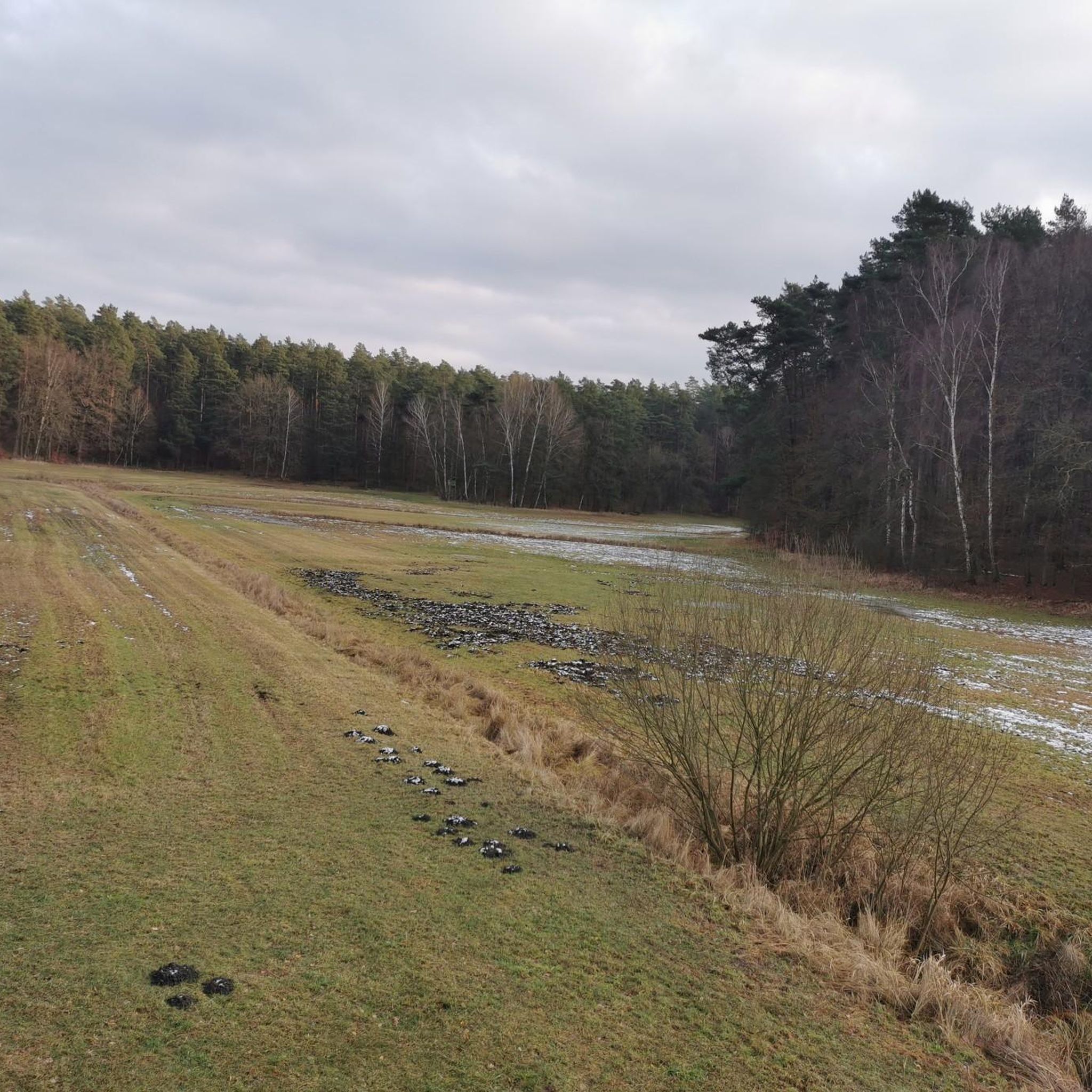
The old swan pond is probably past its prime.
4
1

The view from the tower opens up completely new perspectives on the city of Biesenthal and the wonderful Biesenthal basin. The tower is open from May to October and admission is free.
6
0


Mighty city wall, very nicely preserved in parts. Can be driven very well on the laid narrow slab path within the city wall. Imposing gates and wall towers e.g. Lughaus.
1
0
Nice old preserved ensemble. The tower can also be climbed on weekends. Info on the Bernau page at www.
3
1

The Kaiser-Friedrich-Turm (also called Schlossbergturm) is a memorial to Kaiser Friedrich III. Erected observation tower on the Schlossberg in the town of Biesenthal in the Brandenburg district of Barnim. A castle was first mentioned in a document on the Schlossberg in 1337. However, it fell into disrepair over the centuries, was already described as very damaged during the Thirty Years' War and was then demolished. In 1878 the community built a wooden observation tower on the raised area. He was in 1907 in honor of the German Emperor Friedrich III. replaced by a tower made of brick. After the fall of the Wall, the city commissioned a concept for the renovation of the entire area on the Schlossberg in 1990. A year later, a homeland association was founded, which from then on accompanied the project. First, in 1991 and 1992, the Schlossberg site was reconstructed, leaving the tower outside. On the initiative of the association, Schlossberg festivals have been held there since 2001. At the same time, considerations matured as to how the tower could also be renewed. The club members commissioned a concept and leased the site in 2006. The tower was renovated and opened to the public on October 13, 2007. Source: https://de.wikipedia.org/wiki/Kaiser-Friedrich-Turm_(Biesenthal)
7
0
Frequently Asked Questions
What kind of historical sites can I expect to find around Rüdnitz?
While Rüdnitz itself doesn't have traditional castles, the surrounding region, particularly Bernau, is rich in medieval defensive architecture. You can explore impressive city walls, historical gates, and towers. Notable examples include the Bernau Town Wall and the Steintor and Hungerturm, which are remnants of the city's medieval fortifications.
Are there any family-friendly historical sites near Rüdnitz?
Yes, several sites are suitable for families. The Bernau Town Wall offers an engaging walk through history, and the Kaiser-Friedrich-Tower Biesenthal is also listed as family-friendly, providing views and historical context.
What are the best places to get panoramic views of the region?
For excellent views, visit the Kaiser-Friedrich-Tower Biesenthal. It's located on the Schlossberg, where a 13th-century castle once stood, and offers new perspectives on Biesenthal and its surrounding basin. The Steintor and Hungerturm in Bernau also provide viewpoint opportunities.
Can I visit Schloss Lanke, or only view it from a distance?
Schloss Lanke, built between 1856-59, is a beautiful historical site, but it cannot be visited internally. You can, however, catch a glimpse of the castle from a distance, making it a picturesque stop on a tour through the forest. See the View of Schloss Lanke highlight for more details.
What outdoor activities can I do near these historical sites?
The region around Rüdnitz offers various outdoor activities. You can find numerous hiking trails, running routes, and gravel biking tours. Many of these routes pass through natural landscapes and near historical points of interest, allowing you to combine outdoor activity with sightseeing.
Are there any easy walking trails around the historical sites?
Yes, you can find easy walking trails, particularly around the Bernau Town Wall, which offers a pleasant stroll along the preserved medieval fortifications. For more extensive options, explore the hiking guide for Rüdnitz, which includes routes of varying difficulties.
What is the best season to explore the historical sites around Rüdnitz?
The Kaiser-Friedrich-Tower Biesenthal is open from May to October, suggesting that late spring through early autumn is an ideal time to visit for pleasant weather and accessibility to attractions. This period generally offers good conditions for exploring the outdoor historical sites and enjoying the surrounding natural landscapes.
What do visitors appreciate most about the historical sites in this region?
Visitors frequently highlight the impressive preservation of medieval structures, such as the Bernau Town Wall, which offers a tangible connection to history. The scenic views from places like the Kaiser-Friedrich-Tower and the opportunity to combine historical exploration with nature walks are also highly valued.
Is the Bunker Koralle a traditional castle, and what can I expect there?
The Bunker Koralle (Object Koralle) is not a traditional medieval castle but a significant historical site from World War II. It was a command center for the Kriegsmarine. Today, you can explore the ruins of this impressive bunker complex, which rises from the forest, offering a unique glimpse into a different period of history. It's considered an intermediate to challenging site to explore.
Are there any cafes or pubs near the historical sites in Bernau?
Yes, particularly around the Steintor and Hungerturm in Bernau. This area features an expansive square with cafes and restaurants, making it an idyllic spot to relax and enjoy refreshments after exploring the city's medieval fortifications.
How long does it typically take to visit the Bernau Town Wall?
The Bernau Town Wall is approximately 1.3 kilometers long, with large sections preserved. A leisurely walk along the wall, taking in the defense towers and historical features, could take anywhere from 1 to 2 hours, depending on your pace and how much time you spend exploring specific sections or reading informational plaques.
Most popular routes around Rüdnitz
Most popular attractions around Rüdnitz

Get inspired with the komoot mobile app


Explore more
Looking for the best castles somewhere else? Discover other guides around Rüdnitz:
