The best MTB trails in Monteluco Di Spoleto
4.7
(355)
2,472
riders
118
rides
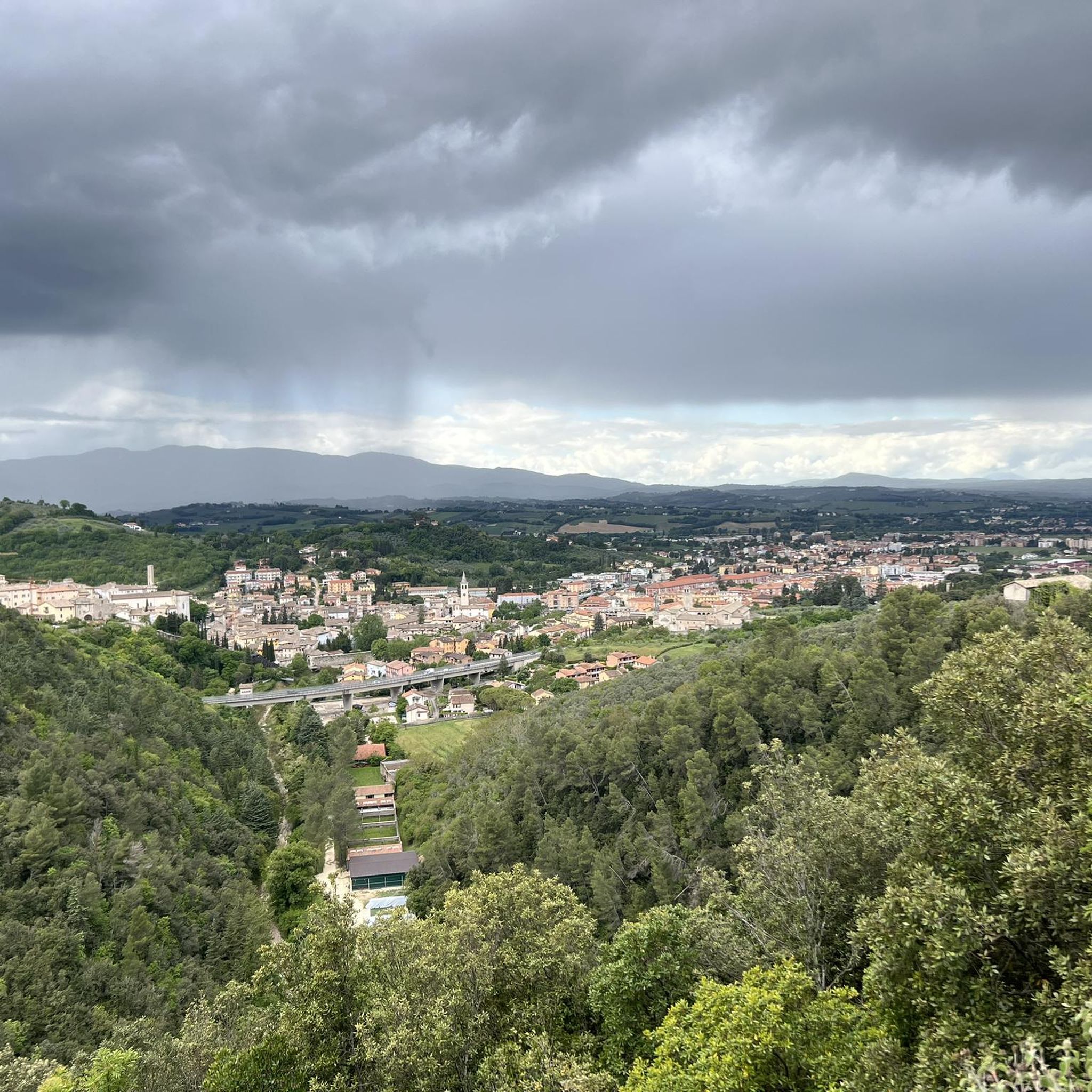
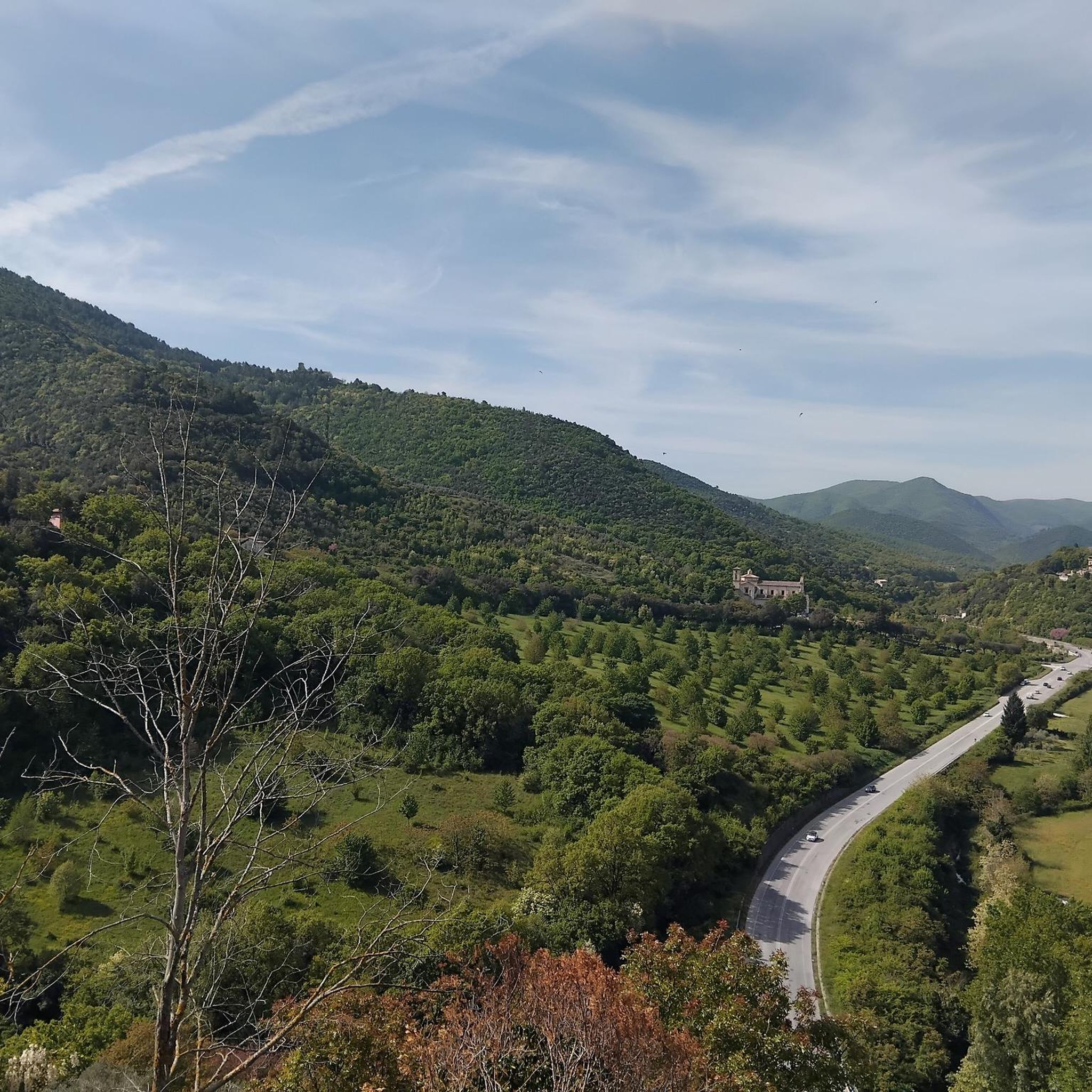
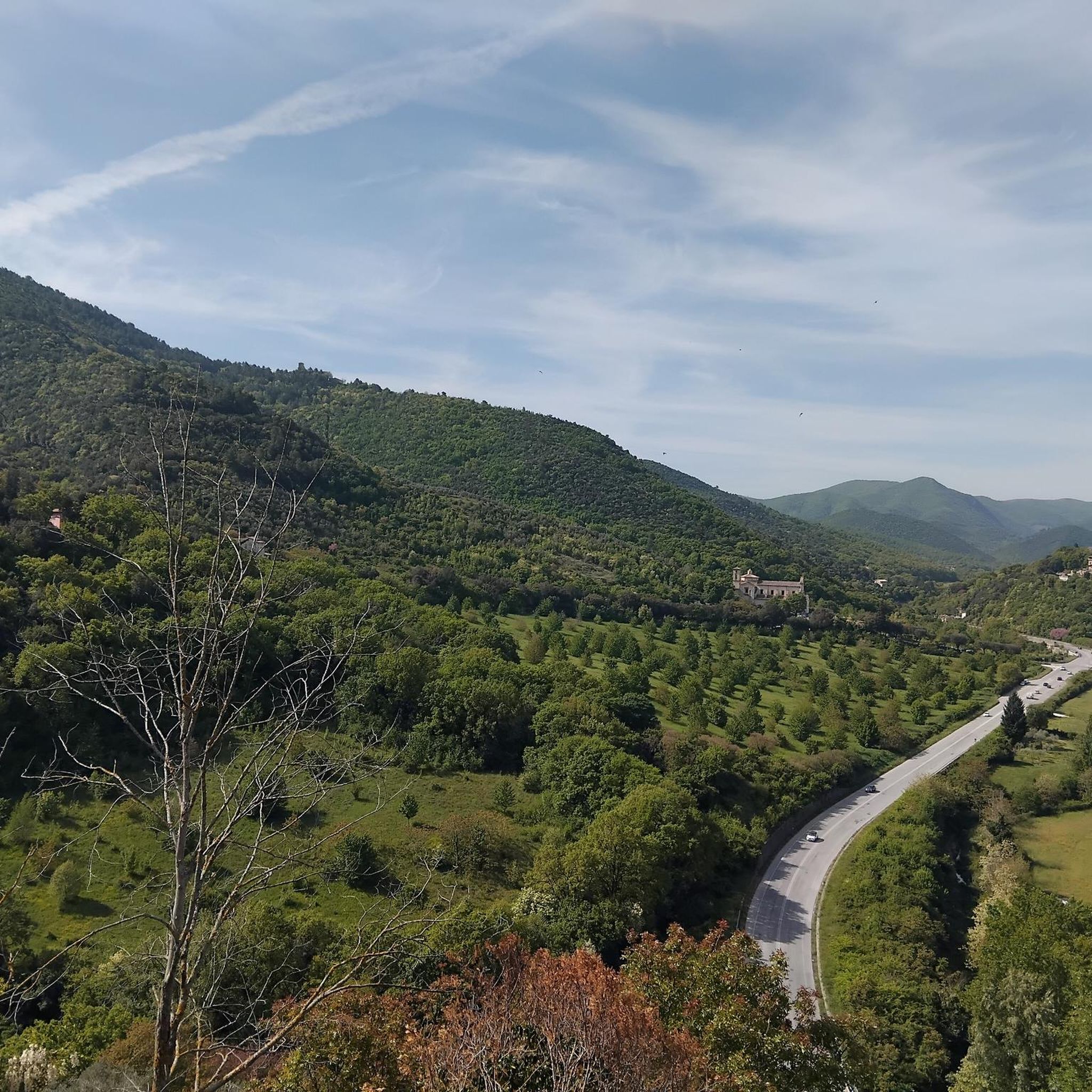
Mountain bike trails in Monteluco Di Spoleto offer a diverse and challenging terrain, characterized by dense and ancient forests, historical landmarks, and varied surfaces. The region features a network of trails winding through the Sacred Wood of Monteluco, known for its evergreen oak trees and rich biodiversity. Riders can expect a mix of paved and dirt roads, steep ascents, and rocky passages, providing options for different skill levels. Panoramic views of Spoleto and the surrounding valleys are accessible from several…
Last updated: July 8, 2026
25
riders
15.6km
01:46
660m
660m
Hard mountain bike ride. Good fitness required. Advanced riding skills necessary. Some portions of the route may require you to push your bike.
4.6
(16)
118
riders
98.7km
07:20
1,670m
1,670m
Hard mountain bike ride. Very good fitness required. Advanced riding skills necessary.

Sign up for free
4.7
(15)
114
riders
91.6km
04:39
180m
180m
Moderate mountain bike ride. Good fitness required. Suitable for all skill levels.
4.5
(23)
100
riders
26.0km
02:02
530m
530m
Moderate mountain bike ride. Good fitness required. Suitable for all skill levels.
4.5
(2)
77
riders
26.2km
02:32
890m
890m
Hard mountain bike ride. Good fitness required. Advanced riding skills necessary. Some portions of the route may require you to push your bike.
Get access to more routes and recommendations from other explorers.
Sign up for free
Already have an account?
Our route recommendations are based on thousands of hikes, rides, and runs completed by other people on komoot.
Start today with a free account
Your next adventure awaits.
Login or Signup
Tips from the Community

The historic center of Bevagna is unmissable for the historic buildings it contains. But what makes the difference is the medieval atmosphere that you can breathe.
0
0

The Roman Theater of Spoleto is one of the most important Roman monuments in the city and represents a significant testimony to the cultural life of ancient Spoletium. It was built in the 1st century BC, in an area near the forum, according to the architectural models of classical Roman theater. The cavea, built against the natural slope of Sant'Elia Hill, was divided into sectors and could accommodate several thousand spectators. Opposite were the orchestra and the monumental stage, originally decorated with columns, niches, and statues, which served as a backdrop for theatrical and musical performances. The building was constructed of masonry and clad in local stone, with technical solutions that ensured good acoustics. After the end of the Roman era, the theater was gradually abandoned and was partially incorporated into medieval buildings. The area was restored in the 20th century, restoring the structure's visibility and highlighting its archaeological importance. Today, the Roman Theatre is part of the National Archaeological Museum of Spoleto and continues to serve a cultural purpose, hosting events and performances that renew the city's connection to its thousand-year-old theatrical tradition.
0
0

after the tunnel is very steep and rough. not suitable for road bikes
0
0

Natural waterfalls on the Topino river near Cannara
0
0

The tunnel is pretty bad. It looks like a set from "The Walking Dead" but it allows you to avoid a road tunnel on the highway. However, the end of the tunnel leads to emerging back on the highway. It depends on whether the spooky environment or the highway is scarier.
0
0

Chiesa di San Filippo Neri, Spoleto The beautiful Church of San Filippo Neri stands near Piazza Mentana and was built starting in 1640 by two wealthy citizens of Spoleto who lived in Rome: Ugo Alberici and Loreto Vittori. The design of the building was entrusted to Loreto Scelli and was finally completed in 1671 with the construction of the dome. It was not consecrated until 1724. The Church of San Filippo Neri in Spoleto has the forms and architectural features of 17th-century Roman churches, with an elegant travertine façade decorated with pilasters and a beautiful tympanum. The interior is divided into three naves separated by pillars and a large transept surmounted by the dome. Inside the sacristy is a marble bust of Saint Philip Neri, a work by the sculptor Alessandro Algardi (1650). The side chapels contain altars from the 17th and 18th centuries, while the walls are decorated with 18th-century paintings by artists such as Gaetano Lapis, Sebastiano Conca, Pietro Labruzzi, and the Spoleto painter Francesco Refini. Text T Source: Exploring Umbria srl, https://www.exploring-umbria.com/scopri-spoleto/cosa-vedere-a-spoleto/chiesa-di-san-filippo-neri-a-spoleto/
15
0
Chiesa di San Filippo Neri, Spoleto The beautiful Church of San Filippo Neri stands near Piazza Mentana and was built starting in 1640 by two wealthy citizens of Spoleto who lived in Rome: Ugo Alberici and Loreto Vittori. The design of the building was entrusted to Loreto Scelli and was finally completed in 1671 with the construction of the dome. It was not consecrated until 1724. The Church of San Filippo Neri in Spoleto has the forms and architectural features of 17th-century Roman churches, with an elegant travertine façade decorated with pilasters and a beautiful tympanum. The interior is divided into three naves separated by pillars and a large transept surmounted by the dome. Inside the sacristy is a marble bust of Saint Philip Neri, a work by the sculptor Alessandro Algardi (1650). The side chapels contain altars from the 17th and 18th centuries, while the walls are decorated with 18th-century paintings by artists such as Gaetano Lapis, Sebastiano Conca, Pietro Labruzzi, and the Spoleto painter Francesco Refini. Text T Source: Exploring Umbria srl, https://www.exploring-umbria.com/scopri-spoleto/cosa-vedere-a-spoleto/chiesa-di-san-filippo-neri-a-spoleto/
15
0
Former Church of San Lorenzo, Spoleto The former Church of San Lorenzo, now called Sala Pegasus, is located in Spoleto on Via delle Terme, in front of the Rosari-Spada Palace. It is a small, deconsecrated church that served as a religious building until 1825. In 1972, through restoration and structural consolidation, it was converted into a venue for exhibitions, small conferences, and cultural events. Text / Source: wikipedia.org https://it.wikipedia.org/wiki/Ex_chiesa_di_San_Lorenzo#Storia
14
0
Frequently Asked Questions
How many mountain bike trails are there in Monteluco Di Spoleto?
Monteluco Di Spoleto offers a wide selection of mountain bike trails, with over 110 routes available. These trails cater to various skill levels, ranging from moderate to difficult, ensuring there's something for every rider.
What kind of terrain can I expect on the mountain bike trails in Monteluco Di Spoleto?
The terrain in Monteluco Di Spoleto is diverse and challenging. You'll encounter a mix of paved and dirt roads, steep ascents, and rocky passages. The region is known for its dense, ancient forests, particularly the Sacred Wood of Monteluco, which features enjoyable single tracks winding through the trees.
Are there any advanced mountain bike routes in Monteluco Di Spoleto?
Yes, Monteluco Di Spoleto has many challenging routes for experienced riders. Approximately 60% of the trails are rated as difficult. For example, the Antica Ferrovia Spoleto - Norcia - giro ad anello is a difficult 98.7 km path with significant elevation gain, following an old railway line. Another challenging option is the Spoleto–Norcia Cycle Path – Scheggino loop from Spoleto, which is 58.4 km long and also rated difficult.
What natural features and landmarks can I see along the mountain bike trails?
The trails in Monteluco Di Spoleto are rich in natural beauty and historical landmarks. You can explore the ancient Sacred Wood of Monteluco, known for its evergreen oak trees. Many routes offer stunning panoramic views of Spoleto and the surrounding Umbrian hills. You might also encounter historical sites like the impressive 14th-century Ponte delle Torri, which provides breathtaking vistas, and various hermitages and sanctuaries steeped in spiritual history.
What do other mountain bikers enjoy most about Monteluco Di Spoleto?
The mountain bike trails in Monteluco Di Spoleto are highly rated by the komoot community, with an average score of 4.6 stars from over 495 reviews. Riders often praise the diverse and challenging terrain, the beauty of the dense ancient forests, and the impressive historical landmarks like Ponte delle Torri. The panoramic viewpoints overlooking Spoleto are also frequently highlighted as a favorite feature.
Are there any family-friendly mountain bike trails in Monteluco Di Spoleto?
While many trails in Monteluco Di Spoleto are moderate to difficult, there are options suitable for families or those seeking a less strenuous ride. Approximately 10 of the available routes are rated as easy. These trails typically feature less challenging ascents and smoother surfaces, allowing for a more relaxed experience amidst the beautiful scenery.
Are there mountain bike trails that form a loop in Monteluco Di Spoleto?
Yes, many mountain bike trails in Monteluco Di Spoleto are designed as loops, offering varied scenery without retracing your steps. An example is the Historic Center of Bevagna – View of Trevi loop from Spoleto, a 49.6 km moderate trail. Another option is the Antica Ferrovia Spoleto - Norcia - giro ad anello, a longer and more difficult loop.
Where can I find parking for mountain bike trails in Monteluco Di Spoleto?
Monteluco Di Spoleto is easily accessible from the historic center of Spoleto. Many trails start near the city, and parking can often be found in or around Spoleto, especially near popular access points like the Ponte delle Torri. It's advisable to check specific starting points for individual routes for the most convenient parking options.
What is the best season for mountain biking in Monteluco Di Spoleto?
Monteluco Di Spoleto offers enjoyable mountain biking for much of the year. Spring and autumn generally provide the most pleasant conditions with milder temperatures and vibrant foliage. Summer can be warm, so early morning or late afternoon rides are recommended. Winter rides are possible, but some higher or more exposed sections might be affected by weather conditions.
Are there any cafes or restaurants near the mountain bike trails in Monteluco Di Spoleto?
Given Monteluco Di Spoleto's proximity to the city of Spoleto, you'll find numerous cafes, restaurants, and accommodation options in the historic center. Many trails either start from or pass close to Spoleto, making it convenient to refuel before or after your ride.
Can I reach the mountain bike trails using public transport from Spoleto?
Monteluco Di Spoleto is well-connected to the city of Spoleto, often by scenic trails like the "Via di Francesco." While direct public transport specifically for trailheads might be limited, Spoleto itself is accessible by public transport, and many trails are within cycling distance or a short connection from the city center.
Are there any trails that follow old railway lines?
Yes, Monteluco Di Spoleto features routes that incorporate old railway lines. A notable example is the difficult Antica Ferrovia Spoleto - Norcia - giro ad anello, which follows a historic railway path, offering unique terrain and views.
Most popular routes in Monteluco Di Spoleto
Most popular attractions in Monteluco Di Spoleto

Get inspired with the komoot mobile app


Explore more
Browse the best MTB trails in other regions.
