The best cycling routes in Gehron-See
4.6
(1442)
5,496
riders
138
rides
Touring cycling in Gehron-See is characterized by its location within a region rich in lakes, forests, and well-established cycling paths. The area offers diverse natural features, including tranquil watersides and extensive woodlands, providing a refreshing environment for cyclists. Terrain primarily features flat sections alongside lakes and rivers, with some gently rolling hills adding variety without being overly challenging. Well-maintained cycle paths and quiet country roads are common, making the region suitable for various cycling abilities.
Best touring cycling routes in…
Last updated: June 28, 2026
5.0
(5)
11
riders
Easy bike ride. Great for any fitness level. Mostly paved surfaces. Suitable for all skill levels.
4.7
(19)
70
riders
Hard bike ride. Good fitness required. You may need to push your bike for some segments of this route.

Sign up for free
4.3
(10)
37
riders
34.0km
02:00
130m
130m
Moderate bike ride. Good fitness required. Mostly paved surfaces. Suitable for all skill levels.
4.5
(6)
23
riders
Moderate bike ride. Good fitness required. Mostly paved surfaces. Suitable for all skill levels.
4.8
(5)
25
riders
57.1km
03:27
240m
240m
Moderate bike ride. Good fitness required. Mostly paved surfaces. Suitable for all skill levels.
Get access to more routes and recommendations from other explorers.
Sign up for free
Already have an account?
Our route recommendations are based on thousands of hikes, rides, and runs completed by other people on komoot.
Start today with a free account
Your next adventure awaits.
Login or Signup
Tips from the Community

An imposing church: open daily, but only from 11 a.m.
1
0

Great trail even without an MTB. Might be used by many hikers in summer or during the season, then it might get tricky.
0
0

The mill was first documented in 1530 and originally belonged to the Lindow convent (later the Lindow ladies' convent and office). It is one of the last remaining water and windmills in the region. In the Middle Ages, it served the monastery, which was one of the richest in the March of Brandenburg. Fires destroyed parts of the complex in 1805 and 1846; it was rebuilt afterwards. The current two-story main building dates from 1848 (or reconstruction after 1846) and is an example of Prussian rural architecture.
0
0
Originally it was a classic water mill. Today it is decommissioned as a grain mill, but still possesses complete milling technology (formerly with a turbine). Since about 1928/1936 it has been operated electrically. The preserved water wheel (an undershot Straub wheel) still turns occasionally for demonstration purposes or lies in the flow.
0
0

Viticulture is probably not typical in this area around Gransee, but where a count or today the government resides, a vineyard is also established. It is certainly idyllic to look at and we enjoyed it.
0
0
It existed from around 1270/1280 until the mid-16th century and was located in the north of the city. The monks, also known as the "Grey Monks," built a Gothic brick church and a cloister, the eastern wing of which, with its cloister, has survived to this day. After several fires – the church in 1604, the west wing and cloister in 1711 – only the eastern cloister wing survived, which is now used as a cultural and exhibition space.
0
0

History of the Prussian nobility (von Arnim) and their activities for "modern" products, such as silkworm breeding on mulberry trees, introduced by the Huguenots. Today, these trees are valuable because they are relatively well adapted to the climate.
1
0

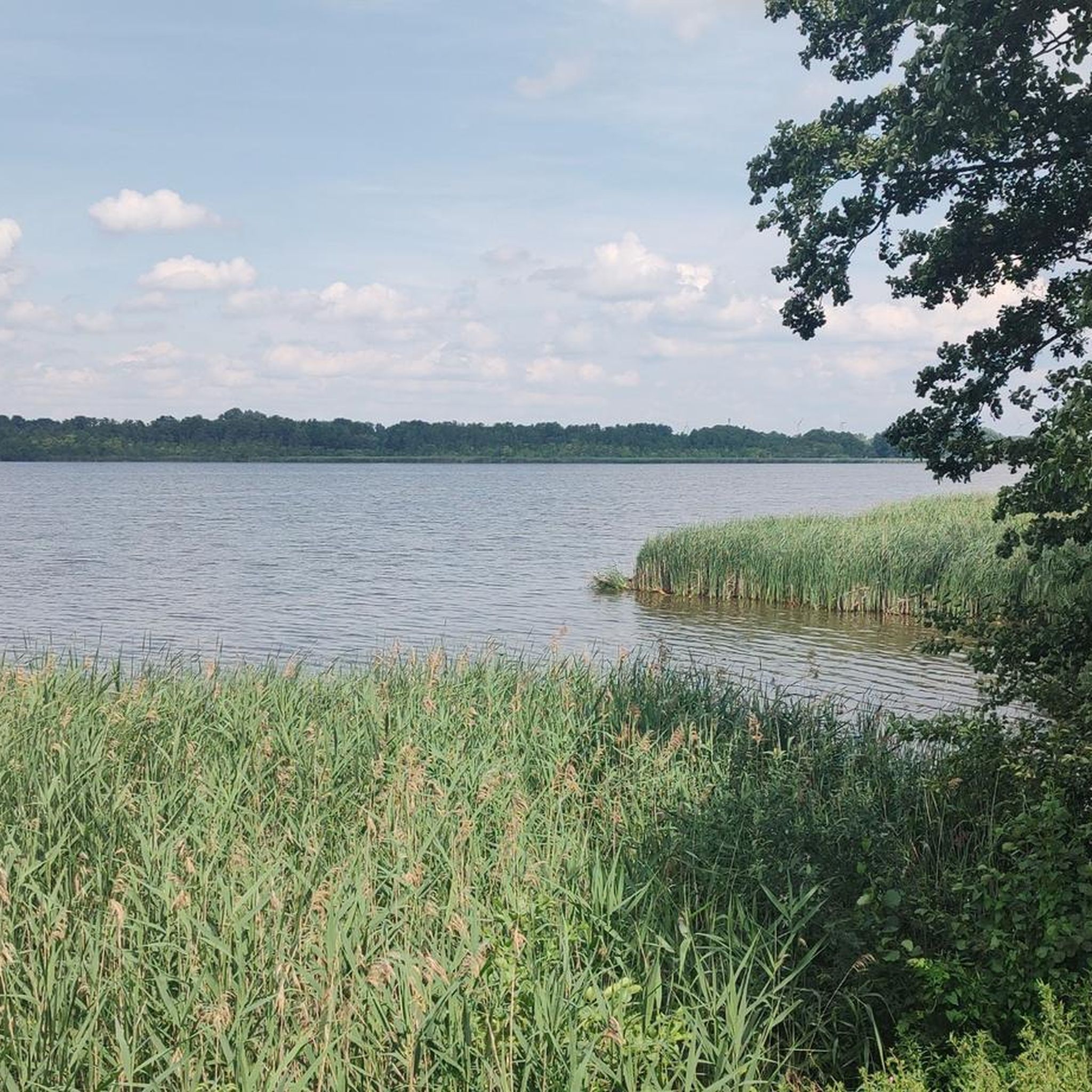
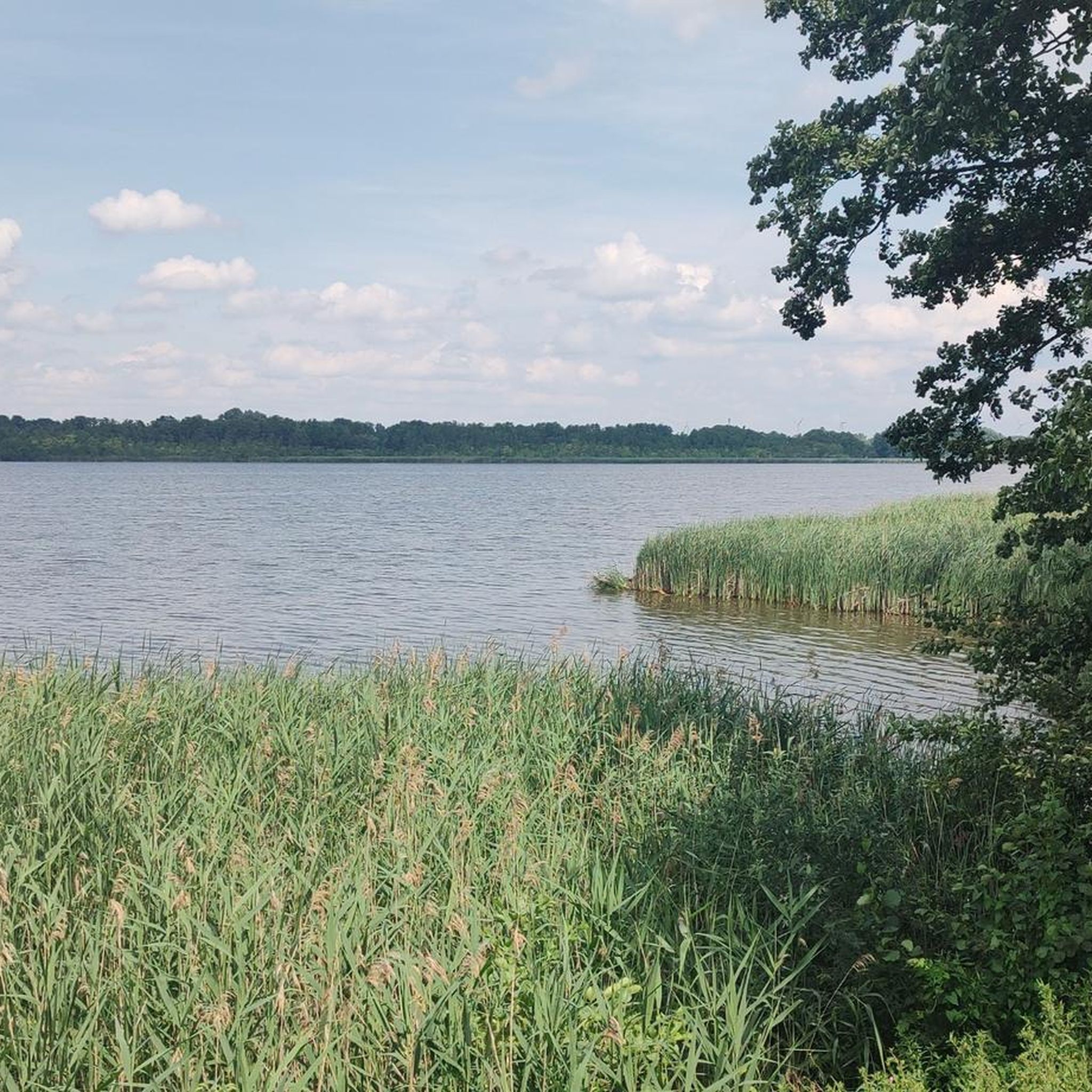
Most of the lakes in the Ruppiner Land region are worth a visit. They are surrounded by pine forests and, in good weather, reflect the typical North German sky.
0
0
Frequently Asked Questions
How many touring cycling routes are available in Gehron-See?
Gehron-See offers a wide variety of touring cycling routes, with over 130 options available. This includes 83 easy routes, 31 moderate routes, and 24 difficult routes, catering to all skill levels.
What kind of terrain can I expect when touring cycling in Gehron-See?
The terrain in Gehron-See is quite diverse. You'll find many routes with flat sections, especially along the numerous lakes and rivers. However, some areas also feature gently rolling hills, adding variety to your ride without being overly challenging. The region is known for its well-maintained cycle paths and quiet country roads.
Are there touring cycling routes suitable for families or beginners in Gehron-See?
Yes, Gehron-See is an excellent destination for families and beginners. The region boasts 83 easy touring cycling routes, many of which run alongside tranquil lakes or through green spaces, offering a relaxed and enjoyable experience. An example of an easy route is the Statue of the white nun Amelie – Gudelack Lake in Lindow loop from Gransee, which is 21.0 miles (33.8 km) long.
Are there more challenging touring cycling routes for experienced cyclists?
Absolutely. For experienced touring cyclists seeking a greater challenge, Gehron-See offers 24 difficult routes. These routes often cover longer distances and may include more varied terrain. A notable difficult route is the Stechlinseebahn Rail Trail – Mulberry Avenue of Zernikow loop from Gransee, which spans 36.4 miles (58.5 km) and follows a former rail line.
What are some popular circular touring cycling routes in Gehron-See?
Many touring cycling routes in Gehron-See are designed as loops, allowing you to start and end at the same point. A popular option is the Schönermark Cycle Path – Gransee loop from Gransee, an 18.8 miles (30.3 km) trail through rural areas. Another is the Stechlinseebahn Rail Trail – Lake Stechlin loop from Gransee, a moderate 35.5 miles (57.1 km) route.
What can I see along the touring cycling routes in Gehron-See?
Touring cycling routes in Gehron-See offer a blend of natural beauty and points of interest. You can cycle along picturesque waterways like Gehron Lake, explore the Oberhavel Nature Reserve, or enjoy views from the Gehronsee Observation Tower. Many routes also utilize dedicated paths like the Stechlinseebahn Rail Trail.
What is the best time of year for touring cycling in Gehron-See?
The region around Gehron-See, like much of Brandenburg, is generally excellent for cycling from spring through autumn. During these seasons, the weather is typically mild, and the natural landscapes of lakes and forests are at their most vibrant. Summer offers longer daylight hours, while spring and autumn provide pleasant temperatures and fewer crowds.
Are there any cafes or places to stop for refreshments along the routes?
While specific cafes are not listed for every route, the region's popularity for outdoor activities means you'll often find opportunities for breaks at lakeside cafes or in charming villages that routes pass through. It's always a good idea to check local maps or plan your stops in advance, especially on longer routes.
What do other touring cyclists enjoy most about touring cycling in Gehron-See?
The area is highly rated by the komoot community, with an average score of 4.6 stars from over 1300 reviews. Reviewers often praise the region's extensive network of well-maintained cycle paths, the tranquil beauty of its lakes and forests, and the diverse terrain that caters to all ability levels. Many appreciate the peaceful escape from urban bustle.
How long do touring cycling routes in Gehron-See typically take to complete?
The duration of touring cycling routes in Gehron-See varies significantly based on distance and difficulty. For example, an easy 18.8-mile (30.3 km) route like the Schönermark Cycle Path – Gransee loop from Gransee can be completed in about 1 hour 46 minutes, while a difficult 36.4-mile (58.5 km) route such as the Stechlinseebahn Rail Trail – Mulberry Avenue of Zernikow loop from Gransee might take around 3 hours 42 minutes.
Is it possible to access touring cycling routes in Gehron-See using public transport?
The region around Gehron-See, being close to Berlin and within Brandenburg, generally benefits from Germany's well-developed public transport infrastructure. While specific access points for every route would need individual checking, many towns and villages that serve as starting points for routes are often connected by regional trains or buses, which can accommodate bicycles. It's advisable to check schedules and bike carriage policies with local transport providers.
Are there any longer touring cycling routes in Gehron-See that explore multiple landmarks?
Yes, there are several longer routes that allow you to explore various points of interest. For instance, the moderate Statue of the white nun Amelie – Meseberg Palace loop from Gransee covers 33.2 miles (53.5 km) and takes you past significant landmarks, offering a comprehensive touring experience through the landscape.
Most popular routes in Gehron-See
Most popular attractions in Gehron-See

Get inspired with the komoot mobile app


Explore more
Browse the best Cycling routes in other regions.
