The 6 Most Amazing Peaks around Büdesheim
Best mountain peaks around Büdesheim are located in the surrounding Rhineland-Palatinate region of Germany, particularly within the Eifel. While Büdesheim itself does not feature prominent alpine peaks, the wider area offers numerous elevations and hiking opportunities. These include distinct summits, elevated viewpoints, and historical sites situated on hills, providing diverse experiences for outdoor enthusiasts. The landscape is characterized by low mountain ranges, forests, and valleys.
Best mountain peaks around Büdesheim
- The most popular mountain peaks is Dietzenley Observation Tower,…
Last updated: June 24, 2026
View of Gerolstein from the Munterley
Highlight • Viewpoint
Translated by Google •
Tip by

Dietzenley Observation Tower
Highlight • Viewpoint
Translated by Google •
Tip by

Sign up now to discover places like this
Get recommendations on the best single tracks, peaks, & plenty of other exciting outdoor places.
Sign up for free
Basilica of St. Salvator, Prüm
Highlight • Religious Site
Translated by Google •
Tip by

Giant Bench with View of Berlingen, Rockeskyll, and Kasselburg
Highlight • Viewpoint
Simply fantastic for a nice break.
Translated by Google •
Tip by

Langer Stein and Seimersberg
Highlight • Summit
Translated by Google •
Tip by

Sign up for free to discover even more peaks around Büdesheim.
Sign up for free
Already have an account?
Start today with a free account
Your next adventure awaits.
Login or Signup
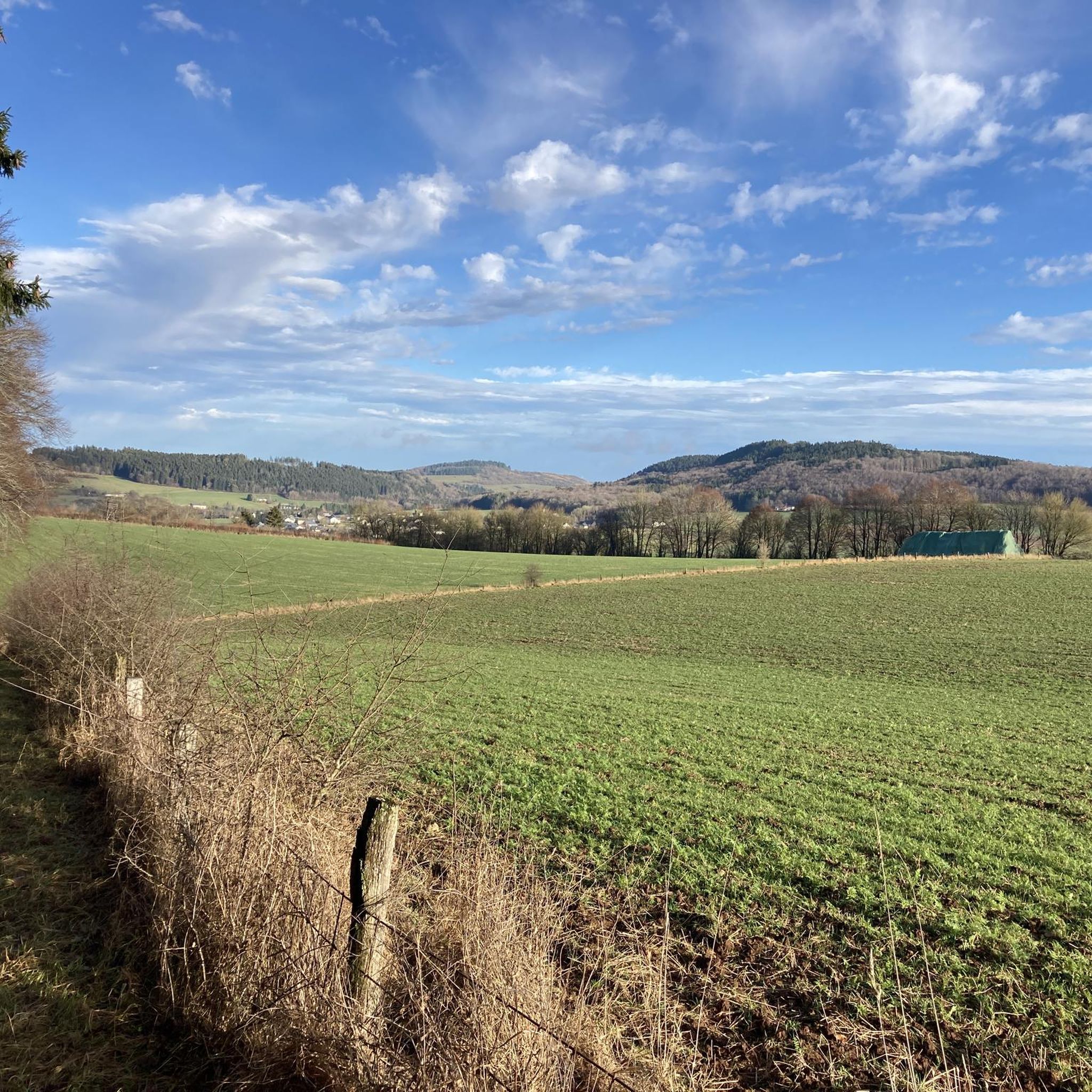
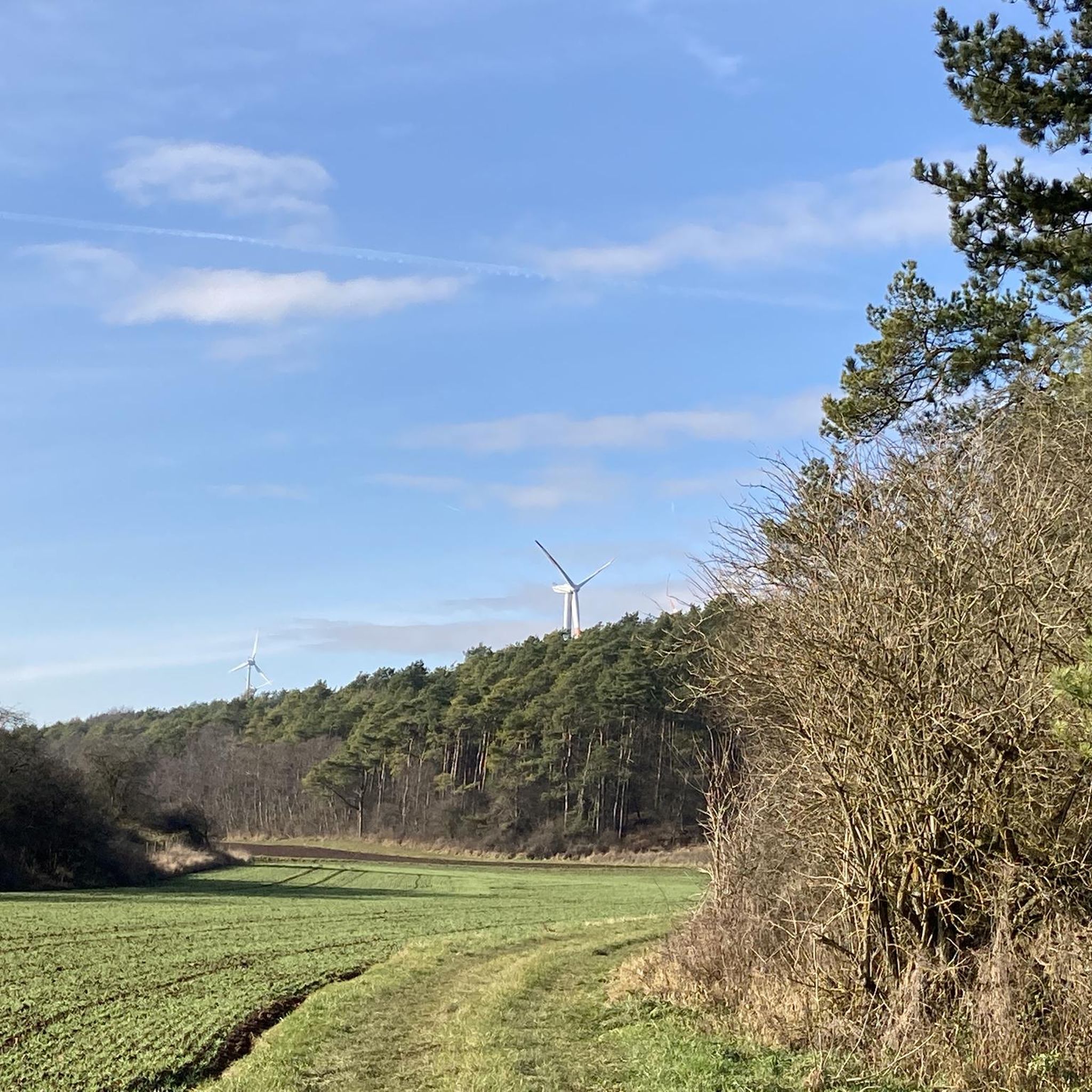

Tips from the Community

Great panoramic view overlooking Kasselburg Pelm
1
0

When the weather is good, you have a fantastic view over the hills of the Volcanic Eifel from here.
3
0

The view from here is phenomenal.
1
0

"To the west of the Langer Stein (640m) and Seimersberg (662m) we move to the Prümer Kopf. The gradients have so far proven to be very moderate, as they are today. In the surrounding spruce forest we repeatedly discover up to two meter high anthills ( https://www.das-tierlexikon.de/ameise/) and these are often surprisingly close together. We also encounter an unusually large number of hard-working dung beetles; we often have to be very careful not to step on them. (https://www .biologie-schule.de/mistkaefer-steckbrief.php)" https://www.komoot.de/tour/778942841
0
0

The Liberation Beech stands at the highest point of the Alter Foss mountain. According to the stories, it was a strategically important lookout point during the Thirty Years' War. From there you could see the towns of Pelm, Gerolstein, Rockeskyll, Hohenfels, Essingen, Betteldorf, Kirchweiler and Hinterweiler. https://kulturdb.de/einobjekt.php?id=48574
0
0

"With an area of approx. 102 hectares, the area around the Gerolsteiner Dolomites has been a nature reserve since 1990. + occurring animal species: bat + occurring plant species: juniper, orchids, character plants calcareous grassland, grove rush-beech forest, woodruff-beech forest, orchid-limestone-beech forest Around 380 million years ago there was a warm, subtropical shallow sea here, in which mighty reefs of stromatopores - relatives of sponges - and corals formed. After the dolomitization, sinking and folding of the rocks, the Devonian deposits were lifted out again. Today's Gerolsteiner Dolomites were formed, which rise steeply above the Kylltal north of the center of Gerolstein. The rocks "Hustley", "Munterley", "Drohende Ley", "Große Kanzel" and "Auberg" characterize the cityscape from afar and form the landmark of Gerolstein. The most famous summit of the Gerolsteiner Dolomites is the "Munterley" - with a height of 482 meters - and offers a breathtaking view over Gerolstein, the Kylltal and far into the Vulkaneifel. Stone Age people, who settled here 30,000 years ago, obviously enjoyed this view, as evidenced by stone tools and bones found at the nearby Buchenloch Cave. Visiting the Gerolsteiner Dolomites can be perfectly combined with hiking the Felsenpfad - the northern part of the "Gerolsteiner Dolomiten Acht". The almost eight-kilometer round tour offers many magical places and geological traces." https://www.eifel.info/a-gerolsteiner-dolomites
10
0

A mighty, beautiful building in the middle of the Eifel, including the building of the adjoining grammar school.
8
1

The Basilica of St. Salvator stands in Prüm, a town in the West Eifel region. In 721, the Frankish noblewoman Bertrada founded a monastery on her estate on the Prüm River with monks from Echternach. A second foundation was established in 752 by King Pippin, who had married a granddaughter of the first founder, with monks from Meaux near Paris, who lived according to the Rule of St. Benedict. In 1222, the monastery became the center of an independent principality, which was annexed by the Elector of Trier in 1576. The Elector and Archbishop of Trier then served as the abbot's administrator. Reconstruction of the abbey buildings began in 1721. As part of the Napoleonic secularization, the abbey was finally dissolved in 1802. Prüm, which initially belonged to the original parish of Rommersheim, was under the pastoral care of the Marienstift (St. Mary's Collegiate Church) from the mid-15th century. The Marienstift had been founded in 1016 by Abbot Urold of Prüm. The collegiate church became the parish church. In 1802, the monastery church became the parish church, and the collegiate church was demolished in 1826.
9
0
Frequently Asked Questions
What are some of the most popular viewpoints around Büdesheim?
Visitors frequently enjoy the Dietzenley Observation Tower, which offers impressive views of the Vulkaneifel landscape. Another highly-rated spot is the View of Gerolstein from the Munterley, providing a fantastic panorama over Gerolstein and the Kylltal. Both are appreciated for their scenic beauty and historical context.
Are there any family-friendly mountain walks or viewpoints near Büdesheim?
Yes, several spots are suitable for families. The View of Auberg and Munterley is considered family-friendly and offers beautiful views. Additionally, the Giant Bench with View of Berlingen, Rockeskyll, and Kasselburg provides a lovely spot for a break with panoramic views, perfect for all ages.
What kind of natural features can I expect to see on mountain peaks around Büdesheim?
The region around Büdesheim, particularly in the Eifel, is characterized by low mountain ranges, forests, and valleys. You can encounter unique geological formations like the Devonian reef at Munterley, formed 380 million years ago. The Auberg, for instance, is a rocky plateau made of dolomite, part of a nature reserve with rare orchids and nutrient-poor grasslands.
Are there any historical or cultural sites located on or near these elevated points?
Absolutely. The Dietzenley Observation Tower stands on a site where a Celtic housing estate existed about 2500 years ago. Further afield, the Jakobsberg (273 m) in Landkreis Mainz-Bingen is home to the Jakobsberg Abbey, offering a blend of natural beauty and cultural significance. The Basilica of St. Salvator, Prüm, while not a peak itself, is a significant historical and religious site in the nearby town of Prüm, with a rich history tied to Charlemagne and the Frankish empire.
What are the highest points in the broader region around Büdesheim?
While Büdesheim itself doesn't have dramatic alpine peaks, the highest point in the Landkreis Mainz-Bingen is the Salzkopf (634 m), offering elevated views and hiking opportunities. The Scharlachkopf (251 m) is noted for its prominence, meaning it rises significantly from its surroundings, often providing good views.
What outdoor activities can I do near the mountain peaks around Büdesheim?
The region offers diverse outdoor activities. You can explore numerous hiking trails, including sections of the famous Rheinsteig Trail in the nearby Rheingau-Taunus-Kreis, which provides spectacular views over the Rhine Valley. For cycling, there are many routes available, such as those found in the Road Cycling Routes around Büdesheim guide or the Cycling around Büdesheim guide. Running enthusiasts can also find suitable trails, detailed in the Running Trails around Büdesheim guide.
Are there specific hiking trails that lead to scenic viewpoints near Büdesheim?
Yes, many trails in the Eifel and Rheingau-Taunus-Kreis lead to rewarding viewpoints. The 'Gerolsteiner Dolomiten Acht' is a local circular trail that includes the Auberg, offering sublime views. The Rheinsteig Trail, particularly near Rüdesheim am Rhein, traverses elevations with stunning vistas of the Rhine Valley and historical sites.
What is the terrain like on the mountain peaks and elevated areas near Büdesheim?
The terrain varies from rolling landscapes and vineyards, characteristic of the Mainz-Bingen district, to more rugged, forested hills in the Eifel. You'll encounter paths through dense forests, open fields, and rocky outcrops, especially in areas like the Gerolstein Dolomites, which feature unique Devonian limestone reefs.
Can I find any unique or 'hidden gem' elevated spots in the area?
While not a 'hidden gem' in the traditional sense, the Wißberg (277 m) offers local hiking trails and scenic views over the rolling, vineyard-laden landscape, providing a different perspective than the more rugged Eifel. Its charm lies in its integration with the region's viticulture.
What do visitors enjoy most about the mountain peaks and viewpoints around Büdesheim?
Visitors particularly appreciate the impressive panoramic views, the tranquility, and the blend of natural beauty with historical significance. Many enjoy the opportunity to explore ancient sites like the Celtic housing estate on Dietzenley or the geological wonders of the Devonian reefs. The well-maintained trails and the chance to relax at scenic spots like the Giant Bench are also frequently highlighted.
Are there any specific mountain peaks known for their geological significance?
Yes, the area around Gerolstein is particularly notable. The View of Gerolstein from the Munterley stands on a Devonian reef formed 380 million years ago in a tropical lagoon. Similarly, the Auberg is a dolomite rocky plateau, part of the 'Gerolstein Dolomites' nature reserve, showcasing ancient reef formations exposed by geological processes.
Most popular routes around Büdesheim
Most popular attractions around Büdesheim

Get inspired with the komoot mobile app


Explore more
See even more amazing summits around Büdesheim with these guides:
