Top 4 Castles around Kerschenbach
Castles around Kerschenbach offer a journey into the Eifel region's history and architectural heritage. While Kerschenbach itself does not host castles, its vicinity provides access to several historical sites. The landscape features valleys and forested areas, providing picturesque settings for these ancient structures. Visitors can explore a range of castles, from well-preserved medieval fortresses to evocative ruins.
Best castles around Kerschenbach
- The most popular castles is Schmidtheim Castle, a castle that was originally built as a moated castle. At…
Last updated: August 9, 2026
Schmidtheim Castle
Highlight • Castle
Translated by Google •
Tip by

Glaadt Castle Ruins
Highlight • Castle
In the Middle Ages Glaadt was even more important than Jünkerath, because at that time there was only one settlement of huts. That is why the …
Translated by Google •
Tip by

Sign up now to discover places like this
Get recommendations on the best single tracks, peaks, & plenty of other exciting outdoor places.
Sign up for free
Historic centre of Kronenburg
Highlight • Historical Site
Showing Translation
Tip by

Start today with a free account
Your next adventure awaits.
Login or Signup
Tips from the Community

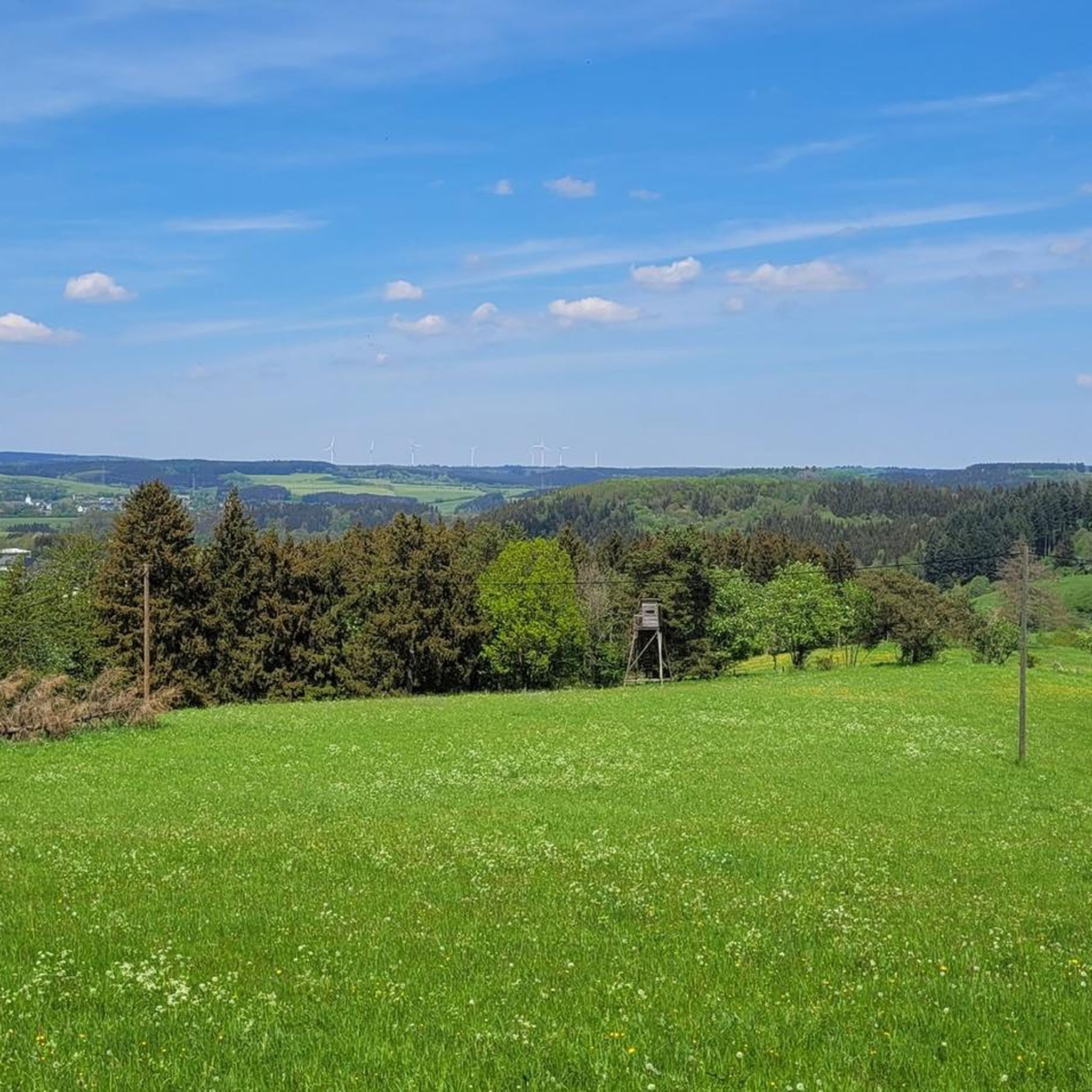
The historic center of Kronenburg is absolutely worth seeing. It lies above the Kronenburger See, directly around the destroyed castle ruins.
8
0

rtseite Schloss Schmidtheim Schloss Schmidtheim Dahlem The castle is picturesquely situated amidst green spaces and is surrounded by a moat. Today, the castle is not only an important landmark of the region but also a cultural venue. The architecture of the castle combines elements of the Renaissance and Baroque, making it a fascinating example of the region's architectural history.
0
0

For information on the castle ruins, see, for example, https://www.juenkerath.de/freizeit-und-tourismus/burgruine. An interesting detail about a special "stone" that was once found at the castle's gate and is now incorporated into a house wall can be found at https://www.heimatjahrbuch-vulkaneifel.de/VT/hjb1993/hjb1993.58.htm
0
0

The palace complex was built between the 16th and 18th centuries. The distinctive residential tower was built first. The complex was then expanded to include an outer bailey with a farmyard, two side wings, and a four-part fountain basin in the courtyard. The moats of the former two-part moated palace have now been filled in. The palace is still privately owned by the Count Beissel von Gymnich family. On the southeast wing, a coat of arms for Friedrich Wilhelm Beyssel von Gymnich (born 1638, died 1710) and Maria Magdalena von Metzenhausen (died 1716) is affixed to the exterior. In the outer bailey, a coat of arms is placed above the gateway for Georg Anton Dominikus Beyssel von Gymnich (born 1683, died 1754), Privy Councilor and Chamberlain of the Electorate of Trier, Chief Bailiff of Prüm, Schönecken, and Schönberg, and his second wife, Maria Anna Franziska Ludovika Baroness Raitz von Frentz zu Kendenich. Today, guests can stay overnight in the castle's holiday home and vacation apartment, and they can also have a civil wedding in the Blue Salon. It is also suitable for celebrations and conferences.
1
0

The castle complex was built between the 16th and 18th centuries. The particularly striking residential tower was built first. The complex was then expanded to include a bailey with a farm yard, two side wings and a four-part fountain basin in the courtyard. The ditches of the former two-part moated castle are now filled in. The castle is still privately owned by the Count Beissel von Gymnich family. Source: Wikipedia
4
0

Very beautiful castle, you can also rent holiday apartments here. For 4 - 14 people
3
0
Jünkerath Castle – Glaadt Castle In the Middle Ages, Glaadt was even more important than Jünkerath, which at the time was just a smelting settlement. Therefore, a castle was built on this spot by Count Dieterich von Schleiden in the 14th century. The castle was besieged and conquered several times, mainly by the Archbishops of Trier. In 1488 the Counts of Manderscheid-Blankenheim inherited the area through the division of Manderscheid. Due to dilapidation, the late medieval complex was demolished and rebuilt by Count Arnold as a moated castle between 1605 and 1610. The entrance with a drawbridge was in the western part. From 1694 - 1705 Count Salentin Ernst spent the last years of his life in the castle, where he also died. 1726 - 1735 Count Franz Georg had a major renovation carried out and the castle converted into a palace complex. The castle has a square floor plan and consisted of two floors, high arched windows adorned the west wing. In the courtyard there is a fountain and paving made of quartz stones with ornaments. Next to the castle there was a mill, a bakery and a brewery, as well as a riding arena and gardens with a baroque ambience. In the area around the ruins, the former moat and the approximate extent of the complex, indicated by the remains of the wall, are also clearly visible. Two years after completion, the castle burned down and has remained a ruin ever since. According to a legend, the fire was caused by a lightning bolt, as a punishment from God, since one is said to have blasphemed God at the inauguration ceremony. In the 1970s - 1980s, the ruins were uncovered and restored with the participation of many volunteers and associations.
2
0
The ruins of Glaadt Castle are the ruins of the former palace complex in Jünkerath and were built in the 13th century. 1726 - 1735 Count Franz Georg had a major renovation carried out and the castle converted into a palace complex. Two years after completion, the castle burned down and has remained a ruin ever since. According to a legend, the fire was caused by a lightning bolt, as a punishment from God, since one is said to have blasphemed God at the inauguration ceremony. Next to the castle there was a mill, a bakery and a brewery, as well as a riding arena and gardens with a baroque ambience. In the area around the ruins, the former moat and the approximate extent of the complex, indicated by the remains of the wall, are also clearly visible. Source: https://www.gerolsteiner-land.de/a-burgruine-glaadt
3
0
Frequently Asked Questions
What are some unique castles to visit near Kerschenbach?
The region offers a variety of historical sites. Beyond the popular Ruins of Kronenburg Castle, consider visiting Schmidtheim Castle, which is a privately owned moated castle and the highest of its kind in the Rhineland. The Glaadt Castle Ruins also offer a glimpse into a former significant palace complex, with visible remains of its moat.
Are there family-friendly castles around Kerschenbach?
Yes, several castles are suitable for families. The Ruins of Kronenburg Castle are considered family-friendly, offering an easy walk to the ruins and a charming medieval village to explore. The Jünkerath Castle Ruins (Glaadter Castle) also welcome families to browse freely.
Can I bring my dog to the castles or nearby trails?
The Ruins of Kronenburg Castle are dog-friendly, allowing you to explore the ruins and the surrounding village with your pet. Many of the hiking trails in the Eifel region are also suitable for dogs, offering plenty of opportunities for walks near historical sites.
What kind of historical experiences do the castles offer?
The castles provide a journey into the Eifel region's history. Kronenburg Castle Ruins are set within a well-preserved medieval village, offering a glimpse into medieval life. Eltz Castle, though not listed in the guide highlights, is a stunning medieval fortress that has never been destroyed and offers authentic interiors and guided tours. Lissingen Castle, a rare undestroyed double castle, showcases architectural styles from Gothic to Baroque and functions partly as a museum.
Are there good viewpoints or natural features near the castles?
Yes, the Ruins of Kronenburg Castle offer a beautiful panoramic view of the Eifel region, the Kyll valley, and Lake Kronenburg. Eltz Castle is nestled deep in the Eltz Forest valley, providing a romantic, fairytale-like atmosphere with numerous hiking opportunities through its remote, forested location.
What outdoor activities can I do near these castles?
The area around Kerschenbach and its castles is excellent for outdoor activities. You can find numerous running trails, cycling routes, and gravel biking paths. For example, there are routes around Kronenburger Lake and through the Kyll Valley. You can explore more options on the Running Trails around Kerschenbach, Cycling around Kerschenbach, and Gravel biking around Kerschenbach guide pages.
Are there hiking trails near the castles?
Absolutely. The Eifel region offers many hiking opportunities. Near the Ruins of Kronenburg Castle, you'll find hiking trails in the surrounding area. Eltz Castle's remote location also provides numerous hiking paths through the Eltz Forest. For more detailed routes, check the running trails guide, which includes routes like the Kronenburger Lake loop.
What are the parking options for visiting these castles?
For the Ruins of Kronenburg Castle, free parking spaces are available below the ruins, with a short and easy walk to the site. For other castles like Lissingen Castle, parking is generally available nearby, though it's always advisable to check specific castle websites for the most current information.
What is the best time of year to visit the castles around Kerschenbach?
The Eifel region is beautiful throughout the year. Spring and autumn offer pleasant weather for exploring and hiking. The medieval village of Kronenburg, near the Kronenburg Castle Ruins, traditionally hosts a Christmas market on the first weekend of Advent, offering a unique winter experience within the castle ring wall.
Are there places to eat or stay near the castles?
Yes, the charming village of Kronenburg, home to the Kronenburg Castle Ruins, has art galleries and craft shops, and likely local eateries. Lissingen Castle's lower complex includes a castle mill that now houses a restaurant and court bakery. The upper castle also offers holiday apartments. For specific accommodation and dining options, it's best to check local listings for the villages surrounding each castle.
Which castles offer a glimpse into medieval village life?
The Ruins of Kronenburg Castle are situated in a charming castle village that retains much of its medieval character. You can explore narrow lanes and up to 400-year-old houses, experiencing a medieval atmosphere with art galleries and craft shops now occupying former historical homes.
What makes Eltz Castle special compared to others in the region?
Eltz Castle stands out as one of Germany's most beautiful castles, having been owned by the same family for centuries and remarkably never destroyed in wars. Its unique architecture evolved over 500 years, featuring eight towers, oriels, and timber-frame structures. The interior boasts original furnishings, suits of armor, and a 15th-century kitchen, offering an authentic journey back in time.
Is Lissingen Castle unique in its architecture or history?
Lissingen Castle is unique as a well-preserved former moated castle that has never been destroyed. It is also a rare 'double castle,' having been divided into an upper and lower castle in 1559, which remain under separate ownership today. Its architecture spans Gothic, Renaissance, and Baroque styles, providing a fascinating insight into historical evolution.
What do visitors enjoy the most about the <a href="https://www.komoot.com/highlight/562327" target="_blank" rel="noopener">Ruins of Kronenburg Castle</a>?
Visitors particularly appreciate the great panoramic view of the Eifel region, the Kyll valley, and Lake Kronenburg from the ruins. The charming medieval village of Kronenburg itself is also a highlight, described as 'very cute, a little like a film set,' with its narrow lanes and historic houses.
What are the <a href="https://www.komoot.com/highlight/3056712" target="_blank" rel="noopener">Glaadt Castle Ruins</a> known for?
The Glaadt Castle Ruins, also known as Jünkerath Castle Ruins, were once a significant palace complex built in the 13th century. They are known for their visible former moat and the approximate extent of the complex indicated by wall remains. The castle was converted into a magnificent hunting lodge before burning down in the 18th century, possibly due to a lightning strike according to legend.
Most popular routes around Kerschenbach
Most popular attractions around Kerschenbach

Get inspired with the komoot mobile app


Explore more
Looking for the best castles somewhere else? Discover other guides around Kerschenbach:
