Top 20 Castles around Pielenhofen
Castles around Pielenhofen offer a journey through history in the picturesque Naab Valley, framed by steep Jura cliffs. While Pielenhofen itself is home to the significant Pielenhofen Abbey, the surrounding Landkreis Regensburg features several notable castles and ruins. This region provides a diverse range of historical sites, from well-preserved medieval fortifications to impressive palace complexes. Visitors can explore architectural heritage and scenic landscapes throughout the area.
Best castles around Pielenhofen
- The most popular castles is Wolfsegg Castle, a castle…
Last updated: July 6, 2026
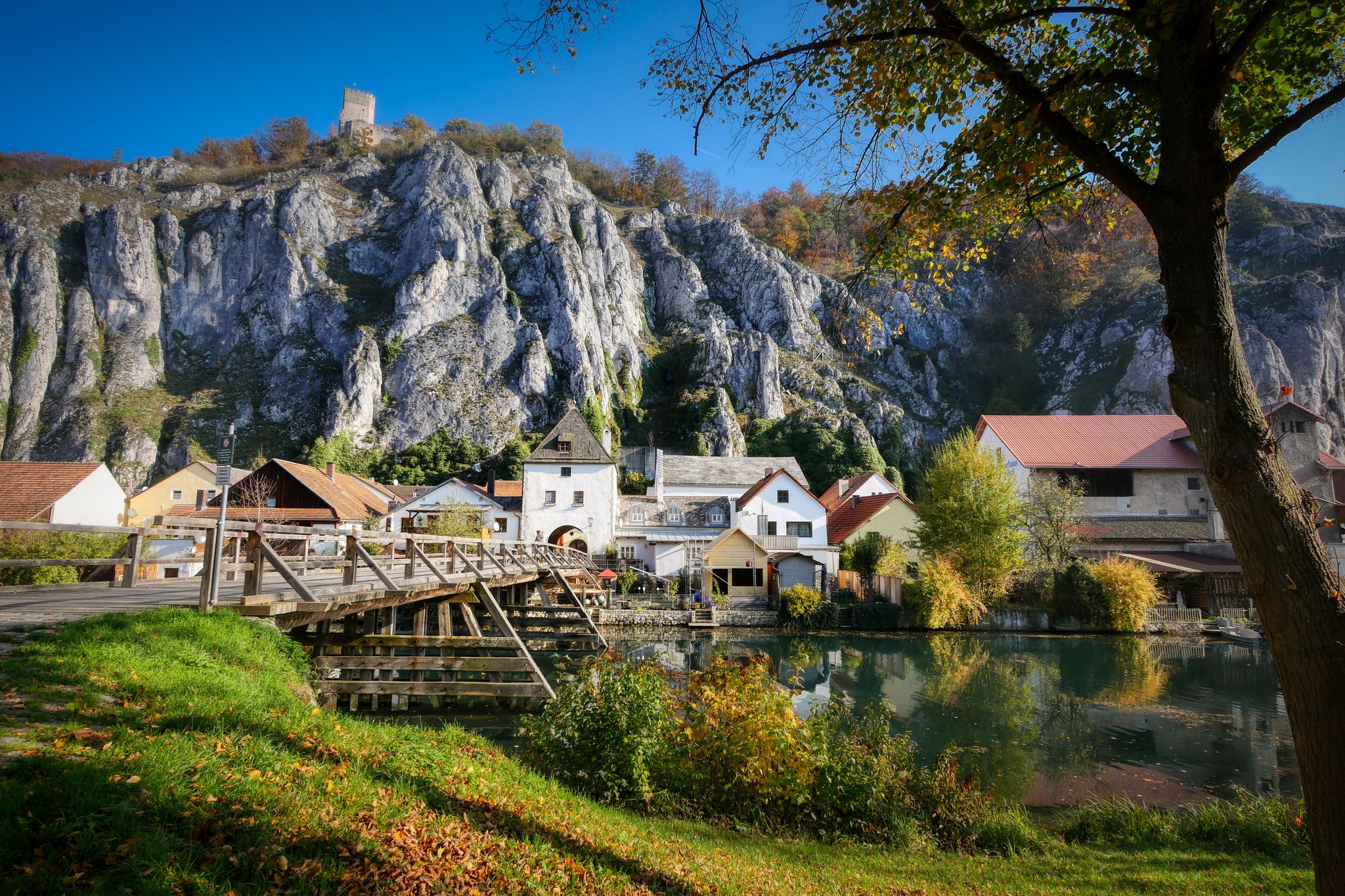
View of Kallmünz Castle Ruins
Highlight • Viewpoint
Translated by Google •
Tip by

Wolfsegg Castle
Highlight • Castle
Translated by Google •
Tip by

Sign up now to discover places like this
Get recommendations on the best single tracks, peaks, & plenty of other exciting outdoor places.
Sign up for free
St. Emmeram Palace (Thurn and Taxis Palace)
Highlight • Castle
Translated by Google •
Tip by

Eichhofen Castle Brewery
Highlight • Pub
Translated by Google •
Tip by

Regendorf Castle
Highlight • Castle
The castle was built in 1515 by the Regensburg master mint master Martin Lerch. The choleric moneymaker had killed his servant in …
Translated by Google •
Tip by

Sign up for free to discover even more castles around Pielenhofen.
Sign up for free
Already have an account?
Start today with a free account
Your next adventure awaits.
Login or Signup
Other adventures around Pielenhofen

Tips from the Community

If the battery of the e-bike starts to run low, there is a free charging station opposite the lock, which really impressed me.
0
0

First mentioned in 1367 and still well preserved today https://www.burg-wolfsegg.de
0
0

You can say it out loud, it is a gem on the Naab.
4
0

Wolfsegg Castle is a well-preserved medieval castle, with origins dating back to the late 13th century. Today, the castle houses a museum that offers insights into medieval life, including everyday objects, archaeological finds and military equipment. The Knights' Hall is decorated with wall paintings from the 15th century. The castle is also regularly used for cultural events. According to an old legend, the "White Lady" is said to haunt the castle walls, a mysterious apparition that always gives rise to mysterious stories.
4
0

Regendorf Castle The Lords of Regendorf, initially referred to as "Lords of Regeldorf", were first mentioned at the beginning of the 13th century. In 1490, Hans Regeldorfer of Regeldorf and Wolfsegg is entered in the Land Register. In 1475, he appears in the entourage of Duke Ludwig IX at the Landshut wedding. Hans Regeldorfer was married twice, he left behind two daughters and no male descendants, and so Regendorf passed into other hands as a male fief after his death. In 1515, the castle was rebuilt for the then owner, the Regensburg Imperial Mint Master Martin Lerch. He had to have a crucifixion group erected for the manslaughter of a mint clerk in 1513. This is now in the apse of the Minorite Church in Regensburg. In 1699, Franziska Adelheid von Braittenburg sold the Regendorf castle and manor to Philipp Anton Leopold Freiherr von Oberndorff, who came from the Upper Palatinate line of the Oberndorff family. They rebuilt the castle around 1840 and added a floor. In 1884, Regendorf Castle was sold to the Imperial Councilor Freiherr von Faber in Stein near Nuremberg and later to the Counts of Faber-Castell. In 1916, it was purchased from them by the royal Bavarian treasurer Eduard von Harnier. As the von Harnier family was known to the National Socialist authorities as anti-National Socialists, they had to vacate the castle in 1936 and sell it to the city of Regensburg. Regendorf Castle is a complex dating back to 1515 and consists of two parallel wings that are connected in the middle by an intermediate building. The main building is a three-story hipped roof building with an H-shaped floor plan. The eastern wing has two four-storey round towers and a garden staircase. The castle chapel at the north end of the east wing dates from 1688. The former stables are a two-storey stable barn with a half-hipped roof from 1830. Remains of the terraced landscape garden with staircase from the 18th century can be found to the west of the castle. The park enclosure, with a fence to the south, otherwise a stone wall with stone pillars, dates from around 1840. Source: Excerpts from www.wikipedia.de
2
0
Eichhofen Castle One of the special features of Bavarian country castles is the so-called hammer castles, which were built from the 16th to the 18th century, primarily in the Upper Palatinate, as representative residential buildings for hammer mill owners. Eichhofen Castle is one of these. Eichhofen Castle was built around 1560 by the influential Sauerzapf family as a late Gothic, rectangular and three-storey gabled building, with stepped gables facing north and south. There is a Romanesque chapel on the west side. In 1866, the property was redesigned in a neo-Gothic style, and the onion domes were probably removed. The eaves side building on a slope is characterized by a protruding tower on the northeast side and a bay window on the southeast side. Inside, the generous three-room layout from the time of construction has been preserved. The hallway on the ground floor is a vaulted corridor, with rooms on two sides. The late Gothic planked beam ceiling and the solid fittings from the 18th century have also been preserved. There is a pavilion from the 19th century in the garden. The castle was pretty much destroyed in the Thirty Years' War and rebuilt in the middle of the 16th century. The former iron hammer ceased operations in 1848 and the grain mills built by the Regensburg wholesaler Wilhelm von Neuffer have been idle since 1970. The Eichhofen Castle Brewery, however, which is run independently by the Schönharting family, can look back on a brewing tradition spanning more than 400 years. According to even older documents, the brewery is one of the oldest breweries in Bavaria, as the brewery was mentioned as early as the beginning of 1300. In recent years, the castle and the surrounding farm buildings have been extensively renovated. With the establishment of a workshop and exhibition space for artists on the upper floor of the former mill, Eichhofen also became a small, private cultural center that has been able to present a series of exhibitions to the public in recent years. The castle is listed in the Nittendorf community's monument list as a protected architectural monument and is now privately owned by the family of Dr. Günther and Ingeborg Schönharting. Source: Excerpts from www.wikipedia.de / Castles tell stories... - Book & Art Publishers Oberpfalz
3
0

No matter what the weather or light, it is always beautiful to look at and take photos of. A visit to the castle is also recommended. It is best to check the opening times online beforehand
0
0

In the town of Wolfsegg, the castle of the same name sits on a rock. From the beginning of May to the beginning of October, you can visit the castle on weekends and public holidays. You might even see the "White Lady". You can find more information about the castle, opening times, prices and events at https://www.burg-wolfsegg.de/.
1
0
Frequently Asked Questions
What kind of historical sites can I expect to find around Pielenhofen?
The Pielenhofen area offers a diverse range of historical sites. While Pielenhofen itself is home to the significant Pielenhofen Abbey, the surrounding Landkreis Regensburg features traditional medieval castles like Wolfsegg Castle, impressive ruins such as Kallmünz Castle, and even unique sites like the Eichhofen Castle Brewery.
Are there any well-preserved medieval castles in the Pielenhofen area?
Yes, Wolfsegg Castle is one of the best-preserved fortifications in the Upper Palatinate. Dating back to the late 13th century, it showcases a blend of Romanesque and Gothic styles and was never destroyed and rebuilt. It also houses a museum with insights into medieval life.
Which castles offer the best panoramic views?
For breathtaking panoramic views, the Kallmünz Castle Ruins are highly recommended. Perched on the Schlossberg, they offer expansive views of the picturesque market town of Kallmünz and the confluence of the Naab and Vils rivers. Similarly, the Donaustauf Castle Ruins provide stunning vistas of the Danube River and the Bavarian countryside from their hilltop location.
Are there any unique or unusual castle experiences near Pielenhofen?
Absolutely. The Eichhofen Castle Brewery offers a unique experience, combining a historical site with a brewing tradition spanning over 400 years and an associated inn. Wolfsegg Castle is also known for its legend of the 'White Lady,' adding an intriguing, supernatural allure to its well-preserved medieval architecture.
What is the historical significance of Pielenhofen Abbey?
Pielenhofen Abbey is a former Cistercian nunnery with a rich history dating back to 1240. While not a castle, it's an imposing Baroque monastery complex. It has served various religious and educational purposes throughout its history and features magnificent Baroque architecture, including its church built between 1717 and 1738.
Are there family-friendly castles to visit near Pielenhofen?
Many of the castles in the region are suitable for families. Wolfsegg Castle, St. Emmeram Palace, and the Eichhofen Castle Brewery are all listed as family-friendly. Exploring the ruins, museums, and legends can be engaging for all ages.
What is the best time of year to visit the castles around Pielenhofen?
The castles around Pielenhofen are beautiful year-round. However, late spring to early autumn (May to October) generally offers the most pleasant weather for exploring ruins, hiking to viewpoints, and enjoying outdoor cultural events. Some castles, like Wolfsegg Castle, have specific opening times for their museums during this period.
Are there options for food and drink near the castles?
Yes, several castles have nearby dining options. The Eichhofen Castle Brewery has its own associated inn offering local dishes and excellent beer. The charming town of Kallmünz, overlooked by its castle ruins, is known for its cafes, beer gardens, and restaurants. You'll find plenty of places to stop for refreshments.
What outdoor activities can I do near these castles?
The region around Pielenhofen is excellent for outdoor activities. You can find numerous hiking and cycling routes that pass by or lead to these historical sites. For example, there are routes like the 'View of Kallmünz Castle Ruins – Stone Bridge in Kallmünz loop from Pielenhofen' for cycling, or various hiking trails in the Naab Valley. You can explore more options in the Hiking around Pielenhofen or Cycling around Pielenhofen guides.
Are there hiking trails near the castles, and what are their difficulty levels?
Yes, there are many hiking trails. The ascent to the Kallmünz Castle Ruins, for instance, offers scenic walks and is part of the 'Burgensteige' network of hiking trails. Routes vary in difficulty; for example, the 'Kneipp Steps in the Naab – Narrow forest trail in the Naab Valley loop from Pielenhofen' is a moderate hike, while the 'Narrow forest trail in the Naab Valley – Pielenhofen loop from Pielenhofen' is considered difficult. You can find detailed information on routes and their difficulty in the Hiking around Pielenhofen guide.
Can I visit multiple castles in one day?
Yes, it's possible to visit multiple castles, especially those in closer proximity. For example, the Donaustauf Castle Ruins can be combined with a visit to the nearby Walhalla monument for a fuller historical and scenic experience. Planning a route that connects a few sites, perhaps by bike or car, would allow for a comprehensive day trip.
Are there any castles with associated legends or ghost stories?
Yes, Wolfsegg Castle is famously associated with the legend of the 'White Lady,' a ghost said to have haunted the castle since the 15th century. This adds an intriguing, supernatural element to your visit.
What do visitors enjoy most about the castles around Pielenhofen?
Visitors frequently appreciate the rich history and well-preserved architecture, especially at Wolfsegg Castle. The panoramic views from ruins like Kallmünz and Donaustauf are also a major draw. Many enjoy the combination of historical exploration with outdoor activities like hiking and cycling in the picturesque Naab Valley.
Most popular routes around Pielenhofen
Most popular attractions around Pielenhofen

Get inspired with the komoot mobile app


Explore more
Looking for the best castles somewhere else? Discover other guides around Pielenhofen:
