Attractions and Places To See around Markt Rettenbach - Top 20
Attractions and places to see around Markt Rettenbach include cultural heritage sites and natural landscapes in the Unterallgäu district of Bavaria, Germany. The region offers a blend of historical landmarks and outdoor activities. Situated in the Allgäu region, it provides opportunities to explore forests, lakes, and scenic routes. The municipality itself contains several cultural heritage monuments.
Best attractions and places to see around Markt Rettenbach
- The most popular attractions is Basilica of St. Alexander and St. Theodor, Ottobeuren, a…
Last updated: August 29, 2026
Ottobeuren Market Square and Basilica
Highlight • Settlement
Probably none of the visitors who stay in Ottobeuren today, for a shorter or longer period of time, can imagine how this approximately 1,500-year-old, …
Translated by Google •
Tip by

Marian Fountain, Mindelheim
Highlight • Monument
Translated by Google •
Tip by

Sign up now to discover places like this
Get recommendations on the best single tracks, peaks, & plenty of other exciting outdoor places.
Sign up for free
Basilica of St. Alexander and St. Theodor, Ottobeuren
Highlight • Religious Site
Translated by Google •
Tip by

Katzbrui Mill
Highlight • Restaurant
Translated by Google •
Tip by

Ottobeuren Basilica
Highlight • Religious Site
Translated by Google •
Tip by

Sign up for free to discover even more attractions around Markt Rettenbach.
Sign up for free
Already have an account?
Start today with a free account
Your next adventure awaits.
Login or Signup
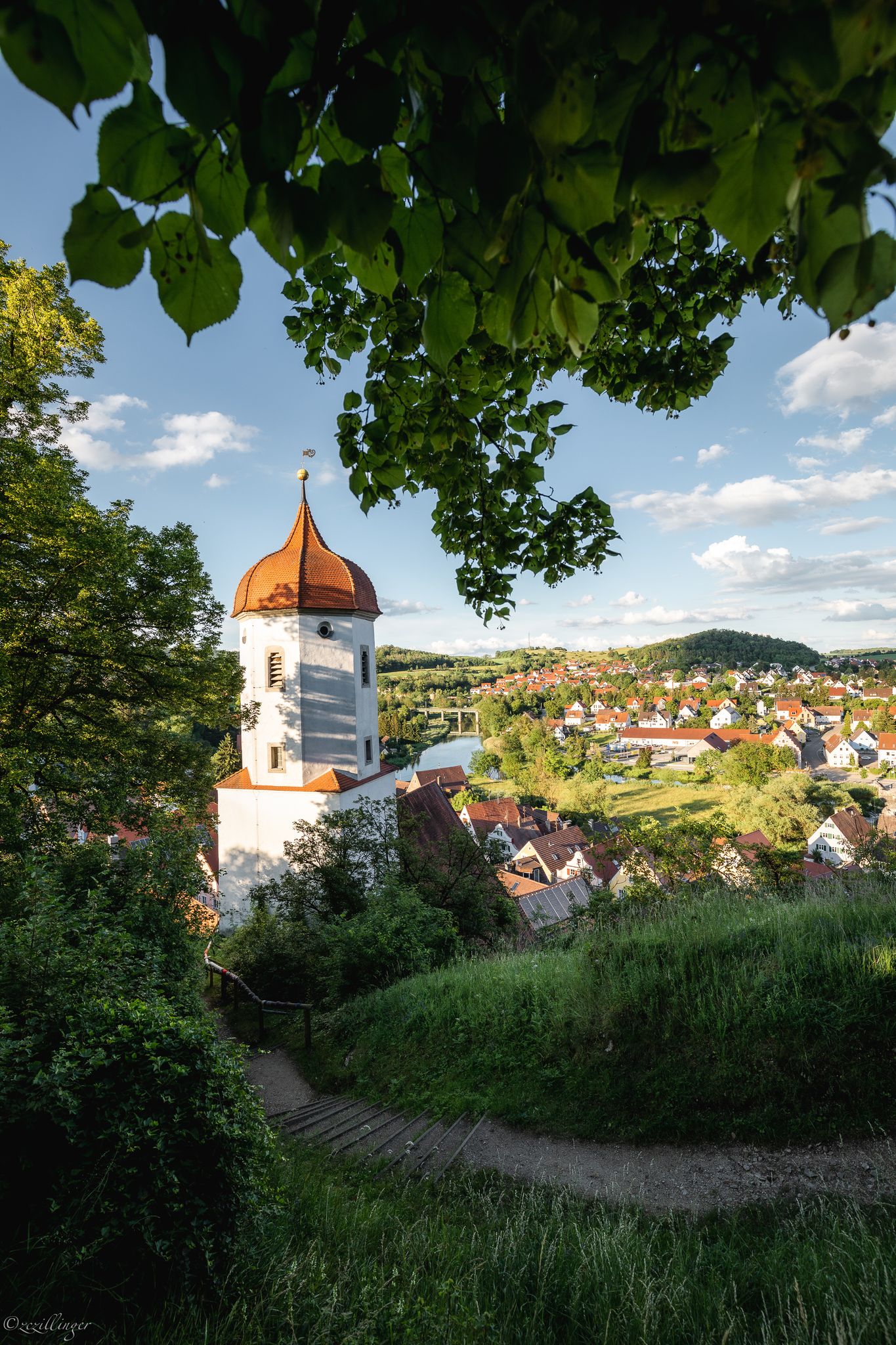
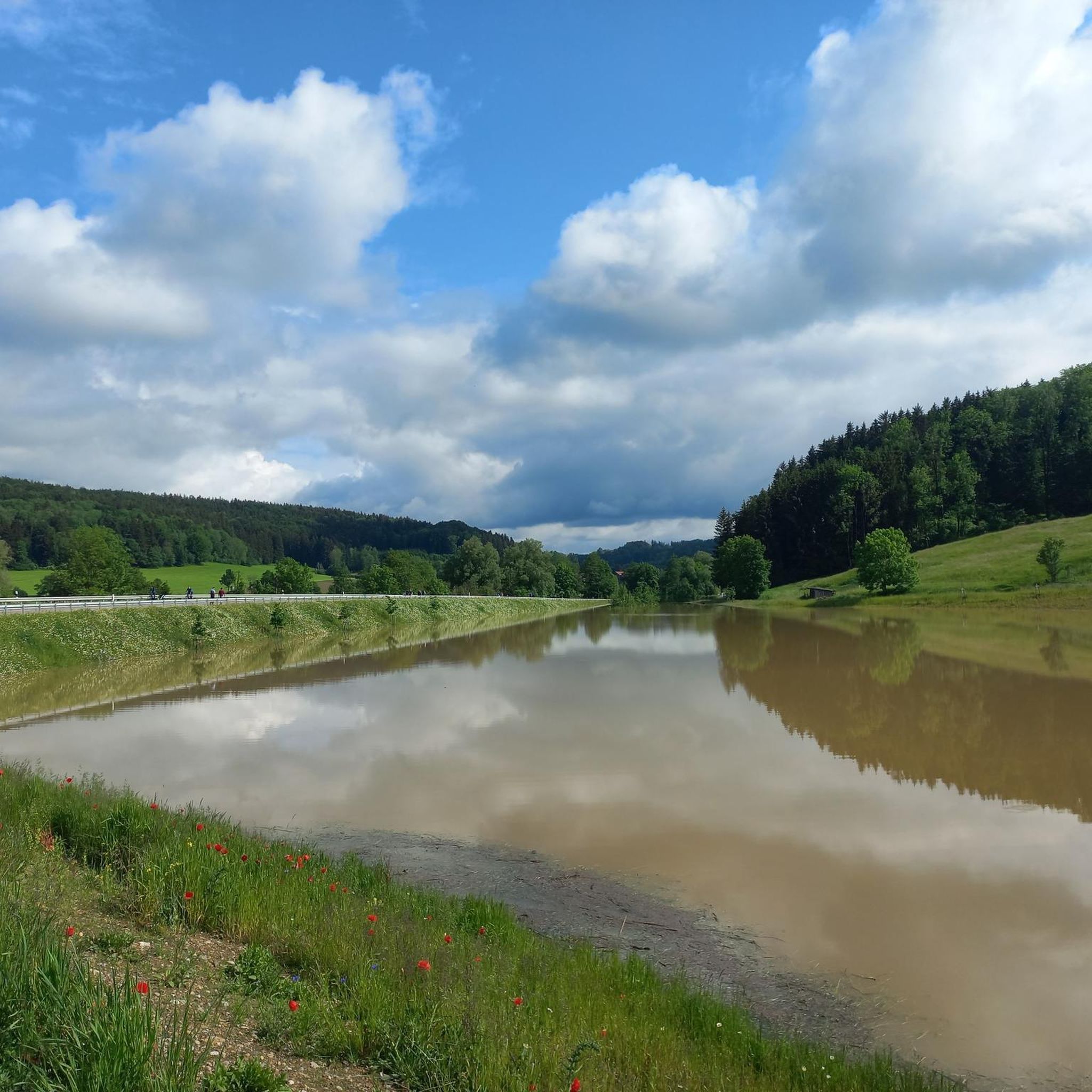
Other adventures around Markt Rettenbach

Tips from the Community

Ottobeuren Market Square / Market Chronicle Probably none of the visitors who stay in Ottobeuren today, for a shorter or longer period of time, can imagine how this approximately 1,500-year-old, historic town was founded. When visitors arrive in Ottobeuren from all directions by private car, taxi, or bus, their first gaze is usually drawn to the mighty basilica with its monastery buildings. No one considers that the very ground they have just set foot on was once impassable terrain, moorland, swamp, and densely wooded area. Nevertheless, a man had dared to gain a foothold here, clear the forest, and establish a human settlement. What Stone Age hunters and fishers had failed to achieve much earlier—namely, to settle here—had become the life's work of a man named Uot. At the site where the market square stands today, the first giant trees soon collapsed under the axe blows of the Uot farmers. Huts were built from rough beams, livestock was raised, and fields were cultivated. Only a few huts in the middle of the forest housed the Uot clan. Uot, the Swabian, founded Ottobeuren in the 5th century. Text / Source: Ottobeuren Tourist Office, Marktplatz 14, Ottobeuren https://www.ottobeuren.de/de/marktgemeinde/rathaus/markt-chronik.php
14
0
Basilica of St. Alexander and St. Theodore, Ottobeuren The magnificent basilica, dedicated to the two Roman martyrs Alexander (162) and Theodore (306), is certainly one of the most beautiful Baroque churches in southern Germany. With its two 82-meter-high onion domes, it stands on a gently rising ridge west of the market square, visible from afar above the valley of the western Günz River. Due to its dominant, free position within the entire building complex, the basilica plays an undeniable presiding role. This concept of placing the church in front of the monastery was not, however, an Ottobeuren invention. Rather, it can be traced back to the famous Swabian architectural theorist Joseph Furtenbach, who published it in 1628 in his work "Architectura Civilis" as the ideal form for a women's monastery. Other monasteries were also built according to this pattern: Kempten in 1651, Seedorf/CH in 1682, Obermarchtal in 1686, Holzen in 1696, Klosterwald in 1714, Sießen in 1716, and Fiecht/Tyrol in 1707. The foundation stone was laid on September 27, 1737, at the present main portal. During the reigns of Abbots Rupert Neß and Anselm Erb, it was built as a monastery church from 1737 to 1766 by Simpert Kraemer (until 1748) and Johann Michael Fischer. The very rich late-Bavarian furnishings include dome and ceiling frescoes and altarpieces by Johann Jakob and Franz Anton Zeiller from Tyrol, stucco figures by Johann Joseph Christian, and stucco work by Johann Michael Feuchtmayer the Younger. It boasts two widely renowned Baroque choir organs by Karl Joseph Riepp: the four-manual Trinity Organ with 47 stops and the two-manual Holy Spirit Organ with 27 stops, both with a French sound. The choir stalls are by Martin Hermann (carpentry) and Johann Joseph Christian (reliefs). The focal point of the church is the Romanesque crucifix (ca. 1220). The church's unusual north-south orientation is due to its location within the overall complex, whose floor plan is in the shape of a cross. In 1926, the monastery church was elevated to a Papal Basilica/Basilica Minor by Pope Pius XI. Text / Source: Benedictine Abbey of Ottobeuren, Sebastian-Kneipp-Str. 1, Ottobeuren https://www.abtei-ottobeuren.de/content/klosteranlage/die-basilika/
14
0

Beautiful, late baroque basilica. Take your time. There are thousands of pictures and figures to discover. 😍🥰👍
8
0

Wonderful basilica with a museum. It's absolutely worth a visit.
3
0
The first church must have been built when the monastery was founded in 764. A new building is documented in 1089.[1] As early as 1204, another new building with a St. Michael's choir in the west was started. There was an Ursula tomb under St. Michael's Choir. In 1525 the monastery and church were looted during the Peasants' War. The renovation of the Gothic church began in 1553. First, the Michael's choir with the Ursula crypt was demolished and replaced by a wider monks' choir. The high choir, which was still east at the time, was provided with a crypt. The octagonal ends of the two east towers were crowned with onion domes. On September 21, 1558, the church, which was renovated in the Renaissance style, was inaugurated. During the Thirty Years' War, the church and monastery were devastated several times between 1630 and 1635. In 1682, the construction of a new baroque monastery was planned, which began in 1686 with the baroque conversion of the old church. However, this conversion was stopped shortly afterwards. From 1711 the entire monastery complex was demolished piece by piece and replaced by a new, baroque building. The monastery church was rebuilt between 1737 and 1766. In 1802 the imperial abbey was dissolved in the course of secularization, the church became the property of the Electorate of Bavaria and later the Kingdom of Bavaria. Some of the 48 monks at the time were allowed to continue monastic life in Ottobeuren, Upper Swabia, which was only possible under difficult conditions. So the monastery church continued to exist as such. From 1834/1835 the monastery and monastery church were continued as a dependent priory of the Benedictine Abbey of Augsburg. On January 25, 1926, Pope Pius XI. the abbey church with the apostolic exhortation Refert ad Nos was given the title Basilica minor.[2] Between 1960 and 1964 the basilica was extensively renovated inside and out. The largest renovation of the church began in 2004 and was completed in 2010. The entire roof structure and towers of the church were also renovated (Wikipedia).
4
0

A beautiful fountain in the middle of Mindelheim's market square.
1
0

The basilica is always worth a visit when you are in Ottobeuren
5
0
Popular marketplace with a number of restaurants and pubs as well as a recommendable ice cream parlor
6
0
Frequently Asked Questions
What historical and cultural sites can I explore near Markt Rettenbach?
The region is rich in history. A must-see is the magnificent Basilica of St. Alexander and St. Theodor, Ottobeuren, renowned as one of Southern Germany's most beautiful Baroque churches with impressive frescoes and altarpieces. You can also visit the over 500-year-old Katzbrui Mill, which features a freely accessible museum and offers local dishes. Additionally, the historic Ottobeuren Market Square and Basilica provides a charming atmosphere with views of the basilica.
Are there any family-friendly attractions in the area?
Yes, several attractions are suitable for families. The Basilica of St. Alexander and St. Theodor, Ottobeuren and the Katzbrui Mill are both listed as family-friendly. The mill, with its museum and restaurant, can be an engaging stop for all ages. The Ottobeuren Market Square and Basilica is also a pleasant place for families to stroll and enjoy the local atmosphere.
What kind of outdoor activities are available around Markt Rettenbach?
The region is ideal for outdoor enthusiasts. You can enjoy extensive networks of hiking and cycling paths through forests, clear lakes, and scenic mountain views. For specific routes, explore the hiking trails around Markt Rettenbach, road cycling routes, or running trails. The Allgäu region, where Markt Rettenbach is located, is known for its green meadows and idyllic forests, perfect for various activities.
Where can I find easy hiking trails or circular walks near Markt Rettenbach?
For easy hikes, consider routes like the 'Allgeierschlaghütte – Elderschachen Hut loop from Kreuz' or the 'Bench Under the Nagelfluh Rock – Günz Trail loop from Engetried', both listed as easy in the hiking guide. The Schlossberg Loop Trail, mentioned in regional research, is also a leisurely circular path offering beautiful views of Markt Rettenbach and the surrounding countryside, suitable for all skill levels.
Are there any wheelchair-accessible attractions or trails?
The Marian Fountain, Mindelheim is listed as wheelchair accessible, offering a beautiful spot in the center of Mindelheim's old town. While specific wheelchair-accessible trails are not detailed in the provided data, many town centers and market squares, like the Ottobeuren Market Square, often offer accessible pathways.
What is the best time of year to visit Markt Rettenbach for outdoor activities?
The Allgäu region is beautiful year-round, but for optimal outdoor activities like hiking and cycling, the warmer months from late spring to early autumn (May to October) are generally best. During this period, you'll find pleasant temperatures and lush green landscapes. Winter offers opportunities for snow-related activities, though specific winter hiking trails are not detailed.
Are there any cafes or places to eat near the main attractions?
Yes, you'll find options for refreshments. The Katzbrui Mill itself is a restaurant known for its mill beer and local trout dishes. The Ottobeuren Market Square is surrounded by 'good localities' and facilities, and the Basilica of St. Alexander and St. Theodor also has a cafe listed among its amenities, making it convenient for visitors.
What natural features can I expect to see in the Markt Rettenbach area?
Markt Rettenbach is nestled in the beautiful Allgäu region, characterized by green meadows, idyllic forests, and majestic mountains. You can explore diverse landscapes, including forests, clear lakes, and scenic mountain peaks. The Nagelfluhkette Nature Park, near the Hochgrat Summit, offers varied landscapes with rivers, lakes, gorges, and unique flora and fauna.
Can I find any hidden gems or less-known outdoor spots?
While the Katzbrui Mill is popular, its location 'hidden in a hollow' gives it a charming, secluded feel. For outdoor exploration, venturing into the extensive network of hiking and cycling paths, such as those found in the hiking guide, can lead you to quieter spots and scenic viewpoints away from the main crowds.
What do visitors enjoy most about the attractions around Markt Rettenbach?
Visitors frequently praise the historical significance and architectural beauty of sites like the Basilica of St. Alexander and St. Theodor, often described as 'incredibly beautiful' and a 'work of art'. The Katzbrui Mill is appreciated for its historical charm, museum, and delicious local food. The overall peaceful and welcoming atmosphere of the region, combined with opportunities for outdoor activities, is also highly valued.
Are there opportunities for cycling or road biking near Markt Rettenbach?
Absolutely! The area offers excellent road cycling opportunities. You can find various routes, including the 'View of the Alps – Ottobeuren Basilica loop from Frechenrieden' or the 'Basilica of Ottobeuren – View of Ottobeuren Abbey loop from Markt Rettenbach'. Explore more options in the Road Cycling Routes around Markt Rettenbach guide, which features routes of varying distances and difficulties.
What are some of the historical monuments within Markt Rettenbach itself?
Beyond the major attractions, Markt Rettenbach is home to several cultural heritage monuments. These include various chapels such as Kapelle Hinterbuchenbrunn, Kapelle Lannenberg, Kapelle St. Wendelin (Wineden), and Kapelle Vorderbuchenbrunn. Other notable structures include St. Gordian und Epimachus in Frechenrieden, St. Leonhard in Gottenau, St. Peter in Altisried, and the Pfarrhaus (rectory) in Frechenrieden and Markt Rettenbach.
Most popular routes around Markt Rettenbach
Most popular attractions around Markt Rettenbach

Get inspired with the komoot mobile app


Explore more
Still not found the Highlight you’re looking for? See guides of the top attractions in other regions:
