Attractions and Places To See in Antofagasta - Top 20
Best attractions and places to see in Antofagasta include a diverse range of natural wonders, historical sites, and cultural landmarks. The region, situated in northern Chile, offers a blend of desert landscapes, coastal features, and significant cultural heritage. Visitors can explore ancient fortresses, unique geological formations, and vibrant natural areas. The city serves as a gateway to the Atacama Desert and its distinct features.
Best attractions and places to see in Antofagasta
- The most popular attractions is Church of San…
Last updated: July 4, 2026
Church of San Pedro de Atacama
Highlight • Religious Site
Translated by Google •
Tip by

Pukará de Quitor
Highlight • Historical Site
Translated by Google •
Tip by

Sign up now to discover places like this
Get recommendations on the best single tracks, peaks, & plenty of other exciting outdoor places.
Sign up for free
El Tatio Geyser Field
Highlight • Natural Monument
Translated by Google •
Tip by

Chaxa Lagoon
Highlight • Lake
Translated by Google •
Tip by
Laguna Miñiques
Highlight • Lake
Translated by Google •
Tip by
Laguna de los Flamencos, Los Flamencos National Reserve
Highlight • Lake
Translated by Google •
Tip by
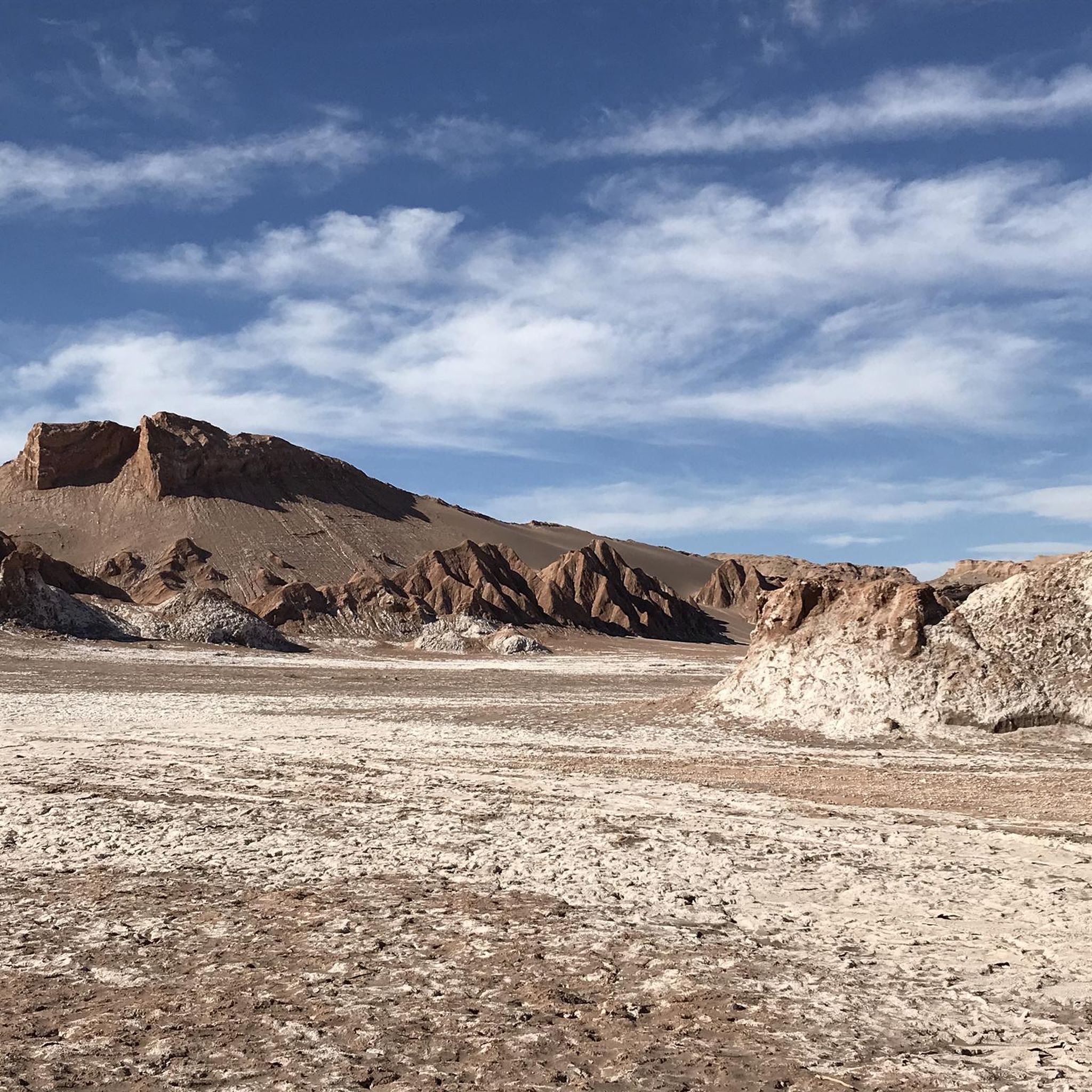
Valley of Death
Highlight • Canyon
Translated by Google •
Tip by

La Casa de Juanita
Highlight • Restaurant
Translated by Google •
Tip by

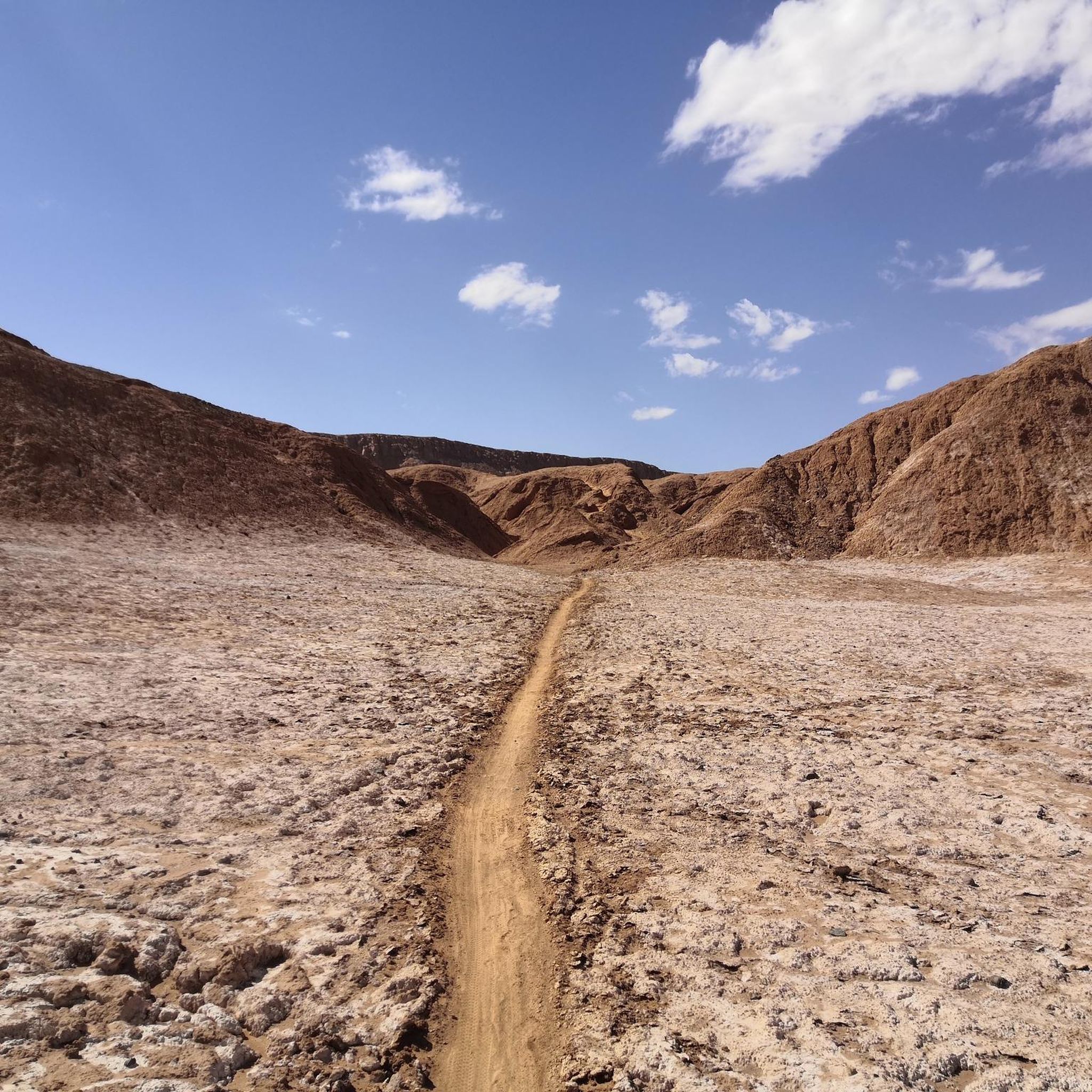
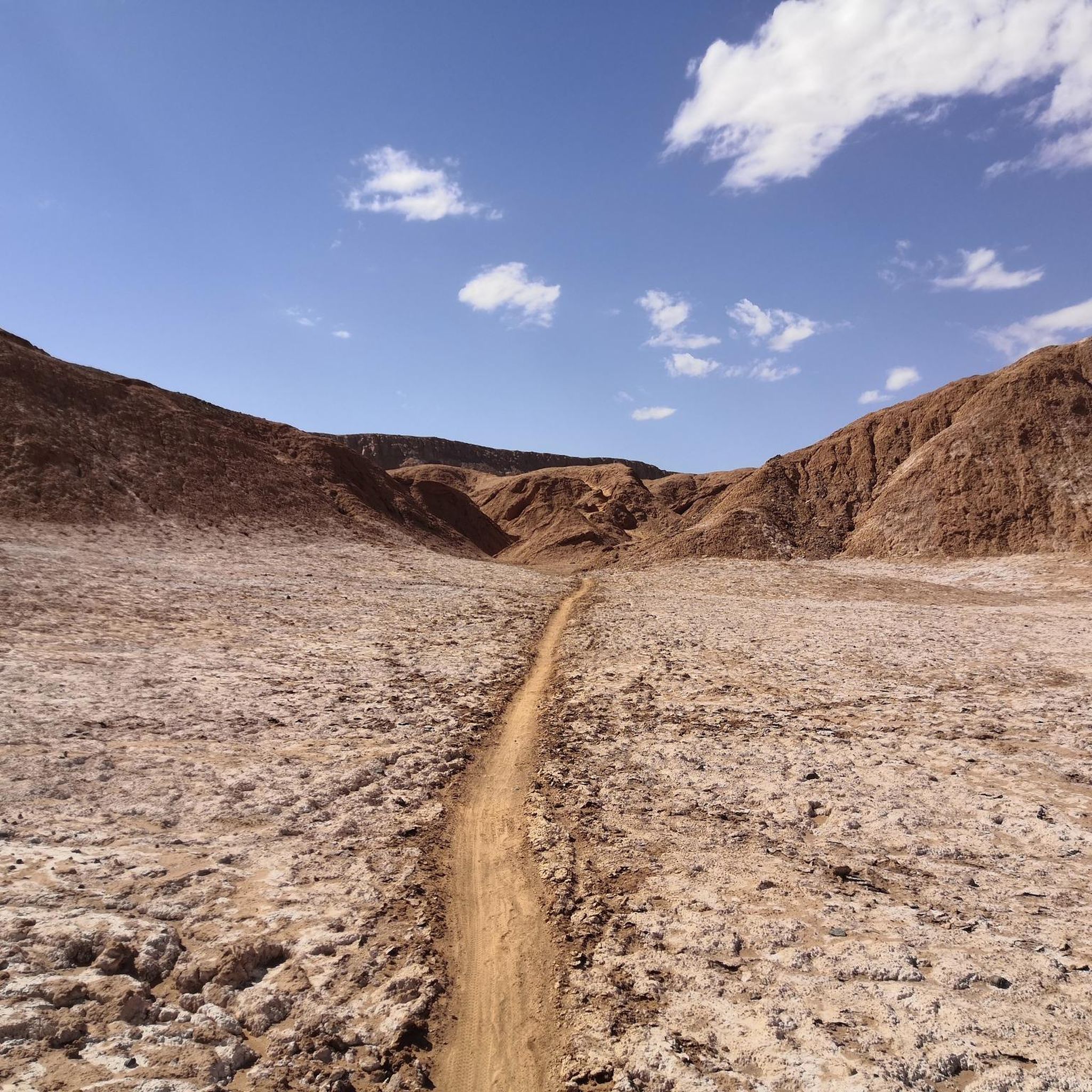
Catarpe Valley Route
Highlight • Trail
Wonderful passage including stream crossings. Possibility to climb the ridge or master the Quebrada del Diablo Trail
Translated by Google •
Tip by
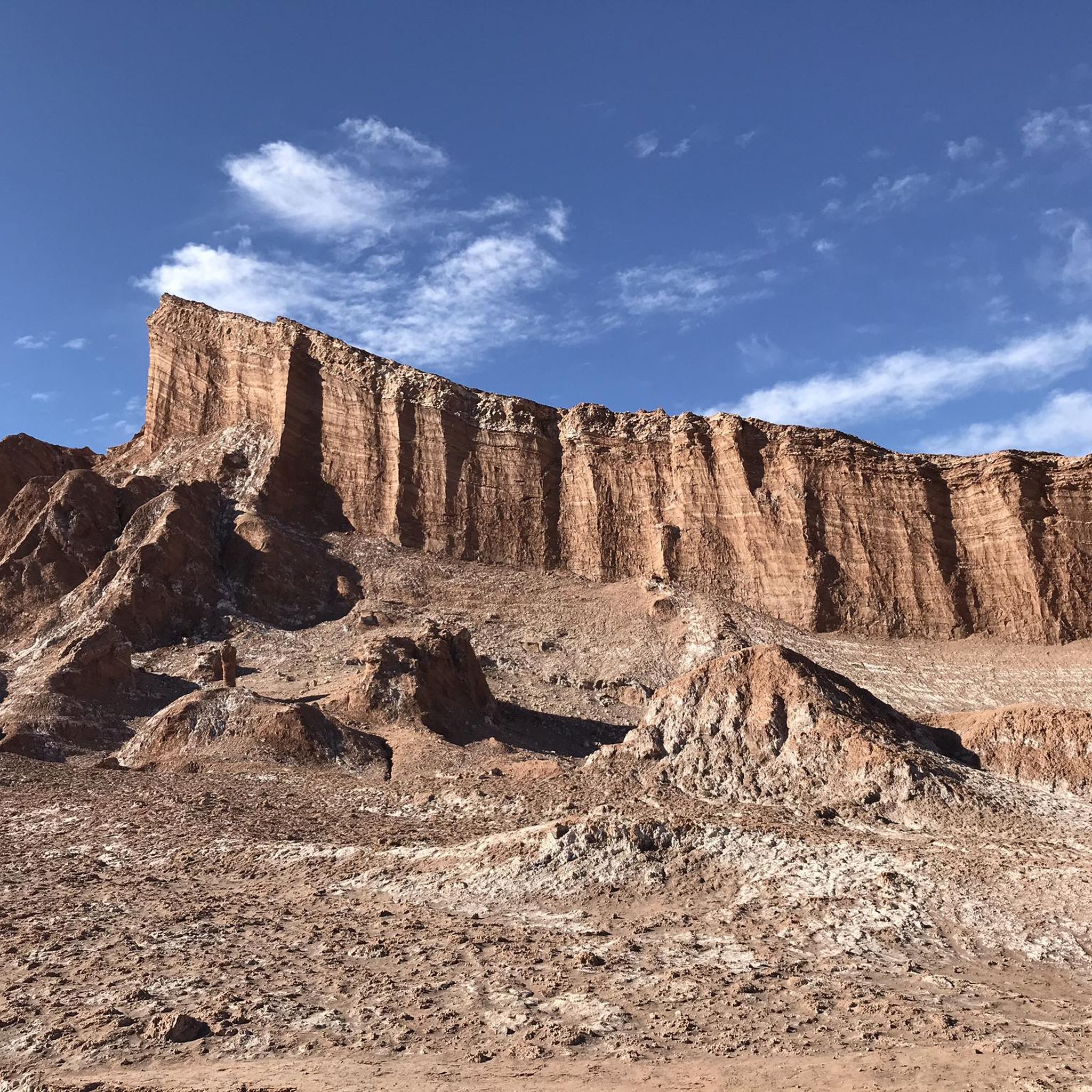
Tres Marías Rock Formation, Valle de la Luna
Highlight • Natural Monument
Translated by Google •
Tip by
Sign up for free to discover even more attractions in Antofagasta.
Sign up for free
Already have an account?
Start today with a free account
Your next adventure awaits.
Login or Signup
Tips from the Community

Laguna Chaxa is located in the middle of the Salar de Atacama in an impressive protected area that is home to numerous flamingos. The visit is particularly worthwhile for bird lovers, as the flamingos that live here (especially the "Flamenco Chileno") can often be observed up close. In addition to the flamingos, there are also other water birds and occasionally small lizards to discover. The salt lake seems almost surreal with its white, glowing surface and the reflective lagoon offers breathtaking photo opportunities. The scenery with the volcanoes towering behind it also reinforces the feeling of being immersed in another world. The entrance fee is 5,000 pesos, which is definitely worth it, especially if you are also interested in the endangered wildlife. A clear tip: don't forget sun protection!
0
0
The Laguna Miñiques, in the middle of the Atacama Desert, is a place of fascinating, almost surreal beauty. The deep blue salt lake nestles against the barren slopes of the Miñiques volcano and, together with the neighboring Laguna Miscanti, forms a harmonious natural picture. A short path connects the two lagoons, and although the route is not long, it is advisable to equip yourself well with water and sun protection - the intensity of the sun at this altitude should not be underestimated. What makes the visit special is the untouched atmosphere. The silence of the surroundings, interrupted only by the wind and the occasional chirping of birds, allows you to completely switch off. The region's wildlife is also unique. If you're lucky, you might spot an Andean fox or flamingos in the distance, who also appreciate this area. Here, nature shows its rough but at the same time sublime side, far away from the hustle and bustle, and reminds us how diverse and impressive our world is.
0
0

The geothermal field extends over 30 square kilometers. It is the third largest geyser field in the world. The world's largest collection of geysers is found in Yellowstone National Park, followed by the Dolina Geiserow in Kamchatka, Russia. El Tatio is home to an estimated 8% of all geysers on earth. It is also the highest geyser field on earth. It is located at an average altitude of 4320 m. Due to the altitude and the resulting reduced air pressure, the water here boils at around 86 degrees Celsius. Most of the geothermal phenomena are concentrated in 3 areas. 67 geysers have been discovered, of which around 30 erupt regularly. Only a few geysers produce water fountains up to 10 m high, while the pressure in the others is just enough to spew water up to 1 m high. The activity is particularly spectacular at sunrise: due to the low morning temperatures - minus 20 degrees is not uncommon at this altitude - you can see it steaming heavily. In addition, the area is home to 85 fumaroles and solfataras, 62 hot springs, 5 mud volcanoes and extensive sinter terraces. The exact number of post-volcanic phenomena not only varies depending on the author, but is also subject to the dynamic processes of the hydrothermal system. Old springs dry up, and new ones emerge elsewhere. Attempts to install geothermal energy plants failed due to the remoteness of the area and a lack of infrastructure. So far, the geysers have remained largely intact and are a tourist attraction. Anyone who wants to visit the geysers has to pay an entrance fee. Source: https://www.vulkane.net/vulkane/tatio/el-tatio.html
3
0
As far as I understand, there are only two of the "Three Marys" left - a tourist hugged the third one and a piece broke off. That's why the path is regulated and you're not allowed to go close to the rock formation.
0
0
The Temple of San Pedro was built in 1557, possibly dependent on the Bishopric of Cuzco, but the building that remains today is the result of an extension of the previous temple from the mid-18th century, which in turn underwent partial reconstructions after earthquakes and fires. The Church of San Pedro is the largest of the Atacama churches. It was built on a stone foundation and for its construction mortar, clay plaster with straw and carob, chañar and cactus wood bound with leather strips were used. Built in the shape of a Latin cross with a single nave 41 meters long and 7.5 meters wide, it has two side chapels that give it the shape of a cruise, in addition to a baptistery near the entrance, a sacristy in the rear, a choir and a bell tower made of adobe from 1965, when it was built to replace an older one made of wood. It has all the characteristics of the Andean mestizo style: a compact volume, adobe walls almost a meter wide and a gable roof that ends in continuous eaves. Inside, the main altar has an altarpiece with stucco and painted motifs on the wood, adobe and stone structure in the Baroque style. The Church of San Pedro de Atacama was declared a Historic Monument in 1951. Due to the damage it suffered from the earthquakes that struck the region, important restoration work began in 2014, which included the installation of two ancient paintings of unknown angels. Source: https://www.monumentos.gob.cl/monumentos/monumentos-historicos/iglesia-san-pedro-atacama
2
0
All information about San Pedro de Atacama (in English, Spanish, Portuguese) at https://sanpedroatacama.com/
2
0

Wonderful, colorful geyser field. Although it is most impressive in the morning due to the higher temperature difference between the water and the surrounding area, it is also the busiest. The on-site swimming pool is currently closed. I found the road from San Pedro to El Tatio easy to drive with the usual caution.
2
0
The Reserva nacional Los Flamencos is a group of nature reserves in the municipality of San Pedro de Atacama in northern Chile. It consists of seven independent and spatially separated zones with a total area of 709 km2, representing 3% of the municipal area of San Pedro de Atacama. These are important landscapes and biotopes in the Atacama Desert that are developed for sustainable tourism and are at the same time subject to nature conservation. 112 different species of birds, reptiles, amphibians and mammals have been counted in the reserve. Notable among these are the flamingos (Andean flamingo, James' flamingo, Chilean flamingo), after which it is named.
0
0
Frequently Asked Questions
What natural wonders can I explore in Antofagasta?
Antofagasta is a gateway to diverse natural wonders. You can visit the iconic La Portada Natural Monument, a stunning sea arch shaped by erosion. The region also offers access to the vast Atacama Desert, including the unique Chaxa Lagoon known for its flamingos, and the impressive El Tatio Geyser Field, one of the highest in the world. For desert landscapes, explore the Valley of Death with its sand formations.
Are there historical sites to visit in Antofagasta?
Yes, Antofagasta boasts several significant historical sites. Don't miss Pukará de Quitor, an ancient fortress that served as a residential and refuge for the Likan Antai people. Other notable sites include the Muelle Salitrero Compañía Melbourne Clark, a historic pier marking the start of the War of the Pacific, and the impressive Huanchaca Ruins, remains of a 19th-century silver smelter.
What cultural landmarks can I find in Antofagasta's city center?
In the heart of Antofagasta, Plaza Colón is a key cultural gathering point, featuring the Monument to the Heroes of the Pacific War and the Antofagasta Clock Tower. Adjacent to the plaza is the Antofagasta Cathedral, a beautiful example of neo-Romanesque architecture.
Are there family-friendly attractions in Antofagasta?
Many attractions in Antofagasta are suitable for families. The Church of San Pedro de Atacama and Chaxa Lagoon are listed as family-friendly. Additionally, the city's beaches like Hornitos Beach and the Municipal Spa offer relaxation, while Parque Croacia provides green spaces and a playground.
Where can I find unique geological formations in the Antofagasta region?
Beyond La Portada, the region is rich in unique geological formations. The Valley of Death near San Pedro de Atacama offers impressive sand formations. Within the Valle de la Luna, you can also find the distinctive Tres Marías Rock Formation.
What outdoor activities can I do near Antofagasta's attractions?
The Antofagasta region offers various outdoor activities. For hiking, consider routes like the 'Pukará de Quitor – Valley of Death loop from San Pedro de Atacama' or the 'View of the Atacama Desert – Mirador Achachis loop'. Cyclists can enjoy routes such as the 'Parque Croata – Clock Tower in Antofagasta loop'. You can find more details on these and other routes in the Hiking in Antofagasta and Road Cycling Routes in Antofagasta guides.
Are there any good viewpoints to capture the landscape?
Yes, Antofagasta offers several excellent viewpoints. The Pukará de Quitor provides great views of the surrounding area. Chimba Hill within La Chimba National Reserve offers panoramic vistas of Antofagasta and the desert. Additionally, Laguna Miñiques and the Valley of Death also feature scenic overlooks.
Where can I learn about the region's history and culture?
To delve into the region's past, visit the Antofagasta Regional Museum, which houses exhibits from prehistoric fossils to colonial-era displays. The Huanchaca Cultural Park, home to the Huanchaca Ruins, also includes the Museum of the Atacama Desert, focusing on geology, astronomy, and archaeology.
What is the 'Hand of the Desert'?
The 'Hand of the Desert' (Mano del Desierto) is a colossal 11-meter-tall sculpture by Chilean artist Mario Irarrázabal. It's an impressive and unique artistic landmark located in the vast desert landscape outside the city, offering a striking contrast to its natural surroundings.
What are some unique experiences or hidden gems in Antofagasta?
For a unique experience, consider visiting the Cerro Paranal Observatory, a world-renowned astronomical observatory in the Atacama Desert known for its exceptionally clear skies. While primarily scientific, it offers a distinct perspective on the region's natural advantages. The Mercado Central de Antofagasta also provides a vibrant local experience with fresh seafood and regional flavors.
What do visitors enjoy most about the attractions in Antofagasta?
Visitors frequently praise the stunning natural beauty, particularly the unique geological formations and the vastness of the desert landscapes. The historical significance of sites like Pukará de Quitor and the cultural insights offered by the museums are also highly appreciated. Many enjoy the opportunity to see wildlife, especially the flamingos at Chaxa Lagoon.
Are there running trails available near the city's attractions?
Yes, there are several running trails in and around Antofagasta. Popular options include the 'Balneario Municipal – Playa Antofagasta loop' and the 'Casino Sub Oficiales Ejército – Balneario Municipal loop', both offering scenic coastal runs. You can find more detailed routes in the Running Trails in Antofagasta guide.
Most popular attractions in Antofagasta

Get inspired with the komoot mobile app


Didn’t find what you were looking for?
Are you keen on exploring more awesome places nearby? Browse our guides:
Explore more
Still not found the Highlight you’re looking for? See guides of the top attractions in other regions:
