Top 20 Caves around Abtsgmünd
Best caves around Abtsgmünd are primarily found in the nearby Rosenstein mountain area, located near Heubach within the Ostalbkreis district. This region is part of the larger karst landscape of the Swabian Alb, known for its geological formations and historical human activity. While Abtsgmünd itself does not feature prominent caves, the proximity to Rosenstein offers numerous notable cave attractions. These sites provide insights into prehistoric human presence and geological features.
Best caves around Abtsgmünd
- The most popular caves is Great…
Last updated: June 22, 2026
Great Scheuer Cave
Highlight • Cave
Translated by Google •
Tip by

Finsteres Loch Cave
Highlight • Cave
Translated by Google •
Tip by

Sign up now to discover places like this
Get recommendations on the best single tracks, peaks, & plenty of other exciting outdoor places.
Sign up for free
Rosenstein Caves and Ruins
Highlight (Segment) • Cave
Translated by Google •
Tip by
Three-Entrance Cave
Highlight • Cave
Translated by Google •
Tip by
Lourdes Grotto, Hohenberg
Highlight • Religious Site
Translated by Google •
Tip by

Sign up for free to discover even more caves around Abtsgmünd.
Sign up for free
Already have an account?
Start today with a free account
Your next adventure awaits.
Login or Signup
Other adventures around Abtsgmünd

Tips from the Community

Many rock formations and caves characterize the Rosenstein
0
0

Pastor Franz Josef Fuchs had the Lourdes Grotto built into the northern slope of Hohenberg Mountain. It was consecrated on June 20, 1886. Glass particles from the Rosenberg glass factory can still be seen in the Lourdes Grotto today. Slag stones from the disused glass factory were used as building material, into which various colored glass was melted. The grotto is freely accessible and can be reached via a path northwest of the pilgrimage church of St. James. It is located in a small wooded area directly next to a small pond. Cycling is prohibited, but you can easily push your bike down from Hohenberg Mountain; there are a few steps at the bottom. You can continue by bike from the grotto.
1
0
Pastor Franz Josef Fuchs had the Lourdes Grotto built into the northern slope of Hohenberg Mountain. It was consecrated on June 20, 1886. Glass particles from the Rosenberg glass factory can still be seen in the Lourdes Grotto today. Slag stones from the disused glass factory were used as building material, into which various colored glass was melted. The grotto is freely accessible and can be reached via a path northwest of the pilgrimage church of St. James. It is located in a small wooded area directly next to a small pond. Cycling is prohibited, but you can easily push your bike down from Hohenberg Mountain; there are a few steps at the bottom. You can continue by bike from the grotto.
1
0
the climb is worth it
0
0

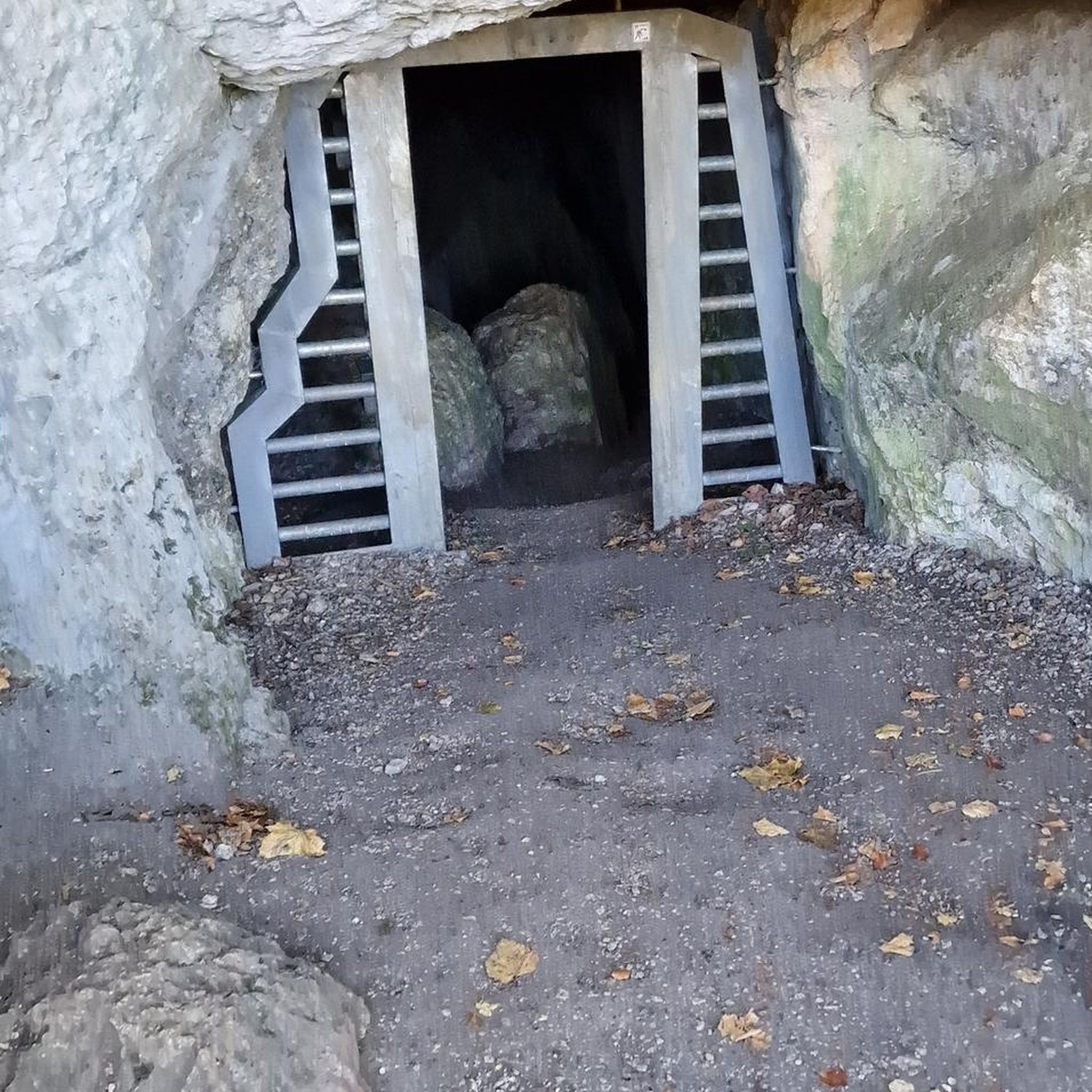
One of the many caves near Heubach
1
0

You can also pass here on the 1st stage of the Bühlersteig (via the Hohenberg from Ellwangen to Willa).
0
0

Beautiful grotto in the middle of the forest and below the Hohenberg. However, the trails are very overgrown, so you have to be careful which one you choose
1
0

Pastor Franz Josef Fuchs had the Lourdes grotto built into the northern slope of the Hohenberg. This was consecrated on June 20, 1886. In the Lourdes grotto you can still see glass particles from the Rosenberg glass factory. The building material used was cinder blocks from the disused glass factory, into which different colored glass was melted. The grotto is freely accessible and can be reached via a path northwest of the pilgrimage church of St. James. It is located in a small forest directly on a small pond. This can be combined with a visit to the pilgrimage church of St. James. The outer facade of the Sieger-Köder-Haus right next to the church is also worth seeing. The grotto is located in a beautiful forest. You can leave this on various paths and take a hike around Hohenberg. Source attractions Swabian Alb
0
0
Frequently Asked Questions
Where are the main caves located near Abtsgmünd?
The most notable caves near Abtsgmünd are primarily found on the Rosenstein mountain, close to Heubach. This area is part of the larger Swabian Alb karst landscape, known for its geological formations.
Are there family-friendly caves to visit?
Yes, several caves are suitable for families. The Great Scheuer Cave is easily accessible with natural light, making it comfortable for all ages. The Three-Entrance Cave is also particularly popular with children due to its interconnected, albeit small, corridors.
What is the best time of year to explore the caves?
The best time to visit is generally from May to September. Many caves, such as the Finstere Loch Cave, are freely accessible during these months. Some caves are closed in winter to protect bat populations.
Do I need special equipment to explore the caves?
For some caves, like the Finstere Loch Cave, a flashlight or headlamp is required as it is long and dark inside. The interior can also be slippery, so sturdy, walk-resistant shoes are recommended. For the Great Scheuer Cave, no flashlight is needed due to its large natural openings.
Are there guided tours available for the caves?
Yes, guided tours are offered for some caves. The local caving club provides tours for the Great Scheuer Cave between May and October. Guided tours are also available for the Finstere Loch Cave, offering insights into its history and geology.
What historical significance do the caves hold?
Many caves in the region, including the Great Scheuer Cave, Finstere Loch Cave, and Three-Entrance Cave, have archaeological findings dating back to the Stone Age, Bronze Age, and Middle Ages, indicating their use by early humans.
What kind of natural features can I expect to see in these caves?
The caves are part of the Swabian Alb's karst landscape, showcasing unique geological formations. You'll find tunnel-like structures, through caves, and cave ruins. The Great Scheuer Cave, for example, is notable for its size and three large natural openings.
Are there hiking trails near the caves?
Yes, the caves are often integrated into hiking routes. The Great Scheuer Cave is located directly on the Albsteig hiking trail. The Rosenstein area, where most caves are found, is a popular spot for hiking. You can find various hiking options in the MTB Trails around Abtsgmünd guide, which also covers general outdoor activities.
What other outdoor activities can I do near the caves?
The Rosenstein area offers a variety of outdoor activities beyond caving. It's a popular spot for hiking, mountain biking, and climbing. You can explore numerous routes for different sports in guides like MTB Trails around Abtsgmünd, Road Cycling Routes around Abtsgmünd, and Cycling around Abtsgmünd.
What do visitors enjoy most about the caves around Abtsgmünd?
Visitors appreciate the unique natural spectacle and the historical insights offered by the caves. The accessibility of some caves, like the Great Scheuer Cave, and the adventurous experience of others, such as the Finstere Loch Cave, are frequently highlighted. The area's scenic beauty and opportunities for combining caving with hiking are also popular.
Is there parking available near the caves?
The Rosenstein, where most caves are located, has a parking lot for hikers on the saddle between the Glasenberg and the actual Rosenstein, which can be reached by car from Heubach.
Are dogs allowed in the caves?
While the region is generally dog-friendly for hiking, specific rules for dogs inside the caves can vary. It's advisable to check with local tour operators or information centers for individual cave regulations, especially for longer or more sensitive cave systems.
Most popular routes around Abtsgmünd
Most popular attractions around Abtsgmünd

Get inspired with the komoot mobile app


Explore more
Extend your search for the best caves by checking out these guides of the top ones around Abtsgmünd:
