Attractions and Places To See in Cajatambo - Top 5
Attractions and places to see in Cajatambo, a province in the Lima region of Peru, encompass diverse natural landscapes and historical sites. The area provides access to the Cordillera Huayhuash Reserved Zone, recognized for its high peaks and rich biodiversity. Cajatambo also features traditional Andean aesthetics with its cobblestone streets and historical landmarks. Visitors can explore mountain passes, ancient Inca trails, and various natural features.
Best attractions and places to see in Cajatambo
- The most popular attractions is Trapecio Pass…
Last updated: July 17, 2026
Jurau Pass Descent
Highlight • Mountain Pass
Translated by Google •
Tip by

Trapecio Pass
Highlight • Mountain Pass
Translated by Google •
Tip by

Sign up now to discover places like this
Get recommendations on the best single tracks, peaks, & plenty of other exciting outdoor places.
Sign up for free
Tapush Pass
Highlight • Mountain Pass
Translated by Google •
Tip by
Pampa Elefante Campsite
Highlight • Rest Area
Translated by Google •
Tip by
Ascent to Paso Tapush
Highlight (Segment) • Mountain Pass
Translated by Google •
Tip by
Ascent to Paso San Antonio
Highlight (Segment) • Mountain Pass
Translated by Google •
Tip by
Start today with a free account
Your next adventure awaits.
Login or Signup
Popular around Cajatambo
Other adventures in Cajatambo

Tips from the Community

Hello Mia, I'm a little confused by your comment. The Jurau Pass is not considered easy but it is a much easier and less steep alternative to the San Antonio and Santa Rosa Pass. I haven't done the tour yet (plan is next year) but I found quite a lot of information about it. I would therefore be very happy to hear back from you as to whether it is actually that demanding or whether you perhaps meant the San Antonio. Best wishes Piet
0
0

The descent from the Jurau Pass to Juraucocha is completely pathless and very steep. There are a few cairns, but not enough to orient yourself in the scree desert. The GPX track here is very imprecise. There are countless steep cliffs that must be avoided. It is possible to descend to Juraucocha, but it is very challenging. Going uphill is a lost cause without a guide.
0
0

On the way you always had great views of the surrounding mountains and you passed small shepherds' huts.
1
0
The climb from Huayllapa to the top of the pass takes a long time, but at the top you are rewarded with a great view.
0
0
The steep and strenuous climb up to Paso San Antonio (5,020 meters) is worth it. With every step the panorama gets better.
1
0
There is even a flush toilet here. In the background the Nevado Puscantrurpa rises into the sky.
1
0
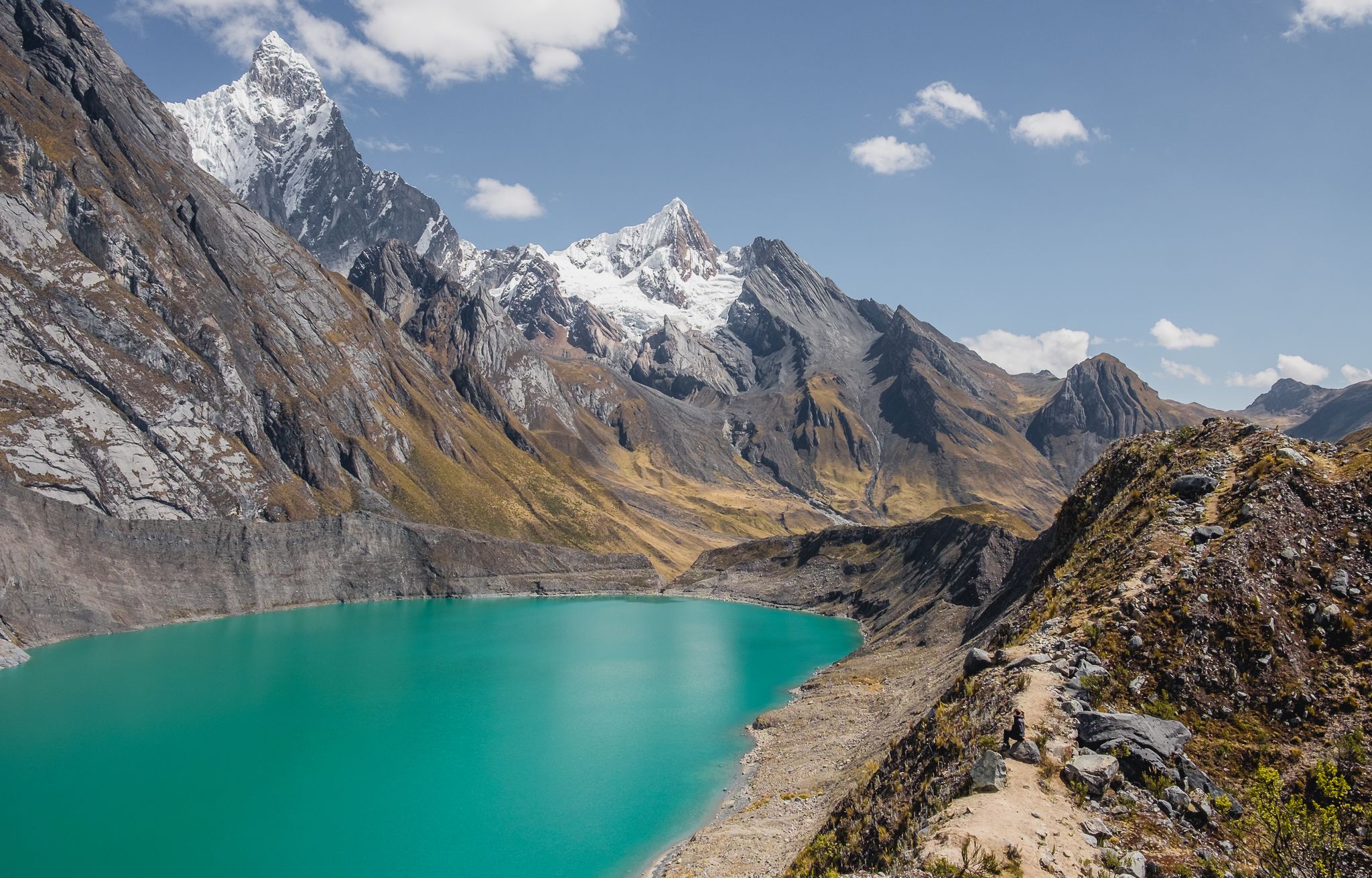
Breathtaking views await you on this 5,040 meter high mountain pass. There are bright blue lakes in the valley and a mighty glacier rises opposite.
0
0
Frequently Asked Questions
What kind of natural features can I explore in Cajatambo?
Cajatambo is rich in natural beauty, offering access to the stunning Cordillera Huayhuash Reserved Zone, known for its high peaks and biodiversity. You can also discover beautiful lagoons like Laguna Viconga and Laguna Huayllacocha, scenic waterfalls such as Catarata de Escalón and Cascadas de Pumarinri, and snow-capped mountains. The region also features the unique Bosque de Quenuales (Queñual Forest).
Are there challenging mountain passes for experienced hikers in Cajatambo?
Yes, Cajatambo is renowned for its challenging mountain passes. The Trapecio Pass, at 5,040 meters high, offers breathtaking views of bright blue lakes and glaciers. Another demanding option is the Ascent to Paso San Antonio. For a very challenging descent, the Jurau Pass Descent is pathless and very steep, recommended only for experienced hikers or with a guide.
Where can I find easier hiking trails or scenic walks in Cajatambo?
While many trails are challenging, you can find more leisurely options. The Tapush Pass, for example, is considered an intermediate climb that rewards you with great views. The Quebrada Llancapampa, near Pampas Grande, offers a more relaxed stroll through verdant valleys with wildflowers and ancient ruins. The picturesque streets of Cajatambo town also provide an authentic Andean walking experience.
Can I observe wildlife in Cajatambo?
Absolutely. Cajatambo is a great place for wildlife spotting. The Mirador de Cóndores, just 5 km from Cajatambo town, offers a unique opportunity to observe majestic condors. Beyond condors, you might spot Andean foxes, vicuñas, viscachas, eagles, and falcons, especially in areas like the Área de Conservación Privada Huayllapa.
What historical and cultural sites can I visit in Cajatambo?
Cajatambo offers a rich historical and cultural experience. You can explore the charming Cajatambo Town with its traditional Andean architecture, visit the significant 17th-Century Colonial Church (Santa María Magdalena), and discover the ancient Archaeological Complex of Tambomarca. Portions of the historic Qhapaq Ñan (Inca Road) are also preserved and used by locals.
Are there any ancient Inca trails accessible in Cajatambo?
Yes, Cajatambo is home to preserved sections of the ancient Qhapaq Ñan (Inca Road). These historical trails are still utilized as bridle paths by locals, offering a direct connection to the region's pre-Hispanic past and a unique cultural experience for visitors.
What is unique about Cajatambo's local culture and gastronomy?
Cajatambo is known for its vibrant folklore and distinct gastronomy. A traditional dish to try is 'Pari,' also known as 'fiambre del viajero,' which features incandescent stones served with various meats. The region also prides itself on traditional artisan production, including dairy products like cheeses and 'manjar blanco,' as well as local honey and artisan breads. The area is also a cradle of ancestral Quechua, particularly the Huaihuash variety.
Are there any thermal baths or relaxing natural spots in the region?
Yes, for relaxation amidst nature, you can visit the Aguas Termales de Guñog (Guñog Thermal Baths). These natural thermal baths provide a soothing experience, perfect after a day of exploring the challenging mountain terrain.
What are the best viewpoints in Cajatambo?
Cajatambo offers numerous breathtaking viewpoints. The Trapecio Pass and Tapush Pass both provide rewarding panoramic views of the surrounding landscapes, including bright blue lakes and glaciers. The Mirador de Cóndores offers not only a view of the majestic birds but also expansive vistas of the valley. Additionally, the Corredor Turístico del Valle ISCO-PUMARINRI features several scenic spots like Cruz Punta and the Rumisaca geological fault.
Is there accommodation available for overnight stays near the attractions?
Yes, for those planning multi-day treks or overnight stays, Pampa Elefante Campsite is a notable facility. It offers amenities for campers and provides views of Nevado Puscantrurpa in the background. The Área de Conservación Privada Huayllapa is also popular for multi-day camping treks.
What is the best time to visit Cajatambo?
The best time to visit Cajatambo for outdoor activities and exploring its natural attractions is generally during the dry season, which typically runs from May to September. During these months, you can expect clearer skies and more stable weather conditions, ideal for hiking and enjoying the mountain passes and viewpoints.
Are there any hidden gems or lesser-known spots worth exploring in Cajatambo?
Beyond the main attractions, Cajatambo holds several hidden gems. The historical Molinos de Agua (Water Mills) offer a glimpse into the region's past. The Socavones de la mina Eben Ezer (Eben Ezer Mine Tunnels) provide a unique insight into its mining history. Exploring the traditional artisan production in local communities can also reveal authentic cultural experiences.
Most popular attractions in Cajatambo

Get inspired with the komoot mobile app


Didn’t find what you were looking for?
Are you keen on exploring more awesome places nearby? Browse our guides:
