The best cycling routes around Commondale
4.4
(62)
2,853
riders
117
rides
Touring cycling around Commondale offers diverse landscapes within the North York Moors National Park. The region features expansive moorland, rolling hills, and charming villages, providing varied terrain for cyclists. Routes often include well-established paths and quiet country roads, with some segments presenting significant elevation changes. The area is characterized by its natural beauty and historical points of interest.
Best touring cycling routes around Commondale
- The most popular touring cycling route is Moor to Sea Cycle Trail, a 25.0 miles (40.3 km) trail that takes 3 hours 53 minutes to complete. This route offers a challenging ride across varied terrain.
- Another top favourite among local touring cyclists is Abbey Tea Rooms – Castleton Village loop from Castleton Moor, a difficult 23.6 miles (38.0 km) path. This route winds through picturesque villages and open moorland.
- Local touring cyclists also love the Beggar's Bridge – Rosedale Chimney Bank Climb loop from Castleton Moor, a 36.9 miles (59.3 km) trail leading through challenging ascents and scenic moorland, often completed in about 4 hours 12 minutes.
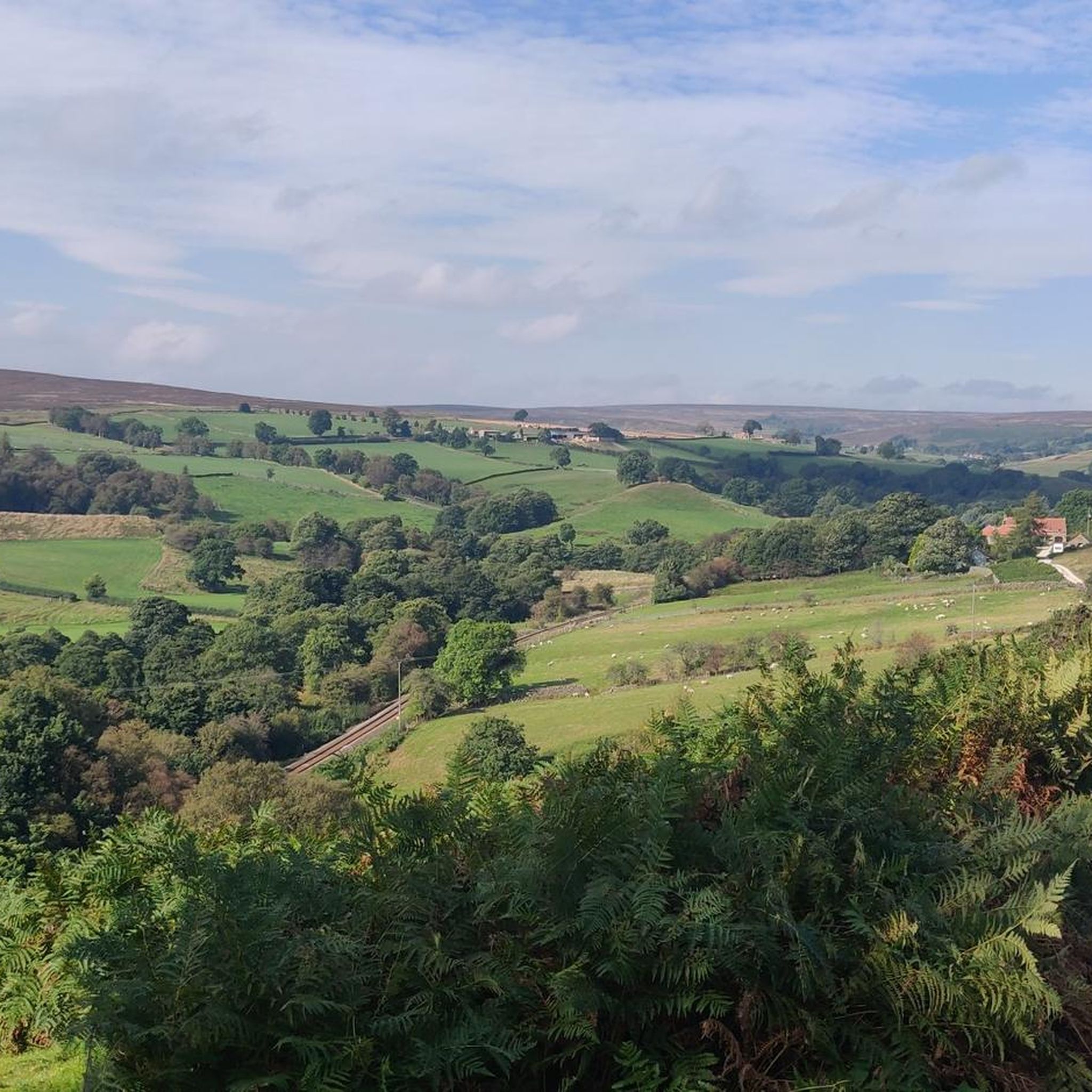
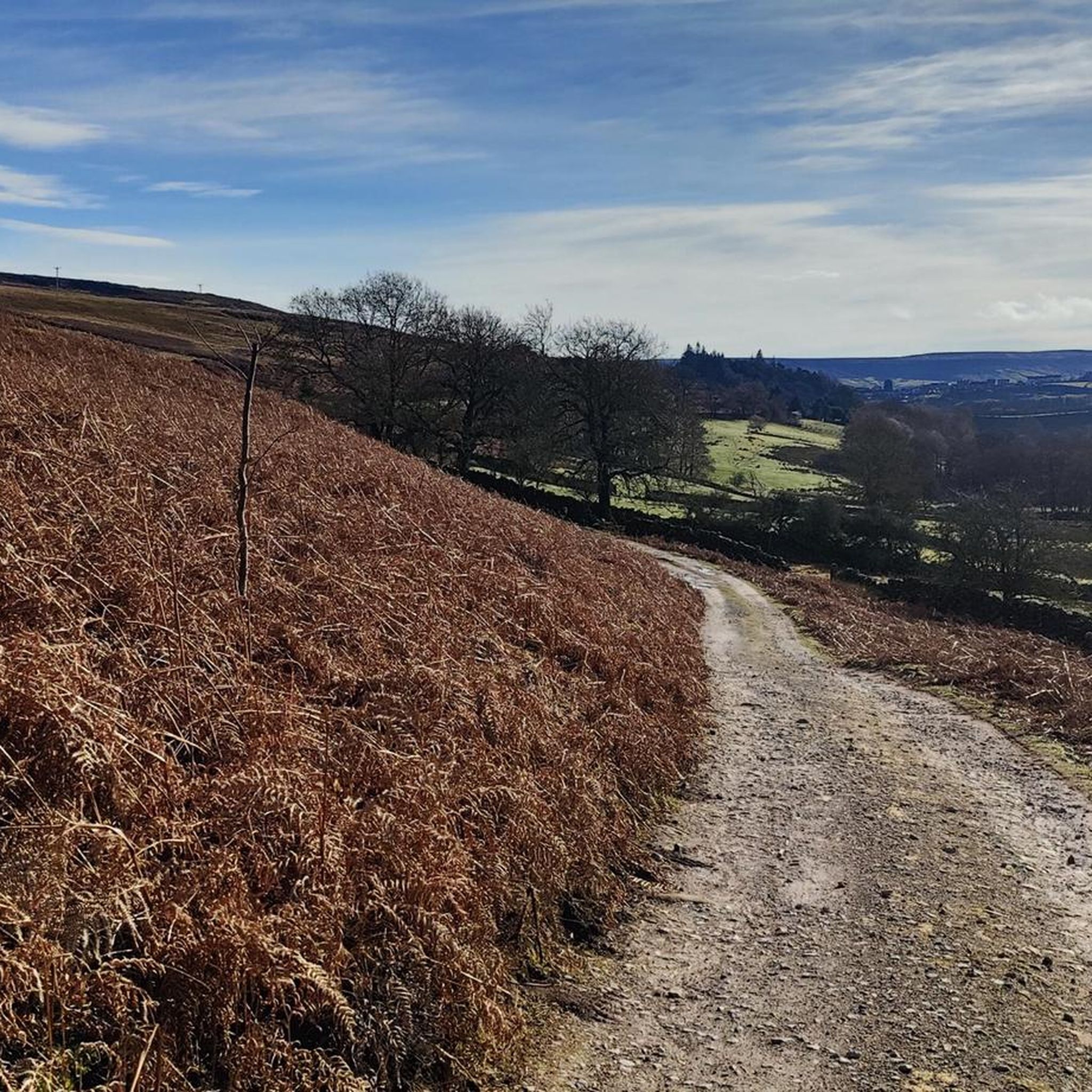
- Touring cycling around Commondale is defined by extensive moorland views, rolling hills, and historical wayside crosses. The network offers options for different ability levels, from moderate rides to more challenging ascents.
- The routes in Commondale are highly rated by the komoot community with an average score of 4.4 stars from over 54 reviews. More than 3000 touring cyclists have used komoot to explore Commondale's varied terrain.
Last updated: October 10, 2026
4.0
(1)
6
riders
40.3km
03:53
600m
600m
The Moor to Sea Cycle Trail offers a challenging touring bicycle experience, covering 25.0 miles (40.3 km) with a significant elevation gain of 1957 feet (597 metres). You can expect to spend around 3 hours and 52 minutes on this difficult route, traversing a varied landscape. As you cycle, you will move from expansive moorland, where you might spot the Bloworth Crossing, through dense forests, and eventually towards dramatic coastal views. The terrain shifts between quiet roads, woodland tracks, and bridleways, providing a diverse and remote cycling adventure. This trail truly captures the essence of the North York Moors National Park.
Planning your trip on this route requires some preparation to ensure a smooth journey. While the trail is generally well-marked, it is wise to carry a map or use a reliable navigation app, as some signs can be missing. You can often access key starting points by bus or train, but always check for any restrictions on bringing your bicycle. Along the wider network, you will find various cafes, tearooms, and accommodation options, making it easy to plan your stops and refuel. Consider starting early to make the most of the daylight, especially given the trail's difficult rating and estimated duration.
This trail stands out for its journey through the diverse ecosystems of the North York Moors National Park. You will encounter a rich tapestry of natural environments, from the open, windswept moors to sheltered woodlands and the rugged coastline. The route is designed to showcase the region's unique natural beauty, offering a comprehensive cycling tour that highlights its varied landscapes. It provides an excellent opportunity to immerse yourself in the remote countryside and experience the distinct character of this protected area.
5.0
(1)
515
riders
38.0km
02:38
680m
680m
Hard bike ride. Very good fitness required. Mostly paved surfaces. Suitable for all skill levels.

3.7
(3)
15
riders
27.2km
01:51
430m
430m
Moderate bike ride. Good fitness required. Mostly paved surfaces. Suitable for all skill levels.
5.0
(1)
11
riders
24.3km
01:42
440m
440m
Moderate bike ride. Good fitness required. Mostly paved surfaces. Suitable for all skill levels.
4
riders
59.3km
04:13
1,150m
1,150m
Hard bike ride. Very good fitness required. Mostly paved surfaces. Suitable for all skill levels.
Get access to more routes and recommendations from other explorers.
Already have an account?
Our route recommendations are based on thousands of hikes, rides, and runs completed by other people on komoot.
Start today with a free account
Your next adventure awaits.

Tips from the Community

Each of the sacred monuments that you repeatedly encounter – despite all the differences in their external design – has a common concern: The cross that rises here not only wants to attract the viewer's gaze, but – and this is primarily – to make him think of God. Not only in theological books, but even in secular literature, God's voice is often represented, and this is even often the case in crime novels. For example, Ellis Peters set the series of novels about the Benedictine 'Brother Cadfael', which is set in 12th-century England, in the surroundings of a monastery. In "The Virgin in the Ice" it says: "And yet life, clinging to faith, the tenacious struggle with fate had to go on, the land had to be cultivated year in, year out. Plough and harrow must not rest, and one had to take care of sowing and harvesting the fruits of the earth as much as here, in the monastery and church, of sowing and harvesting souls." I wish the viewer here in front of the cross a good thought for his soul.
0
0

Nice spot to fuel up with a view. Cakes simple sandwiches and drinks. Friendly staff
0
0

Delicious ice cream or a cake or sandwich with tea or coffee at the Stepping Stones
0
0
Had a delicious meal where fresh herbs were used, such as in the Hake fillet
0
0

I tend to hike/trail run early (sometimes starting around 5am), but I passed through Danby mid-morning on a Saturday and the smell coming from the bakery was heavenly. All the excuse you need for adding Danby to your route!
1
0
Useful landmark village with numerous routeing options and a useful supermarket for resupplying if you need to, but generally not quite as inspiring as Danby and Lealholm to the east, the latter of which is very picturesque.
1
0
The monument includes a standing cross, Listed Grade II, used as a boundary marker and known as Fat Betty or the White Cross. It stands on Danby Moor at the junction of three parishes whose boundaries were fixed during the medieval period. It is on the north side of a minor road to Rosedale 510m to the east of the cross known as Young Ralph. On the north side of the base is the date 1919 cut in the stone. On the west side is an inscription BS IB 1953. Neither inscription bears on a date for this monument. There is also an OS benchmark on the west face. The cross has been repeatedly whitewashed over the years in accordance with the practice of the Downe Estate on which it stands. The cross has been set up on Danby Moor to mark the meeting of the old parishes of Danby, Westerdale and Rosedale. It also marks the side of an old road down to Rosedale from the cross called Young Ralph. The road is mentioned in a 13th century charter from Guisborough.
1
0
Wayside crosses are one of several types of Christian cross erected during the medieval period, mostly from the 9th to 15th centuries AD. In addition to serving the function of reiterating and reinforcing the Christian faith amongst those who passed the cross and of reassuring the traveller, wayside crosses often fulfilled a role as waymarkers, especially in difficult and otherwise unmarked terrain. The crosses might be on regularly used routes linking ordinary settlements or on routes having a more specifically religious function, including those providing access to religious sites for parishioners and funeral processions, or marking long-distance routes frequented on pilgrimages. Over 350 wayside crosses are known nationally, concentrated in south west England throughout Cornwall and on Dartmoor where they form the commonest type of stone cross. A small group also occurs on the North York Moors. The wayside cross and boundary marker known as Young Ralph survive complete even though previously broken and repaired. The cross marks the highest point on the old road from Keldholme in the south of the moors to Castleton in the north. It also marks the boundary of the Wapentake of Pickering Lyth. It has been adopted as the symbol of the North York Moors National Park and has been a listed monument since 1938.
2
0
Frequently Asked Questions
How many touring cycling routes are available around Commondale?
Commondale offers a wide selection of touring cycling routes, with over 130 options available. These routes cater to various skill levels, including 19 easy, 60 moderate, and 53 difficult trails.
What kind of terrain will I encounter on touring cycling routes in Commondale?
You can expect diverse terrain, from well-paved surfaces through charming villages and quiet country roads to more challenging segments across expansive moorland and rolling hills. Some routes, particularly the more difficult ones, may include unpaved sections and significant elevation changes.
Are there any family-friendly touring cycling routes in the Commondale area?
While specific 'family-friendly' routes are not explicitly detailed, the region does offer 19 easy touring cycling routes that could be suitable for families. These routes generally feature less elevation gain and shorter distances, providing a more relaxed experience.
What are some scenic viewpoints or natural features to look out for on Commondale's cycling routes?
The routes often provide extensive moorland views and pass through picturesque landscapes. Keep an eye out for historical wayside crosses, such as Roseberry Topping Summit, and enjoy the tranquility around Urra Moor. The region is rich in natural beauty within the North York Moors National Park.
Are there any circular touring cycling routes around Commondale?
Yes, many routes in the area are designed as loops. For example, the Yorkshire Cycle Hub – Danby Bakery and Tea Shop loop from Castleton Moor is a moderate 27.2 km route that offers a circular journey through the local landscape.
What is the best time of year to go touring cycling in Commondale?
The North York Moors are beautiful year-round, but spring and summer generally offer the most pleasant cycling conditions with milder weather and longer daylight hours. Autumn brings stunning colors to the moorland. Always check local weather forecasts before heading out, as conditions can change rapidly.
Where can I find parking for touring cycling routes near Commondale?
Many routes start from villages like Castleton Moor, which typically offer public parking facilities. It's advisable to check specific starting points of your chosen route for detailed parking information, as options can vary.
Are there cafes or pubs along the touring cycling routes in Commondale?
Yes, many routes pass through or near charming villages where you can find cafes and pubs. For instance, the Yorkshire Cycle Hub – Danby Castle loop from Castleton Moor offers opportunities to stop for refreshments in places like Danby.
What do other touring cyclists enjoy most about cycling in Commondale?
The area is highly rated by the komoot community, with an average score of 4.4 stars from over 54 reviews. Cyclists often praise the extensive moorland views, the variety of terrain, and the challenging ascents found on routes like the Moor to Sea Cycle Trail.
Are there any particularly challenging touring cycling routes for experienced riders?
Absolutely. For experienced riders seeking a challenge, the Beggar's Bridge – Rosedale Chimney Bank Climb loop from Castleton Moor is a difficult 59.3 km trail featuring significant elevation gain, including the demanding Rosedale Chimney Bank Climb.
Can I access Commondale's cycling routes using public transport?
Commondale and surrounding villages like Castleton are accessible by local bus services, and some routes may be reachable via train stations in the wider North York Moors area. It's recommended to check local public transport schedules and bicycle carriage policies before planning your trip.
What is the typical elevation gain on touring cycling routes in Commondale?
Elevation gain varies significantly by route difficulty. Moderate routes might see around 400-600 meters of ascent, while difficult routes, such as the Abbey Tea Rooms – Castleton Village loop from Castleton Moor, can involve over 670 meters of climbing, offering a good workout.
Most popular attractions around Commondale

Get inspired with the komoot mobile app


Explore more
Browse the best Cycling routes in other regions.
