Attractions and Places To See around Oughterside And Allerby - Top 20
Best attractions and places to see around Oughterside And Allerby include historical sites, significant bridges, and natural river features. Located near the edge of the Lake District, the area offers insights into local history and connections to literary figures. The River Derwent flows through the region, providing both scenic views and historical context.
Best attractions and places to see around Oughterside And Allerby
- The most popular attractions is Millers Bridge (Cockermouth), a river bridge that connects the northern and…
Last updated: May 6, 2026
Millers Bridge (Cockermouth)
Highlight • River
Translated by Google •
Tip by

All Saints Church, Cockermouth
Highlight • Historical Site
Tip by

Sign up now to discover places like this
Get recommendations on the best single tracks, peaks, & plenty of other exciting outdoor places.
Sign up for free
Wordsworth House and Garden
Highlight • Monument
Translated by Google •
Tip by
Isle bridge
Highlight • Historical Site
Translated by Google •
Tip by
River Derwent
Highlight • Natural
Translated by Google •
Tip by
Sign up for free to discover even more attractions around Oughterside And Allerby.
Sign up for free
Already have an account?
Start today with a free account
Your next adventure awaits.
Login or Signup

Tips from the Community

Millers Bridge, also known as Harris Bridge, is a steel pedestrian bridge over the River Derwent in Cockermouth, Cumbria, connecting the northern and southern parts of the city. The original structure was destroyed by severe flooding in 2009, and the bridge was rebuilt in 2010 with modified foundations to address changes in the riverbank caused by erosion. The reopening by HRH The Princess Royal underscored the importance of this connection to the local community. As a functional infrastructure, the bridge not only provides pedestrian access but also views of the surrounding landscape.
9
0
Wordsworth House rises majestically on Main Street in Cockermouth, a charming town on the edge of the Lake District. Built around 1745, the house reflects the understated grandeur of Georgian architecture: a perfectly symmetrical façade of sand-colored bricks, tall rectangular windows with classically framed woodwork, and an ornate yet understated doorway that evokes the sense of order and proportion characteristic of this period. The poet William Wordsmouth was born here in 1770.
9
0
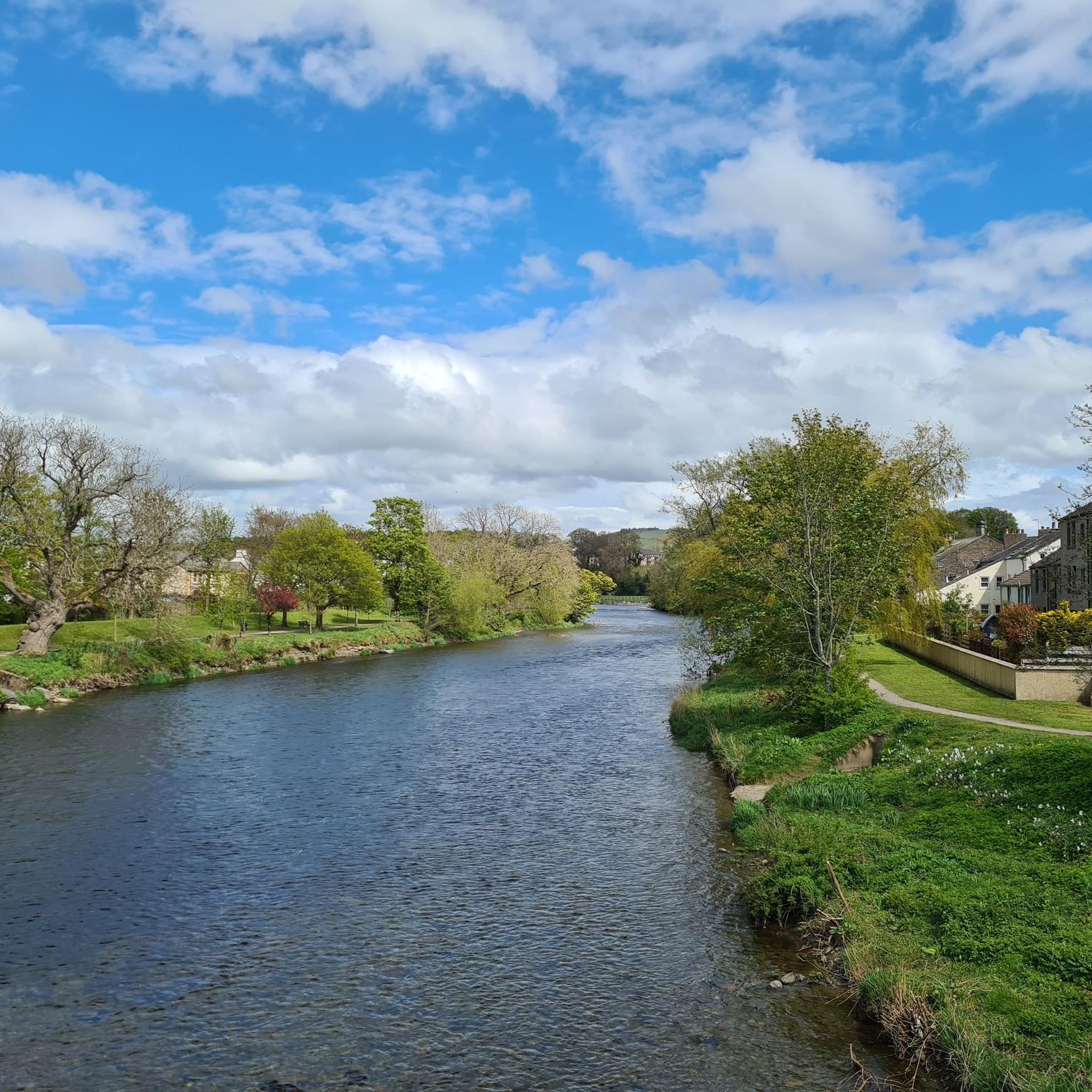
The River Derwent in Cumbria is one of the most iconic rivers in Northwest England, with a course that is both geographically and culturally significant. Rising at Sprinkling Tarn in the highlands of the Lake District, the river flows north through the Borrowdale valley, crossing Derwentwater and Bassenthwaite Lake. It then turns west, passing through Cockermouth—where William Wordsworth grew up—and empties into the Irish Sea at Workington.
9
0
Isel Bridge, located near Setmurthy in the northern Lake District, is an elegant Grade II-listed bridge that spans the River Derwent. Built in 1812 to replace an older bridge dating from 1691, it consists of three segmental arches and two piers of calciferous and pink sandstone, with a solid parapet and saddleback covering. The bridge is situated in a conservation area and is a popular passage for walkers and cyclists, including as part of the Allerdale Ramble and routes to Watch Hill and Setmurthy Common. Its location offers beautiful views of the surrounding hills and valleys, and it's a peaceful place to stop when touring the western Lake District.
8
0

Millers Bridge, as it is known in Cockermouth (official maps refer to it as Harris Bridge), was reopened in 2010 by HRH the Princess Royal after it had suffered severe damage in the 2009 floods and a section of it collapsed into the River Derwent. Part of the steel bridge had to be rebuilt to fit the new shape of the river banks, which were heavily eroded during the floods and have now been fortified.
0
0
Built on a high wooded knoll that formed much of the old town of Cockermouth and is now the east end of the town centre, All Saints is in two ways the high Anglican church in the town. There has been a church here since at least 1395 but an 11th century one was probably there earlier. A new church was built in 1771 as part of the expansion of the eighteenth century old town. That burnt down in 1850 and the current church was built in 1854.
0
0
William Wordsworth and his sister Dorothy were both born in this house (1770 & 1771 respectively) and lived here until 1783 when their father died. The house is now maintained by the National Trust though it narrowly avoided being demolished in the 1960s and replaced by a bus depot before the residents of Cockermouth objected. Only the desk in their father’s office is the family’s original 18th century furniture but the front part of the house has genuine 18th century furniture. The garden is superbly maintained by volunteers in a style appropriate for the time.
1
0

That a Christian place of worship is consecrated equal to "All Saints" (All Saints) is not so common, usually it is one (or at most two) named saints who are the patron saints of a church - and thus also of the community or village , in which this is located – possess. But in search of the origin – or historical models – one has to go far back into history, because a pagan custom can be regarded as original for this practice of dedicating to ALL SAINTS, according to which there were already central temples in pre-Christian times, which generally were dedicated to all deities (PANTHEON).
1
0
Frequently Asked Questions
What historical sites can I visit around Oughterside And Allerby?
The area is rich in history. You can explore All Saints Church, Cockermouth, a religious building dating back to 1854 on a site of worship since the 14th century. Also, visit Wordsworth House and Garden, the birthplace of poet William Wordsworth, offering a glimpse into Georgian life.
Are there any family-friendly attractions in the Oughterside And Allerby area?
Yes, Wordsworth House and Garden is a family-friendly historical site. Additionally, scenic spots like Isle bridge and the River Derwent are suitable for family outings.
What natural features are prominent around Oughterside And Allerby?
The most significant natural feature is the River Derwent, which flows through the Lake District and Cockermouth before reaching the Irish Sea. It offers scenic views and is culturally significant.
Are there easy walks or hiking trails near Oughterside And Allerby attractions?
Yes, there are several easy hiking routes nearby. You can find options like the Maryport Harbour loop or the Allonby Beach loop. For more details and routes, check out the Easy hikes around Oughterside And Allerby guide.
Can I go cycling or mountain biking near Oughterside And Allerby?
Absolutely. The region offers various cycling and mountain biking opportunities. For road cycling, explore routes like the Solway Coast loop. Mountain bikers can find trails around Whinlatter. Detailed routes are available in the Cycling around Oughterside And Allerby guide and the MTB Trails around Oughterside And Allerby guide.
Are there any wheelchair accessible attractions?
Yes, Millers Bridge (Cockermouth) is a steel pedestrian bridge over the River Derwent that is wheelchair accessible, offering views of the surrounding landscape.
What is the significance of the bridges in the area?
Bridges like Millers Bridge (Cockermouth) and Isle bridge are significant. Millers Bridge provides vital pedestrian access across the River Derwent in Cockermouth, rebuilt after severe flooding. Isle Bridge is a Grade II-listed structure from 1812, offering scenic views and forming part of walking routes like the Allerdale Ramble.
What do visitors enjoy most about the attractions around Oughterside And Allerby?
Visitors appreciate the blend of historical insights and natural beauty. The historical sites like Wordsworth House offer a connection to literary heritage, while the scenic river views from bridges and along the River Derwent are highly enjoyed.
Are there any literary connections to the Oughterside And Allerby area?
Yes, the area has strong literary ties. Wordsworth House and Garden in Cockermouth is the birthplace of the renowned poet William Wordsworth, where he spent his early years.
Where can I find views of the landscape and river?
Excellent viewpoints can be found from Millers Bridge (Cockermouth), which offers views of the River Derwent and its surroundings. The River Derwent itself provides numerous scenic spots along its course.
What kind of architecture can I expect to see in the historical sites?
You'll encounter diverse architectural styles. Wordsworth House showcases understated Georgian grandeur with its symmetrical façade. All Saints Church, rebuilt in 1854, reflects Victorian ecclesiastical architecture.
Most popular routes around Oughterside And Allerby
Most popular attractions around Oughterside And Allerby

Get inspired with the komoot mobile app


Explore more
Still not found the Highlight you’re looking for? See guides of the top attractions in other regions:
